On This Page
Description
The Jungle Book is a collection of stories, originally published in magazines in the late 1800s, which involve animals with anthropomorphic characteristics to convey moral lessons. The most famous of these stories involve a young Indian boy named Mowgli who was raised by wolves in the Indian Jungle. He and his friends Baloo, a sloth bear, and Bagheera, a black panther, go on many adventures culminating to a fight with the jungle's bully, the tiger Shere Khan. Containing other famous stories show more such as Rikki-Tikki-Tavi and Toomai of the Elephants, this collection of Rudyard Kipling's most famous stories encompasses his time living in India and the wonders of the Indian jungle. show lessTags
Recommendations
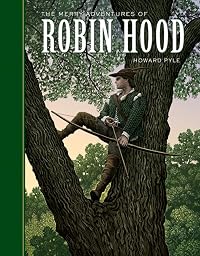
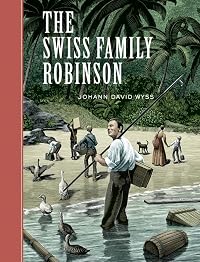
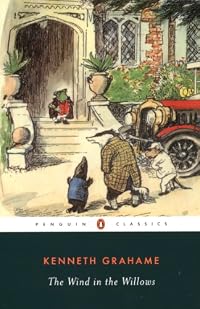
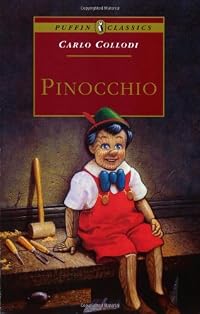




Member Recommendations

Member Reviews
Having grown up with the animation, and enjoying the recently released live-action film, I went into the book with my arms wide open. Sadly, I didn’t enjoy it as much as most others did.
The problem isn’t the book or the stories themselves. Kipling’s writing is solid—practical and concise. The stories are great metaphors for growing in life and can act as coming-of-age stories for younger readers. Characters were built well and developed throughout.
No, the problem lies in the exoticization and the ‘other’-ing of the natives, aka Indians, in the stories. Yes, these are colonial stories and it shows such attitudes through and through. We are shown as “exotic” people who are technologically and culturally challenged. The show more “white sahibs” are far more refined and framed as ‘good’ against their darker counterparts.
A lot has been said about colonialism and post-colonialism. While I enjoyed Mowgli’s stories in the jungle greatly—in fact, they were the best in the collection—the others I didn’t quite enjoy. show less
The problem isn’t the book or the stories themselves. Kipling’s writing is solid—practical and concise. The stories are great metaphors for growing in life and can act as coming-of-age stories for younger readers. Characters were built well and developed throughout.
No, the problem lies in the exoticization and the ‘other’-ing of the natives, aka Indians, in the stories. Yes, these are colonial stories and it shows such attitudes through and through. We are shown as “exotic” people who are technologically and culturally challenged. The show more “white sahibs” are far more refined and framed as ‘good’ against their darker counterparts.
A lot has been said about colonialism and post-colonialism. While I enjoyed Mowgli’s stories in the jungle greatly—in fact, they were the best in the collection—the others I didn’t quite enjoy. show less
The first three stories here are more or less in our literary DNA at this point (I mean, really, who calls up more vivid associations for you, Noah, Achilles, and King Arthur, or Baloo, Bagheera, and Shere Khan?). Mowgli is the child raised by wolves, of course, but he's also the perfect man in a way, the transcendently alive (and lithe) hunter gatherer, domiciling amongst the beasts not because he's fallen off the map of human civilization but because we left him behind, adopted agriculture and superstition. He's not an animal and he's not a man, at least given what man has become--he's the treetopper and tool-user we might have been.
And then there is "The White Seal," Kotick the seal on his requisite quest through underwater show more amazement-scapes, and the seals have their own language based on Aleut, which is amazing, and it's just a really well-fleshed-out and enchanting world. Also Kipling manages to pull off a (gory) seal massacre in a way that's not too awful to teach small children some thoughtful lessons about mortality. The equal of Mowgli in every way.
And Rikki-Tikki-Tavi the mongoose, lesser, and Kipling dwells fetishistically on the "Big Englishman," but still a classic David/Goliath story.
And then "Toomai of the Elephants," which to me is just mahout fanfic, and then the one about the horse and the mule and the camel, which to me is befuddled and pointless as if Kipling got too much sun.
And the poems, which range from evocative in a"Jungle-Floor Ballads" kind of way to extraneous plot sommary of the stories to which they attach. This is a comprehensive rating, but Mowgli and Kotick are five-star bros for sure. show less
And then there is "The White Seal," Kotick the seal on his requisite quest through underwater show more amazement-scapes, and the seals have their own language based on Aleut, which is amazing, and it's just a really well-fleshed-out and enchanting world. Also Kipling manages to pull off a (gory) seal massacre in a way that's not too awful to teach small children some thoughtful lessons about mortality. The equal of Mowgli in every way.
And Rikki-Tikki-Tavi the mongoose, lesser, and Kipling dwells fetishistically on the "Big Englishman," but still a classic David/Goliath story.
And then "Toomai of the Elephants," which to me is just mahout fanfic, and then the one about the horse and the mule and the camel, which to me is befuddled and pointless as if Kipling got too much sun.
And the poems, which range from evocative in a"Jungle-Floor Ballads" kind of way to extraneous plot sommary of the stories to which they attach. This is a comprehensive rating, but Mowgli and Kotick are five-star bros for sure. show less
This holds up surprisingly well for something that could have been full of English racism back in the good old days of 1894. Indeed, some of the stories read very much like a modern YA book of parables with animals who seem much more human than the humans.
Big surprise, right? We humans are a monstrous lot.
That being said, this isn't just the source of Disney's Jungle Book, although a part of it is. It's also full of other great stories. Most memorable is Rikki-Tikki-Tavi, the mongoose who kills a cobra. But also horrifying is the tale of the sea cows, or rather, the White Seal. The tale of the elephant, Toomai, was delightful.
I should say it would be a great book for any child, but not many modern children know crap about India show more except, in my daughter's case, some snappy tunes and dance moves. The connect is kinda missing, you know? Like... Tarzan? Who the F*** is he?
Even so, as an ADULT, it's rather charming and delightful. :) show less
Big surprise, right? We humans are a monstrous lot.
That being said, this isn't just the source of Disney's Jungle Book, although a part of it is. It's also full of other great stories. Most memorable is Rikki-Tikki-Tavi, the mongoose who kills a cobra. But also horrifying is the tale of the sea cows, or rather, the White Seal. The tale of the elephant, Toomai, was delightful.
I should say it would be a great book for any child, but not many modern children know crap about India show more except, in my daughter's case, some snappy tunes and dance moves. The connect is kinda missing, you know? Like... Tarzan? Who the F*** is he?
Even so, as an ADULT, it's rather charming and delightful. :) show less
After running into Kipling in Mike Carey's The Unwritten, I was curious to read some of his works. His earlier, tub-thumping works seem to be less well regarded now (which is a relief, I sat through the movie adaptation of "Gunga Din" with Cary Grant when I was young and Cary Grant-infatuated, and then many years later almost died laughing when Peter Sellers sent it up in "The Party"; I will love Sellers forever for that one scene with the bugle alone). But everyone seems to still love his children's books, and with my kids currently watching a new animated series of The Jungle Book, this seemed like the place to start.
Funnily enough, most of The Jungle Book is not about Mowgli: and of the three stories with him in it, only two feature show more Shere Khan as well. (And one story is set with seals in the cold northern seas. And another in Afghanistan. Since when does either the northern seas or Afghanistan count as "jungle"? I think the title of the book is rather misleading!)
My favourite characters were Baloo & Bagheera, their interaction was just priceless, like a long married squabbling but (underneath it all) loving couple. Shere Khan wasn't as scary as I would have expected, even though he's a man-killer (due to a gammy leg), the way Mowgli despises him makes Shere Khan come across as a nasty schoolyard bully. The scary one was Bagheera, who is actually on Mowgli's side (which is a relief).
But still, good fun, in a very British colonial sort of way. I would have gobbled these up as a child!
And Rikki Tikki Tavi just plain rocks. show less
Funnily enough, most of The Jungle Book is not about Mowgli: and of the three stories with him in it, only two feature show more Shere Khan as well. (And one story is set with seals in the cold northern seas. And another in Afghanistan. Since when does either the northern seas or Afghanistan count as "jungle"? I think the title of the book is rather misleading!)
My favourite characters were Baloo & Bagheera, their interaction was just priceless, like a long married squabbling but (underneath it all) loving couple. Shere Khan wasn't as scary as I would have expected, even though he's a man-killer (due to a gammy leg), the way Mowgli despises him makes Shere Khan come across as a nasty schoolyard bully. The scary one was Bagheera, who is actually on Mowgli's side (which is a relief).
But still, good fun, in a very British colonial sort of way. I would have gobbled these up as a child!
And Rikki Tikki Tavi just plain rocks. show less
This classic story of a boy raised by a pack of wolves has lost none of its power over the years, but the Disney movie certainly doesn't do it justice. Mowgli's journey to manhood is so much more complicated than that depiction shows. He learns the jungle law from the vivid characters Baloo the bear and the panther Bagheera and he must fight the tiger Shere Khan, but the true story lies in his life as a misfit. Though he's raised in the jungle, most animals never accept him. Then when he returns to the human village he finds the same is true there. He has no real home and the pain of that breaks his heart.
I come back to this a lot, a favorite for the writing, and a reminder that imperialism and racism are sweet poison of the time - that it's easy to fall into the beautiful words, and ignore the utter callous horror of that neutral shunning voice. The claim that some people aren't people, that some are dirty, that some are better.
This is probably the best example - especially in The White Seal - of Kipling just being godsawful toxic while loving their subject matter and embracing their words.
This is probably the best example - especially in The White Seal - of Kipling just being godsawful toxic while loving their subject matter and embracing their words.
I had absolutely no expectations for this book. I knew it was a classic, and I believe classics are worth reading. I also knew (and am well familiar with) the Disney movie adaptations of the book. Beyond that, I had no idea what I would find here.
And you know what? The Jungle Book is actually quite charming!
This book is a collection of short stories and poetry. Most of the stories revolve around the adventures of Mowgli, the “manling”, but not all of them. There’s a tale of a seal, and a couple about dogs, and even conversation between multiple caravan animals. For he most part, though? These stories feature Mowgli and one or more of his jungle friends. Each story is self-contained, but the book is better as a whole, in my show more opinion.
Even in short story format, you get to know the recurring characters well enough to be pleased when they pop up as a cameos in another story. Outside the Jungle stories, the characters are one-story-only. Which is fine – honestly? These other stories are not impressive or endearing. Baloo and Bagheera are favorites, as well as Kaa the Python (as may be surprising for those who grew up on the Disney version). Newcomer Akela is a good character as well.
The formatting of this book works well, using a poem to transition between stories. The way my edition is set up, the poem is related to the previous story. I’m not sure if it’s universal, but I like the way it worked in mine and I thought the transitions were very successful. I liked the poems well enough, and they didn’t intrude too much on the story.
If The Jungle Book was the type of book you’d written off as a children’s story, or as a dusty old classic, I would highly recommend giving this book a second chance. It’s charming and enjoyable, and unique in its own way. There are a few turns of phrases that are a little cringy, but because this book so heavily relies on the animals and Mowgli’s perspectives, the traces of racism are very minor, and only present in a couple stories. Honestly, even for an animal book (I know a lot of people have opinions about those – I don’t typically enjoy them myself) this is very good. show less
And you know what? The Jungle Book is actually quite charming!
This book is a collection of short stories and poetry. Most of the stories revolve around the adventures of Mowgli, the “manling”, but not all of them. There’s a tale of a seal, and a couple about dogs, and even conversation between multiple caravan animals. For he most part, though? These stories feature Mowgli and one or more of his jungle friends. Each story is self-contained, but the book is better as a whole, in my show more opinion.
Even in short story format, you get to know the recurring characters well enough to be pleased when they pop up as a cameos in another story. Outside the Jungle stories, the characters are one-story-only. Which is fine – honestly? These other stories are not impressive or endearing. Baloo and Bagheera are favorites, as well as Kaa the Python (as may be surprising for those who grew up on the Disney version). Newcomer Akela is a good character as well.
The formatting of this book works well, using a poem to transition between stories. The way my edition is set up, the poem is related to the previous story. I’m not sure if it’s universal, but I like the way it worked in mine and I thought the transitions were very successful. I liked the poems well enough, and they didn’t intrude too much on the story.
If The Jungle Book was the type of book you’d written off as a children’s story, or as a dusty old classic, I would highly recommend giving this book a second chance. It’s charming and enjoyable, and unique in its own way. There are a few turns of phrases that are a little cringy, but because this book so heavily relies on the animals and Mowgli’s perspectives, the traces of racism are very minor, and only present in a couple stories. Honestly, even for an animal book (I know a lot of people have opinions about those – I don’t typically enjoy them myself) this is very good. show less
Members
- Recently Added By
Lists

Favorite Childhood Books
1,602 works; 516 members

Favorite Animal Fiction
359 works; 156 members

Read the book and saw the movie
1,170 works; 192 members

Classics you know you should have read but probably haven't
421 works; 407 members
1001 Children's Books You Must Read Before You Grow Up
774 works; 100 members
Nonhuman Protagonists
235 works; 34 members

Works That Inspired Disney Movies
119 works; 13 members

Favourite 19th century fiction
257 works; 62 members

Satori Smiles Children's Book List
262 works; 7 members
Honey For a Child's Heart
1,152 works; 25 members

Folio Society
831 works; 53 members

Books I Want to Own
7 works; 1 member

CCE 1000 Good Books List
1,033 works; 12 members

Robinsonade Novels
55 works; 4 members

Books We Loved As Children
603 works; 252 members

The Complete Rory Gilmore Reading List
506 works; 5 members

Book Titles Mentioned In Newberry Medal And Honor Books
884 works; 3 members
Overdue Podcast
800 works; 9 members
Our Favorite Comfort Reads
334 works; 200 members

Ambleside Year 3
47 works; 1 member

Recommended Reading : 600 Classics Reviewed, Editors of Salem Press, 2015
634 works; 6 members

HMS: Make Your Child a Lover of Books, Ages 5-7
17 works; 2 members

The Story of the World: Activity Book Four: The Modern Age
333 works; 2 members

Recommended Reading List
219 works; 1 member

Books Read in 2023
5,547 works; 145 members

Before Austen Comes Aesop
318 works; 9 members

Unread books
1,063 works; 87 members

Ambleside Y3
36 works; 1 member

My Favourite Books
86 works; 5 members

Nobel Price Winners
222 works; 20 members

Books Read in 2020
4,379 works; 124 members

Asia
178 works; 7 members

Trinity College Booklist (1951): Class Ten, English Literature
358 works; 5 members

1890s
49 works; 6 members

Top Five Books of 2013
1,564 works; 722 members

A Novel Cure
742 works; 23 members

Stories Featuring Reptiles
22 works; 5 members

Best Books About Animals
143 works; 48 members

Short Story Collections and Anthologies
260 works; 42 members

Books Read in 2025
4,090 works; 97 members
Talk Discussions
Past Discussions
3949 Rudyard Kiplings The Jungle Book Deluxe Limited Edition in Easton Press Collectors (September 2024)
The Jungle Book(s) Illustrated in Tattered but still lovely (June 2024)
Author Information

2,454+ Works 90,771 Members
Kipling, who as a novelist dramatized the ambivalence of the British colonial experience, was born of English parents in Bombay and as a child knew Hindustani better than English. He spent an unhappy period of exile from his parents (and the Indian heat) with a harsh aunt in England, followed by the public schooling that inspired his "Stalky" show more stories. He returned to India at 18 to work on the staff of the Lahore Civil and Military Gazette and rapidly became a prolific writer. His mildly satirical work won him a reputation in England, and he returned there in 1889. Shortly after, his first novel, The Light That Failed (1890) was published, but it was not altogether successful. In the early 1890s, Kipling met and married Caroline Balestier and moved with her to her family's estate in Brattleboro, Vermont. While there he wrote Many Inventions (1893), The Jungle Book (1894-95), and Captains Courageous (1897). He became dissatisfied with life in America, however, and moved back to England, returning to America only when his daughter died of pneumonia. Kipling never again returned to the United States, despite his great popularity there. Short stories form the greater portion of Kipling's work and are of several distinct types. Some of his best are stories of the supernatural, the eerie and unearthly, such as "The Phantom Rickshaw," "The Brushwood Boy," and "They." His tales of gruesome horror include "The Mark of the Beast" and "The Return of Imray." "William the Conqueror" and "The Head of the District" are among his political tales of English rule in India. The "Soldiers Three" group deals with Kipling's three musketeers: an Irishman, a Cockney, and a Yorkshireman. The Anglo-Indian Tales, of social life in Simla, make up the larger part of his first four books. Kipling wrote equally well for children and adults. His best-known children's books are Just So Stories (1902), The Jungle Books (1894-95), and Kim (1901). His short stories, although their understanding of the Indian is often moving, became minor hymns to the glory of Queen Victoria's empire and the civil servants and soldiers who staffed her outposts. Kim, an Irish boy in India who becomes the companion of a Tibetan lama, at length joins the British Secret Service, without, says Wilson, any sense of the betrayal of his friend this actually meant. Nevertheless, Kipling has left a vivid panorama of the India of his day. In 1907, Kipling became England's first Nobel Prize winner in literature and the only nineteenth-century English poet to win the Prize. He won not only on the basis of his short stories, which more closely mirror the ambiguities of the declining Edwardian world than has commonly been recognized, but also on the basis of his tremendous ability as a popular poet. His reputation was first made with Barrack Room Ballads (1892), and in "Recessional" he captured a side of Queen Victoria's final jubilee that no one else dared to address. (Bowker Author Biography) show less

Rudyard Kipling has a Legacy Library. Legacy libraries are the personal libraries of famous readers, entered by LibraryThing members from the Legacy Libraries group.
Some Editions
Awards and Honors
Awards
Notable Lists
Series
Belongs to Publisher Series
Basford Adult Coloring Books (tie-in | 4.5)
Geração Público (9)
Corticelli [Mursia] (16)
rororo (3)
Tus libros (142)
dtv (1200)
Gallimard, Folio (263-783)
Work Relationships
Is contained in
Penguin Modern Classics: 10 books set Breakfast at Tiffany's, The Day of the Triffids, The Jungle Books, One Flew Over the Cuckoo's Nest, A Room with a View, Goldfinger, A Clockwork Orange, A Kestrel for a Knave, Lolita and Orlando by Penguin (indirect)
Jungle Book / 2nd Jungle Book / Just So Stories / Puck of Pook's Hill / Stalky and Co. / Kim by Rudyard Kipling
The Adventure Collection: Treasure Island, The Jungle Book, Gulliver's Travels, White Fang, The Merry Adventures of Robin by Jonathan Swift
Contains
Is retold in
Has the adaptation
Is abridged in
Inspired
Has as a commentary on the text
Common Knowledge
- Canonical title
- The Jungle Book
- Original title
- The Jungle book
- Original publication date
- 1894; 1934 (Nederlandse vertaling) (Nederlandse vertaling)
- People/Characters
- Mang (bat); Rann (kite | aka Chil in some versions); Father Wolf; Mother Wolf ('Raksha', [Demon]); Tabaqui ([Dish-licker], jackal); Gidur-log (the Jackal People) (show all 42); Shere Khan ('Lungri', [Lame one], tiger); Mowgli ([Frog], man-cub); Akela ([Lone], wolf); Baloo (brown bear); Bagheera (black panther); Ikki (porcupine); Mao (peacock); Hathi (wild elephant); Kaa (rock python); Grey Brother (wolf); Buldeo (hunter); Puran Dass (money lender); Rama (bull buffalo); Kamya (boy); Limmershin (winter wren); Sea Catch (fur seal); Matkah (fur seal); Kotick (fur seal); Grampus (killer whale); Kerick Booterin (seal hunter); Patalamon; Zaharrof; Sea Vitch (walrus); Sea Cow; Rikki-Tikki-Tavi (mongoose); Dazee (tailor bird); Chuchundra (muskrat); Teddy (boy); Nag (cobra); Nagaina (cobra); Karait (snakeling); Chua (rat); Coppersmith (bird); Kala Nag ([Black snake], elephant); Radya Pyari ([Radya darling], elephant); Toomai (elephant driver)
- Important places
- Seoni Hills, Madhya Pradesh, India (spelled in book as Seeonee); Wainganga River, India (spelled in book as Waingunga); Council Rock, Seoni Hills, Madhya Pradesh, India; Cold Lairs, Seoni Hills, Madhya Pradesh, India (lost city); Novastoshnah, St Paul Island, Pribilof Islands, Alaska, USA; St Paul Island, Pribilof Islands, Alaska, USA (show all 13); Bering Sea; Lukannon Beach, St Paul Island, Pribilof Islands, Alaska, USA; Otter Island, Pribilof Islands, Alaska, USA; Walrus Islet, Pribilof Islands, Alaska, USA; Sugauli, Bihar, India (spelled in book as Segowlee); Garo Hills, Meghalaya, India; Rawalpindi, Punjab, Pakistan
- Related movies
- The Jungle Book (1967 | IMDb); Jungle Book (1942 | IMDb); The Jungle Book (2016 | IMDb); The Jungle Book (1994 | IMDb); The Jungle Book (2016 | IMDb); The Jungle Book (2010 | IMDb) (show all 12); Mowgli: Legend of the Jungle (2018 | IMDb); Jungle Book (1995 | IMDb); Jungle Book 2 (IMDb); The Second Jungle Book: Mowgli & Baloo (1997 | IMDb); The Jungle Book: Search for the Lost Treasure (1998 | IMDb); Jungle Book (1990 | IMDb)
- Dedication
- This edition, with its illustrations, is dedicated to the illustrator's granddaughter.
For Abigail - First words
- Now Rann the Kite brings home the night
That Mang the Bat sets free –
The herds are shut in byre and hut
For loosed till dawn are we.
This is the hour of pride and power,
Talon and tush an... (show all)d claw.
Oh, hear the call! – Good hunting all
That keep the Jungle Law! - Last words
- (Click to show. Warning: May contain spoilers.)Children of the Camp are we,
Serving each in his degree;
Children of the yoke and goad,
Pack and harness, pad and load! - Original language
- English
- Disambiguation notice
- This is the main work for The Jungle Book by Rudyard Kipling. Please do not combine with any adaptation, abridgement, etc.
Classifications
Statistics
- Members
- 13,309
- Popularity
- 581
- Reviews
- 168
- Rating
- (3.79)
- Languages
- 22 — Arabic, Catalan, Chinese, Czech, Danish, Dutch, English, Finnish, French, German, Greek, Indonesian, Italian, Norwegian (Bokmål), Polish, Romanian, Russian, Croatian, Slovenian, Spanish, Swedish, Portuguese (Portugal)
- Media
- Paper, Audiobook, Ebook
- ISBNs
- 1,157
- UPCs
- 11
- ASINs
- 312