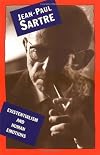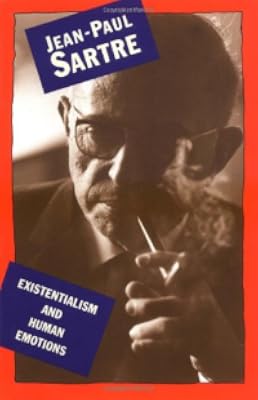
Existentialism and Human Emotions
by Jean-Paul Sartre
On This Page
Description
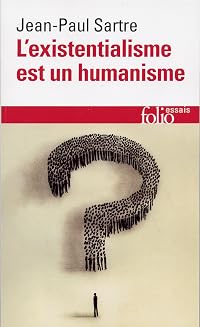
People have obscurely sensed that Jean-Paul Sartre was occupied with a philosophy immediately involved in the peculiar confusions that have beset this general in all aspects of its culture, private as well as public. The chief effort of this work is to face the implications for personal action of a universe without purpose. That man is personally responsible for what he is and what he does; that there are no values external to man and no given human nature which he is obliged to fulfill; show more that man chooses his values and makes himself, and may therefore choose to be a different person - this is the heart of Jean-Paul Sartre's philosophy. - Back cover. show lessTags
Recommendations
















Member Reviews
Sadly, the book while obviously a translation left me without any feeling of engagement or desire to go further into existentialism. The translator, I felt was well advised to declare a distance between "Existentialism" and human emotions. I went back to cynicism.
This book is a good alternative to Being and Nothingness if you're wanting the distilled version of Sartre's philosopy.
A very good read. Sartre defends existentialism by associating it with what it means to be human.
At times very simple; at times very challenging.
Ratings
Members
- Recently Added By
Lists

GreatBooks Worldview Academy Lists
133 works; 4 members

Existentialism
90 works; 11 members
Author Information

Sartre is the dominant figure in post-war French intellectual life. A graduate of the prestigious Ecole Normale Superieure with an agregation in philosophy, Sartre has been a major figure on the literary and philosophical scenes since the late 1930s. Widely known as an atheistic proponent of existentialism, he emphasized the priority of existence show more over preconceived essences and the importance of human freedom. In his first and best novel, Nausea (1938), Sartre contrasted the fluidity of human consciousness with the apparent solidity of external reality and satirized the hypocrisies and pretensions of bourgeois idealism. Sartre's theater is also highly ideological, emphasizing the importance of personal freedom and the commitment of the individual to social and political goals. His first play, The Flies (1943), was produced during the German occupation, despite its underlying message of defiance. One of his most popular plays is the one-act No Exit (1944), in which the traditional theological concept of hell is redefined in existentialist terms. In Red Gloves (Les Mains Sales) (1948), Sartre examines the pragmatic implications of the individual involved in political action through the mechanism of the Communist party and a changing historical situation. His highly readable autobiography, The Words (1964), tells of his childhood in an idealistic bourgeois Protestant family and of his subsequent rejection of his upbringing. Sartre has also made significant contributions to literary criticism in his 10-volume Situations (1947--72) and in works on Baudelaire, Genet, and Flaubert. In 1964 he was awarded the Nobel Prize in Literature and refused it, saying that he always declined official honors. (Bowker Author Biography) show less
Common Knowledge
- Canonical title
- Existentialism and Human Emotions
Classifications
Statistics
- Members
- 669
- Popularity
- 43,017
- Reviews
- 4
- Rating
- (3.49)
- Languages
- English
- Media
- Paper
- ISBNs
- 2
- ASINs
- 3