On This Page
Description
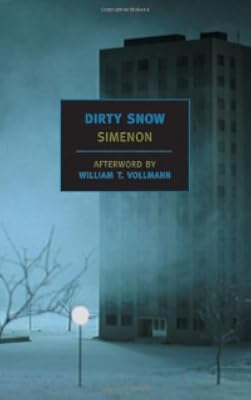
Nineteen-year-old Frank Friedmaier lives in a country under occupation. Most people struggle to get by; Frank takes it easy in his mother's whorehouse, which caters to members of the occupying forces. But Frank is restless. He is a pimp, a thug, a petty thief, and, as Dirty Snow opens, he has just killed his first man. Through the unrelenting darkness and cold of an endless winter, Frank will pursue abjection until at last there is nowhere to go.Hans Koning has described Dirty Snow as "one show more of the very few novels to come out of German-occupied France that gets it exactly right." In a study of the criminal mind that is comparable to Jim Thompson's The Killer Inside Me, Simenon maps a no man's land of the spirit in which human nature is driven to destruction--and redemption, perhaps, as well--by forces beyond its control.
. show less
Tags
Recommendations





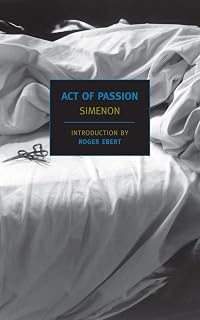
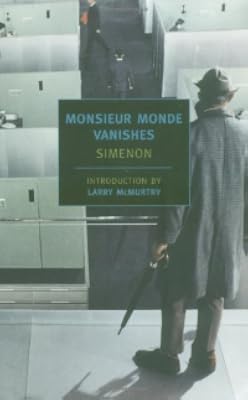
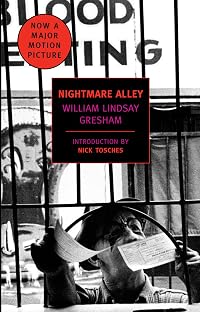

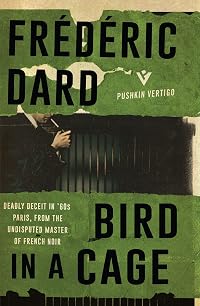






Member Recommendations

by anonymous user
Member Reviews
Frank is nineteen years old in a city under an occupying force, presumably Paris during WWII. He lives on the fringes of society, even more so than others in the city. His mother runs a brothel that’s popular with the occupying army. Frank beds the girls as his due and lives large through crime.
Frank proceeds through life under occupation with a fatalistic attitude. He’s committed two murders – one during a robbery and the other for no particular reason. He summons “fate to take an interest in him.” He’s “courting it, searching everywhere for it.” “He didn’t have enough enemies and he was trying his best to create them.”
When he’s finally picked up and held by the occupiers Frank thinks he’s ready. He holds out show more as long as he wants to, although he’s not really tortured – more like questioned repeatedly. Since he has touched, and actually courted - corruption at a high level, Frank knows he’s not going to get out alive. He can at least dictate his circumstances a bit until he manipulates a visit from a girl he wronged and her father, whom he simultaneously detests and admires. Then he gives his interrogators what they want and welcomes his punishment. show less
Frank proceeds through life under occupation with a fatalistic attitude. He’s committed two murders – one during a robbery and the other for no particular reason. He summons “fate to take an interest in him.” He’s “courting it, searching everywhere for it.” “He didn’t have enough enemies and he was trying his best to create them.”
When he’s finally picked up and held by the occupiers Frank thinks he’s ready. He holds out show more as long as he wants to, although he’s not really tortured – more like questioned repeatedly. Since he has touched, and actually courted - corruption at a high level, Frank knows he’s not going to get out alive. He can at least dictate his circumstances a bit until he manipulates a visit from a girl he wronged and her father, whom he simultaneously detests and admires. Then he gives his interrogators what they want and welcomes his punishment. show less
Non sono un'amante di Maigret, e per fortuna Simenon non è solo Maigret, come dimostra questo bellissimo libro completamente psicologico. In un anonimo paese nordeuropeo, invaso da un esercito di occupazione probabilmente nazista, si dipanano i destini di uomini e donne, che precipitano sempre più in basso. Su tutti svetta Frank, giovanissimo ragazzo di strada, figlio di una tenutaria di bordello, apparentemente privo di anima.
Eppure sarà l'unico che si riscatterà, incontrando l'amore e la morte.
Eppure sarà l'unico che si riscatterà, incontrando l'amore e la morte.
Non sono un'amante di Maigret, e per fortuna Simenon non è solo Maigret, come dimostra questo bellissimo libro completamente psicologico. In un anonimo paese nordeuropeo, invaso da un esercito di occupazione probabilmente nazista, si dipanano i destini di uomini e donne, che precipitano sempre più in basso. Su tutti svetta Frank, giovanissimo ragazzo di strada, figlio di una tenutaria di bordello, apparentemente privo di anima.
Eppure sarà l'unico che si riscatterà, incontrando l'amore e la morte.
Eppure sarà l'unico che si riscatterà, incontrando l'amore e la morte.
It's winter in an occupied country. Frank, a 19-year old living on the fringes in the brothel his mother runs, wants to kill someone because every else has. Somehow, I had envisioned Simenon as the writer of somewhat tidy police procedurals, but this is deep, dark noir, as unlike a "cozy" mystery as anything I can imagine. It works as a psychological study of a disturbed, murderous mind, as a picture of the bleakness of life in an occupied country (unnamed, but presumed to be France during WW II), and as a cat and mouse game of crime solving. I'll be reading more Simenon, a lot more.
Where is the humanity of being the worst person, in the worst place, at the worst time, doing the worst things? Dirty Snow (aka: The Snow is Dirty) by Georges Simenon is a bleak, ugly experience by design. Frank is a 19-year-old piece of human trash who lives in some unnamed European city devoid of beauty. It is the middle of some kind of fascist occupation, wherein murder, human trafficking, and weapon sales go ignored while accidentally passing off a counterfeit bill can result in long-term imprisonment or torture.
For approximately 200 pages we are at Frank’s side, and in his head. He commits some low-level and high-level crimes against humanity, and tromps through the snow glowering at every person who crosses his path. And yet, show more something about the reading experience aligns with what we know of humanity. Dirty Snow was written in 1946, with Simenon only having left Occupied France the year before – just before the War ended. One can only imagine what it would be like to immediately set out to write a crime novel set in a version of the city only just vacated which was occupied by a Fascist regime. There’s something true, nightmarish, and compelling about Simenon’s Dirty Snow. show less
For approximately 200 pages we are at Frank’s side, and in his head. He commits some low-level and high-level crimes against humanity, and tromps through the snow glowering at every person who crosses his path. And yet, show more something about the reading experience aligns with what we know of humanity. Dirty Snow was written in 1946, with Simenon only having left Occupied France the year before – just before the War ended. One can only imagine what it would be like to immediately set out to write a crime novel set in a version of the city only just vacated which was occupied by a Fascist regime. There’s something true, nightmarish, and compelling about Simenon’s Dirty Snow. show less
In the world of novel writing, Georges Simenon was a natural, a kind of Mozart of the novel. He quit school for good as a teenager, never participated in a writing workshop, never enrolled in a writing program and never attended a writing class. With his innate ear for language and dialogue, eye for detail and feel for storytelling, all he needed was four dozen freshly sharpened pencils lined up on his desk and a 'Do Not Disturb' sign to hang on his door. And presto – a first-rate novel written at fever pitch in two weeks. Goodness, what some writers wouldn’t give to have a fraction of his talent.
After ten years of writing dime store potboilers, Simenon decided to get more serious and started writing his Detective Maigret novels. A show more few years after pumping out detective novels, again Simenon decided to become even more serious and thus began writing what he sometimes characterized as romans durs, that is, “straight novels” or “hard novels,” meaning hard on the reader. P.D. James termed these Simenon third phase books as “dark novels.” Personally, I like the sound of all three together: straight, hard and dark. And let me tell you folks, Dirty Snow is exactly that - straight as in straight psychological study (a mile away from detective fiction), hard as in very hard on the reader and dark as in the deep recesses of the human psyche.
Simenon’s novels are nearly always strict point-of-view narratives where readers see people and unfolding events only as the main character sees them. With Dirty Snow, the novel’s main character is a burly eighteen-year-old by the name of Frank Friedmaier, a despicable lout if there ever was one.
The novel isn’t written in first-person but it’s a close cousin – in each and every scene it’s as if we are standing directly behind Frank, gazing over his brawny, swinish shoulder. Judging this novel set in an unnamed European city under World War II-type foreign military occupation as hard on the reader would be understatement; anyone opening the book’s pages had better be prepared for a story that’s tough to swallow; actually, on further reflection, make that extremely tough to swallow.
At various points in the narrative Dirty Snow reminded me of Anthony Burgess’ A Clockwork Orange (random youth violence), Yevgeny Zamyatin’s We (eerie dystopia), Aleksandr Solzhenitsyn’s Gulag Archipelago (state sponsored fear) and Franz Kafka’s The Trial (nightmarish interrogations). Likewise Albert Camus’ 1945 novel, The Stranger, written three year prior to Simenon’s, in the sense Dirty Snow is coated with existential alienation as snow in the novel is coated with dirt, and also is structurally similar to The Stranger in that it is divided into two distinct parts – Frank living on the outside and Frank shut up on the inside.
My strong sense is if Georges Simenon didn’t write all those potboilers and Detective Maigret novels and only wrote a few of his romans durs, then Dirty Snow would be studied and discussed alongside such classics of existentialism as The Stranger and Jean-Paul Sartre’s Nausea. Now I can see why George Simenon thought himself worthy of the Nobel Prize and resented publishers and literati who labeled him a hack catering to the clamoring, detective fiction-loving rabble.
In the first chapter we learn Frank links sex with violence and feels inferior to other, slightly older men who have committed murders, thus Frank plans to murder his first man, a fat officer in the army of occupation known as the Eunuch who is drinking in a bar, murder him with a knife that very evening as a kind of rite of passage. We also come to understand Frank has an odd relationship with an older man, his neighbor, Gerhardt Holst, a man we might infer is a kind of father figure for Frank.
Frank waits in the snow of the back alley, knife at the ready, waiting for the Eunuch to walk out of the bar. Just at that moment Holst walks down the alley. Holst would never see him pressed up against the wall but Frank coughs to make sure Holst knows he is there. Frank reflects: “Of course it wasn’t because of Holst that he was going to kill the Eunuch. That was already decided. It was just that, at that moment, his act had made no sense. It had been almost a joke, a childish prank. What was it he had said? Like losing his virginity.” Let us recall how in traditional societies the rite of passage from boyhood to manhood does not happen in isolation but is a community event, witnessed by older men. Perhaps Frank yearns for such a communal passage.
The plot quickly thickens. I highly recommended this penetrating existential novel published by New York Review Books since there is a most insightful ten page Afterward written by William T. Vollmann. Afterward rather than Introduction is ideal in this case - under the assumption one has already read Dirty Snow, Vollmann critiques the novel in detail without risking giving anything away. At one point Vollmann observes: “Here is Simenon’s genius. Frank wants to be recognized. He wants to be known. He scarcely knows himself, or anything else worth knowing. But if he can somehow stand revealed to the gaze of the Other, then maybe he will achieve some sort of realization. Don’t you and I want to be more real than we are? And wouldn’t it be convenient if somebody else could help us get there?” I hope your literary appetite has been whetted. Again, highly recommended.
Georges Simenon - The first cup of coffee. Awake at 6:00, he prepares it himself and drinks it installed at his machine. He gives himself until 9:00 to write a whole chapter. He works only by electric light. show less
In the world of novel writing, Georges Simenon was a natural, a kind of Mozart of the novel. He quit school for good as a teenager, never participated in a writing workshop, never enrolled in a writing program and never attended a writing class. With his innate ear for language and dialogue, eye for detail and feel for storytelling, all he needed was four dozen freshly sharpened pencils lined up on his desk and a “Do Not Disturb” sign to hang on his door. And presto – a first-rate novel written at fever pitch in two weeks. Goodness, what some writers wouldn’t give to have a fraction of his talent.
After ten years of writing dime store potboilers, Simenon decided to get more serious and started writing his Detective Maigret show more novels. A few years after pumping out detective novels, again Simenon decided to become even more serious and thus began writing what he sometimes characterized as romans durs, that is, “straight novels” or “hard novels,” meaning hard on the reader. P.D. James termed these Simenon third phase books as “dark novels.” Personally, I like the sound of all three together: straight, hard and dark. And let me tell you folks, Dirty Snow is exactly that - straight as in a mile away from detective fiction, hard as in very hard on the reader and dark as in the deep recesses of the human psyche.
Simenon’s novels are nearly always strict point-of-view narratives where readers see people and unfolding events only as the main character sees them. With Dirty Snow, the novel’s main character is a burly eighteen-year-old by the name of Frank Friedmaier, a despicable lout if there ever was one. The novel isn’t written in first-person but it’s a close cousin – in each and every scene it’s as if we are standing directly behind Frank, gazing over his brawny, swinish shoulder. Judging this novel set in an unnamed European city under World War II-type foreign military occupation as hard on the reader would be understatement; anyone opening the book’s pages had better be prepared for a story that’s tough to swallow; actually, on further reflection, make that extremely tough to swallow.
At various points in the narrative Dirty Snow reminded me of Anthony Burgess’ A Clockwork Orange (random youth violence), Yevgeny Zamyatin’s We (eerie dystopia), Aleksandr Solzhenitsyn’s Gulag Archipelago (state sponsored fear) and Franz Kafka’s The Trial (nightmarish interrogations). Likewise Albert Camus’ 1945 novel, The Stranger, written three year prior to Simenon’s, in the sense Dirty Snow is coated with existential alienation as snow in the novel is coated with dirt, and also is structurally similar to The Stranger in that it is divided into two distinct parts – Frank living on the outside and Frank shut up on the inside.
My strong sense is if Georges Simenon didn’t write all those potboilers and Detective Maigret novels and only wrote a few of his romans durs, then Dirty Snow would be studied and discussed alongside such classics of existentialism as The Stranger and Jean-Paul Sartre’s Nausea. Now I can see why George Simenon thought himself worthy of the Nobel Prize and resented publishers and literati who labeled him a hack catering to the clamoring, detective fiction-loving rabble.
In the first chapter we learn Frank links sex with violence and feels inferior to other, slightly older men who have committed murders, thus Frank plans to murder his first man, a fat officer in the army of occupation known as the Eunuch who is drinking in a bar, murder him with a knife that very evening as a kind of rite of passage. We also come to understand Frank has an odd relationship with an older man, his neighbor, Gerhardt Holst, a man we might infer is a kind of father figure for Frank.
Franks waits in the snow of the back alley, knife at the ready, waiting for the Eunuch to walk out of the bar. Just at that moment Holst walks down the alley. Holst would never see him pressed up against the wall but Frank coughs to make sure Holst knows he is there. Frank reflects: “Of course it wasn’t because of Holst that he was going to kill the Eunuch. That was already decided. It was just that, at that moment, his act had made no sense. It had been almost a joke, a childish prank. What was it he had said? Like losing his virginity.” Let us recall how in traditional societies the rite of passage from boyhood to manhood does not happen in isolation but is a community event, witnessed by older men. Perhaps Frank yearns for such a communal passage.
The plot quickly thickens. I highly recommended this penetrating existential novel published by New York Review Books since there is a most insightful ten page Afterward written by William T. Vollmann. Afterward rather than Introduction is ideal in this case - under the assumption one has already read Dirty Snow, Vollmann critiques the novel in detail without risking giving anything away. At one point Vollmann observes: “Here is Simenon’s genius. Frank wants to be recognized. He wants to be known. He scarcely knows himself, or anything else worth knowing. But if he can somehow stand revealed to the gaze of the Other, then maybe he will achieve some sort of realization. Don’t you and I want to be more real than we are? And wouldn’t it be convenient if somebody else could help us get there?” I hope your literary appetite has been whetted. Again, highly recommended.
Georges Simenon - The first cup of coffee. Awake at 6:00, he prepares it himself and drinks it installed at his machine. He gives himself until 9:00 to write a whole chapter. He works only by electric light. show less
Members
- Recently Added By
Lists

1940s
221 works; 25 members

Survey of Classic Crime
39 works; 7 members

To Read Shortlist
20 works; 1 member

H.R.F. Keating's 100 Best Crime & Mystery Books
100 works; 8 members
Author Information

1,336+ Works 63,172 Members
The prolific Belgian-born writer Georges Simenon produced hundreds of fictional works under his own name and 17 pseudonyms, in addition to more than 70 books about Inspector Maigret, long "the favorite sleuth of highbrow detective-story readers" (SR). More than 50 "Simenons" have been made into films. In addition to his mystery stories, he wrote show more what he called "hard" books, the serious psychological novels numbering well over 100. The autobiographical Pedigree, set in his native town of Liege, is perhaps his finest work. The publication of Simenon's intimate memoirs also attracted considerable attention. Simenon himself once said that he would never write a "great novel." Yet Gide called him "a great novelist, perhaps the greatest and truest novelist we have in French literature today," and Thornton Wilder (see Vol. 1) found that Simenon's narrative gift extends "to the tips of his fingers." The following are some of Simenon's novels, exclusive of the Maigret detective stories, that are in print. (Bowker Author Biography) Georges Simenon was born on February 13, 1903 in Liege, Belgium. He wrote more than 200 fiction works under 16 different pseudonyms. His first book, The Case of Peter the Lent led to 80 more of the like including the main character, Inspector Maigret. He published over 400 books that were translated into 50 different languages and sold by the millions. He also wrote psychological novels, including The Man Who Watched the Train Go By. He died on September 4, 1989 in Lausanne. (Bowker Author Biography) show less
Some Editions
Awards and Honors
Notable Lists
Series

Belongs to Publisher Series
Work Relationships
Common Knowledge
- Canonical title
- Dirty Snow
- Original title
- La neige était sale
- Alternate titles
- The Stain on the Snow; The Snow was Black; The Snow Was Dirty
- Original publication date
- 1948
- People/Characters
- Frank Friedmaier; Sissy Holst; Lotte; Kurt Hamling; Anne Loeb; Minna (show all 7); Bertha
- First words
- But for quite a chance incident, what Frank Friedmaier did that night would have been no more than relatively important.
- Quotations
- It was a game he had invented, like the games he used to make up as a child, which he alone understood. It had usually been in his bed in the morning, while Madame Porse was preparing breakfast, and preferably when it was sun... (show all)ny outside. His eyes closed, he would think, for example, "Fly!" Then he would half open his eyes, looking at a certain spot on the wallpaper. If there was a fly there, he won. Now he might have said, "Destiny!" NYRB Ed p 133
- Last words
- (Click to show. Warning: May contain spoilers.)Of course he would have plenty of time afterwards.
- Original language
- French
- Disambiguation notice*
- Riduzione teatrale in italiano di Gianni Nicoletti
*Some information comes from Common Knowledge in other languages. Click "Edit" for more information.
Classifications
- Genres
- Fiction and Literature, General Fiction, Mystery
- DDC/MDS
- 843.912 — Literature & rhetoric French Literature French fiction 1900- 20th Century 1900-1945
- LCC
- PQ2637 .I53 .N4313 — Language and Literature French, Italian, Spanish and Portuguese literatures French literature Modern literature 1900-1960
- BISAC
Statistics
- Members
- 1,092
- Popularity
- 23,470
- Reviews
- 33
- Rating
- (3.79)
- Languages
- 13 — Catalan, Danish, Dutch, English, Finnish, French, German, Italian, Portuguese, Russian, Spanish, Swedish, Turkish
- Media
- Paper, Audiobook, Ebook
- ISBNs
- 44
- ASINs
- 27