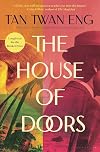
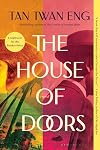
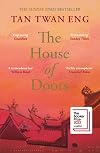
The House of Doors
by Tan Twan Eng
On This Page
Description
The year is 1921. Lesley Hamlyn and her husband, Robert, a lawyer and war veteran, are living at Cassowary House on the Straits Settlement of Penang. When "Willie" Somerset Maugham, a famed writer and old friend of Robert's, arrives for an extended visit with his secretary Gerald, the pair threatens a rift that could alter more lives than one. Maugham, one of the great novelists of his day, is beleaguered: Having long hidden his homosexuality, his unhappy and expensive marriage of show more convenience becomes unbearable after he loses his savings-and the freedom to travel with Gerald. His career deflating, his health failing, Maugham arrives at Cassowary House in desperate need of a subject for his next book. Lesley, too, is enduring a marriage more duplicitous than it first appears. Maugham suspects an affair, and, learning of Lesley's past connection to the Chinese revolutionary, Dr. Sun Yat Sen, decides to probe deeper. But as their friendship grows and Lesley confides in him about life in the Straits, Maugham discovers a far more surprising tale than he imagined, one that involves not only war and scandal but the trial of an Englishwoman charged with murder. It is, to Maugham, a story worthy of fiction. A mesmerizingly beautiful novel based on real events, The House of Doors traces the fault lines of race, gender, sexuality, and power under empire, and dives deep into the complicated nature of love and friendship in its shadow. show lessTags
Recommendations








Member Reviews
57. The House of Doors by Tan Twan Eng
readers: David Oakes & Louise-Mai Newberry
OPD: 2023
format: 11:15 audible audiobook (320 pages in hardcover)
acquired: October 17 listened: Oct 17-26
rating: 4
genre/style: contemporary fiction theme: Booker 2023
locations: 1910 & 1921 Penang in Malaysia and 1947 South Africa
about the author: Malaysian author of Chinese descent who studied law at the University of London. He writes in English and speaks “mainly English, Penang Hokkien, and some Cantonese”. He was born on Penang in 1972.
I was surprised to see this is Eng's first book in 12 years. Back in 2014 I listened to Eng's [The Garden of Evening Mists], a book that relished in the multicultural world of Malaysia overtime, capturing Chinese, show more Japanese, British and Dutch aspects (which sort of means neglecting, to an extent, the majority Malay, and also the large minority Tamil-Indian aspects). There he touched on the complexity of WWII and its aftermath, with distinct, curious, and quietly defiant characters. It was not a perfect book, but it was an experience.
So what has he been doing these last twelve years? Apparently reading some W. Somerset Maugham.
[House of Doors] bookends WWI, mainly taking place in 1921 British Penang, but with extensive memories back to 1910 British Penang. Our main narrator, Leslie Hamlyn, is Penang-born British housewife. Her husband, who survived being gassed in WWI, was once a friend of W. Somerset Maugham. So when the author stops by, he stays in their house. Leslie and her husband are surprised to find Maugham's male secretary is also his lover. Maugham, meanwhile, is looking for stories, and somehow gets Leslie to tell about her close relationship with Sun Yat Sen, who stayed Penang in 1910, and also about her experiences in a friend's murder trial.
I'm not familiar with Maugham's writing or life. (or Sun Yat Sen's, for that matter.) So everything was new and plausible to me. He really did visit Penang, and write a story collection based on his experiences there, called [The Casuarina Tree] (1926), which includes a version of the murder trial--a married woman, only 23, shooting dead a man in her home, claiming he attempted to rape her. Eng is having a dialogue. Maugham heard his version of these stories, then wrote his fictional version in these stories. And Eng is here digging into them with his own fictional versions of what happened behind them. But there is no all-knowing narrator. Everything is told by a character, each with their own perspectives and secrets.
Eng has a way of making a scene present and fully involving various senses of the reader, including those of mystery, curiosity, along with the feel of the weather, and sense of the walls of the homes, the views, wind and sea. His scenes are patient and compelling, characters and atmosphere both drawing the reader.
[The Garden of Evening Mists] was weakened by some cheap plot tricks. Eng evades that kind of thing here. No simple tricks, no neat ties. We are left to wonder, leaving a stronger book, I think. I enjoyed this thoroughly, smitten from beginning to end. I liked the idea literary dialogue, and the inspiration he leaves me with to go read Maugham's stories.
This didn't make the Booker shortlist, but I'll give it my own recommendation.
2023
https://www.librarything.com/topic/354226#8268132 show less
readers: David Oakes & Louise-Mai Newberry
OPD: 2023
format: 11:15 audible audiobook (320 pages in hardcover)
acquired: October 17 listened: Oct 17-26
rating: 4
genre/style: contemporary fiction theme: Booker 2023
locations: 1910 & 1921 Penang in Malaysia and 1947 South Africa
about the author: Malaysian author of Chinese descent who studied law at the University of London. He writes in English and speaks “mainly English, Penang Hokkien, and some Cantonese”. He was born on Penang in 1972.
I was surprised to see this is Eng's first book in 12 years. Back in 2014 I listened to Eng's [The Garden of Evening Mists], a book that relished in the multicultural world of Malaysia overtime, capturing Chinese, show more Japanese, British and Dutch aspects (which sort of means neglecting, to an extent, the majority Malay, and also the large minority Tamil-Indian aspects). There he touched on the complexity of WWII and its aftermath, with distinct, curious, and quietly defiant characters. It was not a perfect book, but it was an experience.
So what has he been doing these last twelve years? Apparently reading some W. Somerset Maugham.
[House of Doors] bookends WWI, mainly taking place in 1921 British Penang, but with extensive memories back to 1910 British Penang. Our main narrator, Leslie Hamlyn, is Penang-born British housewife. Her husband, who survived being gassed in WWI, was once a friend of W. Somerset Maugham. So when the author stops by, he stays in their house. Leslie and her husband are surprised to find Maugham's male secretary is also his lover. Maugham, meanwhile, is looking for stories, and somehow gets Leslie to tell about her close relationship with Sun Yat Sen, who stayed Penang in 1910, and also about her experiences in a friend's murder trial.
I'm not familiar with Maugham's writing or life. (or Sun Yat Sen's, for that matter.) So everything was new and plausible to me. He really did visit Penang, and write a story collection based on his experiences there, called [The Casuarina Tree] (1926), which includes a version of the murder trial--a married woman, only 23, shooting dead a man in her home, claiming he attempted to rape her. Eng is having a dialogue. Maugham heard his version of these stories, then wrote his fictional version in these stories. And Eng is here digging into them with his own fictional versions of what happened behind them. But there is no all-knowing narrator. Everything is told by a character, each with their own perspectives and secrets.
Eng has a way of making a scene present and fully involving various senses of the reader, including those of mystery, curiosity, along with the feel of the weather, and sense of the walls of the homes, the views, wind and sea. His scenes are patient and compelling, characters and atmosphere both drawing the reader.
[The Garden of Evening Mists] was weakened by some cheap plot tricks. Eng evades that kind of thing here. No simple tricks, no neat ties. We are left to wonder, leaving a stronger book, I think. I enjoyed this thoroughly, smitten from beginning to end. I liked the idea literary dialogue, and the inspiration he leaves me with to go read Maugham's stories.
This didn't make the Booker shortlist, but I'll give it my own recommendation.
2023
https://www.librarything.com/topic/354226#8268132 show less
Lesley Hamlyn looks back on 1921, when she and her husband Robert had Willie Somerset Maugham and his secretary (lover) Gerald for a visit in Penang. Though she knows that Willie takes people's stories and makes them her own, she decides to share with him a story of her own from 1910, explaining her relationship with the Chinese revolutionary, Sun Yat Sen, and the murder trial of her friend, Ethel Proudlock.
I haven't read anything by Somerset Maugham, so I was going into the story blind about his writing and his life, and enjoyed watching the story unfold. I think the brilliance of it is that it can be equally enjoyed by someone like me or a Somerset Maugham aficionado, who would recognize the elements of his own stories in this one, a show more feat I think that author would be bemused to see in action. The descriptions of Penang are beautifully evocative, the story immersive, as we learn about Lesley and Robert's unhappy marriage and infidelity. Their tale is melancholy, exploring how little we can truly know another, and the isolation one can feel even in the most intimate of relationships. show less
I haven't read anything by Somerset Maugham, so I was going into the story blind about his writing and his life, and enjoyed watching the story unfold. I think the brilliance of it is that it can be equally enjoyed by someone like me or a Somerset Maugham aficionado, who would recognize the elements of his own stories in this one, a show more feat I think that author would be bemused to see in action. The descriptions of Penang are beautifully evocative, the story immersive, as we learn about Lesley and Robert's unhappy marriage and infidelity. Their tale is melancholy, exploring how little we can truly know another, and the isolation one can feel even in the most intimate of relationships. show less
Sometimes a book draws you in so completely that, once you've finished it, you're left with a lingering void. No matter how many other books you read afterward, none seem to compare. This is one of those rare stories.
The narrative unfolds around the British author William Somerset Maugham, his assistant and lover Gerald, and the infamous real-life case of Ethel Proudlock and her murder trial. Blending historical fact with emotional depth, the book paints a vivid portrait of colonial life, forbidden relationships, and the price of secrets. The characters feel intensely real—flawed, passionate, and human—and the atmosphere is rich with tension and nuance.
What makes this book unforgettable is not just its historical intrigue, but its show more deep exploration of identity, desire, and moral complexity. It lingers with you, long after the final page. show less
The narrative unfolds around the British author William Somerset Maugham, his assistant and lover Gerald, and the infamous real-life case of Ethel Proudlock and her murder trial. Blending historical fact with emotional depth, the book paints a vivid portrait of colonial life, forbidden relationships, and the price of secrets. The characters feel intensely real—flawed, passionate, and human—and the atmosphere is rich with tension and nuance.
What makes this book unforgettable is not just its historical intrigue, but its show more deep exploration of identity, desire, and moral complexity. It lingers with you, long after the final page. show less
Historical fiction is not my favorite genre though there are a number of works of historical fiction I have loved. The thing, I think, that separates most historical fiction from what I consider the good stuff is that the good stuff subverts the conventions of the genre in which it falls. IMO, most historical fiction is manipulative drivel that ignores everything important about significant historical events and reduces them down to things that broke up lovers or put stress on families Those books want to make readers cry (for some reason) rather than taking the opportunity to guide the reader in learning about events and movements that shape lives and define who we are and how we interact with the world. The attachment to these tropes show more explains why so much historical fiction is based in Nazi-occupied Europe -- it is the paint-by-numbers of novel writing. There is no need for nuanced characters, just a bank of readers who have been raised with clear direction on what is good and what is evil -- add a subverted relationship and mix and voila, you have a book. The House of Doors does not fall into that trap. The characters are rich and the focus is on the complexities of the relationships and situations portrayed, with no simple good vs evil presentation. Gay men marry women and break their hearts and women retaliate for the hurt they feel in the only ways available to these women 100 years ago (spend his money or cuckold him.) And even in the fighting back or clamoring to latch on to that real love or pleasure or feeling of safety that is denied one, everyone is hurt and pleasures are fleeting. The book delves deep into the ways colonialism turned nations into leisure communities for Europeans where they take the good and valuable things they "discover" and control the people they have colonized. (Colonialism is definitely evil, except that things did not go well for countries, like China, which mostly though not entirely fought effectively against colonization.) Eng shows us that marriage itself is both a trap and a haven (and it its way, a colonization of women), self-rule a sometimes deadly blessing. No easy answers. This is one of best depictions of the ways in which colonization causes harm and keeps on harming I have read. It does not fall into the historical fiction trap of creating the sainted and the evil, the cowboys and Indians sort of lens applied to imperialism outside the US (which is no more interesting to me when the Indians are the one-dimensional heroes than when the cowboys are.)
In addition to subverting the tropes of historical fiction, this book transcends another thing that holds most historical fiction back -- it is beautifully written. It is written very much in the style of Somerset Maugham, who is a character in the book, but it also feels very separate from his work. The book is smartly (not reactively) anti-colonial, subtly feminist, and truly humanist, as was true of Maugham's work. I really enjoyed it. I did feel there were a couple of storylines that spun off and then came back after I had sort of forgotten them and had lost some interest in them, and I had a hard time connecting some narratives to one another. Highly recommended. show less
In addition to subverting the tropes of historical fiction, this book transcends another thing that holds most historical fiction back -- it is beautifully written. It is written very much in the style of Somerset Maugham, who is a character in the book, but it also feels very separate from his work. The book is smartly (not reactively) anti-colonial, subtly feminist, and truly humanist, as was true of Maugham's work. I really enjoyed it. I did feel there were a couple of storylines that spun off and then came back after I had sort of forgotten them and had lost some interest in them, and I had a hard time connecting some narratives to one another. Highly recommended. show less
Set in Penang in the 1920s, protagonist Lesley Hamlyn and her husband, Robert, open their home to Robert’s old friend and author W. Somerset Maugham (called “Willie”) for an extended holiday. Willie is unhappily married to Syrie, who lives in England. He is traveling with his secretary, Gerald, who is also his paramour. As the story opens, Maugham finds out he is in debt and needs to write another book to recoup his losses.
Though Lesley is initially reluctant to confide in Willie, and she knows he is known to write about the people he meets, she cannot seem to help unburdening herself to him. She tells him about her marriage, her involvement in Sun Yat-sen’s revolutionary goals, and her relationship with Sun’s assistant, show more Arthur. She speaks of the 1911 arrest of her friend, Ethel Proudlock, also a real person and the subject of Maugham’s The Letter.
In this book, the author is writing about a real person who is writing about real people. In addition, Lesley meets Arthur at his “house of doors.” There are so many nested doors that it was difficult to keep track of them all. The prose is elaborate, and I believe this is an intentional attempt to mimic Maugham’s style of writing in his novels of the 1920s.
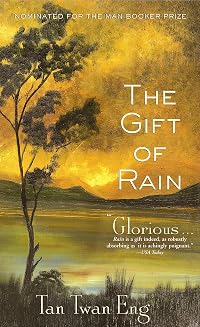
One of the primary themes is the era’s need to maintain secrecy in gay relationships and the impact on the women they marry. Other themes include colonialism, patriarchy, racism, and artistic expression. I enjoyed the many literary references and beautiful imagery. Personally, I preferred Tan’s previous two novels (The Gift of Rain and The Garden of Evening Mists), but this book is a stellar piece of storytelling. show less
Though Lesley is initially reluctant to confide in Willie, and she knows he is known to write about the people he meets, she cannot seem to help unburdening herself to him. She tells him about her marriage, her involvement in Sun Yat-sen’s revolutionary goals, and her relationship with Sun’s assistant, show more Arthur. She speaks of the 1911 arrest of her friend, Ethel Proudlock, also a real person and the subject of Maugham’s The Letter.
In this book, the author is writing about a real person who is writing about real people. In addition, Lesley meets Arthur at his “house of doors.” There are so many nested doors that it was difficult to keep track of them all. The prose is elaborate, and I believe this is an intentional attempt to mimic Maugham’s style of writing in his novels of the 1920s.
One of the primary themes is the era’s need to maintain secrecy in gay relationships and the impact on the women they marry. Other themes include colonialism, patriarchy, racism, and artistic expression. I enjoyed the many literary references and beautiful imagery. Personally, I preferred Tan’s previous two novels (The Gift of Rain and The Garden of Evening Mists), but this book is a stellar piece of storytelling. show less
The Malaysian lawyer and novelist Tan Twan Eng is one of my favorite contemporary authors of historical fiction, and his most recent novel is no exception. The central character is Lesley Hamlyn, a British woman who lives in colonial Penang along with her husband Robert, a highly regarded lawyer. Robert invites the famed British writer and longtime friend W. Somerset Maugham, who prefers to be called Willie, to stay with him and Lesley for a fortnight in 1921, along with Willie’s secretary and traveling companion Gerald Haxton. Maugham, ever eager to mine the public and secret lives of others as a source for his novels, short stories and plays, learns that Lesley was a supporter of Dr Sun Yat Sen, the Chinese revolutionary and first show more provisional president of the Republic of China, who visited Penang in 1910 to enlist financial backing from the Malayan Chinese community in his effort to overthrow the Qing Dynasty during the 1911 Revolution. Maugham talks with Lesley about Sun, as he is writing a book about him, and as their friendship deepens Lesley tells him about her own troubled marriage, as well as that of her friend Ethel Proudlock, whose killing of a British man in Kuala Lumpur became a major scandal in the British colonial society, and it later formed the basis of Maugham’s short story The Letter, which is contained in his collection The Casuarina Tree.
The novel travels mainly between 1910-11 and 1921, with evocative portrayals of Penang, the racist and close minded attitudes of the British toward their Asian neighbors, and especially the main characters and their lives and loves.
The House of Doors is another masterful novel by Tan Twan Eng, one well deserving of its place on the 2023 Booker Prize longlist, and I enjoyed it nearly as much as his previous novels, The Gift of Rain and The Garden of Evening Mists. show less
The novel travels mainly between 1910-11 and 1921, with evocative portrayals of Penang, the racist and close minded attitudes of the British toward their Asian neighbors, and especially the main characters and their lives and loves.
The House of Doors is another masterful novel by Tan Twan Eng, one well deserving of its place on the 2023 Booker Prize longlist, and I enjoyed it nearly as much as his previous novels, The Gift of Rain and The Garden of Evening Mists. show less
This is a well paced, intriguing story which takes place on British Penang in the early 20th century some years before and after WWI. W. Somerset Maugham's visit in 1921 elicits the tale of the continuing but failed marriage of his hosts a decade earlier, the wife's involvement with Sun Yat-sen's efforts at revolution and as a character witness in the first trial of a European woman accused of murder. It is a story of people pinched into the constrained social rolls, wives of unloving husbands, men who prefer men but marry to deflect the stigma, expatriates who put their "origin" country above where they live, individuals born and raised in the east but expected to exemplify English values. The truth which is a fundamental casualty of show more their lives leaks imperfectly into Maugham's stories. For all of its virtues, I was not much moved by the characters and the ending felt a bit tinny after the oboe tones of the preceding realism. show less
Members
- Recently Added By
Published Reviews
Somerset Maugham appears as a flawed actor in a colonial morality play inspired by his classic short story ....The Proudlock scandal would later be refitted to form the basis for The Letter, an acclaimed short story by W Somerset Maugham, that pitiless chronicler of so much human frailty. It now provides the prompt for Tan Twan Eng’s The House of Doors, an ambitious, elaborate fiction about show more fictions that beats back to the humid heyday of empire and instals the bestselling author as a flawed player in the drama..The sheer weight of its interests sometimes slows it down.. But his revolutionary adventure feels undercooked and imported..... Tan writes as Maugham did, almost self-consciously so, in a descriptive high style that focuses on the tales people tell and how they look when they tell them show less
added by vancouverdeb
Lists

Books Read in 2023
5,638 works; 147 members

Which house?
423 works; 16 members

Top Five Books of 2023
767 works; 317 members

Books Read in 2024
4,727 works; 128 members

Queen Camilla's Reading Room
65 works; 6 members

Not the NYT list of top 100 21st century books
100 works; 6 members

Booker Prize Longlist 2023
13 works; 1 member

WBS - Book Club
71 works; 1 member

The LonesomeReader Book Club
36 works; 1 member
Talk Discussions
Past Discussions
ALERT! Fans of Tan Twan Eng in All Writers Considered (February 2023)
Author Information

Some Editions
Awards and Honors
Awards
Distinctions
Notable Lists
Common Knowledge
- Canonical title*
- Het huis met de deuren
- Original title
- The House of Doors
- Original publication date
- 2023
- People/Characters*
- Somerset Maugham
- Important places*
- Penang, Maleisië; Kuala Lumpur, Maleisië
- Epigraph*
- 'Feiten en fictie zijn in mijn werk zo nauw met elkaar vervlochten dat ik ze, achteraf gezien, nauwelijks van elkaar kan onderscheiden.'
Somerset Maugham, The Summing Up - Dedication*
- Voor A.J. Buys
&
ter nagedachtenis aan mijn vader
Tan Ghin Hai (1937-2013) - First words*
- Een verhaal kan, net als een bergvogel, een naam meevoeren tot voorbij de wolken, zelfs tot voorbij de tijd zelf.
- Last words*
- (Click to show. Warning: May contain spoilers.)Hier, aan de randen van de woestijn, is het iets na middernacht, maar als ik me naar het oosten richt, meedraai met de omwenteling van de aarde, dan weet ik dat het op een eiland aan de andere kant van de wereld al ochtend is.
- Original language
- English
*Some information comes from Common Knowledge in other languages. Click "Edit" for more information.
Classifications
Statistics
- Members
- 731
- Popularity
- 38,791
- Reviews
- 53
- Rating
- (4.14)
- Languages
- 8 — Dutch, English, Estonian, French, German, Italian, Polish, Spanish
- Media
- Paper, Audiobook, Ebook
- ISBNs
- 20
- ASINs
- 9