On This Page
Description
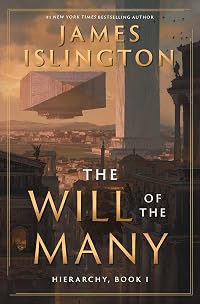
"At the elite Catenan Academy, where students are prepared as the future leaders of the Hierarchy empire, the curriculum reveals a layered set of mysteries which turn murderous in this new fantasy by bestselling author of The Licanius Trilogy, James Islington. Vis, the adopted son of Magnus Quintus Ulcisor, a prominent senator within the Hierarchy, is trained to enter the famed Catenan Academy to help Ulciscor learn what the hidden agenda is of the remote island academy. Secretly, he also show more wants Vis to discover what happed to his brother who died at the academy. He is sure the current Principalis of the academy, Quintus Veridius Julii, a political rival, knows much more than he's revealing. The Academy's vigorous syllabus is a challenge Vis is ably suited to meet, but it is the training in the use of Will, a practice that Vis finds abhorrent, that he must learn in order to excel at the Academy. Will, a concept that encompasses their energy, drive, focus, initiative, ambition, and vitality, can be voluntarily "ceded" to someone else. A single recipient can accept ceded Will from multiple people, growing in power towards superhuman levels. Within the hierarchy your level of Will, or legal rank, determines how you live or die. And there are those who are determined to destroy this hierarchal system, as well as those in the Academy who use it to gain dominance in internationally bestselling author James Islington's wonderfully crafted new epic fantasy series"-- show lessTags
Recommendations

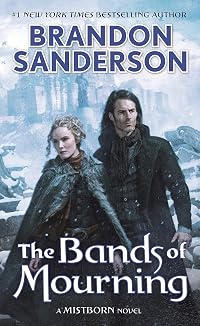

Member Recommendations
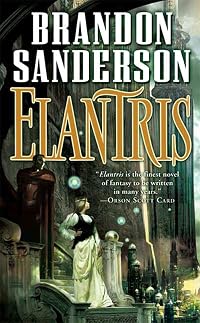
Astute360 Protagonist is orphaned. Roman hierarchy inspired military
Member Reviews
On the one hand, an epic fantasy set in an ancient Roman-themed world is something that I've always dreamed about writing. On the other hand, I have cooled on the magic school setting after Harry Potter especially, feeling like it makes for less well-rounded and mature themes and characters. So I was a bit conflicted with starting The Will of the Many, given these were two of its main tentpoles.
However, it quite quickly became clear that my misgivings were going to be put to bed. James Islington has definitely levelled up from his Licanius trilogy, and has done a masterful job in taking a number of fantasy tropes (which all could be considered well-worn in isolation) and bringing them together in a way that feels both familiar and fresh show more at the same time. I was immediately engaged from the opening chapters, and thoroughly enjoyed the way that the main character's backstory, his strengths, his flaws, his motivations and his values unfurled and was integrated seamlessly with how the world in which he inhabited was revealed. The writing reflects a 'show not tell' approach, which really contributed to how organically the world-building was achieved, and how easy it was to become immersed.
I was particularly captivated by the development of Vis as a protagonist. While he superficially embodies many main character stereotypes (lost royalty, orphan, tragic backstory etc.), these end up playing out through the story in meaningful ways, and as a reader I could really see how these aspects fundamentally contributed to his personality and world view, which are then gradually altered and impacted by the people he meets, the relationships he builds, and the experiences he undergoes. While there are a few moments where he seems to be conveniently proficient at things, it generally feels like he earns his wins, and has to face the consequences of his actions. Despite the focal characters being late-teen/young adult, the book doesn't shy away from confronting scenes or heavy themes, with horror and brutality being clearly exposed without being gratuitous, and at the same time delving into philosophical considerations of whether complacency and abiding by the rules of the system is equivalent to buying into and supporting that system.
This is therefore a tremendous start to a new series, and I have no qualms with giving it 5 stars. James Islington clearly knows his audience, but uses that knowledge to create a story that is well-rounded, well-grounded and well worth a read. With so much more of the world to uncover, and the ending raising far more questions than answers about what is coming next for Vis, I'm definitely looking forward to the next instalment. show less
However, it quite quickly became clear that my misgivings were going to be put to bed. James Islington has definitely levelled up from his Licanius trilogy, and has done a masterful job in taking a number of fantasy tropes (which all could be considered well-worn in isolation) and bringing them together in a way that feels both familiar and fresh show more at the same time. I was immediately engaged from the opening chapters, and thoroughly enjoyed the way that the main character's backstory, his strengths, his flaws, his motivations and his values unfurled and was integrated seamlessly with how the world in which he inhabited was revealed. The writing reflects a 'show not tell' approach, which really contributed to how organically the world-building was achieved, and how easy it was to become immersed.
I was particularly captivated by the development of Vis as a protagonist. While he superficially embodies many main character stereotypes (lost royalty, orphan, tragic backstory etc.), these end up playing out through the story in meaningful ways, and as a reader I could really see how these aspects fundamentally contributed to his personality and world view, which are then gradually altered and impacted by the people he meets, the relationships he builds, and the experiences he undergoes. While there are a few moments where he seems to be conveniently proficient at things, it generally feels like he earns his wins, and has to face the consequences of his actions. Despite the focal characters being late-teen/young adult, the book doesn't shy away from confronting scenes or heavy themes, with horror and brutality being clearly exposed without being gratuitous, and at the same time delving into philosophical considerations of whether complacency and abiding by the rules of the system is equivalent to buying into and supporting that system.
This is therefore a tremendous start to a new series, and I have no qualms with giving it 5 stars. James Islington clearly knows his audience, but uses that knowledge to create a story that is well-rounded, well-grounded and well worth a read. With so much more of the world to uncover, and the ending raising far more questions than answers about what is coming next for Vis, I'm definitely looking forward to the next instalment. show less
The Will of the Many is a dark academia fantasy novel that takes place in a world with similarities to the Roman Empire. Readers will pick up on bits of Latin, references to a pantheon of gods and goddesses, and gladiator-type contests, but I found the most interesting aspect to be that of an empire that's formed itself as a machine for endless conquering. This not only casts it immediately and irrevocably as a force of evil that killed the main character's family, forcibly subdued the people of his beloved homeland, and actively erases every language and culture it is able to subsume. It also presents a force of evil with a unique and fascinating flaw: when you've built your empire to depend upon the constant growth of conquering new show more nations, how can it go on when there is nothing left to conquer?
In this way and many others, the novel gives opportunities for contemplation, even as the action-packed plot keeps throwing the main character into dangerous and seemingly impossible situations. The stakes are so well constructed that even the smallest aspects of the main character's academic life take on profound importance. The air of secrecy and distrust lends itself perfectly to big reveals and plot twists that are perfectly believable to have been hidden for so long or to come so unexpectedly. And this, combined with the main character's need to keep his own identity and his own past a secret, denies him the opportunity to fully lean on any person other than himself. In every way, it's a very well-constructed framework that sets the stage for a stunning success.
In the afterword, the author mentions having been inspired by Brandon Sanderson and Patrick Rothfuss, and I was pleasantly surprised to find that the connections I was drawing between this book and The Name of the Wind were absolutely on point. I think if you enjoy the work of these other authors, you're very likely to enjoy this one as well. On the other hand, I know some people criticize The Name of the Wind for having an overpowered main character, and if that's the case for you, you'll likely have the same complaint about this one.
Even as a person who enjoys a plotline of an exceptionally talented main character learning and training and developing to the point at which they're almost unbelievably exceptional, I did find a few plot developments in The Will of the Many to be a bit of a stretch. The main character was just a bit too lucky, or another character acted in just the right way at just the right time in a way that didn't quite seem believable. In this sort of story structure, it's a serious mistake when readers can detect an author's hand weighing down one end of the scales. Luckily, this did only apply in a few instances for me, while the rest of the book worked perfectly.
As far as content warnings, this book doesn't have much beyond what you would expect from the description. There is a lot of violence and death. Characters from the empire display bigotry in regards to other cultures, though notably there is no evidence of the sort of racism that exists in our world. Women are less likely to have powerful roles in society because they are heavily encouraged to have children (in some cases as many as possible), but the female characters depicted are clearly just as capable as the male characters in terms of natural talent and abilities and there is no evidence of the sort of sexism that exists in our world.
Although this book felt particularly dark and hopeless in the beginning, I started to enjoy it more after the first few chapters, and by the middle I was hooked to the point of flying through the rest of it. I don't always continue a series after reading the first book, but in this case I definitely will be picking up the sequel as soon as it comes out in November. If it sounds like the type of book you might enjoy, now would be the perfect time to give it a read. You might find that by the time you're finished, you won't have to wait at all for the sequel you might be craving. show less
In this way and many others, the novel gives opportunities for contemplation, even as the action-packed plot keeps throwing the main character into dangerous and seemingly impossible situations. The stakes are so well constructed that even the smallest aspects of the main character's academic life take on profound importance. The air of secrecy and distrust lends itself perfectly to big reveals and plot twists that are perfectly believable to have been hidden for so long or to come so unexpectedly. And this, combined with the main character's need to keep his own identity and his own past a secret, denies him the opportunity to fully lean on any person other than himself. In every way, it's a very well-constructed framework that sets the stage for a stunning success.
In the afterword, the author mentions having been inspired by Brandon Sanderson and Patrick Rothfuss, and I was pleasantly surprised to find that the connections I was drawing between this book and The Name of the Wind were absolutely on point. I think if you enjoy the work of these other authors, you're very likely to enjoy this one as well. On the other hand, I know some people criticize The Name of the Wind for having an overpowered main character, and if that's the case for you, you'll likely have the same complaint about this one.
Even as a person who enjoys a plotline of an exceptionally talented main character learning and training and developing to the point at which they're almost unbelievably exceptional, I did find a few plot developments in The Will of the Many to be a bit of a stretch. The main character was just a bit too lucky, or another character acted in just the right way at just the right time in a way that didn't quite seem believable. In this sort of story structure, it's a serious mistake when readers can detect an author's hand weighing down one end of the scales. Luckily, this did only apply in a few instances for me, while the rest of the book worked perfectly.
As far as content warnings, this book doesn't have much beyond what you would expect from the description. There is a lot of violence and death. Characters from the empire display bigotry in regards to other cultures, though notably there is no evidence of the sort of racism that exists in our world. Women are less likely to have powerful roles in society because they are heavily encouraged to have children (in some cases as many as possible), but the female characters depicted are clearly just as capable as the male characters in terms of natural talent and abilities and there is no evidence of the sort of sexism that exists in our world.
Although this book felt particularly dark and hopeless in the beginning, I started to enjoy it more after the first few chapters, and by the middle I was hooked to the point of flying through the rest of it. I don't always continue a series after reading the first book, but in this case I definitely will be picking up the sequel as soon as it comes out in November. If it sounds like the type of book you might enjoy, now would be the perfect time to give it a read. You might find that by the time you're finished, you won't have to wait at all for the sequel you might be craving. show less
I was surprised by how much I enjoyed this one. I didn't realize when I put it on hold that it was a YA book -- after many disappointments I've decided I've aged out of that genre. But this book has solid, well-thought-out worldbuilding, and it turns out that makes all the difference. (Well. And also the main character, Vis, although he's far from perfect, acts older than he is and has good reason to. Probably that helped, too.)
The worldbuilding makes all kinds of things in this book work where they wouldn't in another.I'm so tired of intensely dangerous magical schools where they sacrifice highly talented teenagers in ridiculous ways and no one seems to mind. This book worked because it makes a ton of sense in this universe. When will show more drives magic, and will is a limited resource that comes from humans, you want as few high-ranking people as possible. After all, they get will that could otherwise be ceded to you, and they have powers that might be equal to yours. So it's okay if a few die. And there's no public outcry because almost no one knows, given all the population secrets the government has to keep.
Vis also makes as much sense as he can. He's not special because he was born that way or because of some innate ability.He had a monarch's education and upbringing followed by a school of hard knocks training followed by an elite training from someone who knew exactly what he'd face. He's still unusually skilled, but there are good reasons. And the smarter people around him know that his backstory doesn't make sense, that he's too skilled for it to be true. I really appreciated that. I also appreciated the somewhat convoluted explanation for why he's the only one who can solve this mystery, and I was very glad that almost every strange coincidence turns out not to be.
The pacing on this book is great; it's a definite page turner and it's a very fast read despite its length because it's so tightly written and edited. It's also a fun read despite the very real sense of menace and the many dangers Vis faces. There's even a twist that surprised me and still made sense, which is unusual.
Are there things I wish for? Well. Yeah. This could be queerer, for one thing. (The society is based on Ancient Rome, ffs. There were a lot of ways he could have incorporated queerness, and he just didn't except to mention it's against the law, like that has ever stopped anyone.) I also wish Vis's relationships with others were a bit deeper and fell less along the lines of the Big Tropes; he has a lot of growing to do in the areas of trusting and relating to people, andI spent the last half of the book waiting patiently to find out which of his three friends would die, because one of them was going to have to, and indeed, one of them does. It was the one I bet on. And man are there a lot of conspiracies in this book.
Still, though, I really did enjoy this. And I'm pleased to know I can still enjoy what amounts to a Chosen One at a Magical School if the worldbuilding is done right.
(Note: there is a dog, and he is hurt but he does not die. This book gets extra love from me for breaking my streak of unexpected animal death; normally it would be a four star, but that kicked it up to five.)
(Additional note: Wow, after looking at the comparables for this one and what the author is influenced by, I'm even more surprised I liked it.) show less
The worldbuilding makes all kinds of things in this book work where they wouldn't in another.
Vis also makes as much sense as he can. He's not special because he was born that way or because of some innate ability.
The pacing on this book is great; it's a definite page turner and it's a very fast read despite its length because it's so tightly written and edited. It's also a fun read despite the very real sense of menace and the many dangers Vis faces. There's even a twist that surprised me and still made sense, which is unusual.
Are there things I wish for? Well. Yeah. This could be queerer, for one thing. (The society is based on Ancient Rome, ffs. There were a lot of ways he could have incorporated queerness, and he just didn't except to mention it's against the law, like that has ever stopped anyone.) I also wish Vis's relationships with others were a bit deeper and fell less along the lines of the Big Tropes; he has a lot of growing to do in the areas of trusting and relating to people, and
Still, though, I really did enjoy this. And I'm pleased to know I can still enjoy what amounts to a Chosen One at a Magical School if the worldbuilding is done right.
(Note: there is a dog, and he is hurt but he does not die. This book gets extra love from me for breaking my streak of unexpected animal death; normally it would be a four star, but that kicked it up to five.)
(Additional note: Wow, after looking at the comparables for this one and what the author is influenced by, I'm even more surprised I liked it.)
Okay, so this was amazing. Let me start out by saying that you really have to impress me when it comes to epic fantasy/academia stories just because it's very easy to fall into a lot of similar tropes and events (not necessarily a bad thing, but a struggle to read through when done wrong.)
Islington does it right.
First person for this story, let alone a single perspective, was a smart choice because of the scope of this world and the need to keep certain things a secret from the reader and Vis. I think if we bounced around it would lose that hold that it had on me. The worldbuilding was incredible and felt as natural as it could be with the swaths of information which were necessary to understand the story. However, understanding these show more complex worlds has always been my favorite part of fantasy and academic stories though, so let's get into other sections.
As much as I understood Vis as a main character, I didn't like him for most of the narrative. Now I'm not going to say I would deduct a whole star just because he annoyed me, but it took almost till the end for me to understand who he was besides a pawn to keep the plot going. For most of the time, all I understood was that he was angry, had anger problems, and could lie really well. Cool? On the more positive side, giving him a solid group of friends was also a smart move, and I could easily picture each one as their own being who existed outside of Vis' scenes with them.
While the pacing of the first two thirds of the book were brilliant, the third began that 'we gotta go, we gotta run' pace that I'm very used to now in this genre of story. There's a ton of set up, lots of lore, and then we realize that there needs to be a plot to wrap up so people may or may not die, alliances may or may not get switched, and then there's the plot twist to set up the second book OR it ends abruptly. The big reason that this book was five stars and not four was because Islington managed to wrap up the actual story from the first book while also setting up the sequel in a pretty solid way. If I had to describe it to someone I could, albeit a lot of backtracking to explain the complex system.
It's not often I say that I want to read the sequel to something. It's really not often I say that I'm EXCITED for a sequel but here I am. I'm really hoping that The Strength of the Few will continue on this strong path. This is a flat-out recommendation.
Pre-read: god this better be amazing I have very high expectations show less
Islington does it right.
First person for this story, let alone a single perspective, was a smart choice because of the scope of this world and the need to keep certain things a secret from the reader and Vis. I think if we bounced around it would lose that hold that it had on me. The worldbuilding was incredible and felt as natural as it could be with the swaths of information which were necessary to understand the story. However, understanding these show more complex worlds has always been my favorite part of fantasy and academic stories though, so let's get into other sections.
As much as I understood Vis as a main character, I didn't like him for most of the narrative. Now I'm not going to say I would deduct a whole star just because he annoyed me, but it took almost till the end for me to understand who he was besides a pawn to keep the plot going. For most of the time, all I understood was that he was angry, had anger problems, and could lie really well. Cool? On the more positive side, giving him a solid group of friends was also a smart move, and I could easily picture each one as their own being who existed outside of Vis' scenes with them.
While the pacing of the first two thirds of the book were brilliant, the third began that 'we gotta go, we gotta run' pace that I'm very used to now in this genre of story. There's a ton of set up, lots of lore, and then we realize that there needs to be a plot to wrap up so people may or may not die, alliances may or may not get switched, and then there's the plot twist to set up the second book OR it ends abruptly. The big reason that this book was five stars and not four was because Islington managed to wrap up the actual story from the first book while also setting up the sequel in a pretty solid way. If I had to describe it to someone I could, albeit a lot of backtracking to explain the complex system.
It's not often I say that I want to read the sequel to something. It's really not often I say that I'm EXCITED for a sequel but here I am. I'm really hoping that The Strength of the Few will continue on this strong path. This is a flat-out recommendation.
Pre-read: god this better be amazing I have very high expectations show less
I enjoyed Islington's The Licanius Trilogy - enough so that when I spotted this in the bookshop, it went into my basket without even reading the blurb. So I had high expectations for the story - and it certainly delivered.
This book is a platypus. It has a lot of wild elements that by all accounts shouldn’t work together (and perhaps wouldn’t if handled by a less deft writer), but somehow he pulled it off.
The Roman Empire setting, the complex and wholly unique magic system, the political intrigue and social commentary, the friendships, the mystery, the magical academy, the emotion, the layers, the plot twists, the opposing stakes!!! Every time I thought I’d figured something out, everything got turned on its head again.
It is a show more unique thing for a writer to be able to craft a world that feels real, along with characters that are complex and alive, invent a magic system and write a plot that keeps you on the edge of your seat for all 620 pages. And that ending… it’s just cruel to leave us behind like this.
I can't wait for the sequel to see what will happen next. show less
This book is a platypus. It has a lot of wild elements that by all accounts shouldn’t work together (and perhaps wouldn’t if handled by a less deft writer), but somehow he pulled it off.
The Roman Empire setting, the complex and wholly unique magic system, the political intrigue and social commentary, the friendships, the mystery, the magical academy, the emotion, the layers, the plot twists, the opposing stakes!!! Every time I thought I’d figured something out, everything got turned on its head again.
It is a show more unique thing for a writer to be able to craft a world that feels real, along with characters that are complex and alive, invent a magic system and write a plot that keeps you on the edge of your seat for all 620 pages. And that ending… it’s just cruel to leave us behind like this.
I can't wait for the sequel to see what will happen next. show less
Disclaimer: I received a free copy of this book from the publisher in exchange for a fair and honest review. All opinions are my own.
The Will of the Many is a fun, compulsively readable, and action-packed Roman inspired epic fantasy that had me staying up way past my bedtime. It is a wonderful addition to the “magical academy” subgenre (with all of your favorite tropes!) as well as being a carefully nuanced critique of colonialism and the project of empire. Whether you are in the mood for something fun and breezy or something deeper and more contemplative, Islington has you covered.
The Will of the Many tells the story of Vis, a young orphan who is adopted by one of the sociopolitical elites of the Hierarchy. Vis is tasked with show more entering a prestigious magical academy with one goal – ascend the ranks, figure out what the other major branches of the government are doing, and report back. However, that isn’t quite as easy as Vis or anyone else thought it was going to be…
I really enjoyed Islington’s worldbuilding. It’s actually shocking we don’t have more fantasy books set in a Roman-esque setting, and Islington uses the setting to its full potential. The main thrust of the world is the Hierarchy itself, a powerful, colonizing empire that has pretty much wiped every other independent nation out. The Hierarchy is socially divided…hierarchically. Most people are at the bottom with fewer people at the top, and the people at the top can pull magical energy from the lower people. What results is essentially the magical equivalent of a pyramid scheme – each Rank 4 person has a few Rank 5 people they pull from, the Rank 5 people pull from Rank 6 people, etc. etc. This gives most people access to some kind of magic, while the people at the top can do the most powerful stuff because they are drawing magical energy from the most people.
This magical energy, the Will, is not only a cool magic system to explore, but it has social and thematic resonance as well. Islington’s magic system is a condemnation of both his fictional Hierarchy and the world that we live into today. While the people in the Hierarchy are deprived of their magical energies, in our world people are deprived of their money, health, and happiness to those at the top of the social hierarchy; those that take and never give. I always love when magic systems are thought out in this way. I am always down for a magic system that is cool just because it’s cool, but when a magic system is so nicely integrated into the book’s setting and theme like The Will is, it makes it all the better.
More than anything else what I loved about Islington’s worldbuilding is that he has carefully thought about how magic would actually impact the world. While it is definitely Roman inspired, Islington’s world doesn’t look exactly like Ancient Rome. For example, flying trains and mass transit are common in this world because of course it does. Magic makes it really easy to transport objects and people, so why wouldn’t an efficiently run empire have this? I don’t see this kind of thinking enough in epic fantasy, and I loved how it was used here.
The book is compulsively consumable and readable. I didn’t even realize the book was nearly 700 pages long because I flew through it. Islington’s writing style is a bit more interesting than say, Sanderson’s prose (this is not a hit against Sanderson, his prose is just utilitarian), but still fades into the background as you race through the pages. The story also moves. I thought that a chonky first book in a series would be a lot of set up, but Islington keeps the story progressing at a fine pace. And while there are definitely reveals to come in future books, he also gives the readers a lot of information so it doesn’t feel like this book only exists for the set up.
There isn’t a magical academy, coming of age, epic fantasy trope that Islington doesn’t put on display here. I’m not sure this is necessarily a criticism, but my feelings about the tropiness of the story did vacillate frequently as I was working my way through the book. Vis is a low class kid placed in magical academy to aid in the resistance (although the resistance here is another branch of the government rather than the resistance movement). There is a love triangle between Vis, one of the upper-class classmates, and one of the resistance fighters. There is a cruel professor and a professor that supports Vis. A lot of the worldbuilding is done through class lectures and grand speeches. There is a dangerous game (that isn’t really a death game, but death is possible) that all of the students need to participate in. I could keep listing them, but my point is that if you are looking for something that revels in these tropes, The Will of the Many has them all. However, if you hate these tropes you might want to look elsewhere.
No matter how many tropes Islington engaged in, I will say that he did them really well.
Between the prose style and the tropiness, this book sits nicely between YA and adult fantasy. Fans of either genre will feel right at home here. The young protagonists, magical school, and first-person present narration will appeal to YA fans, while the complex magic system, critiques of colonialism/power, and the political maneuvering will keep fans of adult fantasy interested. I’m not sure if I have read a book that so seamlessly draws in both audiences without alienating one or the other at some point!
One trope that Islington avoided that I really enjoyed was how he portrayed the villains. It often feel like authors want the readers to know how evil the antagonists are, and thus go out of their way to have the villains do the most heinous things. They are vile, arrogant, and cruel in all of the most horrifying ways. The villains in The Will of the Many aren’t like this. They act like normal people. Some are jerks, most are rather nice. Unlike most fish-out-of-water magical academy stories, Vis’ classmates are no nicer or meaner than what you would expect at any kind of normal school. Sure, there are bullies but Vis isn’t some kind of social pariah.
What is so brilliant about this is that these characters feel all the more natural, real, and human because Islington doesn’t feel like he needs to up the teen angst. To be clear, these people are vile colonizers. But the thing is that they have already won. The Hierarchy is the victor, its citizens are comfortable. There is no need for the characters to act out their villainy. This makes Islington’s villains all the more heinous; they are normal people, having normal conversations, and doing normal things all the while casually discussing how to perpetuate their colonizing ways. As I worked my way through The Will of the Many I was achingly uncomfortable (in a good way!) because I was being endeared to these people that…are not great.
Having said that, Islington does run into a bit of the problem that many similar stories run into, and that is that he does want some of the colonizers to be heroes. He doesn’t have them fully unpack their own complicity in the pain of others (including Vis’ family), but there will be plenty of time to hopefully do so in later books.
And speaking of villainy, I won’t say too much to avoid spoilers but I did really like that (outside of Vis) Islington does add some gray layers and nuance to all sides of the colonizer/colonized issue. He recognizes that simple binaries don’t work in the creation of and the resistance to empires. Good/bad and colonizer/colonized don’t always operate in those overly simplistic and binary ways. I wouldn’t but this book anywhere near the grimdark genre, mostly because Vis is such an example of a classic good-guy protagonist, but the world around Vis is much more complicated than your standard “heroic” fantasy epic.
The end of The Will of the Many sets up so many exciting directions for the series, for both heroes and villains, and I am definitely on board for wherever Islington takes me next.
Concluding Thoughts: The Will of the Many is an exciting start to a new fantasy series, full of political intrigue, magical academies, insurgence, death games and more. No matter what kind of epic fantasy you usually gravitate towards, you will definitely find something in Islington’s Roman-inspired world. Simultaneously a breezy, fun beach read and a deeper, more searing condemnation of colonialism and social inequalities, I could not put this book down and I am anxiously awaiting the sequel. show less
The Will of the Many is a fun, compulsively readable, and action-packed Roman inspired epic fantasy that had me staying up way past my bedtime. It is a wonderful addition to the “magical academy” subgenre (with all of your favorite tropes!) as well as being a carefully nuanced critique of colonialism and the project of empire. Whether you are in the mood for something fun and breezy or something deeper and more contemplative, Islington has you covered.
The Will of the Many tells the story of Vis, a young orphan who is adopted by one of the sociopolitical elites of the Hierarchy. Vis is tasked with show more entering a prestigious magical academy with one goal – ascend the ranks, figure out what the other major branches of the government are doing, and report back. However, that isn’t quite as easy as Vis or anyone else thought it was going to be…
I really enjoyed Islington’s worldbuilding. It’s actually shocking we don’t have more fantasy books set in a Roman-esque setting, and Islington uses the setting to its full potential. The main thrust of the world is the Hierarchy itself, a powerful, colonizing empire that has pretty much wiped every other independent nation out. The Hierarchy is socially divided…hierarchically. Most people are at the bottom with fewer people at the top, and the people at the top can pull magical energy from the lower people. What results is essentially the magical equivalent of a pyramid scheme – each Rank 4 person has a few Rank 5 people they pull from, the Rank 5 people pull from Rank 6 people, etc. etc. This gives most people access to some kind of magic, while the people at the top can do the most powerful stuff because they are drawing magical energy from the most people.
This magical energy, the Will, is not only a cool magic system to explore, but it has social and thematic resonance as well. Islington’s magic system is a condemnation of both his fictional Hierarchy and the world that we live into today. While the people in the Hierarchy are deprived of their magical energies, in our world people are deprived of their money, health, and happiness to those at the top of the social hierarchy; those that take and never give. I always love when magic systems are thought out in this way. I am always down for a magic system that is cool just because it’s cool, but when a magic system is so nicely integrated into the book’s setting and theme like The Will is, it makes it all the better.
More than anything else what I loved about Islington’s worldbuilding is that he has carefully thought about how magic would actually impact the world. While it is definitely Roman inspired, Islington’s world doesn’t look exactly like Ancient Rome. For example, flying trains and mass transit are common in this world because of course it does. Magic makes it really easy to transport objects and people, so why wouldn’t an efficiently run empire have this? I don’t see this kind of thinking enough in epic fantasy, and I loved how it was used here.
The book is compulsively consumable and readable. I didn’t even realize the book was nearly 700 pages long because I flew through it. Islington’s writing style is a bit more interesting than say, Sanderson’s prose (this is not a hit against Sanderson, his prose is just utilitarian), but still fades into the background as you race through the pages. The story also moves. I thought that a chonky first book in a series would be a lot of set up, but Islington keeps the story progressing at a fine pace. And while there are definitely reveals to come in future books, he also gives the readers a lot of information so it doesn’t feel like this book only exists for the set up.
There isn’t a magical academy, coming of age, epic fantasy trope that Islington doesn’t put on display here. I’m not sure this is necessarily a criticism, but my feelings about the tropiness of the story did vacillate frequently as I was working my way through the book. Vis is a low class kid placed in magical academy to aid in the resistance (although the resistance here is another branch of the government rather than the resistance movement). There is a love triangle between Vis, one of the upper-class classmates, and one of the resistance fighters. There is a cruel professor and a professor that supports Vis. A lot of the worldbuilding is done through class lectures and grand speeches. There is a dangerous game (that isn’t really a death game, but death is possible) that all of the students need to participate in. I could keep listing them, but my point is that if you are looking for something that revels in these tropes, The Will of the Many has them all. However, if you hate these tropes you might want to look elsewhere.
No matter how many tropes Islington engaged in, I will say that he did them really well.
Between the prose style and the tropiness, this book sits nicely between YA and adult fantasy. Fans of either genre will feel right at home here. The young protagonists, magical school, and first-person present narration will appeal to YA fans, while the complex magic system, critiques of colonialism/power, and the political maneuvering will keep fans of adult fantasy interested. I’m not sure if I have read a book that so seamlessly draws in both audiences without alienating one or the other at some point!
One trope that Islington avoided that I really enjoyed was how he portrayed the villains. It often feel like authors want the readers to know how evil the antagonists are, and thus go out of their way to have the villains do the most heinous things. They are vile, arrogant, and cruel in all of the most horrifying ways. The villains in The Will of the Many aren’t like this. They act like normal people. Some are jerks, most are rather nice. Unlike most fish-out-of-water magical academy stories, Vis’ classmates are no nicer or meaner than what you would expect at any kind of normal school. Sure, there are bullies but Vis isn’t some kind of social pariah.
What is so brilliant about this is that these characters feel all the more natural, real, and human because Islington doesn’t feel like he needs to up the teen angst. To be clear, these people are vile colonizers. But the thing is that they have already won. The Hierarchy is the victor, its citizens are comfortable. There is no need for the characters to act out their villainy. This makes Islington’s villains all the more heinous; they are normal people, having normal conversations, and doing normal things all the while casually discussing how to perpetuate their colonizing ways. As I worked my way through The Will of the Many I was achingly uncomfortable (in a good way!) because I was being endeared to these people that…are not great.
Having said that, Islington does run into a bit of the problem that many similar stories run into, and that is that he does want some of the colonizers to be heroes. He doesn’t have them fully unpack their own complicity in the pain of others (including Vis’ family), but there will be plenty of time to hopefully do so in later books.
And speaking of villainy, I won’t say too much to avoid spoilers but I did really like that (outside of Vis) Islington does add some gray layers and nuance to all sides of the colonizer/colonized issue. He recognizes that simple binaries don’t work in the creation of and the resistance to empires. Good/bad and colonizer/colonized don’t always operate in those overly simplistic and binary ways. I wouldn’t but this book anywhere near the grimdark genre, mostly because Vis is such an example of a classic good-guy protagonist, but the world around Vis is much more complicated than your standard “heroic” fantasy epic.
The end of The Will of the Many sets up so many exciting directions for the series, for both heroes and villains, and I am definitely on board for wherever Islington takes me next.
Concluding Thoughts: The Will of the Many is an exciting start to a new fantasy series, full of political intrigue, magical academies, insurgence, death games and more. No matter what kind of epic fantasy you usually gravitate towards, you will definitely find something in Islington’s Roman-inspired world. Simultaneously a breezy, fun beach read and a deeper, more searing condemnation of colonialism and social inequalities, I could not put this book down and I am anxiously awaiting the sequel. show less
Whatever it is that I just finished reading, was freaking AWESOME. It's rare to run across something that starts out feeling a little too familiar (Red Rising) and ends up being unlike anything I've ever read before. But this book was that, in spades. Completely new magic system that reads both fantasy and sci-fi, a class system that is also brand new but recognizable, and tropes I thought I'd tired of, but which are presented in an exciting new way or turned completely on their heads. (orphan to royalty).
Though I think the dramatic personae could benefit from being presented up front (I spent half the damn book trying to figure out how to pronounce these names, and I took three years of college Latin), the rest of the story was beyond show more reproach. Incredible depth of character, world-building, geography etc... fast-paced but not too fast to miss the details that really make a story shine, plot points that are impossible to predict, but thrilling all the same, and world-building unlike anything I have ever read.
And another thing I appreciated? This book had some fantastic editing.
Definitely read it. And you'll definitely want to read it again! show less
Though I think the dramatic personae could benefit from being presented up front (I spent half the damn book trying to figure out how to pronounce these names, and I took three years of college Latin), the rest of the story was beyond show more reproach. Incredible depth of character, world-building, geography etc... fast-paced but not too fast to miss the details that really make a story shine, plot points that are impossible to predict, but thrilling all the same, and world-building unlike anything I have ever read.
And another thing I appreciated? This book had some fantastic editing.
Definitely read it. And you'll definitely want to read it again! show less
Members
- Recently Added By
Lists

Books Read in 2023
5,638 works; 147 members

infjsarah's wishlist
408 works; 2 members

Kindle Books
15 works; 1 member

BookTube Fantasy Recommendations
37 works; 1 member

Books We Want To Read Again For The First Time
384 works; 160 members

Top Five Books of 2025
954 works; 303 members
Top Five Books of 2024
795 works; 264 members

naturallogg's 2025 in Books
50 works; 1 member
Author Information

16 Works 8,773 Members
Awards and Honors
Awards
Series

Common Knowledge
- Canonical title
- The Will of the Many
- Original title
- The Will of the Many
- Original publication date
- 2023
- People/Characters
- Vis Telimus; Advenius Claudius; Aequa Claudius; Ascenia; Atrox; Atticus (show all 57); Auctia; Ava; Belli Volenis; Brixia; Caeror Telimus; Callidus Ericius; Carinza; Cassia; Cristoval; Drusus Corani; Dultatis; Eidhin Breac; Ellanher; Emissa Corenius; Estevan; Exesius; Fadrique; Felix; Feriun; Ferrea; Gaius Valerius; Gaufrid; Hrolf; Ianix; Idonia; Indol Quiscil; Iro Decimus; Kadmos; Lanistia Scipio; Lerius Telimus; Lucius; Manius; Marcellus; Marcus Carcius; Menendo; Nateo; Nequias; Prav; Quiscil; Relucia Telimus; Scitus; Sianus; Taedia; Tem; Titus; Ulciscor Telimus; Ulnias Filo; Valentina; Veridius Julii; Vermes; Ysabel
- Important places
- Catenan Academy, Solivagus, Deditia; Acharnae, Syntrece; Agerus; Alta Semita, Caten; Catenan Republic; Solivagus (show all 7); Villa Telimus
- First words
- I'm dangling, and it is only my father's blood-slicked grip around my wrist that stops me from falling.
- Last words
- (Click to show. Warning: May contain spoilers.)"Pull back your sleeve, Vis."
- Original language
- English
Classifications
Statistics
- Members
- 3,105
- Popularity
- 5,681
- Reviews
- 43
- Rating
- (4.37)
- Languages
- 5 — English, French, German, Italian, Spanish
- Media
- Paper, Audiobook, Ebook
- ISBNs
- 15
- ASINs
- 9