When She Was Good
by Philip Roth
On This Page
Description
In this funny and chilling novel, the setting is a small town in the 1940s Midwest, and the subject is the heart of a wounded and ferociously moralistic young woman, one of those implacable American moralists whose "goodness" is a terrible disease. When she was still a child, Lucy Nelson had her alcoholic failure of a father thrown in jail. Ever since then she has been trying to reform the men around her, even if that ultimately means destroying herself in the process. With his unerring show more portraits of Lucy and her hapless, childlike husband, Roy, Roth has created an uncompromising work of fictional realism, a vision of provincial American piety, yearning, and discontent that is at once pitiless and compassionate. show lessTags
Recommendations


















Member Recommendations

anonymous user irrelevant lyrics by old men called Roth
Member Reviews
Interesting mental exercise by a male writer in trying to imagine rage as primary motivation in a female protagonist. The results are not truly successful. Off the top of my head, The Bell Jar could be used as a female penned counterpoint, and you'll see this novel's short comings. The dimensions of true inner rage are the most intimate aspects of anyone's persona -they are difficult to counterfeit and they are often intrinsically tied up with sexual identity in ways we desperately keep hidden from the other sex -so they are the most difficult for the opposite sex to grasp.
Still, a brave undertaking. Or an exercise borne of narcissistic conceit -take your pick.
Still, a brave undertaking. Or an exercise borne of narcissistic conceit -take your pick.
A very interesting work. The focus of the book is Lucy, a ferociously moralistic young woman in 1940s small town America. Defining herself in opposition to her alcoholic father, she has grown to believe that she is the only truly moral fighter against a bad world. Roth brilliantly uses her absolutist and pitiless gaze to explore the flawed but well-meaning characters around her. In opposition to this never-endingly harsh point of view, we are drawn into compassionately engaging with their (and our) human failings. As the book progresses and Lucy's self-imposed social isolation worsens, these characters retreat into a background against which Lucy rails in an increasingly hopeless monologue against all around her. Occasionally, she seems show more to show flashes of understanding of her central role in her husband's and family's struggles, but these are quickly hidden by her inability to see any good in her father.
Loved it. show less
Loved it. show less
This is my second Roth and I have to say he captivates me immediately with his writing style, and i feel myself drawn swiftly into a story into which very little is happening, yet i did not want to stop reading. Lots of stuff in this about moral right and wrong versus common sense 'right and wrong' and the utter chaos families can inflict on each other in often self-centered attempts to do what is 'right.' Lots of enabling goes on in this that ultimately allows the turmoil to continue, and a tremendous amount of denial and hiding of truths (1960's suburban culture) that really causes the most destruction. In spite of that somewhat negative outlook, i liked it quite a bit.
This was Roth's second full-length novel, published in 1966. Roth is a huge literary hero of mine. I've read almost all of his works and decided to go back and read one of the four remaining Roth books still awaiting me.
This is a tough book to get through. The protagonist, if that word can be used for a character so unpleasant, is Lucy Nelson, child of an alcoholic and abusive father who goes through life with fists clenched, trying with all her might to control her family and friends in order to push them to live up to her impossible standards of morality and propriety. Her husband, well-meaning but ineffectual, is unfortunately made of much less noble stuff.
Less skillfully than he would in his later career, Roth plays with narrative show more time, giving us in particular one important piece of the storyline out of order, shifting point of view so that we see aspects of the action from several perspectives. This all might be very cool, except that Lucy herself is wound so tight and is, most of the time, so unforgiving and unpleasant, that the book is often very hard to get through.
In the end, I would recommend When She Was Good to Roth completists only. As a glimpse into the novelist in transition, beginning to work out issues of theme and form that he would later conquer so brilliantly (a matter of opinion, I know), the book is interesting. Purely as a reading experience, though, probably not a valuable enough experience for most readers. As such, this book was a step back from Roth amazing debut, the novella Goodbye Columbus, and even, if I remember right (I read it very long ago), his first full-length novel, Letting Go.
Roth's next at bat produced the explosively funny Portnoy's Complaint. After that, Roth was, mostly, off and running for a long, long time. show less
This is a tough book to get through. The protagonist, if that word can be used for a character so unpleasant, is Lucy Nelson, child of an alcoholic and abusive father who goes through life with fists clenched, trying with all her might to control her family and friends in order to push them to live up to her impossible standards of morality and propriety. Her husband, well-meaning but ineffectual, is unfortunately made of much less noble stuff.
Less skillfully than he would in his later career, Roth plays with narrative show more time, giving us in particular one important piece of the storyline out of order, shifting point of view so that we see aspects of the action from several perspectives. This all might be very cool, except that Lucy herself is wound so tight and is, most of the time, so unforgiving and unpleasant, that the book is often very hard to get through.
In the end, I would recommend When She Was Good to Roth completists only. As a glimpse into the novelist in transition, beginning to work out issues of theme and form that he would later conquer so brilliantly (a matter of opinion, I know), the book is interesting. Purely as a reading experience, though, probably not a valuable enough experience for most readers. As such, this book was a step back from Roth amazing debut, the novella Goodbye Columbus, and even, if I remember right (I read it very long ago), his first full-length novel, Letting Go.
Roth's next at bat produced the explosively funny Portnoy's Complaint. After that, Roth was, mostly, off and running for a long, long time. show less
What a work! This was the first book I read by Roth. My parents had it in their library as long as I can remember and I ended up with it when I moved. This book has the honor of being probably one of the highest on the list of books I disliked. Actually, disliked is a little weak of a term. I hated this book... and yet I'm giving it 3 1/2 stars?
I hated the book because the heroine was horrible. Roth's talent wasn't horrible though. In fact, I found myself so mad at the character that I was mad at Roth for being so talented to make me feel that strongly about a fictitious person. Hence, I hated the book, because it was well-written when presenting a despicable character!
I hated the book because the heroine was horrible. Roth's talent wasn't horrible though. In fact, I found myself so mad at the character that I was mad at Roth for being so talented to make me feel that strongly about a fictitious person. Hence, I hated the book, because it was well-written when presenting a despicable character!
Non so come in quarta di copertina si possa dire che questo è un libro 'divertente': questo è un libro tremendo.
Nella follia raziocinante di Lucy, nella grandiosità dei dialoghi di cui non mi capacito del come Roth riesca a trasferirli su carta, nella rappresentazione dell'ambiente e dei pensieri che sono piu' reali del vero. Tragico e necessario.
Nella follia raziocinante di Lucy, nella grandiosità dei dialoghi di cui non mi capacito del come Roth riesca a trasferirli su carta, nella rappresentazione dell'ambiente e dei pensieri che sono piu' reali del vero. Tragico e necessario.
This took me forever to finish It was hard to read because Lucy, the "she" in the title was NEVER good. She was a bitch. Her father, an alcoholic, was her nemesis, almost. She had him jailed when he was drunk (and she was 15?) She was so critical of everyone and couldn't understand why her mother put up with her father. Then Lucy got married (shotgun?) and criticized her husband. I was happy that the last altercation showed people standing up to Lucy and telling it like it is: She's crazy! It was hard to read because I kept thinking she needed Al-anon big time!
Members
- Recently Added By
Lists

Top Five Books of 2013
1,562 works; 715 members
Author Information

123+ Works 74,915 Members
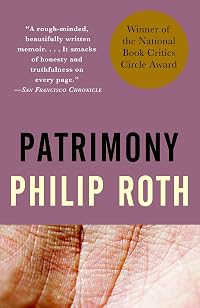
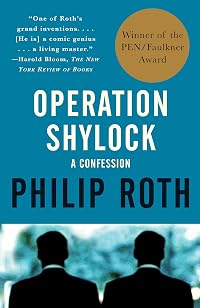
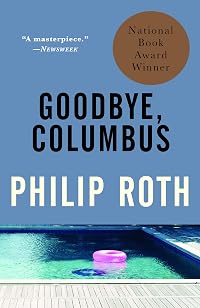
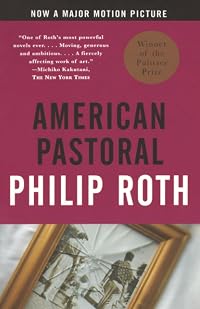
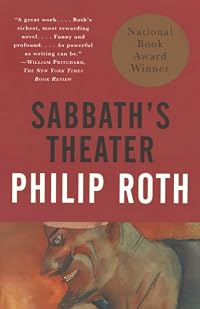
Philip Milton Roth was born in Newark, New Jersey on March 19, 1933. He attended Rutgers University for one year before transferring to Bucknell University where he completed a B.A. in English with highest honors in 1954. He received an M.A. from the University of Chicago in 1955. His first book, Goodbye, Columbus, received the National Book Award show more in 1960. His other books include Letting Go, When She Was Good, Portnoy's Complaint, My Life as a Man, The Ghostwriter, Zuckerman Unbound, I Married a Communist, The Plot Against America, The Facts, The Anatomy Lesson, Exit Ghost, Deception, Nemesis, Everyman, Indignation, and The Humbling. He won the National Book Critic Circle Awards in 1987 for his novel The Counterlife and in 1992 for his memoir Patrimony: A True Story. He won the PEN/Faulkner Award for Fiction in 1993 for Operation Shylock: A Confession and in 2001 for The Human Stain, the National Book Award in 1995 for Sabbath's Theater, and the Pulitzer Prize in 1998 for American Pastoral. He stopped writing in 2010. He died from congestive heart failure on May 22, 2018 at the age of 85. (Bowker Author Biography) show less
Some Editions
Awards and Honors
Distinctions
Series
Belongs to Publisher Series
Work Relationships
Is contained in
Has as a student's study guide
Common Knowledge
- Canonical title*
- Een braaf meisje
- Original title
- When She Was Good
- Alternate titles*
- Een braaf meisje : roman
- Original publication date
- 1966 (Engels) (Engels); 1970 (Nederlands) (Nederlands)
- Dedication
- To my brother Sandy; to my friends Alison Bishop, Bob Brustein, George Elliott, Mary Emma Elliott, Howard Stein, and Mel Tumin; and to Ann Mudge: For words spoken and deeds done
- First words
- Not to be rich, not to be famous, not to be mighty, not even to be happy, but to be civilized - that was the dream of his life.
- Last words
- (Click to show. Warning: May contain spoilers.)It was some months after the funeral, during one of those cold, fresh, wet springs such as they have in the middle of America, that the letters from the prison began to come directly to the house.
- Blurbers*
- Stanley Elkin
- Original language*
- Inglese
*Some information comes from Common Knowledge in other languages. Click "Edit" for more information.
Classifications
Statistics
- Members
- 766
- Popularity
- 36,755
- Reviews
- 14
- Rating
- (3.51)
- Languages
- 7 — Dutch, English, French, Italian, Polish, Portuguese (Portugal), Spanish
- Media
- Paper, Audiobook, Ebook
- ISBNs
- 39
- ASINs
- 13