
On This Page
Description
Because the Taliban rulers of Kabul, Afghanistan, impose strict limitations on women's freedom and behavior, eleven-year-old Parvana must disguise herself as a boy so that her family can survive after her father's arrest.Tags
Recommendations



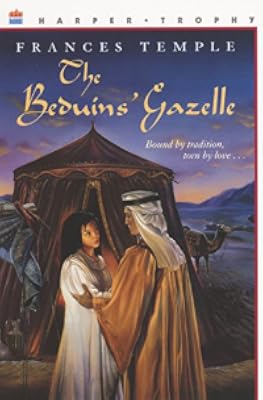
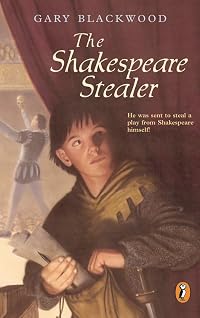
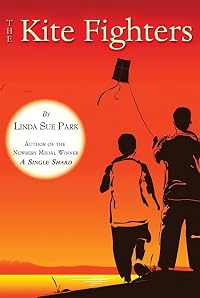
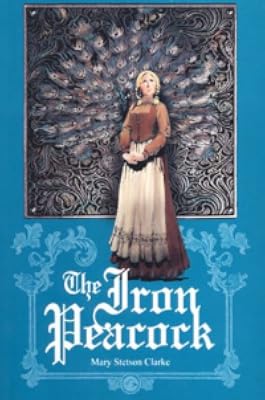

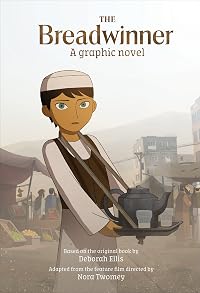

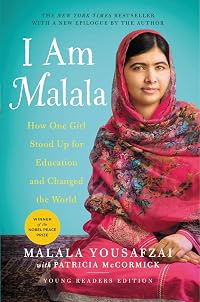

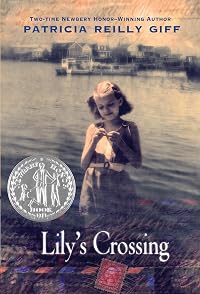



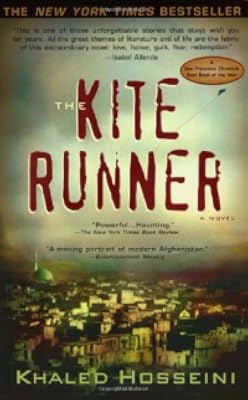
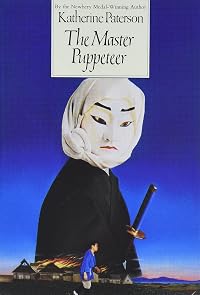
Member Recommendations
Member Reviews
The Breadwinner is a story about family and the lengths that one girl must go to in order for her family to survive. Parvana, who is only eleven, simply wishes things could go back to the way they used to be before the Taliban took over her city of Kabul. Parvana and her family of eight live in a bombed out one-bedroom apartment with hardly any ventilation. They used to have nice things before the bombing took place, but in the destruction they lost everything, and the little they do have must go to the market in order for the family to make money. Parvana’s father is the only male in the household which makes it difficult because women are only allowed outside if they are accompanied by a man. One day Parvana’s father gets taken show more away by the Taliban and the family does not know how they are going to survive with little money and no food. Yet because Parvana is young, the family decides that if she cut her hair no one would know if she was a boy or a girl, so that is exactly what they did. Parvana desperately did not want to cut her hair, but she knew there was no other way her family was going to eat, so she did what she had to do. The story follows Parvana’s days out in the market and all that she encounters as a young boy making a living for her entire family.
I really liked this story because of the overall message, and because it made me wish there was more after I got to the end. Deborah Ellis, the author, did a fantastic job making the reader feel a connection with the characters. For example, I could really feel for Parvana when her sister was telling her just to cut her hair off because she didn’t look much like a girl anyway. When I was younger I cut almost a foot off my hair in order to donate it, but it was still a hard decision to go through because of how much time it took me to grow it out that long, so I could understand her struggle in that moment. I also could not imagine how scary it must have been to go out into a world that was under strict control and work, knowing that at any moment she could have been discovered. Because of this I was fearful for the young Parvana, but I also felt very proud of her that she was able to realize what had to be done and that she did it all for the sake of her family which was a heartwarming point in the story. When I read the very last paragraph of the book I thought to myself, how could this be it? I have to know what happens to her family! Because of the cliff-hanger ending I did not like the book as much, but when I realized that the author had written a second book, it put my mind at ease knowing that I can figure out what happens to Parvana along her journey to find her mother and siblings. I would highly recommend this story, especially to those who would like to learn more about Afghan culture and a different way of life. show less
I really liked this story because of the overall message, and because it made me wish there was more after I got to the end. Deborah Ellis, the author, did a fantastic job making the reader feel a connection with the characters. For example, I could really feel for Parvana when her sister was telling her just to cut her hair off because she didn’t look much like a girl anyway. When I was younger I cut almost a foot off my hair in order to donate it, but it was still a hard decision to go through because of how much time it took me to grow it out that long, so I could understand her struggle in that moment. I also could not imagine how scary it must have been to go out into a world that was under strict control and work, knowing that at any moment she could have been discovered. Because of this I was fearful for the young Parvana, but I also felt very proud of her that she was able to realize what had to be done and that she did it all for the sake of her family which was a heartwarming point in the story. When I read the very last paragraph of the book I thought to myself, how could this be it? I have to know what happens to her family! Because of the cliff-hanger ending I did not like the book as much, but when I realized that the author had written a second book, it put my mind at ease knowing that I can figure out what happens to Parvana along her journey to find her mother and siblings. I would highly recommend this story, especially to those who would like to learn more about Afghan culture and a different way of life. show less
Parvana, an eleven-year-old living in Afghanistan under the Taliban rule, disguises herself as a boy after her father is arrested and her family has no means of support. Set in a time before the first Persian Gulf War, but because the discrimination against woman still is a problem, this book does not seem dated. Despite the fraught situation, every day life still has ordinary problems, and they are reflected in this book. Parvana and her older sister have sibling rivalry issues. She makes a friend in the marketplace. There are small heroes throughout this book, not the least of which is Parvana herself.
I originally read this book as a possibility for inclusion in my lesson plans for the school year when I was teaching and fell in love with it! This story made me see the people of Afghanistan in a completely new light. Having lived through 9/11/2001 and having a parent who spent a lot of time working the pile at ground zero I had a less-than-stellar view of the Afghan people. This book helped me to see past the Taliban and into the fact that there are many Afghanis that had nothing to due with this group of people and were just as victimized by them as we were. I read this book to my students every year that I taught after that because I felt like it was a story that needed to be told.
I highly recommend this book and thank the author show more for bringing a new view point into my life. show less
I highly recommend this book and thank the author show more for bringing a new view point into my life. show less
Deborah Ellis does a magnificent job portraying the lives of women being ruled by the Taliban in this book. I am ashamed to admit that I don’t know a lot about the culture of Afghan or the severe struggles these people endured to survive under Taliban rule. The restrictions on females described in this book prompted me to further research. It is amazing women, and children, could survive this heinous treatment. This book served a reminder of the cocoons we can weave ourselves into as we go about our daily lives, giving no thought to the outside world. The interaction of the female characters in this story made a huge impact on me. When Father is with them, the girls are rude to each other, bantering back and forth about everything. show more Rarely do they have a pleasant exchange. Because of the laws concerning women, even Mother, who in the past was a very active member of society, is stuck in her own little world within her apartment. As the story progresses, the women begin to rely on each other, and also on other females outside the apartment. Finally, the females in the story even begin helping others, seeing needs beyond their own and realizing their own strength and significance.
Library Implications: This book is an excellent addition to any library collection. It gives the reader, young and old alike, a perspective of Afghanistan few can even imagine. The reader is able to experience the plight of women being terrorized by the Taliban but also feel a sense of hope as the events of the story unfold. The student reading this book could further their study of Afghan women by focusing on present-day conditions of life for women. Although graphic in nature, the more mature student could focus their research on Taliban control tactics and battle strategies that have made it difficult for Afghans to survive in that war-ravaged land. show less
Library Implications: This book is an excellent addition to any library collection. It gives the reader, young and old alike, a perspective of Afghanistan few can even imagine. The reader is able to experience the plight of women being terrorized by the Taliban but also feel a sense of hope as the events of the story unfold. The student reading this book could further their study of Afghan women by focusing on present-day conditions of life for women. Although graphic in nature, the more mature student could focus their research on Taliban control tactics and battle strategies that have made it difficult for Afghans to survive in that war-ravaged land. show less
In 1997, Canadian author Deborah Ellis traveled to Pakistan, where she worked in a camp set up for Afghani refugees, interviewing the women she met, and learning about their experiences under the oppressive Taliban regime. The stories she heard on that trip form the basis for her Breadwinner Trilogy, an acclaimed series of children's novels devoted to the experiences of women and girls in Afghanistan. The first of these, The Breadwinner, was published just a few months before the events of September 11, 2001, and takes place (naturally) before the fall of the Taliban.
The story of Parvana, a young girl who must disguise herself as a boy in order to earn a living for her fatherless family, The Breadwinner offers a heartbreaking portrait show more of a society dominated by religious zealots, in which the most basic of human rights - from education and employment, to the simple ability to leave the house - is denied to women and girls. Film-goers might recognize the similarity between Ellis' work and the movie Osama, which also features a young Afghani girl disguised as a boy, and which was released in 2004. Thankfully, the book does not end quite as grimly as the movie, although there is a horrifying sequence of events in which Parvana and her friend Shauzia find themselves digging up bones in the local graveyard, hoping to sell them and earn some money for food... show less
The story of Parvana, a young girl who must disguise herself as a boy in order to earn a living for her fatherless family, The Breadwinner offers a heartbreaking portrait show more of a society dominated by religious zealots, in which the most basic of human rights - from education and employment, to the simple ability to leave the house - is denied to women and girls. Film-goers might recognize the similarity between Ellis' work and the movie Osama, which also features a young Afghani girl disguised as a boy, and which was released in 2004. Thankfully, the book does not end quite as grimly as the movie, although there is a horrifying sequence of events in which Parvana and her friend Shauzia find themselves digging up bones in the local graveyard, hoping to sell them and earn some money for food... show less
I love this book. Although the story is fictitious, it feels very real. Ellis paints a realistic view of a Taliban ruled Afghanistan and its citizens. The main reasons I enjoyed this book so much are: the characters are well written and the story flows well.
I was able to feel the oppression of this war ridden country immediately. By page 8, Ellis tells of Parvana’s fear of the Taliban soldiers. Parvana tries “to make herself look smaller…she had seen what they did, especially to women”. Parvana wanted to make herself invisible, because that’s how the Taliban wants women to be. Parvana, her mother, and sister, although educated females, are forced to keep their heads down and to try to simply stay alive. As an outspoken woman show more myself and the mother of two outspoken daughters, I can only imagine how difficult this had to be , but Ellis paints a very vivid picture of this war torn world under the oppressive Taliban rule.
Ellis develops her characters in a multi-faceted, realistic way. Parvana evolves from a girl who is taught to keep her head down in public to a girl who is the sole support for her family. This was not something that happened overnight but evolved over time. Parvana went from a little girl relieved to not have to go to school to missing school and her friends. She became a girl that dug up graves to support her family and was willing to risk her life to help others in need.
I especially love Mrs. Weera. She is a strong woman fighting for the rights of the Afghan people, especially Afghan women. She steps right into the family and brings a fighting spirit back to the beaten down family after their patriarch was taken away.
The main message of this story is to show the oppression of the Afghan people. It is a story of survival and that we are stronger than we think we are. show less
I was able to feel the oppression of this war ridden country immediately. By page 8, Ellis tells of Parvana’s fear of the Taliban soldiers. Parvana tries “to make herself look smaller…she had seen what they did, especially to women”. Parvana wanted to make herself invisible, because that’s how the Taliban wants women to be. Parvana, her mother, and sister, although educated females, are forced to keep their heads down and to try to simply stay alive. As an outspoken woman show more myself and the mother of two outspoken daughters, I can only imagine how difficult this had to be , but Ellis paints a very vivid picture of this war torn world under the oppressive Taliban rule.
Ellis develops her characters in a multi-faceted, realistic way. Parvana evolves from a girl who is taught to keep her head down in public to a girl who is the sole support for her family. This was not something that happened overnight but evolved over time. Parvana went from a little girl relieved to not have to go to school to missing school and her friends. She became a girl that dug up graves to support her family and was willing to risk her life to help others in need.
I especially love Mrs. Weera. She is a strong woman fighting for the rights of the Afghan people, especially Afghan women. She steps right into the family and brings a fighting spirit back to the beaten down family after their patriarch was taken away.
The main message of this story is to show the oppression of the Afghan people. It is a story of survival and that we are stronger than we think we are. show less
Set in Afghanistan during the peak of the reign of the Taliban - before American and NATO invasion and intervention, this is the story of a young girl, Parvana, who must sacrifice her very identity to be the breadwinner for the family. The world Ellis draws us into is very complete and the drama and conflict the family faces is set up in such a way that what is unbelievable is that Parvana must acquiesce and survive in such a ridiculous world. Set in Kabul during a time of public punishments, military rule, imprisonment without charge or trial, and practically an apartheid against women and girls, the Breadwinner never succumbs to opinions and the brevity of the prose is haunting.
Coming from an educated family, Parvana sees the city of show more Kabul under the Taliban in stark contrast to her dreams of the future and her family's recent past. While her mother and older sister attempt to set up a clandestine school in their small home, Parvana steels through the streets of Kabul brazenly following crowds with wares and snacks for sale when she is not otherwise engaged writing and reading letters for people who cannot read or write.
This is a thoughtful novel with a high degree of accuracy and will leave the reader intensely curious about Parvana, her family, Afghanistan and the children of war - to whom the book is dedicated. The writing is as exceptional as the story, and although the publisher chose a passage for the jacket that is filled with a high degree of tension - pitting the central character against the very face of the war - I would select this passage if trying to entice someone to read the book:
"...Mother and Nooria had to wear burquas whenever they went outside, and they couldn't carry a pail of water up those uneven broken stairs if they were wearing burquas. Plus, it was dangerous for women to go outside without a man.
Parvana knew she had to fetch the water because there was nobody else in the family who could do it. Sometimes this made her resentful. Sometimes it made her proud. One thing she knew - it didn't matter how she felt. Good mood or bad, the water had to be fetched, and she had to fetch it." show less
Coming from an educated family, Parvana sees the city of show more Kabul under the Taliban in stark contrast to her dreams of the future and her family's recent past. While her mother and older sister attempt to set up a clandestine school in their small home, Parvana steels through the streets of Kabul brazenly following crowds with wares and snacks for sale when she is not otherwise engaged writing and reading letters for people who cannot read or write.
This is a thoughtful novel with a high degree of accuracy and will leave the reader intensely curious about Parvana, her family, Afghanistan and the children of war - to whom the book is dedicated. The writing is as exceptional as the story, and although the publisher chose a passage for the jacket that is filled with a high degree of tension - pitting the central character against the very face of the war - I would select this passage if trying to entice someone to read the book:
"...Mother and Nooria had to wear burquas whenever they went outside, and they couldn't carry a pail of water up those uneven broken stairs if they were wearing burquas. Plus, it was dangerous for women to go outside without a man.
Parvana knew she had to fetch the water because there was nobody else in the family who could do it. Sometimes this made her resentful. Sometimes it made her proud. One thing she knew - it didn't matter how she felt. Good mood or bad, the water had to be fetched, and she had to fetch it." show less
Members
- Recently Added By
Published Reviews
Parvana es una chica de once años que vive con su familia en Kabul, la capital de Afganistán, durante la época del gobierno talibán. Cuando su padre es detenido, su familia -sin recursos para poder vivir-, buscará una solución desesperada: Parvana, que por ser mujer tiene prohibido ganar dinero, deberá transformarse en un chico y trabajar. Primero, leyendo la correspondencia en el show more mercado a la gente que es analfabeta y, poco después, vendiendo también tabaco con otra chica disfrazada. Mientras, su familia marcha a Mazar a casar a la hija mayor. Pero la ciudad, que estaba en manos de los rebeldes, es tomada por los talibanes, quedando atrapados allí. El padre de Parvana sale de la cárcel y ambos emprenden viaje para reunirse con ellas. show less
added by Pakoniet
Lists

A Child's Book Tour of Afghanistan
13 works; 2 members

Sonlight Books
1,487 works; 25 members

Geek Dad Read to Your Kids Additions List
66 works; 4 members

CBC's 100 Young Adult Books
100 works; 4 members

CBC's Great Canadian Reading List
149 works; 5 members

KayStJ's to-read list
1,616 works; 11 members

Asiatic Settings
21 works; 1 member

Childhood: Books for or about children in different cultures around the wor
345 works; 17 members

The Story of the World: Activity Book Four: The Modern Age
333 works; 2 members
Author Information

49+ Works 8,336 Members
Deborah Ellis is an anti-war and women's rights activist who works as a mental health counsellor at Margaret Frazer House in Toronto.
Some Editions
Awards and Honors
Awards
Notable Lists
Series

Belongs to Publisher Series
Work Relationships
Is contained in
Has the adaptation
Has as a teacher's guide
Common Knowledge
- Canonical title
- The Breadwinner
- Original title
- The Breadwinner
- Original publication date
- 2000
- People/Characters
- Parvana; Nuria; Talib
- Important places
- Afghanistan
- Related movies
- The Breadwinner (2017 | IMDb)
- Dedication
- To the children of war
- First words
- "I can read that letter as well as Father can," Parvana whispered into the folds of her chador.
- Last words
- (Click to show. Warning: May contain spoilers.)Through the dusty front windshield she could see Mount Parvana, the snow on its peak sparkling in the sun.
Classifications
Statistics
- Members
- 3,433
- Popularity
- 4,858
- Reviews
- 110
- Rating
- (3.97)
- Languages
- 12 — Catalan, Chinese, Dutch, English, French, German, Greek, Italian, Norwegian (Bokmål), Portuguese, Spanish, Swedish
- Media
- Paper, Audiobook, Ebook
- ISBNs
- 97
- ASINs
- 14