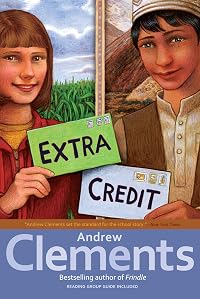
Extra Credit
by Andrew Clements
On This Page
Description
As letters flow back and forth--between the prairies of Illinois and the mountains of Afghanistan, across cultural and religious divides--sixth-grader Abby, ten-year-old Amira, and eleven-year-old Sadeed begin to speak and listen to each other.Tags
Recommendations














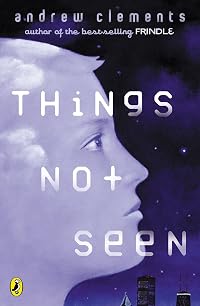

Member Recommendations
Member Reviews
It isn't that Abby Carson can't do her schoolwork. She just doesn't like doing it. And consequently, Abby will have to repeat sixth grade--unless she meets some specific conditions, including taking on an extra credit project: find a pen pal in a distant country.
But when Abby's first letter arrives at a small school in Afghanistan, complications arise. The elders agree that any letters going back to America must be written well, but the only qualified English-speaking student is a boy. And in this village, it's not proper for a boy to correspond with a girl. So, Sadeed's sister will dictate and sign the letters for him. But what about the villagers who believe that girls should not be anywhere near a school? And what about those who show more believe that any contact with Americans is... unhealthy?
As letters flow back and forth--between the prairies of Illinois and the mountains of central Asia, across cultural and religious divides, through the minefields of different lifestyles and traditions--a small group of children begin to speak and listen to each other. And in just a few short weeks, they make important discoveries about their communities, about their world, and most of all, about themselves. show less
But when Abby's first letter arrives at a small school in Afghanistan, complications arise. The elders agree that any letters going back to America must be written well, but the only qualified English-speaking student is a boy. And in this village, it's not proper for a boy to correspond with a girl. So, Sadeed's sister will dictate and sign the letters for him. But what about the villagers who believe that girls should not be anywhere near a school? And what about those who show more believe that any contact with Americans is... unhealthy?
As letters flow back and forth--between the prairies of Illinois and the mountains of central Asia, across cultural and religious divides, through the minefields of different lifestyles and traditions--a small group of children begin to speak and listen to each other. And in just a few short weeks, they make important discoveries about their communities, about their world, and most of all, about themselves. show less
Oops I read this in one day and was sad when it ended. I thought I have another couple of chapters but when she said the farms and green fields were beautiful and I turned the page, it was all over. Great book, especially where 2 parts of the world are compared and contrasted.
It isn’t that Abby Carson can’t do her schoolwork. She just doesn’t like doing it. And in February a warning letter arrives at her home. Abby will have to repeat sixth grade—unless she meets some specific conditions, including taking on an extra credit project: find a pen pal in a distant country. Seems simple enough.
But when Abby's first letter arrives at a small school in Afghanistan, the teacher takes it to the village elders. And everyone agrees that show more any letters going back to America must be written well in English. And the only qualified student is a boy, Sadeed Bayat. Except in this village, it is not proper for a boy to correspond with a girl. So Sadeed’s younger sister will write the letters. Except she knows hardly any English. So Sadeed must write the letters. But what about the villagers who believe that girls should not be anywhere near a school? And what about those who believe that any contact with Americans is . . . unhealthy?
As letters flow back and forth—between the prairies of Illinois and the mountains of central Asia, across cultural and religious divides, through the minefields of different lifestyles and traditions—a small group of children begin to speak and listen to each other. And in just a few short weeks, they make important discoveries about their communities, about their world, and most of all, about themselves. show less
It isn’t that Abby Carson can’t do her schoolwork. She just doesn’t like doing it. And in February a warning letter arrives at her home. Abby will have to repeat sixth grade—unless she meets some specific conditions, including taking on an extra credit project: find a pen pal in a distant country. Seems simple enough.
But when Abby's first letter arrives at a small school in Afghanistan, the teacher takes it to the village elders. And everyone agrees that show more any letters going back to America must be written well in English. And the only qualified student is a boy, Sadeed Bayat. Except in this village, it is not proper for a boy to correspond with a girl. So Sadeed’s younger sister will write the letters. Except she knows hardly any English. So Sadeed must write the letters. But what about the villagers who believe that girls should not be anywhere near a school? And what about those who believe that any contact with Americans is . . . unhealthy?
As letters flow back and forth—between the prairies of Illinois and the mountains of central Asia, across cultural and religious divides, through the minefields of different lifestyles and traditions—a small group of children begin to speak and listen to each other. And in just a few short weeks, they make important discoveries about their communities, about their world, and most of all, about themselves. show less
When Abby finds out the she is in danger of being held back in sixth grade, she knows she can fix it. She can do the work, she just doesn't like to do the work. So she begs her teachers to tell her what she needs to do to save herself. They decide that along with doing all of her regular homework and getting good grades on all quizzes and tests, she must also complete an extra credit assignment. The assignment is that she has to write to a pen pal in another part of the world. Her teacher has contacts in 3 different countries and Abby can choose which one. After looking at the globe, Abby picks the school in Afghanistan because they have mountains. Abby is obsessed with the idea of mountain climbing, maybe because her home in Illinois show more is so flat.
She writes to the school and it immediately causes concern at that school in Afghanistan. They want to look good in this letter back to America. They want their students to seem bright and capable. Their brightest student is a boy named Sadeed, but it isn't proper for a boy and girl to write to one another. The school decides that Sadeed's little sister Amira will be her pen pal....but Sadeed will make sure she uses proper English words and does a good job. When it becomes too hard for Amira, Sadeed takes over and begins writing to Abby.
They both learn about the world and the ways of the world by learning about each other and also seeing the reactions it causes in both countries. This is another fantastic book from Clements who has a way of writing that causes me to fall in love with all of his characters, or at least makes me believe they are real. show less
She writes to the school and it immediately causes concern at that school in Afghanistan. They want to look good in this letter back to America. They want their students to seem bright and capable. Their brightest student is a boy named Sadeed, but it isn't proper for a boy and girl to write to one another. The school decides that Sadeed's little sister Amira will be her pen pal....but Sadeed will make sure she uses proper English words and does a good job. When it becomes too hard for Amira, Sadeed takes over and begins writing to Abby.
They both learn about the world and the ways of the world by learning about each other and also seeing the reactions it causes in both countries. This is another fantastic book from Clements who has a way of writing that causes me to fall in love with all of his characters, or at least makes me believe they are real. show less
I’ve loved Andrew Clements’ books for children for years, but still haven’t read even all the books I have had the opportunity to read yet. Eventually, I’d love to read all—or almost all—of his works, but that’s not a likelihood anytime soon. Extra Credit was one of the books I hadn’t read yet, and I’m thrilled I finally got the chance to read it—this is a unique story!
I’m not sure I’ve read a book by Clements with characters outside the US before, so that element was a lot of fun. Plus, getting to see how letter writing—or communicating cross-culturally in general—can change us was especially interesting.
I didn’t connect with any of the characters particularly well, but comparing and contrasting two show more completely different cultures was fascinating. I loved watching Sadeed grow as a character, though, as he tried to navigate the dos and don’ts in his life and figure out what was best for him to do. And getting to see America through his eyes—and the eyes of people around him—was also interesting.
If you’re looking for a book to help stretch your horizons just a little more, or perhaps to help your children get to know what life is like for other children around the world, this book could be great for you. I loved the letter writing that went on in this story, and with the bonus of getting to see a little village life in rural Afghanistan, this book has become one of my favorite Clements stories (at least temporarily!). show less
I’m not sure I’ve read a book by Clements with characters outside the US before, so that element was a lot of fun. Plus, getting to see how letter writing—or communicating cross-culturally in general—can change us was especially interesting.
I didn’t connect with any of the characters particularly well, but comparing and contrasting two show more completely different cultures was fascinating. I loved watching Sadeed grow as a character, though, as he tried to navigate the dos and don’ts in his life and figure out what was best for him to do. And getting to see America through his eyes—and the eyes of people around him—was also interesting.
If you’re looking for a book to help stretch your horizons just a little more, or perhaps to help your children get to know what life is like for other children around the world, this book could be great for you. I loved the letter writing that went on in this story, and with the bonus of getting to see a little village life in rural Afghanistan, this book has become one of my favorite Clements stories (at least temporarily!). show less
I was interested to read this book, because it is my impression that there are not enough books that seek to educate young readers about the current contention between the US and Afghanistan. At first I was very disappointed with the pace of this book - it felt extremely slow. Even when I was almost halfway through I felt that the plot dragged and the voice was very slow. However, once Sadeed wrote his own letter to Abby, things started picking up and I got much more interested. I loved the symbolism of the mountain rock and the little pile of dirt taking on new meaning after traveling across the world. The imagery was very powerful. I thought the author portrayed the racism and hatred that can exist in both cultures very well and show more painted both episodes in a way that was simple and easy for young readers to understand while still showing them how detrimental it is. I think this book would be a great resource for teaching students not only about the relationship between the US and Afghanistan, but for teaching acceptance and respect for other cultures. The best thing about this book is that it shows intolerance on both sides of the world and how sad this intolerance makes both Abby and Sadeed. Seeing intolerance through these two different lenses makes this book much more meaningful and valuable as a teaching tool. show less
Narrated by Gabra Zackman. Abby is in danger of having to repeat the 6th grade but an extra-credit project can help her meet the requirements for advancement. Her project is to begin a penpal correspondence with a student in Afghanistan. Sadeed is tapped by his teacher to be that correspondent but village leaders rule that, for propriety's sake, Sadeed's sister Amira must write the letters and Sadeed can help with the English. Still, Abby and Sadeed manage to find a kindred spirit in each other, before the correspondence is abruptly cut short by the village leaders. I liked the idea of young people from very different places finding a common ground, and particularly involving a country so often in the news today.
Retelling: Abby, an adventurous girl whose greatest passion was the climbing wall in gym class, was faced with the possibility that she would have to repeat sixth grade if she did not receive a B or higher on every test and quiz until the end of the year and complete an extra credit pen-pal project. What began as reluctant compliance turned into an adventure as Abby connected with a pair of siblings, Amira and Sadeed, from Afghanistan.
In Afghanistan, the pen-pal project was controversial. First, it was considered improper for boy students to correspond with girl students so Sadeed had to pretend that his sister, Amira, had written the letters. Her English was not strong enough yet. Second, there was fighting with America in other show more parts of the country and some people had strong feelings against American influence.
In the United States, Abby became inspired by Sadeed's grasp of the English language and his strong writing skills. She became aware of the controversies her project incited when Sadeed wrote to her in secret, using his own signature. After a few exchanges, a strange man intercepted him on his way to the post office and threatened Sadeed with violence. His teacher and the town leaders made him cut off the correspondence with Abby, writing one last letter to explain the circumstances.
Thoughts and Feelings: I could identify with Abby and Sadeed's excitement each time they got a letter. I remember completing a pen-pal project with a school in Mexico in the fifth grade. When the letter arrived from my "Mexican friend," I was ecstatic! I read her letter over and over again and shared it with anyone who would listen.
I like how the author chose to make the correspondence between waring nations. Abby and Sadeed's innocent, curious messages about favorite past-times and landscapes, contrasted sharply with the attitudes of their respective nations toward one another. show less
In Afghanistan, the pen-pal project was controversial. First, it was considered improper for boy students to correspond with girl students so Sadeed had to pretend that his sister, Amira, had written the letters. Her English was not strong enough yet. Second, there was fighting with America in other show more parts of the country and some people had strong feelings against American influence.
In the United States, Abby became inspired by Sadeed's grasp of the English language and his strong writing skills. She became aware of the controversies her project incited when Sadeed wrote to her in secret, using his own signature. After a few exchanges, a strange man intercepted him on his way to the post office and threatened Sadeed with violence. His teacher and the town leaders made him cut off the correspondence with Abby, writing one last letter to explain the circumstances.
Thoughts and Feelings: I could identify with Abby and Sadeed's excitement each time they got a letter. I remember completing a pen-pal project with a school in Mexico in the fifth grade. When the letter arrived from my "Mexican friend," I was ecstatic! I read her letter over and over again and shared it with anyone who would listen.
I like how the author chose to make the correspondence between waring nations. Abby and Sadeed's innocent, curious messages about favorite past-times and landscapes, contrasted sharply with the attitudes of their respective nations toward one another. show less
Members
- Recently Added By
Lists

Children and YA books involving school
58 works; 2 members
Author Information

116 Works 61,192 Members
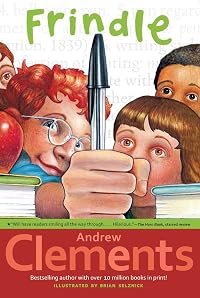
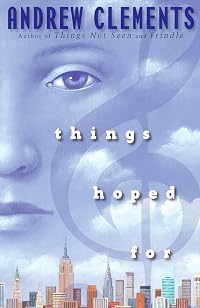
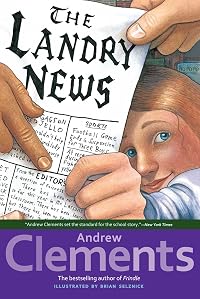
Andrew Clements was born in Camden, New Jersey on May 7, 1949. He received a bachelor's degree in literature from Northwestern University and master's degree in teaching from National Louis University. Before becoming a full-time author, he taught in the public schools north of Chicago for seven years, was a singer-songwriter, and worked in show more publishing. He is well known for his picture book texts, but it was his middle school novel, Frindle, that was a breakthrough for his writing career. Frindle won numerous awards including the Georgia Children's Book Award, the Sasquatch Children's Book Award, the Massachusetts Children's Book Award, the Rhode Island Children's Book Award, and the Year 2000 Young Hoosier Book Award. His other works include The Landry News, The Janitor's Boy, No Talking, Things Not Seen, Things Hoped For, and Things That Are. (Bowker Author Biography) show less
Awards and Honors
Awards
Notable Lists
Work Relationships
Common Knowledge
- Canonical title
- Extra Credit
- Original publication date
- 2009-06-23
- People/Characters
- Abby Carson; Sadeed Bayat
- Dedication
- For Rick Richter
- First words
- Sadeed knew he wasn't supposed to be listening to the men talking in the next room.
Classifications
Statistics
- Members
- 1,724
- Popularity
- 12,870
- Reviews
- 62
- Rating
- (3.85)
- Languages
- English
- Media
- Paper, Audiobook, Ebook
- ISBNs
- 20
- ASINs
- 6