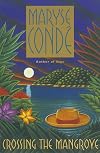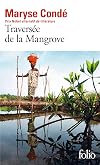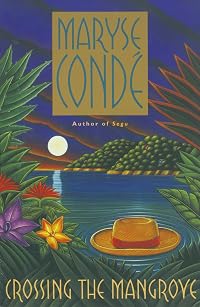
Crossing the Mangrove
by Maryse Condé
On This Page
Description
In Guadeloupe, a man is found dead in the village of Riviere au Sel. He was Francis Sancher, a handsome individual, liked by some and reviled by others. The villagers come to pay their last respects and in speech or in internal monologue reveal their relationship to him. They include the postman who was his friend, the man who hated his guts and the woman who wishes she could burn on his pyre. By the author of Segu.Tags
Recommendations































Member Recommendations

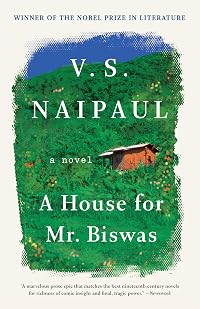
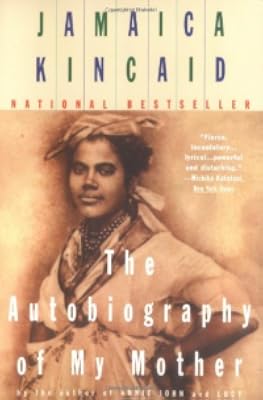
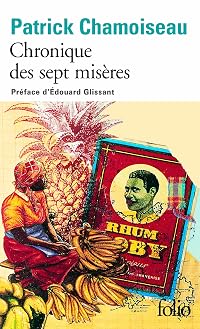
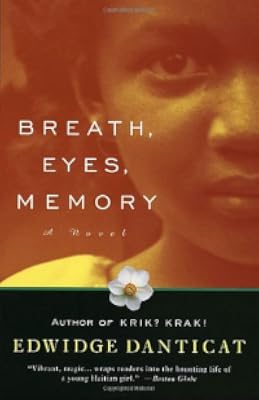
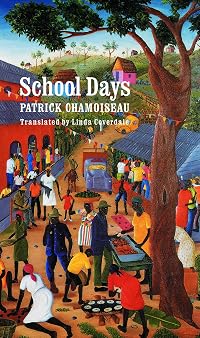
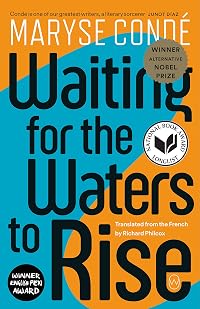
GlebtheDancer Similar jaunty writing style, unusual twist on a whodunnit structure, issues of Creole identity, caribbean setting

TheLittlePhrase a crime story from the perspective of multiple witnesses
Member Reviews
Do we really know who our neighbors are, who our friends are, what thoughts they keep to themselves, not to be shared with even their own family members?
Francis Sancher is found dead in the mud along the path to Riviere au Sel, but the story isn't about how he died or even if someone had killed him. His wake, attended by everyone in the village, both those who detested the man and the few who liked him, is the event during which each person is lost in his or her own thoughts, analyzing the decisions they made, significant events in their lives and how they met Francis.
Through the internal monologues, we're given a glimpse into the nature of Francis, a man who was complex, verbose, and yet secretive. In each of the internal monologues, show more there is a thread of sadness, some thicker than others, telling of dreams that have been set aside, hope that has been lost, children who are unloved and passions left unanswered.
All the personal stories are beautifully nuanced. They highlight the caste system that existed in Guadaloupe based on the color of one's skin and provide a richly detailed cultural journey into this part of the world. show less
Francis Sancher is found dead in the mud along the path to Riviere au Sel, but the story isn't about how he died or even if someone had killed him. His wake, attended by everyone in the village, both those who detested the man and the few who liked him, is the event during which each person is lost in his or her own thoughts, analyzing the decisions they made, significant events in their lives and how they met Francis.
Through the internal monologues, we're given a glimpse into the nature of Francis, a man who was complex, verbose, and yet secretive. In each of the internal monologues, show more there is a thread of sadness, some thicker than others, telling of dreams that have been set aside, hope that has been lost, children who are unloved and passions left unanswered.
All the personal stories are beautifully nuanced. They highlight the caste system that existed in Guadaloupe based on the color of one's skin and provide a richly detailed cultural journey into this part of the world. show less
Traversée de la mangrove borrows the classic literary conceit of the "mysterious stranger": an outsider arrives in a small, closed community and inadvertently releases all the tensions that have been smouldering in the place. In this case, it's a village called Rivière au Sel, hidden in dense forests on the slopes of Guadeloupe's volcano, La Grande Soufrière, and the story opens with the unexplained death of Francis Sancher, who had come to live in the village a few years earlier, no-one being quite sure where from. During an overnight wake, a succession of local people reflect on Sancher and the way he has affected their lives, and in the process tell us a great deal about how life in the village works, and how it is affected by show more class, gender and ethnicity.
Of course, Condé doesn't leave this literary convention in its standard form: she makes it clear that we are in the 1980s, and the village, remote as it is, does not exist in isolation. Everyone there has connections to the outside that define their lives in some way. They have come from somewhere else, they have been away to work or study and returned, they have close family in metropolitan France or abroad, they do business with the outside world, they have brought in a partner from elsewhere, etc. There is no such thing as an isolated village, and possibly there never was.
The portraits of the villagers don't in the end tell us a great deal about Sancher: we get a lot of snippets about him, but they don't add up to a simple closed narrative about him. It is the villagers themselves who turn out to be at the centre, and Condé has a lot of fun telling us about them in a whole series of different styles, sometimes funny, sometimes very moving, but always packed with fascinating detail. Towards the end, we get a chapter about the local intellectual, a young man (inevitably!) called Lucien, in which Condé neatly demolishes most of our preconceptions about "the Caribbean novel" and manages to poke fun at quite a few well-known figures, including herself. show less
Of course, Condé doesn't leave this literary convention in its standard form: she makes it clear that we are in the 1980s, and the village, remote as it is, does not exist in isolation. Everyone there has connections to the outside that define their lives in some way. They have come from somewhere else, they have been away to work or study and returned, they have close family in metropolitan France or abroad, they do business with the outside world, they have brought in a partner from elsewhere, etc. There is no such thing as an isolated village, and possibly there never was.
The portraits of the villagers don't in the end tell us a great deal about Sancher: we get a lot of snippets about him, but they don't add up to a simple closed narrative about him. It is the villagers themselves who turn out to be at the centre, and Condé has a lot of fun telling us about them in a whole series of different styles, sometimes funny, sometimes very moving, but always packed with fascinating detail. Towards the end, we get a chapter about the local intellectual, a young man (inevitably!) called Lucien, in which Condé neatly demolishes most of our preconceptions about "the Caribbean novel" and manages to poke fun at quite a few well-known figures, including herself. show less
It starts with a death; the mysterious stranger who came to the little Guadeloupan town years earlier is found dead, the entire town comes to his wake - his enemies, his mistresses, his friends - and all have their own image of him. It's not miles from Mahfouz's Akhenaten: Dweller in Truth in that way; the truth about a man nobody really knew is different for everyone. The question who killed him soon becomes so irrelevant that I find myself realising after I've put the book down that I forgot about looking for clues to his death, instead looking for clues to his life.
Of course, it's not about him, it's about the society he winds up in. Condé's sketch of Guadeloupe here won't win her any points with the tourist board, but it's show more beautifully complex, mixing the lingering effects of centuries of colonialism - both physical and mental, geographical and internal; the need to not be the one who gets dominated, whether on account of your skin or your gender, even if it means letting yourself be dominated in a manner of your own choosing. Etc. Condé switches POV and narration with every chapter, from the poetic to the harsh, and every time we see a new side of the supposed protagonist it seems to contradict the last one. She gives a multitude of voices to people who are (by others) supposed to be uniform, either in their négritude or their own disdain for it. One of those novels I find myself admiring more than I love it - it probably deserves a higher rating, but something about it frustrates me; I want to know more, I want to see more, I want those half-spoken things explored rather than swirled into a mystery that doesn't unpack itself. Maybe I should pick up Segu. show less
Of course, it's not about him, it's about the society he winds up in. Condé's sketch of Guadeloupe here won't win her any points with the tourist board, but it's show more beautifully complex, mixing the lingering effects of centuries of colonialism - both physical and mental, geographical and internal; the need to not be the one who gets dominated, whether on account of your skin or your gender, even if it means letting yourself be dominated in a manner of your own choosing. Etc. Condé switches POV and narration with every chapter, from the poetic to the harsh, and every time we see a new side of the supposed protagonist it seems to contradict the last one. She gives a multitude of voices to people who are (by others) supposed to be uniform, either in their négritude or their own disdain for it. One of those novels I find myself admiring more than I love it - it probably deserves a higher rating, but something about it frustrates me; I want to know more, I want to see more, I want those half-spoken things explored rather than swirled into a mystery that doesn't unpack itself. Maybe I should pick up Segu. show less
This is a story told with simple language, unrestrained emotion and a complex narrative structure, all based around the mutual cruelty and interdependence in a small island community. The mystery in the story and the metaphor of the tangled mangrove swamp work in thematic ways that reach far beyond the particulars of the book.
Condé, van wie ik Ségou zo'n 20 jaar geleden heb gelezen, bracht in 1995 Tocht door de mangrove uit, dat een kaleidoscoop geeft van de ervaringen van bij de dodenwake voor Francis Sancher samengetrokken inwoners van Rivière au Sel op Guadeloupe. Sancher heeft een spookhuis geërfd dat, evenals zijn persoonlijkheid, aantrekkelijke en duistere kanten heeft. Menig dorpsbewoner is verleid, zwanger gemaakt, of heeft andere ervaringen door Sancher. Condé loopt hen als een soort ronde langs de rouwenden langs en beschrijft vol details en verfe het leven op het kleurrijke Guadeloupe. De invloeden van het hindoestaanse India, het christelijke Europa, de inheemse spiritistische bevolking, de verschuivingen van een Franse kolonie naar meer show more vrijheden, de geschiedenis van Cuba en de andere Antillen op de achtergrond, de Caribische sfeer is voelbaar aanwezig in deze roman. Zoals ze op p.180 laat vertellen: "Door de mangrove kun je geen tocht maken. Je blijft haken aan de scherpe mangrovewortels. Je zakt weg in de brakke modder." Die kracht lijkt ook van Rivière au Sel en Francis Sancher uit te gaan. show less
Mar 15, 2009Dutch
1
Denna roman fick mycket ros när den var nyöversatt. Och kanske med rätta. Men jag tycker den är ganska tråkig faktiskt.
Eftersom den är upplagd så att varje kapitel är en människas livsberättelse får man sig till livs många porträtt. Men ingen fördjupad historia. Och det saknas tycker jag. Som den nu är blir det mer som en novellsamling, med ett samlande tema (som ibland känns pliktskyldigt inslängt i slutet på en levnadshistoria). Visst lärde jag mig om Guadeloupe, det var bra, men jag ville ha en bättre berättelse.
Eftersom den är upplagd så att varje kapitel är en människas livsberättelse får man sig till livs många porträtt. Men ingen fördjupad historia. Och det saknas tycker jag. Som den nu är blir det mer som en novellsamling, med ett samlande tema (som ibland känns pliktskyldigt inslängt i slutet på en levnadshistoria). Visst lärde jag mig om Guadeloupe, det var bra, men jag ville ha en bättre berättelse.
May 25, 2009Swedish
Members
- Recently Added By
Published Reviews
ThingScore 75
[...] a story of life in all its flavours.
added by Nevov
Lists

Books Read in 2016
4,666 works; 199 members

Reading LIst
648 works; 1 member
Author Information

54+ Works 3,932 Members
Some Editions
Series
Belongs to Publisher Series
Rainbow pocketboeken (183)
Gallimard, Folio (2411)
Common Knowledge
- Canonical title*
- Unter den Mangroven
- Original title
- Traversée de la Mangrove
- Original publication date
- 1989
- Important places
- Guadeloupe, France
- First words*
- -Hjärtat stannade inte!
- Last words*
- (Click to show. Warning: May contain spoilers.)Dinah skakade av sig tröttheten, och när hon såg den raka, vackra och bara vägen av sitt liv framför sig öppnade hon psalmboken och alla besvarade hennes smärta.
- Original language
- French
*Some information comes from Common Knowledge in other languages. Click "Edit" for more information.
Classifications
Statistics
- Members
- 336
- Popularity
- 94,838
- Reviews
- 8
- Rating
- (3.67)
- Languages
- 8 — Catalan, Dutch, English, Estonian, French, German, Spanish, Swedish
- Media
- Paper, Audiobook, Ebook
- ISBNs
- 19
- ASINs
- 7