The House of Hunger
by Dambudzo Marechera
On This Page
Description
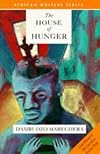
Winner of the Guardian Fiction Prize, 1979 and first published in 1978, The House of Hunger is a selection of interconnected short stories that tell of Zimbabwe in chaos. In a style somewhat reminiscent of Joyce's Dubliners, the stories deal with psychological and social alienation. Dambudzo Marechera's work is not material typically associated with African literature. His stories are psychologically, rather than politically, motivated as his depictions of living in exile and outsiderhood show.Tags
Recommendations
















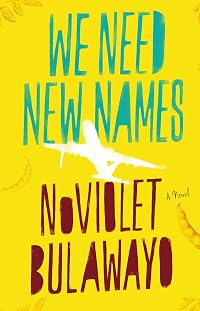

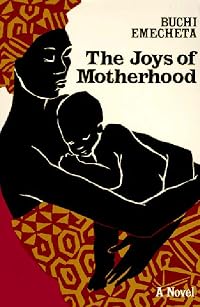
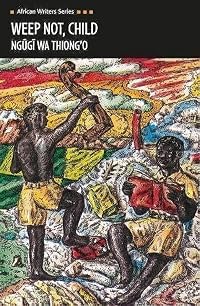











Member Recommendations

Member Reviews
My first impression of the story was: "nobody hates Black women as much as Black men." There is a lot of abuse described in detail. But reading a bit more, it became clear that the abuse of women was part of a large spiral of abuse and destruction.
My second impression was that it reminded me of Salinger's Catcher in the Rye with it's loathing of everything.
It is well written which makes it all the more terrible.
Read at your own discretion but check in with your own mental state before diving into this one.
Side note: the story is set in Zimbabwe around the time of it's struggle for independence.
My second impression was that it reminded me of Salinger's Catcher in the Rye with it's loathing of everything.
It is well written which makes it all the more terrible.
Read at your own discretion but check in with your own mental state before diving into this one.
Side note: the story is set in Zimbabwe around the time of it's struggle for independence.
Ratings
Members
- Recently Added By
Author Information

9+ Works 407 Members
The writings of this precocious but short-lived literary talent from Zimbabwe have been described as "the work of a tortured genius." His work reflects a passionate concern for Zimbabwe and Africa in general, and brilliantly combines elements of realism and fantasy. His writing is very introspective, with a keen interest in exploring the inner show more workings of his protagonists. He does not romanticize the African past nor glorify the African personality. Yet, while his work does not seem preoccupied with inequities in African society, it does display a deep disillusionment and cynicism. An element of resignation reveals, on closer examination, an attempt to hide the sensitivity of his characters, whose behavior can be seen as a defense mechanism against the chaos, senselessness, and brutality of life. Marechera's first published work, "The House of Hunger" (1979), received the 1979 Guardian Prize for Fiction, while his posthumously published collection of writings, "The Black Insider and Other Fragments," was selected for honorable mention by the 1991 Noma Award Committee. In addition to "The House of Hunger," Marechera also published "Black Sunlight" before his untimely death in 1987. (Bowker Author Biography) show less
Awards and Honors
Series
Belongs to Publisher Series
Common Knowledge
Classifications
Statistics
- Members
- 230
- Popularity
- 142,376
- Reviews
- 1
- Rating
- (3.73)
- Languages
- 6 — Dutch, English, French, German, Spanish, Swedish
- Media
- Paper, Ebook
- ISBNs
- 15
- ASINs
- 1