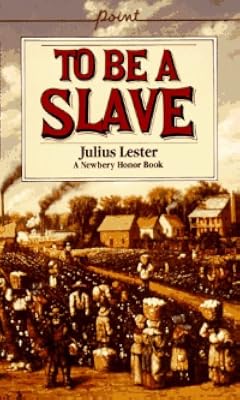
To Be a Slave
by Julius Lester
On This Page
Description
A compilation, selected from various sources and arranged chronologically, of the reminiscences of slaves and ex-slaves about their experiences from the leaving of Africa through the Civil War and into the early twentieth century.Tags
Recommendations




Member Recommendations
jacqueline065 If your enjoyed the poignant narrative of Frederick Douglass, you will be moved by the perserved accounts of slave life in this book.
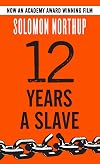
muumi Julius Lester quotes from Solomon Northup's book at least once in almost every chapter. To Be a Slave is a Newbery winner, intended for younger readers; readers who appreciate Twelve Years a Slave will find much food for thought in To Be a Slave, and I recommend Twelve Years for adults and teens who want to read further after finishing To Be a Slave.
Member Reviews
I can't believe this book was published in 1968, won the Newbery in 1969, and none of my teachers in grade 7 and 8 recommended it. It could be such a foundational book for a young teenager. We needed this book.
It's a moving account of slavery collected from the words of people who lived it. The oral histories recorded by the Federal Writers' Project in the 1930s include stories that go back to people who remembered life in Africa before they were kidnapped and sold, usually at secondhand but still incredibly vivid. So To Be a Slave is not just history, it's a collection of primary documents. Young people in school could gain an introduction to historiography.
Julius Lester closes with a chapter on life after Emancipation. It didn't get show more better, for many if not most African Americans. That really drives home how much needed to be done in desegregation and civil rights activism in the 1960s and how much is left to be done today. show less
It's a moving account of slavery collected from the words of people who lived it. The oral histories recorded by the Federal Writers' Project in the 1930s include stories that go back to people who remembered life in Africa before they were kidnapped and sold, usually at secondhand but still incredibly vivid. So To Be a Slave is not just history, it's a collection of primary documents. Young people in school could gain an introduction to historiography.
Julius Lester closes with a chapter on life after Emancipation. It didn't get show more better, for many if not most African Americans. That really drives home how much needed to be done in desegregation and civil rights activism in the 1960s and how much is left to be done today. show less
To be a slave. To be owned by another person, as a car, house, or a table is owned. To live as a piece of property that could be sold...
This book is about how it felt. The words of black men and women who had themselves been slaves are here, accompanied by Julius Lester's historical commentary and Tom Feelings's powerful and muted paintings.
Lester spent long weeks researching documents in the Library of Congress, assimilating first-person accounts of runaway slaves, former slaves and descendents of slaves in order to reconstruct a shameless timeline of slavery in America. Each quotation is followed by a literary acknowledgment of one of his three main sources. Interspersed among the abundant personal recollections by long-desceased show more informants, the author adds his own historical introspection and insight in italics.
"To Be A Slave" is such a powerful read. This book will give the reader a first hand experience of what it was like to be a slave. What makes this book so good is that it's the words of the slave. It's their stories and their words. The reader will learn how they were beaten and how their families were split up...sometimes for life.
Presented in chronological order, this book is a veritable patchwork quilt of memories and excruciating experiences -- a wholesale attempt to brainwash an entire race into calm acceptance of belief in racial inferiority and a mindset of docile, servile obedience. These testimonies include some that are humorous or poignant, as well as painfully disgusting. Bravo to the slaves who secretly refused to accept white man's judgment regarding their ability and innate humanity. Adopting various methods of resistance -- both subtle and openly defiant -- these proud people transmitted their memories of living free in story telling format, passing down their African traditions to generations who were born into America's most shameful institution.
Book Details:
Title To Be A Slave
Author Julius Lester
Reviewed By Purplycookie show less
This book is about how it felt. The words of black men and women who had themselves been slaves are here, accompanied by Julius Lester's historical commentary and Tom Feelings's powerful and muted paintings.
Lester spent long weeks researching documents in the Library of Congress, assimilating first-person accounts of runaway slaves, former slaves and descendents of slaves in order to reconstruct a shameless timeline of slavery in America. Each quotation is followed by a literary acknowledgment of one of his three main sources. Interspersed among the abundant personal recollections by long-desceased show more informants, the author adds his own historical introspection and insight in italics.
"To Be A Slave" is such a powerful read. This book will give the reader a first hand experience of what it was like to be a slave. What makes this book so good is that it's the words of the slave. It's their stories and their words. The reader will learn how they were beaten and how their families were split up...sometimes for life.
Presented in chronological order, this book is a veritable patchwork quilt of memories and excruciating experiences -- a wholesale attempt to brainwash an entire race into calm acceptance of belief in racial inferiority and a mindset of docile, servile obedience. These testimonies include some that are humorous or poignant, as well as painfully disgusting. Bravo to the slaves who secretly refused to accept white man's judgment regarding their ability and innate humanity. Adopting various methods of resistance -- both subtle and openly defiant -- these proud people transmitted their memories of living free in story telling format, passing down their African traditions to generations who were born into America's most shameful institution.
Book Details:
Title To Be A Slave
Author Julius Lester
Reviewed By Purplycookie show less
Interesting, informative and very sad. Where Booker T. Washington had a hopeful outlook for the future, this author seems mired in the bitterness of the past, and who can blame him? Washington was a part of slavery and overcame it, Lester is writing in the 1960's, some of the most trying modern times for race relations.
Lester has edited together many interviews of those who lived through slavery. He inserts much of his voice into the book, telling us how to interpret what we read and how to feel about it. I don't know, but I suspect he was very selective over which stories to include, ending with a bitter hopeless rant. To what end? I understand the desperation, but I continue to have hope. A fool's hope maybe, but it is mine.
Lester has edited together many interviews of those who lived through slavery. He inserts much of his voice into the book, telling us how to interpret what we read and how to feel about it. I don't know, but I suspect he was very selective over which stories to include, ending with a bitter hopeless rant. To what end? I understand the desperation, but I continue to have hope. A fool's hope maybe, but it is mine.
If you are looking for primary sources on slavery, look no further. Author Julius Lester provides context for what is basically a compilation of quotations by and about slaves. Some of these are incredibly harsh, with explicit language intact. In the introduction, Lester makes an argument that younger children can handle this harsh reality and that it does in fact make them into more compassionate people who will value truth over lies. This may be too much for children under the age of 12, but it's an indispensable resource for exposing young adults to the realities of this country's past.
By chance, I read this right before the movie "Twelve Years a Slave" is due out and so I noticed that book heavily quotes Solomon Northup, on whose show more autobiography the movie is based. show less
By chance, I read this right before the movie "Twelve Years a Slave" is due out and so I noticed that book heavily quotes Solomon Northup, on whose show more autobiography the movie is based. show less
Read for the Newbery Club in Children's Books: https://www.goodreads.com/topic/show/21440520-the-newbery-honor-books-from-1969-...
Short book, but lots in it. Too much to read in one sitting... I keep getting up and doing something else, processing.
One thing I was never taught was about the different ways that the Negro people resisted slavery. Lester gives us two chapters on it. Very enlightening.
And then there's the last chapter, about the times after Emancipation, when it was/is still really tough to be Black in a White-dominated society.
Art, introduction, and bibliography also make this a special book. It really should be more widely read. And if it makes a child uncomfortable, well, just imagine the difference between just reading show more about it, and actually living it. Recommended for ages 8-108.
Available free to read on openlibrary.org show less
Short book, but lots in it. Too much to read in one sitting... I keep getting up and doing something else, processing.
One thing I was never taught was about the different ways that the Negro people resisted slavery. Lester gives us two chapters on it. Very enlightening.
And then there's the last chapter, about the times after Emancipation, when it was/is still really tough to be Black in a White-dominated society.
Art, introduction, and bibliography also make this a special book. It really should be more widely read. And if it makes a child uncomfortable, well, just imagine the difference between just reading show more about it, and actually living it. Recommended for ages 8-108.
Available free to read on openlibrary.org show less
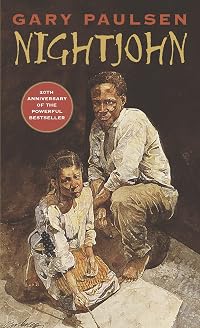
Very good compilation of memories of actual slaves, StoryCorp style organized with Lester's own skilled narration. Much of it was not new to me, but would be to an audience of 7th-12th grade students. It's like Roots for people who can't handle Roots (me). It didn't make me sick or cry like Paulsen's Night John or Roots, but I did learn about the actual origins of American slavery a bit better. The first few chapters and the last chapter had the newest information (for me). There was a bit of baby murder to traumatize and upset, but no rape/breeding in this collection (why, I don't know). In all, I think it's appropriate for middle school.
Julius Lester's compilation of slave narratives tell the story of slavery from capture, to the auction block, to life on the plantation, slave resistance in its many forms, and life after emancipation. Lester's narration is as powerful as the first person narratives he selected to share. The words are haunting. The history is important. The book it timeless.
Members
- Recently Added By
Lists

Best Newbery Honor Books
257 works; 32 members

United States Slave Narratives
28 works; 1 member

Newbery Honor Books By Year - I - 1922-1980
199 works; 3 members

Books Read in 2024
4,727 works; 128 members

Best Sellers / Popular 1968
237 works; 5 members
Author Information

56+ Works 11,069 Members
Julius Bernard Lester was born in St. Louis, Missouri on January 27, 1939. He received a bachelor's degree in English from Fisk University in 1960. He moved to New York to become a folk singer. He performed on the coffeehouse circuit as a singer and guitarist. He released two albums entitled Julius Lester in 1965 and Departures in 1967. His first show more published book, The Folksinger's Guide to the 12-String Guitar as Played by Leadbelly written with Pete Seeger, was published in 1965. In the 1960s, Lester was closely involved as a writer and photographer with the Student Nonviolent Coordinating Committee. He traveled to the South to document the civil rights movement and to North Vietnam to photograph the effects of American bombardment. He also hosted radio and television talk shows in New York City. He wrote more than four dozen nonfiction and fiction books for adults and children. His books for adults included Look Out, Whitey!: Black Power's Gon' Get Your Mama, Revolutionary Notes, All Is Well, Lovesong: Becoming a Jew, and The Autobiography of God. His children's books included To Be a Slave, Sam and the Tigers, and Day of Tears: A Novel in Dialogue, which won the American Library Association's Coretta Scott King Award in 2006. He also wrote reviews and essays for numerous publications including The New York Times Book Review, The Boston Globe, The Village Voice, Dissent, The New Republic, and the Los Angeles Times Book Review. After teaching for two years at the New School for Social Research in New York, Lester joined the faculty of the University of Massachusetts, Amherst in 1971. He originally taught in the Afro-American studies department, but transferred to the Judaic and Near Eastern studies department when Lester criticized the novelist James Baldwin for what he felt were anti-Semitic remarks. He died from complications of chronic obstructive pulmonary disease on January 18, 2018 at the age of 78. (Bowker Author Biography) show less
All Editions
Awards and Honors
Awards
Series
Belongs to Publisher Series
Common Knowledge
- Canonical title
- To Be a Slave
- Original publication date
- 1968
- Dedication
- The ancedtry of any black American can be traced to a bill of sale and no further. In many instances even that cannot be done. Such is true of part of my family. This book is dedicated to the memory of my great-grandparent... (show all)s: Elvira Smith, Maggie Carson, Slaves in Arkansas, and Square and Angeline Lester, Austin and Sylvia Jones, Slaves in Mississippi, and to those whose names are now unknown. I never knew them, but I am proud to be one of their descendants. I hope that I may be worthy of them, their strength, and their courage.
- First words
- It was the late forties.
- Last words
- (Click to show. Warning: May contain spoilers.)No matter where you are from I don't want you to write my story, 'cause the white folks have been and are now and always will be against the Negro.
Classifications
- Genre
- Nonfiction
- DDC/MDS
- 306.3620973 — Society, government, & culture Social sciences, sociology & anthropology Social Behavior - Dating, Marriage, Divorce Economic institutions Systems of labor Slavery Biography And History Biography And History North America United States
- LCC
- E444 .L47 — History of the United States United States Revolution to the Civil War, 1775/1783-1861 Slavery in the United States. Antislavery
- BISAC
Statistics
- Members
- 1,876
- Popularity
- 11,503
- Reviews
- 17
- Rating
- (4.00)
- Languages
- Dutch, English, Swedish
- Media
- Paper, Audiobook, Ebook
- ISBNs
- 35
- ASINs
- 15