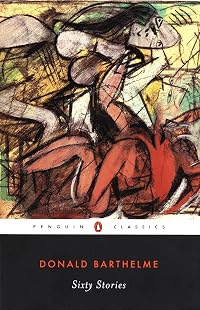
Sixty Stories
by Donald Barthelme
On This Page
Description
Presents a collection of sixty short stories by twentieth-century American author Donald Barthelme.Tags
Recommendations
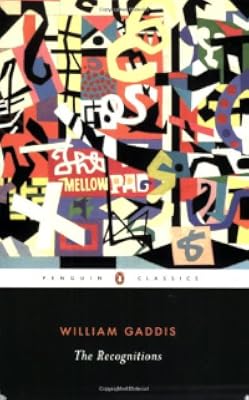
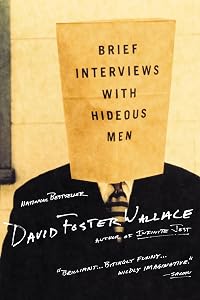
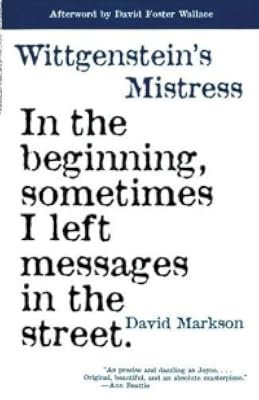

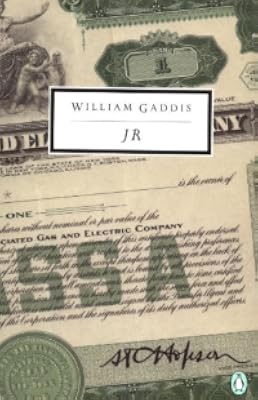




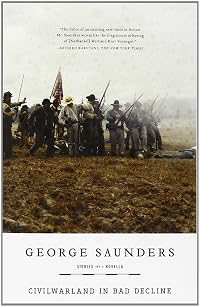
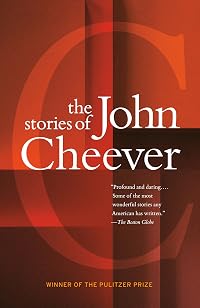
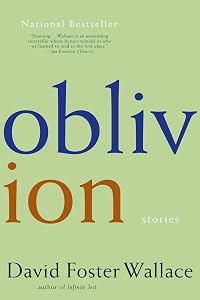
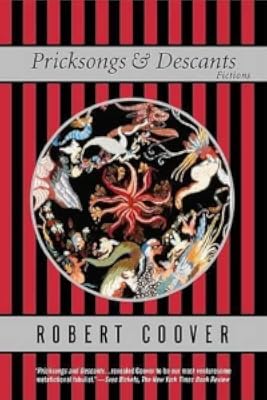














Member Recommendations

Member Reviews
I have never read such a collection of sublime, incomprehensible, subtle, perplexing, satisfying, confusing, stunning, hard, exciting, tantalizing, wonderful, stymieing, infuriating, [insert your own adjective] stories in my life. (Can you tell I’m not entirely sure what I just went through, but I’m glad I went there?) Moving from one story to the next, I was never quite sure what I was going to get into. However, no matter what I might have thought of any one story, each held adequate evidence of skill and genius at work.
Some of these stories are (as I’ve already stated) incomprehensible. I just don’t get them. I don’t understand entirely what is trying to be achieved. Yet, even those I found enjoyable. Other stories tickled show more the edge of my brain. I am not sure I understood them – understood what Barthelme was trying to get at – but it felt like I was close.
And then there are the sublime. Just about the time I thought I might want to give up, I would come across another story that left me breathless, that made me just set the book aside for a moment and utter (and I literally did this after one story while on a plane flight) “Wow”. Stories like “The Balloon” in which a portion of New York finds itself under a balloon that is spreading/growing across the city – a message that one person is trying to send to another. Stories like “Robert Kennedy Saved from Drowning” in which snippets of K’s life are told in ways that twist the reader’s understanding of who K is. Stories like “The Dolt” in which a writer is taking an exam to be able to be considered a writer, coming close to success, but not quite getting there. Stories like “The Phantom of the Opera’s Friend” in which we get a slightly skewed impression of who the Phantom of the Opera is/was. Stories like “The King of Jazz” which is a deceptively simple telling of two jazz greats determining who is actually the king. Stories like “The Emerald” (oh my gosh, “The Emerald”, what a story) in which a woman gives birth to an emerald which all people want for their own nefarious reasons.
Sixty stories, and these are just a few that will take your breath away. These short descriptions (obviously) do not do them justice, but I hope they give you a small taste of the strangeness. You will have to dive in yourself to determine what a great swim it is.
So, in spite of not quite knowing where some of these stories go, each had enough to draw me into the next. And if it weren’t for the incomprehensibility of some of the stories, it would be a perfect collection. But, even with this, it is a collection well worth exploring. show less
Some of these stories are (as I’ve already stated) incomprehensible. I just don’t get them. I don’t understand entirely what is trying to be achieved. Yet, even those I found enjoyable. Other stories tickled show more the edge of my brain. I am not sure I understood them – understood what Barthelme was trying to get at – but it felt like I was close.
And then there are the sublime. Just about the time I thought I might want to give up, I would come across another story that left me breathless, that made me just set the book aside for a moment and utter (and I literally did this after one story while on a plane flight) “Wow”. Stories like “The Balloon” in which a portion of New York finds itself under a balloon that is spreading/growing across the city – a message that one person is trying to send to another. Stories like “Robert Kennedy Saved from Drowning” in which snippets of K’s life are told in ways that twist the reader’s understanding of who K is. Stories like “The Dolt” in which a writer is taking an exam to be able to be considered a writer, coming close to success, but not quite getting there. Stories like “The Phantom of the Opera’s Friend” in which we get a slightly skewed impression of who the Phantom of the Opera is/was. Stories like “The King of Jazz” which is a deceptively simple telling of two jazz greats determining who is actually the king. Stories like “The Emerald” (oh my gosh, “The Emerald”, what a story) in which a woman gives birth to an emerald which all people want for their own nefarious reasons.
Sixty stories, and these are just a few that will take your breath away. These short descriptions (obviously) do not do them justice, but I hope they give you a small taste of the strangeness. You will have to dive in yourself to determine what a great swim it is.
So, in spite of not quite knowing where some of these stories go, each had enough to draw me into the next. And if it weren’t for the incomprehensibility of some of the stories, it would be a perfect collection. But, even with this, it is a collection well worth exploring. show less
Barthelme first came on my radar when he was mentioned several times by my favorite musician, John Linnell of They Might Be Giants, as being a favorite writer/influence on his own work. I've since learned that he mostly grew up in and worked in many different capacities in my hometown of Houston, and interesting people with Houston connections always make me excited! I can genuinely say that his stories are utterly unlike anything else I've ever read, sometimes in a way that was a bit overwhelming to parse (I actually worked my way through this book over a period of about half a year, because it was easier to manage in shorter chunks). But that very uniqueness also made it compelling, and again something that caught my attention as a show more writer. And I can definitely see why John Linnell, who's got a very unusual creative voice himself, considers him an influence! show less
I wanted to review this book by writing one sentence about each short story (60 sentences in all), but I have to confess this: I wasn't sure what some of the stories were even about. I am glad I found other "I'm so confused" reviews. It's nice to know I wasn't the only one lost from time to time. I'm like the sober party-goer who doesn't get the drunk joke that everyone else is cracking up about. Even the writing structure was strange. Sometimes a story wouldn't have paragraphs. Other times the story was without punctuation. Or. Or! Or, something like this - the word butter written 97 times. Most of the time it was people acting oddly like writing letters to their lover's therapist or living in the church of their denomination or show more killing 6,000 dogs after buying Galveston, Texas. Some stories were profound especially when they centered on the human condition. Others were just plain strange and I couldn't wrap my brain around his motive or meaning.
Lines I liked but didn't understand, "But stealing books is metaphysically different from stealing like money" (p 13), "Strangling the moon is wrong" (p 99), and "The bad zombies banged the Bishop's car with a dead cow, at night" (p 351). show less
Lines I liked but didn't understand, "But stealing books is metaphysically different from stealing like money" (p 13), "Strangling the moon is wrong" (p 99), and "The bad zombies banged the Bishop's car with a dead cow, at night" (p 351). show less
Barthelme isn’t a short story writer. He’s a drug. Writing a bizarre,
twisted brew of post-modernism and satire, Barthelme touched parts of
the human experience that most people didn’t even know existed. With
most of his collections long out of print, “60 Stories” (along with its
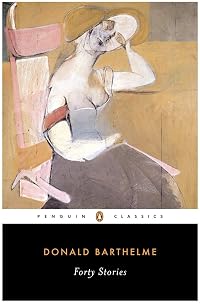
companion piece, “40 Stories”) is the best available introduction to
Barthelme’s work. Classics such as “The Balloon” (in which a giant
balloon is inflated over New York City and everyone has their own
interpretation of its significance), “Me and Mrs. Mandible” (in which a
middle-aged man inexplicably finds himself back in elementary school)
and the dark humor of “The School” make this an invaluable piece of the
American literary canon. show more Brilliant and so good it hurts.
(This review originally appeared on zombieunderground.net) show less
twisted brew of post-modernism and satire, Barthelme touched parts of
the human experience that most people didn’t even know existed. With
most of his collections long out of print, “60 Stories” (along with its
companion piece, “40 Stories”) is the best available introduction to
Barthelme’s work. Classics such as “The Balloon” (in which a giant
balloon is inflated over New York City and everyone has their own
interpretation of its significance), “Me and Mrs. Mandible” (in which a
middle-aged man inexplicably finds himself back in elementary school)
and the dark humor of “The School” make this an invaluable piece of the
American literary canon. show more Brilliant and so good it hurts.
(This review originally appeared on zombieunderground.net) show less
Dazzling collection of postmodern blisters and blasters, usually as short as three, four or five pages but some as long as twelve pages, stories written in dialogue or lists or letters or narrative, covering topics from highbrow culture to the lowbrow scuzzy, from the everyday to the sensational and historic, an innovative collection from one of the most perceptive wordsmiths ever to put pen to paper or fingers to typewriter. Many are the stories I found wickedly astute, including these two:
REPORT
Antiwar: The narrator is sent by an antiwar group from New York to Cleveland to persuade hundreds of engineers “not to do what they are going to do.” This 1968 Barthelme flash fiction was written at the peak of the U.S. war in Vietnam. A show more fiercely anti-U.S., anti-Vietnam War story, but not once is Vietnam mentioned. Similar to Samuel Beckett’s Waiting for Godot (Donald Barthelme much admired Beckett), time-bound specific symbols and specific references are absent.
Cartoon Atmosphere: The Cleveland meeting of engineers takes place at a motel, very appropriate since the whole phenomenon of motels, those small, cheap, tacky roadside hotels with a swimming pool out back, were also at their peak in the late 1960s. Hundreds of engineers attend the meeting and as soon as our narrator walks in, he beholds chaos: not only are the engineers making calculations and taking measurements, they are drinking beer, throwing breads and hurling glasses into the fireplace. On top of this, he also sees most of those hundreds of engineers have their arms, legs or other body parts in plaster casts due to various kinds of multiple fractures. This bit of absurdity is truly cartoonish, and to top it off, the narrator tells us the engineers are friendly.
Friendly, Friendly: Of course those beer drinking, bread throwing engineers are friendly - friendly on the surface, that is, since their jolly laughter and all those jovial smiles are effective ways to maintain a lighthearted, uncritical attitude toward the destructive, tragic power and death-dealing consequences of their calculations and measurements.
Love and Information: Yes, yes, yes . . . the narrator tells us directly how the engineers are also full of love and information. As, for instance, when the chief engineer, standing among beer bottles and microphone cable, invites him to eat some of their chicken dinner and asks what they, the engineers, can do for him, their “distinguished guest.” A true stroke of irony bordering on sarcasm: to call such an outsider “distinguished guest,” an outsider who could quite possibly pose a threat to their developing and utilizing invented technologies to win the war.
The Irony Thickens; The Sarcasm Thickens: When the narrator states his line is software and how he wants to know what they are doing, the chief engineer begins his reply: “Ask us anything about our thing, which seems to be working. We will open our hearts and heads to you, Software Man, because we want to be understood and loved by the great lay public, and have our marvels appreciated by that public, for which we daily unsung produce tons of new marvels each more life-enhancing than the last.” Although the engineers are creating military weapons and chemicals to be used in war, the chief engineer refers to their creations as “life-enhancing.” Yet again another Donald Barthelme tale where language is distorted and twisted by the power people in order to maintain and expand their power.
A Sucker is Born Every Day: The Software Man states his concerns; the head engineer bombards him with a thick fog of words, including making a personal accusation of Software Man’s hatred and jealousy (ah, when it doubt, attack the person not the argument!). The fog of words is so thick he gets Software Man to leave with a smile on his face. Back among his antiwar group, the narrator stresses the friendliness of the engineers and how everything is all right, how “We have a moral sense." and “We are not going to do it.” Oh, my - not only swallowing the head engineer’s lies but taking on the identity of the entire room of friendly, beer drinking warmongers. Talk about gullible!
THE INDIAN UPRISING
One of the most popular Donald Barthelme’s stories. Here are a number of themes I see contained in its mere seven pages:
America, land of genocide
Why are Indians attacking an American city in the 20th century? Why are the narrator’s people defending the city? Is this a mental defending of past history, a defending or justifying the genocide of the Native Americans in previous centuries? Back in high school history class during the late 1960s, the time this story was written, there wasn’t too much said about the brutal treatment of Native Americans and the destruction of their populations and cultures. Ironically, my high school mascot was and still is “The Indians.”
America the superficial
“There were earthworks along the Boulevard Mark Clark and the hedges had been laced with sparkling wire.” Nice contrast, Donald: the Indians and their primitive crafts (earthworks) on one side and the barbed wire (sparkling wire) on the other. Donald Barthelme doesn’t miss an opportunity to make his story’s details, telling details – case in point, barbed wire played a pivotal role in transforming the open land west of the Mississippi River into domesticated ranchland. Meanwhile, the narrator, let’s call him Bob, asks his girlfriend Silvia if this is a good life. She tell him “No.” Are the apples, books and long-playing records laid out on a table (perhaps symbols of American, the land of plenty), Bob’s idea of a good life, even if his city is under attack? If so, Bob’s idea of the good life sounds rather superficial.
America the hyper-violent
Bob and others torture a Comanche but Bob doesn’t give this cruel act any more emotional weight than if he and a couple men were cleaning up a grimy picnic table. I don’t know about you, but such insensitivity and sadism sends shivers up my spine. In the late 1960s, the time when this story was first published, photographs of Americans torturing Vietnamese first began appearing fairly regularly in magazines and newspapers. Additionally, I recall how during the late 1960s , Saturday morning cartoons switched from funny to hyper-violent, which caused outrage among some to ask: “Are we becoming a country of extreme violence and nothing but extreme violence?”
America, land of postmodern leveling
Bob asks Silvia if she is familiar with the classical composer Gabriel Fauré. This question quickly shifts to Bob’s reflections on the details of a smut scene and then to the tables he made for four different women. This mental jumping from the beautiful to the repugnant, from people to objects, treating everything, irrespective of content, with the same emotional neutrality sounds like a grotesque form of postmodern leveling. Personally, this is one big reason have always refused to watch commercial television: the non-stop switching from one image to the next, from tragedy on the nightly news to selling candy bars to the latest insurance deal I find unsettling in the extreme.
America, land of the racist
Bob tells us: “Red men in waves like people, scattering in a square startled by something tragic or a sudden, loud noise accumulated against the barricade we had made of window dummies, silk, thoughtfully planned job descriptions (including scales for the orderly progress of other colors), wine in demijohns, and robes.” Red men in waves like people? They are people! Stupid to the core, Bob blithely dehumanizes others by his racism and barely realizes he is doing so. Donald Barthelme wrote this with a light touch, but I couldn’t imagine an author damning his own society and culture with more vitriol and scorn. John Gardner wrote how Barthelme lacked a moral sense. What the hell were you thinking, John?!
America, the land of hard drugs
To combat the uprising, Bob notes: “We sent more heroin into the ghetto.” And the emphasis is on “more” since it is well documented how the U.S. government permitted and even encouraged the influx of hard drugs into poor black neighborhoods. Ironically, the outrage over the widespread use of hard drugs began once drug usage and addiction entered the fabric of middle class suburbia. I don’t think I’m alone in detecting a direct link between the use of drugs -- hard drugs, prescription drugs, recreational drugs - and the emotional numbness people have to the ocean of detritus overwhelming their lives.
America, the land of booze and passion
Bob actively participates in more extreme torture. Doesn’t bother Bob in the least. Bob simply gets more and more drunk and falls more and more in love. Even when he hears children have been killed in masses, Bob barely reacts. Have some more booze, Bob, as that will solve all your problems. All this Bob stuff occurring in a world where, “The officer commanding the garbage dump reported by radio that the garbage had begun to move.” Also, “Strings of language extend in every direction to bind the world into a rushing, ribald whole.” Have another drink, Bob, and convince yourself you are falling more and more in love. show less
Dazzling collection of postmodern blisters and blasters, usually as short as three, four or five pages but some as long as twelve pages, stories written in dialogue or lists or letters or narrative, covering topics from highbrow culture to the lowbrow scuzzy, from the everyday to the sensational and historic, an innovative collection from one of the most perceptive wordsmiths ever to put pen to paper or fingers to typewriter. Many are the stories I found wickedly astute, including these two:
REPORT
Antiwar: The narrator is sent by an antiwar group from New York to Cleveland to persuade hundreds of engineers “not to do what they are going to do.” This 1968 Barthelme flash fiction was written at the peak of the U.S. war in Vietnam. A show more fiercely anti-U.S., anti-Vietnam War story, but not once is Vietnam mentioned. Similar to Samuel Beckett’s Waiting for Godot (Donald Barthelme much admired Beckett), time-bound specific symbols and specific references are absent.
Cartoon Atmosphere: The Cleveland meeting of engineers takes place at a motel, very appropriate since the whole phenomenon of motels, those small, cheap, tacky roadside hotels with a swimming pool out back, were also at their peak in the late 1960s. Hundreds of engineers attend the meeting and as soon as our narrator walks in, he beholds chaos: not only are the engineers making calculations and taking measurements, they are drinking beer, throwing breads and hurling glasses into the fireplace. On top of this, he also sees most of those hundreds of engineers have their arms, legs or other body parts in plaster casts due to various kinds of multiple fractures. This bit of absurdity is truly cartoonish, and to top it off, the narrator tells us the engineers are friendly.
Friendly, Friendly: Of course those beer drinking, bread throwing engineers are friendly - friendly on the surface, that is, since their jolly laughter and all those jovial smiles are effective ways to maintain a lighthearted, uncritical attitude toward the destructive, tragic power and death-dealing consequences of their calculations and measurements.
Love and Information: Yes, yes, yes . . . the narrator tells us directly how the engineers are also full of love and information. As, for instance, when the chief engineer, standing among beer bottles and microphone cable, invites him to eat some of their chicken dinner and asks what they, the engineers, can do for him, their “distinguished guest.” A true stroke of irony bordering on sarcasm: to call such an outsider “distinguished guest,” an outsider who could quite possibly pose a threat to their developing and utilizing invented technologies to win the war.
The Irony Thickens; The Sarcasm Thickens: When the narrator states his line is software and how he wants to know what they are doing, the chief engineer begins his reply: “Ask us anything about our thing, which seems to be working. We will open our hearts and heads to you, Software Man, because we want to be understood and loved by the great lay public, and have our marvels appreciated by that public, for which we daily unsung produce tons of new marvels each more life-enhancing than the last.” Although the engineers are creating military weapons and chemicals to be used in war, the chief engineer refers to their creations as “life-enhancing.” Yet again another Donald Barthelme tale where language is distorted and twisted by the power people in order to maintain and expand their power.
A Sucker is Born Every Day: The Software Man states his concerns; the head engineer bombards him with a thick fog of words, including making a personal accusation of Software Man’s hatred and jealousy (ah, when it doubt, attack the person not the argument!). The fog of words is so thick he gets Software Man to leave with a smile on his face. Back among his antiwar group, the narrator stresses the friendliness of the engineers and how everything is all right, how “We have a moral sense." and “We are not going to do it.” Oh, my - not only swallowing the head engineer’s lies but taking on the identity of the entire room of friendly, beer drinking warmongers. Talk about gullible!
THE INDIAN UPRISING
One of the most popular Donald Barthelme’s stories. Here are a number of themes I see contained in its mere seven pages:
America, land of genocide
Why are Indians attacking an American city in the 20th century? Why are the narrator’s people defending the city? Is this a mental defending of past history, a defending or justifying the genocide of the Native Americans in previous centuries? Back in high school history class during the late 1960s, the time this story was written, there wasn’t too much said about the brutal treatment of Native Americans and the destruction of their populations and cultures. Ironically, my high school mascot was and still is “The Indians.”
America the superficial
“There were earthworks along the Boulevard Mark Clark and the hedges had been laced with sparkling wire.” Nice contrast, Donald: the Indians and their primitive crafts (earthworks) on one side and the barbed wire (sparkling wire) on the other. Donald Barthelme doesn’t miss an opportunity to make his story’s details, telling details – case in point, barbed wire played a pivotal role in transforming the open land west of the Mississippi River into domesticated ranchland. Meanwhile, the narrator, let’s call him Bob, asks his girlfriend Silvia if this is a good life. She tell him “No.” Are the apples, books and long-playing records laid out on a table (perhaps symbols of American, the land of plenty), Bob’s idea of a good life, even if his city is under attack? If so, Bob’s idea of the good life sounds rather superficial.
America the hyper-violent
Bob and others torture a Comanche but Bob doesn’t give this cruel act any more emotional weight than if he and a couple men were cleaning up a grimy picnic table. I don’t know about you, but such insensitivity and sadism sends shivers up my spine. In the late 1960s, the time when this story was first published, photographs of Americans torturing Vietnamese first began appearing fairly regularly in magazines and newspapers. Additionally, I recall how during the late 1960s , Saturday morning cartoons switched from funny to hyper-violent, which caused outrage among some to ask: “Are we becoming a country of extreme violence and nothing but extreme violence?”
America, land of postmodern leveling
Bob asks Silvia if she is familiar with the classical composer Gabriel Fauré. This question quickly shifts to Bob’s reflections on the details of a smut scene and then to the tables he made for four different women. This mental jumping from the beautiful to the repugnant, from people to objects, treating everything, irrespective of content, with the same emotional neutrality sounds like a grotesque form of postmodern leveling. Personally, this is one big reason have always refused to watch commercial television: the non-stop switching from one image to the next, from tragedy on the nightly news to selling candy bars to the latest insurance deal I find unsettling in the extreme.
America, land of the racist
Bob tells us: “Red men in waves like people, scattering in a square startled by something tragic or a sudden, loud noise accumulated against the barricade we had made of window dummies, silk, thoughtfully planned job descriptions (including scales for the orderly progress of other colors), wine in demijohns, and robes.” Red men in waves like people? They are people! Stupid to the core, Bob blithely dehumanizes others by his racism and barely realizes he is doing so. Donald Barthelme wrote this with a light touch, but I couldn’t imagine an author damning his own society and culture with more vitriol and scorn. John Gardner wrote how Barthelme lacked a moral sense. What the hell were you thinking, John?!
America, the land of hard drugs
To combat the uprising, Bob notes: “We sent more heroin into the ghetto.” And the emphasis is on “more” since it is well documented how the U.S. government permitted and even encouraged the influx of hard drugs into poor black neighborhoods. Ironically, the outrage over the widespread use of hard drugs began once drug usage and addiction entered the fabric of middle class suburbia. I don’t think I’m alone in detecting a direct link between the use of drugs -- hard drugs, prescription drugs, recreational drugs - and the emotional numbness people have to the ocean of detritus overwhelming their lives.
America, the land of booze and passion
Bob actively participates in more extreme torture. Doesn’t bother Bob in the least. Bob simply gets more and more drunk and falls more and more in love. Even when he hears children have been killed in masses, Bob barely reacts. Have some more booze, Bob, as that will solve all your problems. All this Bob stuff occurring in a world where, “The officer commanding the garbage dump reported by radio that the garbage had begun to move.” Also, “Strings of language extend in every direction to bind the world into a rushing, ribald whole.” Have another drink, Bob, and convince yourself you are falling more and more in love. show less
I feel incredibly lucky to have found two such amazing writers within the span of a few months: George Saunders and now Donald Barthelme. Barthelme is an American Borges with a wry sense of humor and his stories are fantastic.
Members
- Recently Added By
Lists

Larry McCaffery's 20th Century Greatest Hits: 100 English-Language Books
103 works; 12 members

Favorite Short Fiction
228 works; 99 members

Significant works of postmodern fiction
86 works; 25 members

Pen/Faulkner Winners and Finalists
178 works; 9 members

McMurtry's Texas Literature
27 works; 1 member

Michael Dirda's 100 Best Comic Novels
100 works; 1 member
Author Information

68+ Works 7,810 Members
Donald Barthelme was born on April 7, 1931, and was one of the major U.S. short story writers and novelists of the late twentieth century. Barthelme satirized American life. Born in Philadelphia, Barthelme spent part of his early life in Houston, Texas, and began to write fiction while working as a journalist, director of an art museum and show more university publicist. These occupations became fuel for his creative fire. His arsenal of techniques included parodies of television shows, radio plays and recipes, long and elaborate metaphors, complex dream sequences, and a break-neck narrative pace. After the publication of his first collection, Come Back Dr. Caligari (1964), Barthelme became a full-time writer of short stories and novels. The latter included Snow White (1967), The Dead Father (1975), and Paradise (1986). Barthelme also published three more short story collections, 60 Stories (1981), Overnight to Many Distant Cities (1983), and 40 Stories (1987). Barthelme died of cancer in 1989. (Bowker Author Biography) show less
Some Editions
Awards and Honors
Awards
Series
Belongs to Publisher Series
Work Relationships
Contains
Common Knowledge
- Canonical title
- Sixty Stories
- Alternate titles
- 60 Stories
- Original publication date
- 1981
Classifications
Statistics
- Members
- 1,806
- Popularity
- 12,139
- Reviews
- 16
- Rating
- (4.13)
- Languages
- English, Portuguese
- Media
- Paper, Audiobook
- ISBNs
- 13
- ASINs
- 8