
The Culture of Fear: Why Americans Are Afraid of the Wrong Things
by Barry Glassner
On This Page
Description
Revised for the first time in ten years, an update of the classic book, with new material on the administration of George W. Bush and the use of fear in the war on terror.Tags
Recommendations

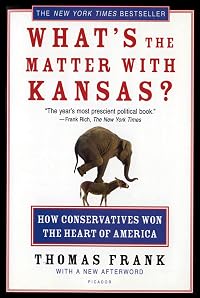
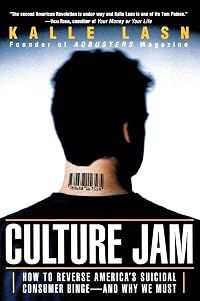
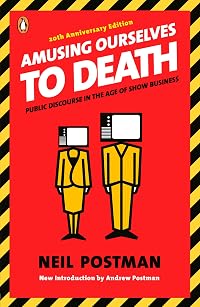
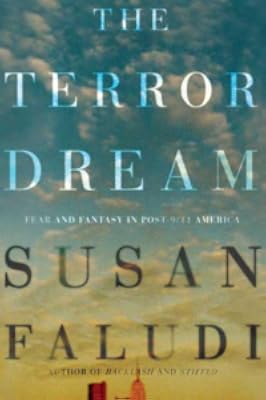
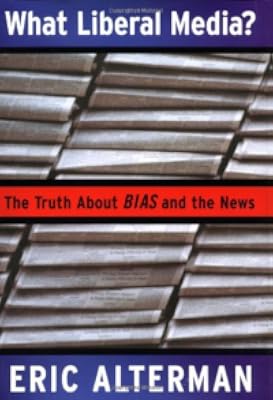

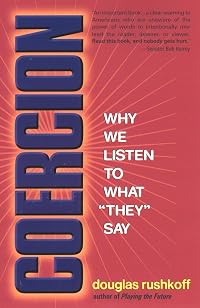

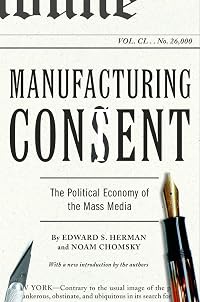
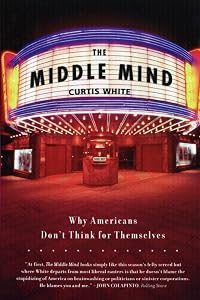

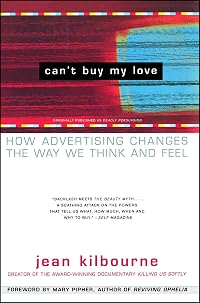
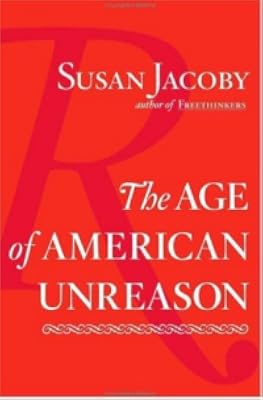
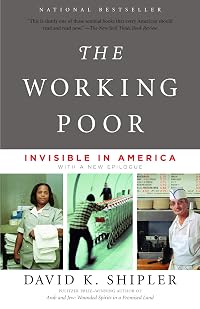

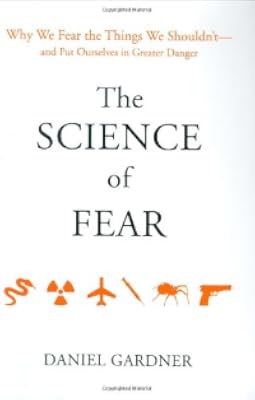







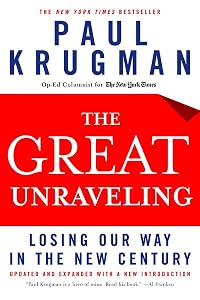




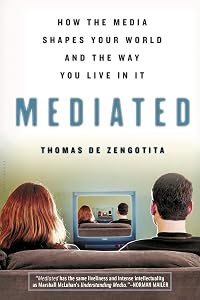

Member Recommendations

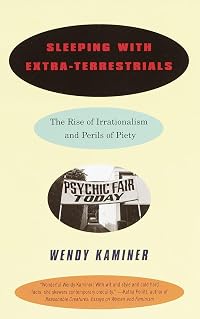
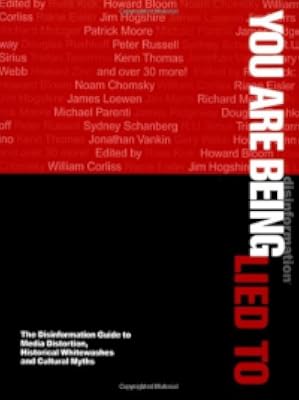
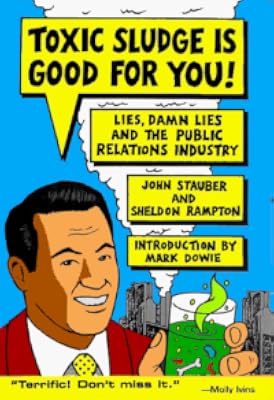
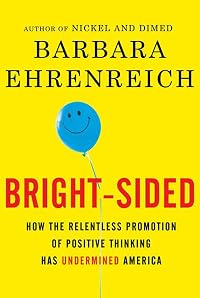
Othemts A lot of politics and punditry are based on mythology of how America used to be better and how its so bad today. Read "The Way We Never Were" and "The Culture of Fear" to help the scales fall from your eyes and see the truth behind these myths.
20

bluepiano Glassner writes about several overblown, currently entrenched fears prevalent in the US; Atkinson & Blandy examine how one of those fears has changed the idea of home and the building of houses in UK, US, and Australia.
Member Reviews
Not terribly useful if you have ever read anything else in a similar vein. The author switches topics rapidly, citing statistics and using anecdotes which are probably just as dubious as the ones he questions. He has a thesis of sorts; that these unreal fears are frequently proxies for the real problems people don't want to face. They tend to be simpler, and easier to think about; and consequently what people want to read about. This is probably why I ignore the news, because I get disgusted by these simple-minded, tear-jerking stories.
Started reading this as an ebook of the original edition from the Open Library, saw the new edition on my public library's shelves and grabbed it to read the updates. This is a terrifyingly clear look at the way news media (and the politicians who manipulate it) focuses our cultural fear onto the wrong things, thus preventing us from appropriately addressing the things that really are dangerous (namely driving, guns, poverty, guns, prejudice, and guns).
This book focuses on the sort of public media scares that have, and continue to, grip the American public. It argues that not only are these episodes of mass hysteria completely unfounded, they are actively detrimental to the American population. From fears of car-jacking and plane crashes to those of silicone breast implants and unwed teenage mothers, Glassner uncovers significant evidence that these threats were grossly overblown, even in the face of hard countervailing evidence. So, that raises the question of how these non-issues become the basis for widespread fear. On this Glassner is clear. He places the blame squarely on the media and lobby groups. The frequency and the tone with which the media presents scare stories leads to show more their power and proliferation. Glassner certainly shows the existence of significant scares, and offers compelling evidence that many of these were overblown. As for Glassner's second contention, that these fears are actively hurting Americans, his claims are not uniformly sound. One of the strongest parts of this book is Glassner's discussion of the ways in which unreasonable fears perpetuate racism against young black men. Many are well aware of the failures of the heavily-funded war on drugs, and how the conditions of poverty, hunger, and lack of opportunity are completely ignored. But some of Glassner's claims are just as far-fetched as the media events he studies. Claiming that airline crash hysteria is dangerous because people who might fly would otherwise engage in the more dangerous activity of driving is specious at best. The bulk of this book is a series of topical chapters on various hysterias. In his conclusion Glassner addresses the question of why Americans are so susceptible to these scares. Here, Glassner points to one of the phenomena that has defined the lives of Americans in the second half of the twntieth century: celebration of the culture of experts. Each of these scare campaigns gained legitimacy through public pronouncements made by those who appear to be knowledgeable experts. Each of these campaigns has loud, publicly-oriented experts of its own. And experts seem reliable. Herein lies the danger. Professionalization began in the United States in the 19th c., as practitioners in certain fields sought the hallmarks of professionalism: standards, limited entry, national organizations, and peer review. In the wake of WWII, as American culture celebrated higher education, especially science, Americans came to respect, even celebrate the culture of experts. They sought experts to analyze and improve all areas of their lives. The very standards of education and professionalization suggested that expert opinion was trustworthy, that it was best. This very trust has allowed for the manipulation of the American public. In a culture in which expert opinion is revered, and the very fact of expert status suggests qualification, it becomes difficult to determine what is reasonable trust and what is not. In seeing Glassner's conclusions, it becomes clear that one of the problems is surely too much news. With 24-hour news channels, programs like Dateline on television every night of the week, all of this airtime has to be filled with something. This creates an atmosphere ripe for exploitation. This book certainly made me think, however, I suspect Glassner might be preaching to the choir. People who are reading academic sociology are likely not the same people who drink up hours of sensationalist news without a second thought. show less
This book was good food for thought, though I wish the later chapters were as well thought-out and well written as the earlier chapters were.
One of my favorite chapters was "Monster Moms". Coming from a single-parent home myself, it always gets under my skin when someone tries to convince me that illegitimacy is a Great Evil and that it's always better to have two parents instead of one. So now I have some facts to back up my side of that particular argument.
One of my favorite chapters was "Monster Moms". Coming from a single-parent home myself, it always gets under my skin when someone tries to convince me that illegitimacy is a Great Evil and that it's always better to have two parents instead of one. So now I have some facts to back up my side of that particular argument.
Analysis of how modern media keeps people afraid of imagined or exaggerated dangers. I was aware of this phenomenon even before reading this book (or seeing Moore's documentaries) but it is surprising to understand the extent of the problem. Full of relevant statistics to drive home the point. Very necessary book.
Information has morphed into infotainment; factual knowledge can’t compete with drama. Media greed isn’t the root cause of intellectual laziness, but journalism abdicates from its responsibility when it elects to cater to uneducated fears and prejudices to ensure a bigger market share. “Culture of fear” describes the forces at play and the system that benefits from the inertia of the status-quo. And it does so very well.
Barry wrote this book in 1999, so it a whole different social landscape of fear than we have now. However, one can see the parallels between our worlds and a somewhat belabored book could be summed up in a handful of points. Let me see if I can do this.
People begin to see the things that they fear. Perhaps, we are all hypochondriacs at some level.
I have laughed at myself at this weakness, but I think we all have it. When exposed enough to an idea (fear), we will believe it.
Trust but verify.
Sex sells but fear may sell even better.
Finally, I know so much less than I thought I did after reading this book. We all really do.
People begin to see the things that they fear. Perhaps, we are all hypochondriacs at some level.
I have laughed at myself at this weakness, but I think we all have it. When exposed enough to an idea (fear), we will believe it.
Trust but verify.
Sex sells but fear may sell even better.
Finally, I know so much less than I thought I did after reading this book. We all really do.
Members
- Recently Added By
Author Information

14+ Works 1,704 Members
Barry Glassner is a professor of sociology at Lewis Clark College in Portland, Oregon. He lives in Los Angeles, California.
Common Knowledge
- Original publication date
- 2000
- Important places
- USA
- First words
- Why are so many fears in the air, and so many of them unfounded? (Introduction)
"There is no terror in the band, only in the anticipation of it," said the ultimate master of terror, Alfred Hitchcock. - Last words
- (Click to show. Warning: May contain spoilers.)Or we can go on believing in martian invaders.
- Canonical DDC/MDS
- 302.17
- Canonical LCC
- HN59.2
Classifications
- Genres
- Sociology, General Nonfiction, Nonfiction
- DDC/MDS
- 302.17 — Society, government, & culture Social sciences, sociology & anthropology Mass Communication & Media General topics of social interaction Social dysfunction
- LCC
- HN59.2 — Social sciences Social history and conditions. Social problems. Social reform Social history and conditions. Social problems. By region or country
- BISAC
Statistics
- Members
- 1,421
- Popularity
- 16,651
- Reviews
- 18
- Rating
- (3.70)
- Languages
- English, Portuguese
- Media
- Paper, Audiobook, Ebook
- ISBNs
- 15
- ASINs
- 13