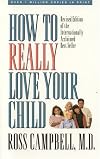
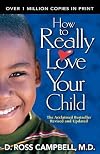
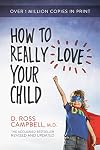
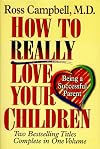
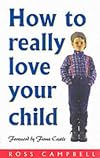
How to really love your child
by Ross Campbell
On This Page
Description
You know you love your child. You attend school events, care for physical needs, and discipline when needed. But did you know that most children, even in loving households, doubt that they are genuinely and unconditionally loved?In Dr. Ross Campbell's groundbreaking book, he explains the emotional needs of a child and provides you with skills that will help your child feel truly loved and accepted. Using eye contact, affirmation, and spiritual nurturing, you'll learn to really love your show more child no matter what the circumstances. The practical applications in How to Really Love Your Child have already helped over 2 million parents around the world show love to their children in a way that can be received and returned, again and again.
. show less
Tags
Recommendations

















Member Reviews
While so many parenting books out there are "ages and stages" and discipline (reacting AFTER behavior), Dr. Campbell take a preventative approach.I think every parent, teacher, grandparent, babysitter, social worker ... basically anyone who interacts with children on a regular basis should read this book!
How to Really Love Your Child by Dr. Ross Campbell, M.D.
In the preface, Dr. Campbell acknowledges that there is a lot of parenting information out there--enough to overwhelm parents. Though the information is good "many books, articles, and lectures have honed in on one, or at most only a few specific aspects of child rearing without clearly defining the specific areas they cover." It's not that the information is wrong or the parents show more didn't do it right, "the problem lies in the parents not having a general, balanced perspective on how to relate to a child." Dr. Campbell believes "the problem is how to manifest our love to a child through discipline and when to show it in other more affectionate ways."
In chapter one he cites some of the common problems he has seen as a psychiatrist. Chapters two and three talk about the home, parents and child and how important this relationship is for the child to understand love. An entire chapter is devoted to how the husband and wife relate and how that affects the children. Chapter three defines what unconditional love is and is not. The next three chapters discuss how to express, demonstrate, show this unconditional love through eye contact, physical contact and focused attention.
While chapter three defined unconditional love, chapter seven touches on appropriate and inappropriate love: possessiveness, seductiveness, vicariousness and role-reversal. If you are a loving, Christian parent and think you can skip over this chapter--wait. Read through it if only to know possible warning signs if you ever see them in your friends' or your child's friends' family.
Though chapter eight touches on helping your child learn how to deal with his anger, Dr. Campbell says this topic is thoroughly covered in How to Really Love Your Angry Child. There is some helpful starting information in this chapter, however.
Chapter nine is about discipline. Dr. Campbell says "that making a child feel loved is the first and most important part of good discipline." Love and discipline should not be viewed as separate entities, and "punishment is a very small part of discipline." But the next thing he says is what I found interesting:
"What you have read thus far in this book is the most important aspect of discipline, and you must apply what you've learned to expect the best results from disciplining your child. There is no point in reading further at this time if you have not applied what you have already read." show less
How to Really Love Your Child by Dr. Ross Campbell, M.D.
In the preface, Dr. Campbell acknowledges that there is a lot of parenting information out there--enough to overwhelm parents. Though the information is good "many books, articles, and lectures have honed in on one, or at most only a few specific aspects of child rearing without clearly defining the specific areas they cover." It's not that the information is wrong or the parents show more didn't do it right, "the problem lies in the parents not having a general, balanced perspective on how to relate to a child." Dr. Campbell believes "the problem is how to manifest our love to a child through discipline and when to show it in other more affectionate ways."
In chapter one he cites some of the common problems he has seen as a psychiatrist. Chapters two and three talk about the home, parents and child and how important this relationship is for the child to understand love. An entire chapter is devoted to how the husband and wife relate and how that affects the children. Chapter three defines what unconditional love is and is not. The next three chapters discuss how to express, demonstrate, show this unconditional love through eye contact, physical contact and focused attention.
While chapter three defined unconditional love, chapter seven touches on appropriate and inappropriate love: possessiveness, seductiveness, vicariousness and role-reversal. If you are a loving, Christian parent and think you can skip over this chapter--wait. Read through it if only to know possible warning signs if you ever see them in your friends' or your child's friends' family.
Though chapter eight touches on helping your child learn how to deal with his anger, Dr. Campbell says this topic is thoroughly covered in How to Really Love Your Angry Child. There is some helpful starting information in this chapter, however.
Chapter nine is about discipline. Dr. Campbell says "that making a child feel loved is the first and most important part of good discipline." Love and discipline should not be viewed as separate entities, and "punishment is a very small part of discipline." But the next thing he says is what I found interesting:
"What you have read thus far in this book is the most important aspect of discipline, and you must apply what you've learned to expect the best results from disciplining your child. There is no point in reading further at this time if you have not applied what you have already read." show less
Good read.
This book has really challenged me to make a better effort to really love my children. So often as a parent we get caught up in all the responsibilities and task that come with parenting and we lose sight of what matters most - Showing Gods love and our love to our children. For me, it is taking the time to stop, look and listen to each child as they need me each day!
This book has really challenged me to make a better effort to really love my children. So often as a parent we get caught up in all the responsibilities and task that come with parenting and we lose sight of what matters most - Showing Gods love and our love to our children. For me, it is taking the time to stop, look and listen to each child as they need me each day!
A perspective on parent-to-child relationships by a psychiatrist who specialize in working with young cildren
Includes two titles: How To Really Love Your Child, and How To Really Love Your Teenager
En lärorik bok om hur vi kan hantera tuffa situationer i vardagen. Boken handlar om hur vi kan visa barnen vår kärlek, både i medvind och i motvind.
Nov 22, 2007Swedish
Ratings
Members
- Recently Added By
Author Information

33 Works 1,984 Members
Ross Campbell is formerly an associate clinical professor of pediatries and psychiatry at the University of Tennessee College of Medicinc
Series
Belongs to Publisher Series
Edition C (F 1)
Common Knowledge
- Canonical title
- How to really love your child
- Original title
- How to really love your child
- Original publication date
- 1977
- First words*
- "Er war so ein guter Junge und benahm sich immer so gut", klagten die Eltern, und dann kamen sie in meinem Sprechzimmer mit ihrer traurigen Geschichte heraus.
- Last words*
- (Click to show. Warning: May contain spoilers.)Ich für meinen Teil muss ständig daran erinnert werden, wie ich meine Kinder richtig lieben soll.
- Original language*
- Amerikanisch
*Some information comes from Common Knowledge in other languages. Click "Edit" for more information.
Classifications
- Genre
- Nonfiction
- DDC/MDS
- 649.1 — Applied Science & Technology Home economics & family management Child rearing; home care of people with illnesses and disabilities by family and friends Parenting
- LCC
- BF723 .P25 .C34 — Philosophy, Psychology and Religion Psychology Psychology Developmental psychology
- BISAC
Statistics
- Members
- 867
- Popularity
- 31,198
- Reviews
- 6
- Rating
- (3.98)
- Languages
- 7 — English, Finnish, French, German, Hungarian, Norwegian (Bokmål), Swedish
- Media
- Paper, Audiobook, Ebook
- ISBNs
- 31
- ASINs
- 7