
Cherry: A Life of Apsley Cherry-Garrard
by Sara Wheeler
On This Page
Description
Apsley Cherry-Garrard (1886-1959) was one of the youngest members of Captain Scott's final expedition to the Antarctic. Cherry undertook an epic journey in the Antarctic winter to collect the eggs of the Emperor penguin. The temperature fell to seventy below, it was dark all the time, his teeth shattered in the cold and the tent blew away. 'But we kept our tempers,' Cherry wrote, 'even with God.'After serving in the First War Cherry was in an invalided home, and with the zealous show more encouragement of his neighbour Bernard Shaw he wrote a masterpiece. In The Worst Journey in the World Cherry transformed tragedy and grief into something fine. But as the years unravelled he faced a terrible struggle against depression, breakdown and despair, haunted by the possibility that he could have saved Scott and his companions.This is the first biography and a brilliant one. Sara Wheeler, who has travelled extensively in the Antarctic, has had unrestricted access to new material and the full co-operation of Cherry's family. show lessTags
Recommendations





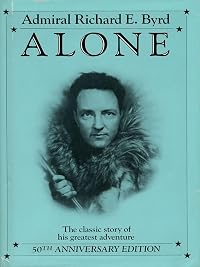


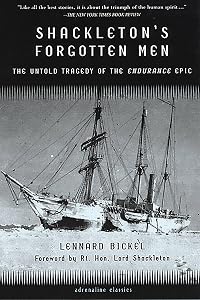
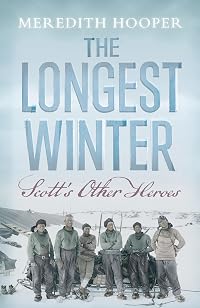

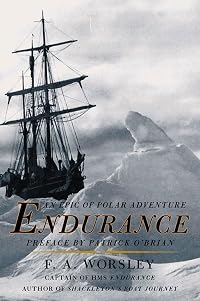










Member Recommendations
Member Reviews
In this biography, a survivor of Robert Scott's ill-fated 1910 polar expedition tries to grapple with a modern England.
I gather that the author became interested in this story after writing her Antarctica travelogue. I love the prior book, but this biography is not good. Wheeler is weirdly in love with her subject, eager to make apologies for him. ("The tension between competing demands and responsibilities, combined with a highly strung disposition, was a heavy burden for a young man. No wonder he got a third-class degree.") Her evaluation of his one book seems...overly generous: it was "a superlative piece of art that vaults above the human experience which gave it form." Also, she's apparently oblivious to how the historical record show more works. She makes a great deal about the amount of ink that Cherry-Garrad spills on his book deals and interprets this as a sign of his obsessive, neurotic fixation on the failed polar expedition -- which seems likely, but also, you know, letters about royalties to publishers is the kind of financial record that tends to survive. No historian worth her salt is going to see this particular documentary strata and think that their survival indicates anything about their biographical importance (beyond a possible plaintiff and a possible defendant keeping records in case of a possible lawsuit).
Also, the author is curiously...incurious about Cherry's patterns of human attachment. She blandly documents his passionately warm attachments to men, many of whom will later turn out to be either gay or into non-mainstream sexual practices. ("[T. H.] Lawrence suggested, 'If our sexes had been different (one of us, I mean) we could have pulled of a eugenicist's dream.'") Instead, Wheeler dutifully catalogs what information she has about his many girlfriends -- who never seem to have names or much in the way of documented existences, and who are treated with great ambivalence by Cherry-Garrad. ("In middle-age Cherry said he was afraid of women. He once told Lillie that a happy married life was impossible for him...") His eventual marriage, to a woman a generation younger than he, is presented by Wheeler as a happy union (and seems to be based on oral interviews with his surviving widow) but objectively seems less than satisfying. ("The irony was that the peaceful relief of his happy marriage allowed his anxieties to take hold.") show less
I gather that the author became interested in this story after writing her Antarctica travelogue. I love the prior book, but this biography is not good. Wheeler is weirdly in love with her subject, eager to make apologies for him. ("The tension between competing demands and responsibilities, combined with a highly strung disposition, was a heavy burden for a young man. No wonder he got a third-class degree.") Her evaluation of his one book seems...overly generous: it was "a superlative piece of art that vaults above the human experience which gave it form." Also, she's apparently oblivious to how the historical record show more works. She makes a great deal about the amount of ink that Cherry-Garrad spills on his book deals and interprets this as a sign of his obsessive, neurotic fixation on the failed polar expedition -- which seems likely, but also, you know, letters about royalties to publishers is the kind of financial record that tends to survive. No historian worth her salt is going to see this particular documentary strata and think that their survival indicates anything about their biographical importance (beyond a possible plaintiff and a possible defendant keeping records in case of a possible lawsuit).
Also, the author is curiously...incurious about Cherry's patterns of human attachment. She blandly documents his passionately warm attachments to men, many of whom will later turn out to be either gay or into non-mainstream sexual practices. ("[T. H.] Lawrence suggested, 'If our sexes had been different (one of us, I mean) we could have pulled of a eugenicist's dream.'") Instead, Wheeler dutifully catalogs what information she has about his many girlfriends -- who never seem to have names or much in the way of documented existences, and who are treated with great ambivalence by Cherry-Garrad. ("In middle-age Cherry said he was afraid of women. He once told Lillie that a happy married life was impossible for him...") His eventual marriage, to a woman a generation younger than he, is presented by Wheeler as a happy union (and seems to be based on oral interviews with his surviving widow) but objectively seems less than satisfying. ("The irony was that the peaceful relief of his happy marriage allowed his anxieties to take hold.") show less
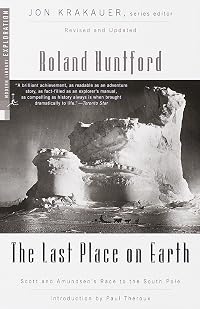
For Sara Wheeler polar exploration is terra cognita. As for the subject of this biography, Apsley Cherry-Garrard himself, he proves more elusive. As Wheeler notes, Roland Huntford, author of The Last Place on Earth found Cherry to be "a closed book". And Wheeler herself states that "a glimpse was the most that [we] could hope for" from this biography.
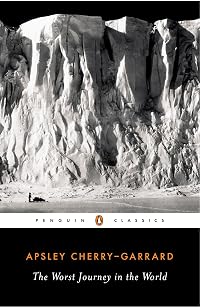
Coming to the book the reader will likely know two extraordinary things about Cherry: that he was part of the doomed Scott expedition and that he subsequently wrote The Worst Journey in the World (TWJ), widely agreed to be one of the best accounts of polar exploration ever written. It is confounding then to find that everything else about Cherry seems so terribly ordinary. He was show more enormously wealthy, well connected, had many friends, and yet even with so many opportunities he failed to prosper. Instead he comes across as odd, inadequate, self-absorbed, and largely disconnected from everything except his polar past. His life just seems to attenuate after the writing of TWJ in his thirties. Wheeler suggests that his Antarctic journey was a kind of "depressogenic" subtext in his life that always lurks and sometimes surfaces to pull him down. This is a persuasive notion. To have bonded so deeply with Wilson and Bowers as they willed the stumbling, near-sighted Cherry to survive the horrific Cape Crozier journey, and then for Cherry to find the bodies of these beloved friends and to find them so tantalizing close to where Cherry himself had stopped on his provisioning run only weeks before they died: how horrible! The what ifs and if onlys in any life can be a burden, but these would have been crushing if they indeed tormented him. On the other hand though, it is possible to see Cherry as simply a man with an extraordinary gift for writing, who stumbles into an expedition that inspires him to write one great book, but who thereafter finds himself totally ill equipped for the ordinary business of living. We can never know really. One thing is certain though, Scott's "peevish" shadow loomed perniciously and uneasily over Cherry's life. He is never quite able to absolve Scott.
As Sara Wheeler found in the writing of this book, spending some time with Cherry is overall a happy experience, and I enjoyed this book. Cherry memorably stated in TWJ that "For a joint scientific and geographical piece of organization, give me Scott; for a Winter Journey, Wilson; for a dash to the Pole and nothing else, Amundsen; and if I am in the devil of a hole and want to get out of it give me Shackleton every time". To this I would add "for an expedition scribe whose chronicle will do justice to the men, the land, and the journey, give me Cherry-Garrard." show less
Coming to the book the reader will likely know two extraordinary things about Cherry: that he was part of the doomed Scott expedition and that he subsequently wrote The Worst Journey in the World (TWJ), widely agreed to be one of the best accounts of polar exploration ever written. It is confounding then to find that everything else about Cherry seems so terribly ordinary. He was show more enormously wealthy, well connected, had many friends, and yet even with so many opportunities he failed to prosper. Instead he comes across as odd, inadequate, self-absorbed, and largely disconnected from everything except his polar past. His life just seems to attenuate after the writing of TWJ in his thirties. Wheeler suggests that his Antarctic journey was a kind of "depressogenic" subtext in his life that always lurks and sometimes surfaces to pull him down. This is a persuasive notion. To have bonded so deeply with Wilson and Bowers as they willed the stumbling, near-sighted Cherry to survive the horrific Cape Crozier journey, and then for Cherry to find the bodies of these beloved friends and to find them so tantalizing close to where Cherry himself had stopped on his provisioning run only weeks before they died: how horrible! The what ifs and if onlys in any life can be a burden, but these would have been crushing if they indeed tormented him. On the other hand though, it is possible to see Cherry as simply a man with an extraordinary gift for writing, who stumbles into an expedition that inspires him to write one great book, but who thereafter finds himself totally ill equipped for the ordinary business of living. We can never know really. One thing is certain though, Scott's "peevish" shadow loomed perniciously and uneasily over Cherry's life. He is never quite able to absolve Scott.
As Sara Wheeler found in the writing of this book, spending some time with Cherry is overall a happy experience, and I enjoyed this book. Cherry memorably stated in TWJ that "For a joint scientific and geographical piece of organization, give me Scott; for a Winter Journey, Wilson; for a dash to the Pole and nothing else, Amundsen; and if I am in the devil of a hole and want to get out of it give me Shackleton every time". To this I would add "for an expedition scribe whose chronicle will do justice to the men, the land, and the journey, give me Cherry-Garrard." show less
Cracking good book. I'll miss him; the old curmudgeon became quite a pal. Lovely touches include her descriptions of the weather and the state of the gardens - now how did she research that? and the pen portraits of supporting cast such as GBS, the know-all even about things he didn't know, and the one-line, even one-word, captures, eg Lees-Milne "the feline diarist". And she is revealing about the whole State of the Nation, arrival of motor-car (fun when you had the only one), post-war Britain likened to Moscow, the decline of landed privilege (slightly sad but the privilege was arbitrary and unfair).
The scene where the brother-in -law tries to have him committed is strikingly close to an episode in the recent Blandings on TV. Wonder show more if Wodehouse knew about the incident. Unlikely; probably a regular occurrence in mid-century country houses. show less
The scene where the brother-in -law tries to have him committed is strikingly close to an episode in the recent Blandings on TV. Wonder show more if Wodehouse knew about the incident. Unlikely; probably a regular occurrence in mid-century country houses. show less
This was the age when everyone wanted to get to a Pole. North Pole or South Pole, it didn't matter. For Apsley Cherry-Garrard, his expedition was to the South Pole with Robert Falcon Scott (Scott's second journey).
Antarctica fueled the competitive spirits of Robert Falcon Scott and his expedition as they constantly compared their experiences in the Antarctic to Shackleton's and kept a close eye on reports of Amundsen's progress a short distance away. I am not going to review the events of what happened during this particular expedition as everyone is well familiar with Scott's demise. Let's focus on Cherry.
After the expedition Cherry's life was consumed by his experiences. His opinion of Scott changed several different times as the show more reality of what he lived through sharpened. The expedition gave him purpose in life (writing a book and lecturing about it) while haunting his sleep and stunting his ability to move on from it. Wheeler does a fantastic job painting a sympathetic portrait of a complicated man.
As an aside, I am trying to imagine the amount of gear one would take to the South Pole. It boggled my mind that Scott would ask Cherry to learn how to type and to bring two typewriters even though no one else knew how to use them. show less
Antarctica fueled the competitive spirits of Robert Falcon Scott and his expedition as they constantly compared their experiences in the Antarctic to Shackleton's and kept a close eye on reports of Amundsen's progress a short distance away. I am not going to review the events of what happened during this particular expedition as everyone is well familiar with Scott's demise. Let's focus on Cherry.
After the expedition Cherry's life was consumed by his experiences. His opinion of Scott changed several different times as the show more reality of what he lived through sharpened. The expedition gave him purpose in life (writing a book and lecturing about it) while haunting his sleep and stunting his ability to move on from it. Wheeler does a fantastic job painting a sympathetic portrait of a complicated man.
As an aside, I am trying to imagine the amount of gear one would take to the South Pole. It boggled my mind that Scott would ask Cherry to learn how to type and to bring two typewriters even though no one else knew how to use them. show less
Fleshes out the life of Apsley Cherry-Garrard, member of Scott's Terra Nova expedition, and author of the most lasting account of the trip -- The Worst Journey in the World.
The book divides roughly into three parts: before, during and after the Antarctic journey. Whilst the "during" is well covered by "The Worst Journey", from the distance of 80 years further on Sara Wheeler is more able to objectively bring out more of the tensions of the trip. The "before" concerns Cherry's privileged upbringing and inheritance of vast amounts of property at a young age. This was at a time of social change in Britain, and this continues as a theme in the "after", where Cherry feels increasingly persecuted by it. The "after" follows Cherry's authorship show more of TWJ and his directionlessness after the Terra Nova expedition, having no career to return to. Throughout this time and to the end of his life, Cherry suffered greatly both mentally and physically conditions which were little understood at the time.
Like Sara Wheeler's other books on the poles, it is written with a lively style which, like TWJ, brings out the human and spiritual aspects of polar exploration. Of interest to both those unacquainted with polar exploration, and those who aim to fill in some of the gaps and surrounds in what they already know. show less
The book divides roughly into three parts: before, during and after the Antarctic journey. Whilst the "during" is well covered by "The Worst Journey", from the distance of 80 years further on Sara Wheeler is more able to objectively bring out more of the tensions of the trip. The "before" concerns Cherry's privileged upbringing and inheritance of vast amounts of property at a young age. This was at a time of social change in Britain, and this continues as a theme in the "after", where Cherry feels increasingly persecuted by it. The "after" follows Cherry's authorship show more of TWJ and his directionlessness after the Terra Nova expedition, having no career to return to. Throughout this time and to the end of his life, Cherry suffered greatly both mentally and physically conditions which were little understood at the time.
Like Sara Wheeler's other books on the poles, it is written with a lively style which, like TWJ, brings out the human and spiritual aspects of polar exploration. Of interest to both those unacquainted with polar exploration, and those who aim to fill in some of the gaps and surrounds in what they already know. show less
Excellent biography of the Antarctic explorer whose life was so sad after returning from the Scott expedition. He wrote an amazing book [The Worst Journey in The World] about his experiences, but suffered severe depression on and off throughout the rest of his life.
the man behind the classic,The Worst Journey in The World. What this man wont do for an egg doesn't bear thinking about.
Members
- Recently Added By
Published Reviews
Writing about the poles is not an easy task, but an audience (especially given recent interest in Scott and Shackleton) is virtually assured. Where Sara Wheeler excels in this first biography of Cherry-Garrard is in illuminating his life before and after the epoch-making polar expedition. She makes of his struggle to work out and write the truth about those years a narrative almost as exciting show more as the journey itself. show less
added by MsMixte
Lists

Polar exploration
54 works; 4 members
Author Information

18+ Works 1,888 Members
Sara Wheeler is the author of many books of biography and travel, including Access All Areas; Selected Writings 1990-2011 (North Point Press. 2013) and Travels in a Thin Country: A Journey Through Chile. Terra Incognita: Travels in Antarctica was an international bestseller that The New York Times described as "gripping, emotional" and show more "compelling," and The Magnetic North: Notes from the Arctic Circle (FSG, 2011) was chosen as Book of the Year by Michael Palin and Will Self, among others, Wheeler lives in London. show less
Common Knowledge
- Original publication date
- 2002
- People/Characters
- Apsley Cherry-Garrard
- Important places
- Antarctica
- Dedication
- To Angela Mathias and Hugh Turner,
with affection - First words
- (Introduction) Some years ago, marooned in a small tent close to one of the dynamic ice streams on the west Antarctic ice sheet, I finished reading The Worst Journey in the World as a blizzard closed in around our tiny... (show all) camp.
In the restless years of middle age Cherry used to sit in the bow-window of his library, turning the pages of the journals he had kept in the Antarctic three decades before. - Last words
- (Click to show. Warning: May contain spoilers.)He was buried in St. Helen's churchyard, with his secrets.
- Blurbers
- Winchester, Simon; Krakauer, Jon; Hoagland, Edward; Roberts, David; Parry, Richard
- Original language
- English
Classifications
- Genres
- Nonfiction, Biography & Memoir, Travel, General Nonfiction, History
- DDC/MDS
- 919.8 — History & geography Geography & travel Geography of and travel in Australasia, Pacific Ocean islands, Atlantic Ocean islands, Arctic islands, Antarctica and on extraterrestrial worlds Polar regions
- LCC
- G875 .C53 .W54 — Geography, Anthropology and Recreation Geography (General) Arctic and Antarctic regions
- BISAC
Statistics
- Members
- 220
- Popularity
- 148,019
- Reviews
- 7
- Rating
- (4.09)
- Languages
- English, Spanish
- Media
- Paper, Ebook
- ISBNs
- 8
- ASINs
- 1