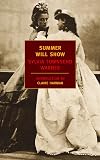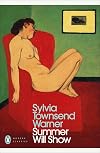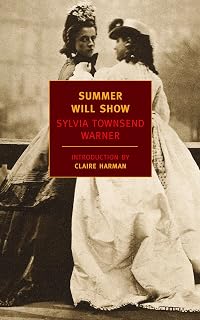
Summer Will Show
by Sylvia Townsend Warner
On This Page
Description
Sophia Willoughby, a young Englishwoman from an aristocratic family and a person of strong opinions and even stronger will, has packed her cheating husband off to Paris. He can have his tawdry mistress. She intends to devote herself to the serious business of raising her two children in proper Tory fashion. Then tragedy strikes: the children die, and Sophia, in despair, finds her way to Paris, arriving just in time for the revolution of 1848. Before long she has formed the unlikeliest of show more close relations with Minna, her husband’s sometime mistress, whose dramatic recitations, based on her hair-raising childhood in czarist Russia, electrify audiences in drawing rooms and on the street alike. Minna, “magnanimous and unscrupulous, fickle, ardent, and interfering,” leads Sophia on a wild adventure through bohemian and revolutionary Paris, in a story that reaches an unforgettable conclusion amidst the bullets, bloodshed, and hope of the barricades. Sylvia Townsend Warner was one of the most original and inventive of twentieth-century English novelists. At once an adventure story, a love story, and a novel of ideas, Summer Will Show is a brilliant reimagining of the possibilities of historical fiction. show lessTags
Recommendations
































Member Reviews
[a:Sylvia Townsend Warner|32349|Sylvia Townsend Warner|https://d202m5krfqbpi5.cloudfront.net/authors/1329513169p2/32349.jpg] has written a beautifully crafted tale of a 19th C wealthy, landed and slightly smug Englishwoman who spurns her adulterer husband, loses her children from smallpox and flees to France. There she finds herself stretching her feminist inklings to forge a new life with her husband's ex-mistress and embraces the revolution of 1848 happening around her. As Minna, her new companion, says "Though you may think you have chosen me..or chosen happiness,it is the revolution you have chosen." My commonplace book at the ready, there were abundant quotations to jot down, some outright humorous, but mainly the clear thinking show more and revolutionary story of a woman's transformation which propel the reader along. Townsend Warner was a contemporary of Woolf and Mansfield and equal to them in her writing. We read this book for a book club and the conversation flowed hither and yon. show less
[a:Sylvia Townsend Warner|32349|Sylvia Townsend Warner|https://d202m5krfqbpi5.cloudfront.net/authors/1329513169p2/32349.jpg] has written a beautifully crafted tale of a 19th C wealthy, landed and slightly smug Englishwoman who spurns her adulterer husband, loses her children from smallpox and flees to France. There she finds herself stretching her feminist inklings to forge a new life with her husband's ex-mistress and embraces the revolution of 1848 happening around her. As Minna, her new companion, says "Though you may think you have chosen me..or chosen happiness,it is the revolution you have chosen." My commonplace book at the ready, there were abundant quotations to jot down, some outright humorous, but mainly the clear thinking show more and revolutionary story of a woman's transformation which propel the reader along. Townsend Warner was a contemporary of Woolf and Mansfield and equal to them in her writing. We read this book for a book club and the conversation flowed hither and yon. show less
What luck, to have read two absolutely excellent novels in a row! That doesn’t occur very often. ‘Summer Will Show’ was wonderful, a novel calculated to appeal to me as it combines feminism with revolutionary upheaval in 19th century Paris - two of my favourite subjects. First published in 1936, it initially struck me as a combination of [b:Madame Bovary|2175|Madame Bovary|Gustave Flaubert|https://i.gr-assets.com/images/S/compressed.photo.goodreads.com/books/1335676143l/2175._SY75_.jpg|2766347] and [b:Two Serious Ladies|215262|Two Serious Ladies|Jane Bowles|https://i.gr-assets.com/images/S/compressed.photo.goodreads.com/books/1172774282l/215262._SY75_.jpg|208395]. The writing is lyrical but not as deft as Flaubert; the tone is show more less deadpan and madcap than Bowles. Where it beats both is in politics, which are beautifully integrated into the narrative, and in utter unrepentant dismissal of Frederick, Sophia’s husband. Sophia is the point of view character, an intelligent, capable, and independent woman unsuited to life as a wife and mother. She comments early on that, ‘It was boring to be a woman, nothing that one did had any meat to it... Should she enforce her will over convention [...] the deed would only be granted to her on the terms that it was a woman’s whim, a nonsense to be tidied up as soon as possible by the responsible of the world’. Frustrated with life, Sophia travels to Paris with a vague plan of confronting her husband and his mistress. As soon as she meets the mistress, Minna, the pair form a strong bond, fall in love, and move in together.
Frederick is consistently depicted as Sophia’s inferior in all respects and a generally bad person. The two are estranged from the start and eventually their relationship deteriorates to the point that Sophia straight up punches him in the face. I was not expecting such a satisfyingly cathartic scene and was delighted to find it followed by this exchange, after Sophia has pawned her ring to buy dinner for bohemians:
Sophia and Minna are fascinating, inspiring, and unapologetically independent characters. A loving and supportive relationship such as theirs is rarely depicted between women nowadays. (I am reminded of [b:Surpassing the Love of Men: Romantic Friendship and Love Between Women from the Renaissance to the Present|260412|Surpassing the Love of Men Romantic Friendship and Love Between Women from the Renaissance to the Present|Lillian Faderman|https://i.gr-assets.com/images/S/compressed.photo.goodreads.com/books/1387740528l/260412._SY75_.jpg|2881900].) The treatment of racism, anti-semitism, and classism is interesting throughout the narrative, although sometimes uncomfortable. Intentionally so, I expect. The streets of Paris and their social ferment are vividly evoked. This really is a hidden gem of a novel, much more invigorating and radical than I had dared to hope. I also appreciated the potentially hopeful ambiguity of the ending. (I am choosing to believe that a best case scenario prevailed.) show less
Frederick is consistently depicted as Sophia’s inferior in all respects and a generally bad person. The two are estranged from the start and eventually their relationship deteriorates to the point that Sophia straight up punches him in the face. I was not expecting such a satisfyingly cathartic scene and was delighted to find it followed by this exchange, after Sophia has pawned her ring to buy dinner for bohemians:
”I regretted that ring this afternoon. You see, I lost my temper and hit him in the face. And the moment I had done it I remembered my ring and thought how much more it would have hurt if I had been wearing it.”
“Yes. A knuckle-duster. Rings are invaluable, I know, and diamonds most of all.”
Sophia and Minna are fascinating, inspiring, and unapologetically independent characters. A loving and supportive relationship such as theirs is rarely depicted between women nowadays. (I am reminded of [b:Surpassing the Love of Men: Romantic Friendship and Love Between Women from the Renaissance to the Present|260412|Surpassing the Love of Men Romantic Friendship and Love Between Women from the Renaissance to the Present|Lillian Faderman|https://i.gr-assets.com/images/S/compressed.photo.goodreads.com/books/1387740528l/260412._SY75_.jpg|2881900].) The treatment of racism, anti-semitism, and classism is interesting throughout the narrative, although sometimes uncomfortable. Intentionally so, I expect. The streets of Paris and their social ferment are vividly evoked. This really is a hidden gem of a novel, much more invigorating and radical than I had dared to hope. I also appreciated the potentially hopeful ambiguity of the ending. (I am choosing to believe that a best case scenario prevailed.) show less
It took me longer than I expected to finish this novel, although I liked it all the way through. In the first half, we see Sophia as a competent, energetic landowner, but the death of her frail children and final breach with her husband leaves her at a loss: what to do now. She sets out to Paris to meet her husband, but ends up drawn to and living with his former mistress, Minna, and witness the 1848 unrest first hand.
Winter will shake. Spring will try,
Summer will show if you live or die.
This somewhat ominous couplet seemed a promising start to Sylvia Townsend Warner's Summer will Show. The promise held in the excellent writing, the use of language, and Townsend Warner's deeply evident connection to the English countryside. It didn't hold with the characters and plot.
The word that frequently came to mind was "unpleasant". Nothing stronger, as the well mannered central character Sophia Willoughby would not herself use a stronger word, although her feelings would be evident nonetheless. As the novel starts, Sophia was well pleased with herself indeed. Her husband Frederick was off in France having an affair, and Sophia was happily living the show more exceedingly comfortable life of a nineteenth century woman in charge of her inherited estates. Yes, the servants might talk about the state of her marriage, but it was a small price to pay for being on her own.
Sophia's world abruptly changed though and she set off to France, to visit her great aunt in Paris. Nothing like a new wardrobe to set the world right after an upset, or was it Frederick who might do it? Frederick may have been a cunning person, but he certainly could not have anticipated the outcome of Sophia's visit. He may have been egocentric and dim, but he was certainly the master of petty spite. When Sophia suddenly left her great aunt's and asked for her trunk and dressing case to be forwarded, it was Frederick who sent them on. She discovered
The cause of all this turmoil was Minna Lemeul, Frederick's mistress. In the introduction to the NYRB edition, Claire Harman describes Minna as "...one of Warner's most beguiling creations, a self-dramatist and visionary, an artist of great power, yet also a bit of a charlatan. Aging, unbeautiful, unscrupulous, 'her principles were so inconsistent that to all intents and purposes she had no principles at all'." (p ix)
"Beguiling" did not fit at all with my reading; "unscrupulous" did. Minna was every bit as unpleasant and manipulative in her own way as Frederick and Sophia were in theirs. However, while Minna's character and behaviour were well drawn and crucial to the plot, I had a lot of trouble with the characteristics attributed to her by both Frederick and Sophia based on her religion. Minna earned her living in part as a storyteller on stage. Many of her stories were of the Lithuanian shtetl where she had grown up. The casual way in which prejudice was expressed and received among the English characters was disturbing. This was a novel written in 1936 and set in 1848, so some prejudice might be expected, but here it seemed completely gratuitous and added nothing. Had Minna been nearly as inately clever with money and finances as their remarks would have it, she would not have been living in a garret and borrowing from those friends in a position to help.
The Paris section of the book is set against the uprisings of 1848. Minna was involved in the same vague way she did everything. Sophia became more involved, collecting scrap metal for the workers to make into ammunition. One fateful June evening, Minna and Sophia helped defend the people's barricades. Sophia's world shifted yet again. In the end, Sophia's future is left up in the air. Last seen, she is reading [The Communist Manifesto].
However, despite Warner's own membership in the British Communist Party and despite the dramatic events of the rebellion and their conclusion, it seemed Sophia was still as detached and self contained as ever. Sophia herself seemed to suspect this, seemed to anticipate a return to her old life, thinking
This is the second book I have read by Sylvia Townsend Warner and the second disappointment, which is a pity, as she writes so well. Perhaps she was trying to show the immutability of the landed classes, perhaps she was trying to idealize the workers and students; there just did not seem to be a purpose for this book, while its earnestness definitely suggested it should have one. show less
Summer will show if you live or die.
This somewhat ominous couplet seemed a promising start to Sylvia Townsend Warner's Summer will Show. The promise held in the excellent writing, the use of language, and Townsend Warner's deeply evident connection to the English countryside. It didn't hold with the characters and plot.
The word that frequently came to mind was "unpleasant". Nothing stronger, as the well mannered central character Sophia Willoughby would not herself use a stronger word, although her feelings would be evident nonetheless. As the novel starts, Sophia was well pleased with herself indeed. Her husband Frederick was off in France having an affair, and Sophia was happily living the show more exceedingly comfortable life of a nineteenth century woman in charge of her inherited estates. Yes, the servants might talk about the state of her marriage, but it was a small price to pay for being on her own.
Sophia's world abruptly changed though and she set off to France, to visit her great aunt in Paris. Nothing like a new wardrobe to set the world right after an upset, or was it Frederick who might do it? Frederick may have been a cunning person, but he certainly could not have anticipated the outcome of Sophia's visit. He may have been egocentric and dim, but he was certainly the master of petty spite. When Sophia suddenly left her great aunt's and asked for her trunk and dressing case to be forwarded, it was Frederick who sent them on. She discovered
They had been carefully dealt with, the dressing-case in particular. Even the gold tops had been removed from the flasks and pomade-pots, and corks of assorted sizes rammed down in their stead. Hidden under a silk band -- pious observance of Papa's axiom that one should always keep five pounds against emergency -- had been a Bank of England note. This also had been removed. Frederick had indeed been a most thorough and conscientious steward of her goods.
The cause of all this turmoil was Minna Lemeul, Frederick's mistress. In the introduction to the NYRB edition, Claire Harman describes Minna as "...one of Warner's most beguiling creations, a self-dramatist and visionary, an artist of great power, yet also a bit of a charlatan. Aging, unbeautiful, unscrupulous, 'her principles were so inconsistent that to all intents and purposes she had no principles at all'." (p ix)
"Beguiling" did not fit at all with my reading; "unscrupulous" did. Minna was every bit as unpleasant and manipulative in her own way as Frederick and Sophia were in theirs. However, while Minna's character and behaviour were well drawn and crucial to the plot, I had a lot of trouble with the characteristics attributed to her by both Frederick and Sophia based on her religion. Minna earned her living in part as a storyteller on stage. Many of her stories were of the Lithuanian shtetl where she had grown up. The casual way in which prejudice was expressed and received among the English characters was disturbing. This was a novel written in 1936 and set in 1848, so some prejudice might be expected, but here it seemed completely gratuitous and added nothing. Had Minna been nearly as inately clever with money and finances as their remarks would have it, she would not have been living in a garret and borrowing from those friends in a position to help.
The Paris section of the book is set against the uprisings of 1848. Minna was involved in the same vague way she did everything. Sophia became more involved, collecting scrap metal for the workers to make into ammunition. One fateful June evening, Minna and Sophia helped defend the people's barricades. Sophia's world shifted yet again. In the end, Sophia's future is left up in the air. Last seen, she is reading [The Communist Manifesto].
However, despite Warner's own membership in the British Communist Party and despite the dramatic events of the rebellion and their conclusion, it seemed Sophia was still as detached and self contained as ever. Sophia herself seemed to suspect this, seemed to anticipate a return to her old life, thinking
Probably I shall live to a profound old age. And people will say of me "Do you know, old Mrs. Willoughby went through the Revolution of '48 in Paris?" And someone else will answer, "How extraordinary! One would never think it."... "Such a dull old woman."
This is the second book I have read by Sylvia Townsend Warner and the second disappointment, which is a pity, as she writes so well. Perhaps she was trying to show the immutability of the landed classes, perhaps she was trying to idealize the workers and students; there just did not seem to be a purpose for this book, while its earnestness definitely suggested it should have one. show less
I love Warner, but boy, I struggled with this one. I liked the first part very much, where she does what she does best: explore the ambivalence of women trapped in their era's expectations and circumstances, how they cope (or don't), and how they struggle to break free. In the mid 1930s, it was probably fairly risky to write a story about a comfortable, handsome, intelligent woman - Sophia Willoughby - in 1848 who has separated herself from a selfish, feckless husband, and borne him two children - who then die horribly of smallpox. Sophia herself occasioned their exposure, by taking them to a lime-kiln to breathe the fumes to improve their health. Once they are dead, she finds she feels almost relieved. This is all more subtle and show more interesting than it sounds. Then she sets off to Paris, to come to an arrangement with her husband - and suddenly falls in love with his mistress.
It happens abruptly, and inexplicably. Minna Lemuel seems to have almost nothing to recommend her: she is frequently described as shabby, homely, amoral, shiftless, and exploitive, not to mention some uncomfortable Jewish stereotyping. I found it extremely difficult to understand what on earth attracted Sophia to Minna and Minna's talky, thinky, polemical friends. It devolves into far too much descriptive, perseverating, philosophical meandering. All necessary, to some extent, as Warner plonks this all down into the onset of the 1848 revolution in Paris. Now, if you are going to set yourself up to do a historical novel set there, you might do well to remember who and what you are up against: Victor Hugo's Les Miserables. Warner is good, but she isn't that good, and her politics and her art just sit uncomfortably, with various stock characters spouting tediously as Sophia transmutes into a happy, hungry street singer. The subplot involving Sophia's treatment of an illegitimate biracial half-cousin is ugly and comes to a horrific end - but somehow doesn't convince the reader that Warner is seriously bothered by it. The final setpiece on the barricades, Minna's death, and Sophia's plunge into violence is fairly rousing and dramatic, but... well, there's still Hugo looming forever bigger, warmer, better. Warner herself ended up a committed Communist, and the weird ending with Sophia suddenly absorbed by proto-Communist pamphlets is almost laughable.
Well-intentioned, still showing streaks of the insight and emotional sympathy that can engage, but... nope. I'd skip this one. show less
It happens abruptly, and inexplicably. Minna Lemuel seems to have almost nothing to recommend her: she is frequently described as shabby, homely, amoral, shiftless, and exploitive, not to mention some uncomfortable Jewish stereotyping. I found it extremely difficult to understand what on earth attracted Sophia to Minna and Minna's talky, thinky, polemical friends. It devolves into far too much descriptive, perseverating, philosophical meandering. All necessary, to some extent, as Warner plonks this all down into the onset of the 1848 revolution in Paris. Now, if you are going to set yourself up to do a historical novel set there, you might do well to remember who and what you are up against: Victor Hugo's Les Miserables. Warner is good, but she isn't that good, and her politics and her art just sit uncomfortably, with various stock characters spouting tediously as Sophia transmutes into a happy, hungry street singer. The subplot involving Sophia's treatment of an illegitimate biracial half-cousin is ugly and comes to a horrific end - but somehow doesn't convince the reader that Warner is seriously bothered by it. The final setpiece on the barricades, Minna's death, and Sophia's plunge into violence is fairly rousing and dramatic, but... well, there's still Hugo looming forever bigger, warmer, better. Warner herself ended up a committed Communist, and the weird ending with Sophia suddenly absorbed by proto-Communist pamphlets is almost laughable.
Well-intentioned, still showing streaks of the insight and emotional sympathy that can engage, but... nope. I'd skip this one. show less
Winter will shake. Spring will try,
Summer will show if you live or die.
With Sylvia Townsend Warner reading week being extended to a month long celebration, it gave me chance to get stuck into one of the two books I have had tbr for quite some time. I could have chosen Lolly Willowes to read – a much smaller book, but I decided to challenge myself with Summer will Show, Warner’s fourth novel. Summer will Show is not an especially easy read, but I found the beginning particularly readable, almost unputdownable and although the novel eventually spirals off into a far more complex narrative – it is really very good and very beautifully written. This is a book that I think I will remember – which is always a very good sign. While show more several of Sylvia Townsend Warner’s novels revisit similar themes, the novels themselves do appear on the surface at least to be very different. Summer will Show is the third of them that I have read. The Corner that Held Them is set among a community of nuns in a fourteenth century abbey, Mr Fortune’s Maggot concerns a missionary on a tiny South-Sea island. First published in 1936, Summer will Show; the story of Sophia Willoughby takes us to the mid nineteenth century, specifically the streets of revolutionary Paris in 1848.
“It was boring to be a woman, nothing that one did had any meat in it. And her peculiar freedom, well-incomed, dis-husbanded, seemed now only to increase the impotence of her life. Free as she might be to do as she pleased, all her doings were barrened.”
Sophia Willoughby enjoys an unconventional independent existence on her inherited family estate, estranged from her husband, who is enjoying himself in Europe with his mistress – she spends her time fretting over the health of her two children. As mistress of Blandamer House, Sophia is unused to criticism, her world, and everyone in it dances to her tune. With her children suffering bad coughs, Sophia takes them up the hill to visit the slightly malevolent lime kiln keeper, breathing in the fumes of the lime kiln an old, traditional cure for coughs. The lime kiln man is a dirty, drunk, with sores on his arms that he uses to lift up Sophia’s precious, cosseted children. Soon after this, while Sophia is delivering her uncle’s illegitimate son to a school in Cornwall, the children fall ill from a fever. The doctor tells a distraught Sophia that it is Smallpox, and Sophia instantly knows that they will die. At first, with the children lying upstairs dangerously ill, nursed faithfully by a woman brought in by the local doctor who visits daily, Sophia delays in contacting her husband Frederick whose adultery has so humiliated her. Following surprising intervention by the doctor’s mouse like wife, Sophia contacts Frederick who arrives just as their son dies. Following the death of both her children, and Frederick’s return to France, Sophia no longer knows where she wants to be. Devastated and still reeling from her appalling loss she hits upon the idea of having another child, and in February 1848 travels to Paris to find Frederick.
“God, an enormous darkness, hung looped over half her sky, an ever-present menace, a cloud waiting to break.”
1848revgFrederick’s mistress in Paris is Minna Lemeul, a Lithuanian storyteller; her salon is a popular place for the bohemian of Paris. It is here that upon her arrival in Paris Sophia tracks down Frederick, while Minna holds the room in the palm of her hand, captivating them with her tales of her childhood in Lithuania. As Minna talks; people are beginning to build barricades on the streets nearby. As the revolution begins to take hold, Sophia is thrown together with Minna – and is surprised by her reactions to the woman she had previously viewed as a home wrecking harlot. Sophia has a much loved great-aunt living in Paris and enduring her third revolution, so Sophia descends on her aunt’s home while the revolution rumbles on. Great-Aunt Léocadie sets herself to reuniting Sophia and Frederick, little suspecting what will happen next.
“Sitting here, and thus, she had attained to a state which she could never have desired, not even conceived. And being so unforeseen, so alien to her character and upbringing, her felicity had an absolute perfection; no comparison between the desired and the actual could tear holes in it, no ambition whisper, But this is not quite what you wanted, is it?”
Sophia sets up home with the ageing, non-too beautiful Minna, fascinated by her revolutionary sympathies, her bohemian friends and her beguiling stories – Sophia has fallen in love with her husband’s mistress. Like other characters in Townsend Warner’s fiction, Sophia has become an outsider within the world she inhabits for a time. Cut off from her fortunes by an enraged Frederick, Sophia’s world is turned upside down; her polite, ordered world seems a long way away in a world of little money, revolutionary plots and communists. As Sophia and Minna collect scrap metal for the revolutionary ammunition makers, intellectuals romanticize the revolution before a final dramatic show down on the barricades.
I am so glad that I read summer will show; it’s a biggish complex novel, colourful, noisy and brilliantly vibrant. I am now looking forward to Lolly Willowes at some point in the future which I know many people have really enjoyed, and I really must read some of Warner’s short stories – I have a feeling they will be particularly good. show less
Summer will show if you live or die.
With Sylvia Townsend Warner reading week being extended to a month long celebration, it gave me chance to get stuck into one of the two books I have had tbr for quite some time. I could have chosen Lolly Willowes to read – a much smaller book, but I decided to challenge myself with Summer will Show, Warner’s fourth novel. Summer will Show is not an especially easy read, but I found the beginning particularly readable, almost unputdownable and although the novel eventually spirals off into a far more complex narrative – it is really very good and very beautifully written. This is a book that I think I will remember – which is always a very good sign. While show more several of Sylvia Townsend Warner’s novels revisit similar themes, the novels themselves do appear on the surface at least to be very different. Summer will Show is the third of them that I have read. The Corner that Held Them is set among a community of nuns in a fourteenth century abbey, Mr Fortune’s Maggot concerns a missionary on a tiny South-Sea island. First published in 1936, Summer will Show; the story of Sophia Willoughby takes us to the mid nineteenth century, specifically the streets of revolutionary Paris in 1848.
“It was boring to be a woman, nothing that one did had any meat in it. And her peculiar freedom, well-incomed, dis-husbanded, seemed now only to increase the impotence of her life. Free as she might be to do as she pleased, all her doings were barrened.”
Sophia Willoughby enjoys an unconventional independent existence on her inherited family estate, estranged from her husband, who is enjoying himself in Europe with his mistress – she spends her time fretting over the health of her two children. As mistress of Blandamer House, Sophia is unused to criticism, her world, and everyone in it dances to her tune. With her children suffering bad coughs, Sophia takes them up the hill to visit the slightly malevolent lime kiln keeper, breathing in the fumes of the lime kiln an old, traditional cure for coughs. The lime kiln man is a dirty, drunk, with sores on his arms that he uses to lift up Sophia’s precious, cosseted children. Soon after this, while Sophia is delivering her uncle’s illegitimate son to a school in Cornwall, the children fall ill from a fever. The doctor tells a distraught Sophia that it is Smallpox, and Sophia instantly knows that they will die. At first, with the children lying upstairs dangerously ill, nursed faithfully by a woman brought in by the local doctor who visits daily, Sophia delays in contacting her husband Frederick whose adultery has so humiliated her. Following surprising intervention by the doctor’s mouse like wife, Sophia contacts Frederick who arrives just as their son dies. Following the death of both her children, and Frederick’s return to France, Sophia no longer knows where she wants to be. Devastated and still reeling from her appalling loss she hits upon the idea of having another child, and in February 1848 travels to Paris to find Frederick.
“God, an enormous darkness, hung looped over half her sky, an ever-present menace, a cloud waiting to break.”
1848revgFrederick’s mistress in Paris is Minna Lemeul, a Lithuanian storyteller; her salon is a popular place for the bohemian of Paris. It is here that upon her arrival in Paris Sophia tracks down Frederick, while Minna holds the room in the palm of her hand, captivating them with her tales of her childhood in Lithuania. As Minna talks; people are beginning to build barricades on the streets nearby. As the revolution begins to take hold, Sophia is thrown together with Minna – and is surprised by her reactions to the woman she had previously viewed as a home wrecking harlot. Sophia has a much loved great-aunt living in Paris and enduring her third revolution, so Sophia descends on her aunt’s home while the revolution rumbles on. Great-Aunt Léocadie sets herself to reuniting Sophia and Frederick, little suspecting what will happen next.
“Sitting here, and thus, she had attained to a state which she could never have desired, not even conceived. And being so unforeseen, so alien to her character and upbringing, her felicity had an absolute perfection; no comparison between the desired and the actual could tear holes in it, no ambition whisper, But this is not quite what you wanted, is it?”
Sophia sets up home with the ageing, non-too beautiful Minna, fascinated by her revolutionary sympathies, her bohemian friends and her beguiling stories – Sophia has fallen in love with her husband’s mistress. Like other characters in Townsend Warner’s fiction, Sophia has become an outsider within the world she inhabits for a time. Cut off from her fortunes by an enraged Frederick, Sophia’s world is turned upside down; her polite, ordered world seems a long way away in a world of little money, revolutionary plots and communists. As Sophia and Minna collect scrap metal for the revolutionary ammunition makers, intellectuals romanticize the revolution before a final dramatic show down on the barricades.
I am so glad that I read summer will show; it’s a biggish complex novel, colourful, noisy and brilliantly vibrant. I am now looking forward to Lolly Willowes at some point in the future which I know many people have really enjoyed, and I really must read some of Warner’s short stories – I have a feeling they will be particularly good. show less
Members
- Recently Added By
Published Reviews
ThingScore 100
Warner has long remained a secret, perhaps because her experimental impulses were never exuberant enough to grab the attention of the Modernists' most adventurous readers. The recent republication of Summer Will Show is her best chance, after all these years, of emerging from the fog of near-oblivion, as thick as it is unfair.
added by lquilter
the most skilful, most surefooted, sensitive, witty piece of prose yet to have been colored by left-wing ideology ...
added by lquilter
Lists

Pre-1969 LGBTQ Literature
184 works; 67 members

Books I've Read More Than Once
602 works; 49 members

1,001 BYMRBYD Concensus
723 works; 27 members

History novels (not too romancey)
37 works; 5 members

Bibliography for How to be a Heroine
148 works; 12 members

Crinoline and gumption
12 works; 1 member

Reading LIst
648 works; 1 member
Author Information

69+ Works 6,174 Members
Some Editions
Awards and Honors
Series
Belongs to Publisher Series
Work Relationships
Is contained in
Common Knowledge
- Canonical title
- Summer Will Show
- Original publication date
- 1936
- People/Characters
- Sophia Willoughby; Minna Lemuel
- Important places
- Paris, France
- Important events
- French Revolution of 1848
- Dedication
- To
Valentine Ackland - First words
- 'It must have been in 1920 or 21, for I was still in my gaunt flat over the furrier in the Bayswater Road and totally engaged in Tudor Church Music, that I said to a young man called Robert Firebrace that I had invente... (show all)d a person: an early Victorian young lady of means with a secret passion for pugilism;... (Introduction)
It was on this very day - the thirteenth of July - and in just such weather that Sophia Willoughby had been taken to see the Duke of Wellington. - Last words
- (Click to show. Warning: May contain spoilers.)And leaning on the balustrade Sophia thought how, through every city, some river flows, bearing its witness against the human delusion. (Introduction)
(Click to show. Warning: May contain spoilers.)She seated herself; and leaning her elbows on the table, and sinking her head in her hands, went on reading, obdurately attentive and by degrees absorbed.
Classifications
Statistics
- Members
- 584
- Popularity
- 50,595
- Reviews
- 12
- Rating
- (3.67)
- Languages
- English
- Media
- Paper, Ebook
- ISBNs
- 7
- ASINs
- 4