On This Page
Description
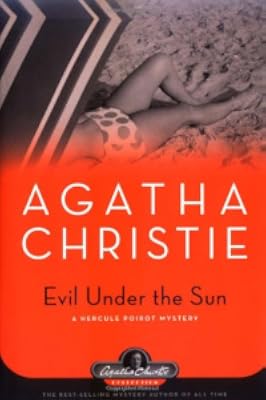
The classic Evil Under the Sun, one of the most famous of Agatha Christie's Poirot investigations, has the fastidious sleuth on the trail of the killer of a sun-bronzed beauty whose death brings some rather shocking secrets into the light.The beautiful bronzed body of Arlena Stuart lay face down on the beach. But strangely, there was no sun and Arlena was not sunbathing...she had been strangled.
Ever since Arlena's arrival the air had been thick with sexual tension. Each of the guests had a show more motive to kill her, including Arlena's new husband. But Hercule Poirot suspects that this apparent "crime of passion" conceals something much more evil.
. show less
Tags
Recommendations





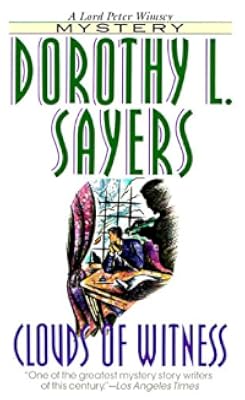
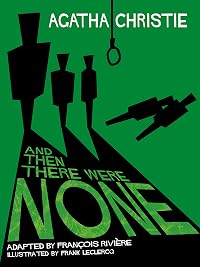
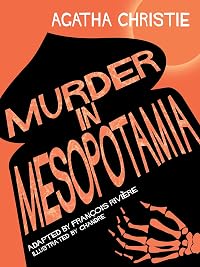


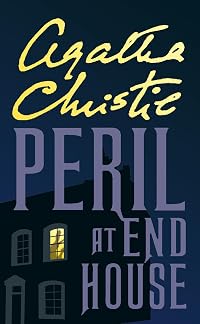





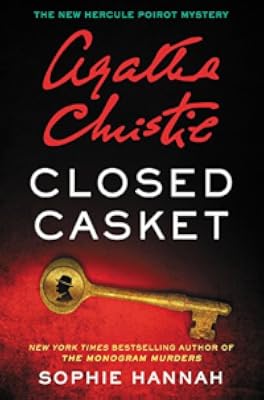
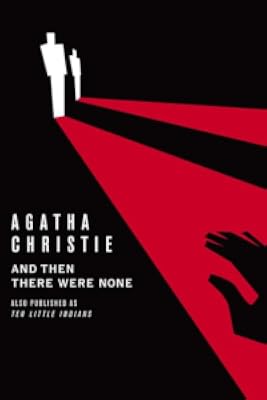
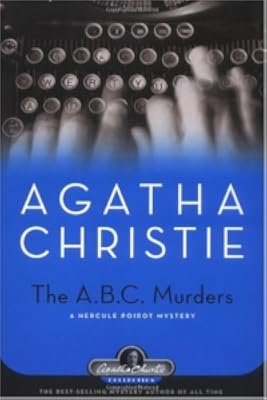

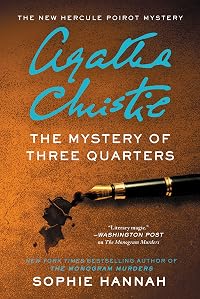


Member Recommendations
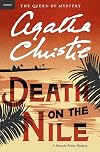
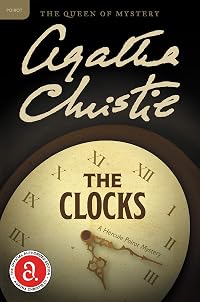
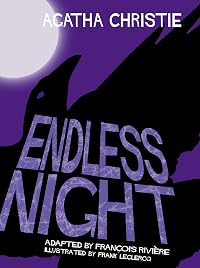
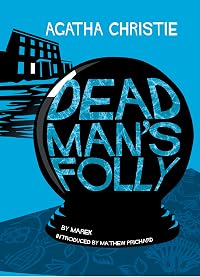
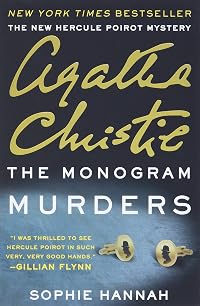
Porua Hercule Poirot and holidays never get on well together. Wherever Poirot goes death seems to stalk him. If anyone enjoys Evil under the Sun s/he should also enjoy Death on the Nile. Both books feature not only Poirot in a holiday mood but also women who are fatally attractive and men who desperately fall for them. But then things are not always what they seem.
90
MissBrangwen Both mysteries, although different in style, feature the murder of a similar character in a holiday setting.
Member Reviews
This is my third Christie book, and not for the first time I find myself wondering, and only halfway jokingly, whether she hated women or was just that much of a traditionalist, and also, where's the line there anyway? I know she is of course of her time, and I suspect that while I find many of her depictions of female characters distasteful, they in actuality hold much more depth than many of Christie's male counterparts would have given their female characters.
Basically, I was incredibly disappointed in the ending of the book, even though the character Rosamund Darnley had been established earlier to have the desires in line with a typical house wife living in the country, wed to a veteran (and I think trader, not exactly sure what show more Capt. Marshall's current career is at the time of the book). While I can grant that it is perhaps quite realistic to represent a woman of this time giving up her lucrative and successful career in order to be wife to a man she loves, as that indeed would follow the morality of the day, I still don't quite buy it. Just as Darnley had been shown to desire the family life, she had equally been shown to be passionate about her business and her craft, thinking of the various ways she could better dress the women around her to flatter their figures. We also received precious little characterization of Capt. Marshall, to the point where I'm not sure why his request to his future wife was for her to give up her business, rather than to continue it with him doing the books. Maybe this is a British class thing that is just flying right over my head, indeed I half-suspect it is.
I do sort of want to emphasize here that there is no real judgement from me on the decision itself, it is perfectly fine to want to be wife and (step) mother, and perhaps Darnley is young enough that they may expand their family further down the line. I'm glad that Linda is gaining a mother in this equation with whom she enjoys spending time, and I think that as a couple, Rosamund and the Captain will do well. They have both already shown great loyalty to one another, such that when they suspected the other of being a murderer, they tried to cover for them. Admittedly, that is in itself something of a morally bankrupt thing to do, but as framed by the narrative, all's well that ends well. Christie's books tend to forgive anything apart from actual murder. It's literally just the very last page that I feel falls flat, and not if it were in isolation. In isolation, I can see that the character of Rosamund Darnley takes serious Capt. Marshall's request and may have even required it of him, to prove to herself that he is truly devoted. However, this same books presents its murder victim as first being blamed by everyone who knew her for her murder, stating it was inherent to her 'type' multiple times. And then! We find out no, she wasn't a tiger stalking her poor victims (grown men who can make their own damn decisions), but in actuality she was the 'type' to be fooled by men and so dumb as to be taken in again and again, constantly sending money to those who take advantage of her. Great.
Add to all this the fact thatthe previous Christie book I read was Death on the Nile, where again we see a female victim - in fact, every Christie book I've read thus far has had one, I suspect all the better to sell your mystery novels with - who is characterized as a 'type' of woman, whose beauty and intelligence and charm and wealth means that with enough time passing, she simply was bound to be killed by somebody. The plot there being fully contrived against her, with her only error to take a man to wed, with whom she flirted when she shouldn't, sure, but who responded to her advances positively, and, in lying to her, presented his former girlfriend as a complete annoyance of his past. I'm not one to defend cheaters or adulterers, but when Linnet Ridgeway made up her mind that she wanted Simon, Simon did absolutely nothing in order to convince her otherwise and indeed played along. From Linnet's perspective, she could have simply lost a friend and a chance at love, if Simon had refused her and Jacqueline had taken him and left, never to be heard or seen again. But, according to the book, for her sin of that initial flirtation with a taken man, and then of believing Simon when he said he was only interested in her, she had to die. Ugh. Both of these books also had one of my least favorite tropes, that is, of women hating women based on assumptions and rumor. Again, I'm not saying it doesn't happen, I'm not naive enough to believe that. However, I also think that hatred and jealousy are emotionally draining and most women focus more on being satisfied with their own lives than desiring to live another's. I'd hate to find that that was overly optimistic of me.
For me, these things are building and compounding on themselves to paint a broader picture I'm not enjoying much, though maybe it is a broader picture of the accepted mores of the time. Even still, that there is an explanation for it doesn't make it then fun to read. Also, and I think this is just a commonality of older mystery novels, but I have come to dislike the essentializing way Christie describes people. show less
I do sort of want to emphasize here that there is no real judgement from me on the decision itself, it is perfectly fine to want to be wife and (step) mother, and perhaps Darnley is young enough that they may expand their family further down the line. I'm glad that Linda is gaining a mother in this equation with whom she enjoys spending time, and I think that as a couple, Rosamund and the Captain will do well. They have both already shown great loyalty to one another, such that when they suspected the other of being a murderer, they tried to cover for them. Admittedly, that is in itself something of a morally bankrupt thing to do, but as framed by the narrative, all's well that ends well. Christie's books tend to forgive anything apart from actual murder. It's literally just the very last page that I feel falls flat, and not if it were in isolation. In isolation, I can see that the character of Rosamund Darnley takes serious Capt. Marshall's request and may have even required it of him, to prove to herself that he is truly devoted. However, this same books presents its murder victim as first being blamed by everyone who knew her for her murder, stating it was inherent to her 'type' multiple times. And then! We find out no, she wasn't a tiger stalking her poor victims (grown men who can make their own damn decisions), but in actuality she was the 'type' to be fooled by men and so dumb as to be taken in again and again, constantly sending money to those who take advantage of her. Great.
Add to all this the fact that
For me, these things are building and compounding on themselves to paint a broader picture I'm not enjoying much, though maybe it is a broader picture of the accepted mores of the time. Even still, that there is an explanation for it doesn't make it then fun to read. Also, and I think this is just a commonality of older mystery novels, but I have come to dislike the essentializing way Christie describes people. show less
Poirot is on vacation at the isolated Jolly Roger Hotel on an island off the coast of Cornwall. When one of the guests is found murdered it seems likely another hotel guest must have committed the crime. But all the likely suspects have alibis and none of the unlikely suspects seem capable of the method of murder...
Another well-crafted mystery from Christie. The plot of this one initially seems to borrow a few elements from an earlier Poirot story ("Triangle at Rhodes" in [Murder in the Mews]) but, of course, Christie crafts something completely fresh. This one is definitely escapist fiction for the time period as there's no mention of the war (although Mussolini gets namedropped) nor the Blitz, and everyone is taking a completely show more normal summer vacation. This one is definitely worth reading although the final few paragraphs made me wrinkle my nose in distaste at the patriarchy. show less
Another well-crafted mystery from Christie. The plot of this one initially seems to borrow a few elements from an earlier Poirot story ("Triangle at Rhodes" in [Murder in the Mews]) but, of course, Christie crafts something completely fresh. This one is definitely escapist fiction for the time period as there's no mention of the war (although Mussolini gets namedropped) nor the Blitz, and everyone is taking a completely show more normal summer vacation. This one is definitely worth reading although the final few paragraphs made me wrinkle my nose in distaste at the patriarchy. show less
Not my favourite Christie, but still a very enjoyable mystery with a solid twist at the end. It’s pretty standard fare: a distinct and well-described setting (in this case a seaside hotel in the West Country), a varied cast of characters and a brutal murder. Poirot is as much fun as ever, but his sidekick Hastings is missing, which is a shame. There’s not much to say beyond that, which may seem like a criticism, but really means it was as consistently enjoyable as you’d expect a Christie mystery to be.
Is EVIL UNDER THE SUN the perfect holiday read? Or will it make you look askance as your fellow holiday makers? Certainly the Jolly Roger Hotel, Smugglers’ Island, Leathercombe Bay sounds attractive and the setting exudes a feeling of summer.
Captain Roger Angmering had only one great love, the sea. So he built his house—a sturdy house too, as it needed to be, on the little windswept gull-haunted promontory—cut off from land at each high tide.
The sturdy house was added to and embellished. A concrete causeway was laid down from the mainland to the island. ‘Walks’ and ‘Nooks’ were cut and devised all round the island. There were two tennis courts, sun-terraces leading down to a little bay embellished with rafts and diving show more boards. The Jolly Roger Hotel, Smugglers’ Island, Leathercombe Bay, came triumphantly into being. And from June till September (with a short season at Easter) the Jolly Roger Hotel was usually packed to the attics. It was enlarged and improved in 1934 by the addition of a cocktail bar, a bigger dining-room and some extra bathrooms. The prices went up. People said: ‘Ever been to Leathercombe Bay? Awfully jolly hotel there, on a sort of island. Very comfortable and no trippers or charabancs. Good cooking and all that. You ought to go.’ And people did go.
Several of the holiday makers recognise Hercule Poirot. (who wouldn't?)
resplendent in a white duck suit, with a panama hat tilted over his eyes, his moustaches magnificently befurled, lay back in an improved type of deck-chair and surveyed the bathing beach.
and go as far as to ask if he is there on "business". He replies:
let me assure you, Madame, that I am here simply in the same way that you are here yourselves—to enjoy myself—to spend the holiday. I do not think of crime even.
There is some discussion about whether crime could ever happen in such an idyllic spot:
‘No, I don’t believe even Mrs Gardener would have believed in a crime staged here. This isn’t the sort of place you’d get a body!’
Hercule Poirot stirred a little in his chair. He protested. He said: ‘But why not, Mademoiselle? Why should there not be what you call a “body” here on Smugglers’ Island?’
Emily Brewster said: ‘I don’t know. I suppose some places are more unlikely than others. This isn’t the kind of spot—’ She broke off, finding it difficult to explain her meaning.
‘It is romantic, yes,’ agreed Hercule Poirot. ‘It is peaceful. The sun shines. The sea is blue. But you forget, Miss Brewster, there is evil everywhere under the sun.’
Some even privately express a belief (a murderer amongst them) that if a crime does occur Poirot is probably "past it".
He’s Hercule Poirot. You must have heard of him.’ Mr Blatt said: ‘Didn’t catch his name properly. Oh yes, I’ve heard of him. But I thought he was dead. Dash it, he ought to be dead. What’s he after down here?’
......
‘He’s pretty old. Probably more or less ga ga.’
Well, the reader knows from the beginning (because of the publisher's blurb) that a murder will occur. Poirot knows it will too but can't see how he can prevent it. And we readers even know who the victim will be. What we don't know is when, how, and why.
One of Poirot's problems is that, although he is pretty sure who one of the murderers is, he likes her. She has qualities he appreciates in the 'modern' young woman - plenty of resolution, courage and good sense - and so he is reluctant to place her in the picture until he gets irrefutable evidence of an earlier crime and then the penny drops. It is a dilemma that often crops up for Poirot - feminine wiles can get the better of him.
For those who need it in their holiday reading, there is also romance, and a young life saved.
EVIL UNDER THE SUN is an enjoyable read, well constructed, fairly complex plot, but I think quite a way from Christie's best. I was particularly exasperated by the final chapter in which Poirot lays everything out before us. This was one case where perhaps Christie could have left it to the reader to put it all together. (Kindle tells me the chapter is 5% of the total book.) Perhaps Christie could have finished when the murderer lunged to get his hands around Poirot's throat. The explanations of chapter 13 got a bit tedious. show less
Captain Roger Angmering had only one great love, the sea. So he built his house—a sturdy house too, as it needed to be, on the little windswept gull-haunted promontory—cut off from land at each high tide.
The sturdy house was added to and embellished. A concrete causeway was laid down from the mainland to the island. ‘Walks’ and ‘Nooks’ were cut and devised all round the island. There were two tennis courts, sun-terraces leading down to a little bay embellished with rafts and diving show more boards. The Jolly Roger Hotel, Smugglers’ Island, Leathercombe Bay, came triumphantly into being. And from June till September (with a short season at Easter) the Jolly Roger Hotel was usually packed to the attics. It was enlarged and improved in 1934 by the addition of a cocktail bar, a bigger dining-room and some extra bathrooms. The prices went up. People said: ‘Ever been to Leathercombe Bay? Awfully jolly hotel there, on a sort of island. Very comfortable and no trippers or charabancs. Good cooking and all that. You ought to go.’ And people did go.
Several of the holiday makers recognise Hercule Poirot. (who wouldn't?)
resplendent in a white duck suit, with a panama hat tilted over his eyes, his moustaches magnificently befurled, lay back in an improved type of deck-chair and surveyed the bathing beach.
and go as far as to ask if he is there on "business". He replies:
let me assure you, Madame, that I am here simply in the same way that you are here yourselves—to enjoy myself—to spend the holiday. I do not think of crime even.
There is some discussion about whether crime could ever happen in such an idyllic spot:
‘No, I don’t believe even Mrs Gardener would have believed in a crime staged here. This isn’t the sort of place you’d get a body!’
Hercule Poirot stirred a little in his chair. He protested. He said: ‘But why not, Mademoiselle? Why should there not be what you call a “body” here on Smugglers’ Island?’
Emily Brewster said: ‘I don’t know. I suppose some places are more unlikely than others. This isn’t the kind of spot—’ She broke off, finding it difficult to explain her meaning.
‘It is romantic, yes,’ agreed Hercule Poirot. ‘It is peaceful. The sun shines. The sea is blue. But you forget, Miss Brewster, there is evil everywhere under the sun.’
Some even privately express a belief (a murderer amongst them) that if a crime does occur Poirot is probably "past it".
He’s Hercule Poirot. You must have heard of him.’ Mr Blatt said: ‘Didn’t catch his name properly. Oh yes, I’ve heard of him. But I thought he was dead. Dash it, he ought to be dead. What’s he after down here?’
......
‘He’s pretty old. Probably more or less ga ga.’
Well, the reader knows from the beginning (because of the publisher's blurb) that a murder will occur. Poirot knows it will too but can't see how he can prevent it. And we readers even know who the victim will be. What we don't know is when, how, and why.
One of Poirot's problems is that, although he is pretty sure who one of the murderers is, he likes her. She has qualities he appreciates in the 'modern' young woman - plenty of resolution, courage and good sense - and so he is reluctant to place her in the picture until he gets irrefutable evidence of an earlier crime and then the penny drops. It is a dilemma that often crops up for Poirot - feminine wiles can get the better of him.
For those who need it in their holiday reading, there is also romance, and a young life saved.
EVIL UNDER THE SUN is an enjoyable read, well constructed, fairly complex plot, but I think quite a way from Christie's best. I was particularly exasperated by the final chapter in which Poirot lays everything out before us. This was one case where perhaps Christie could have left it to the reader to put it all together. (Kindle tells me the chapter is 5% of the total book.) Perhaps Christie could have finished when the murderer lunged to get his hands around Poirot's throat. The explanations of chapter 13 got a bit tedious. show less
Arlena Stuart, gorgeous stage actress and homewrecker, is just the type of woman to get herself killed. And, of course, she does. The bronzed redhead turned men’s heads from the moment she arrived at the upscale Jolly Roger Hotel on Smuggler’s Island on the Cornish coast. “There is evil everywhere under the sun,” detective Hercule Poirot reminds a hotel guest, and it isn’t long before our Jezebel is struck dead.
Dame Agatha Christie piled plenty of twists into Evil Under the Sun, which was suspenseful enough that I read it in a little more than a day. Almost 80 years after it was first published, Christie’s 24th Hercule Poirot novel still proves as alluring as a hot summer day at a vacation resort.
Dame Agatha Christie piled plenty of twists into Evil Under the Sun, which was suspenseful enough that I read it in a little more than a day. Almost 80 years after it was first published, Christie’s 24th Hercule Poirot novel still proves as alluring as a hot summer day at a vacation resort.
Typical, entertaining Christie book. Of course the revelation has a few ridiculous parts but it's still *believable* so it comes across as inspired rather than frustrating. The book is full of stereotypes but they're entertainingly written and she subverts them a bit. Nothing that would surprise anyone who knows what Christie does, just a solid book with some examples of the flair that shows she was a pretty good writer.
Evil Under the Sun by Agatha Christie features Hercule Poirot in his 24th mystery. This time, the detective is enjoying a holiday in Devon at the Jolly Roger Hotel on Smuggler's Island. After the murder of an attractive, flirtatious woman, Poirot is invited to aid the local constabulary with the investigation. The setting of an old hotel on the island with its coves and caves was inspired by Burgh Island and was an important part of the mystery. Christie created a variety of quirky hotel guests, filling in their stories and showing their interactions. Poirot works through the evidence and interviews methodically, often declining to comment when the police begin to form their own opinions. In the end, he creates a bit of a test that show more leads to the murderer. There were red herrings and subplots that kept it interesting.
I have several Christie's planned for the year and am looking forward to reading more. show less
I have several Christie's planned for the year and am looking forward to reading more. show less
Members
- Recently Added By
Lists

Read the book and saw the movie
1,170 works; 195 members

Crime and Mysteries to Read
746 works; 31 members

Best Beach Reads
99 works; 61 members

Female Author
1,234 works; 67 members

Agatha Christie Poirot
43 works; 2 members

Books About Murder
313 works; 7 members

Favorite Books from the 1940s
38 works; 3 members

Detective Stories
343 works; 5 members

Books Read in 2010
631 works; 11 members

Books Read in 2017
4,249 works; 130 members

Books Read in 2023
5,547 works; 145 members

Great Short Books: A Year of Reading-Briefly
59 works; 4 members

Best Mysteries With a Historical Setting
292 works; 160 members

TBR
77 works; 1 member

Must Read Detective Stories (Nick Fuller)
278 works; 2 members

Agatha Christie Chronology
93 works; 1 member

Books Read in 2026
1,961 works; 66 members
Author Information

2,159+ Works 440,861 Members
One of the most successful and beloved writer of mystery stories, Agatha Mary Clarissa Christie was born in 1890 in Torquay, County Devon, England. She wrote her first novel, The Mysterious Affair at Styles, in 1920, launching a literary career that spanned decades. In her lifetime, she authored 79 crime novels and a short story collection, 19 show more plays, and six novels written under the name of Mary Westmacott. Her books have sold over a billion copies in the English language with another billion in 44 foreign languages. Some of her most famous titles include Murder on the Orient Express, Mystery of the Blue Train, And Then There Were None, 13 at Dinner and The Sittaford Mystery. Noted for clever and surprising twists of plot, many of Christie's mysteries feature two unconventional fictional detectives named Hercule Poirot and Miss Jane Marple. Poirot, in particular, plays the hero of many of her works, including the classic, The Murder of Roger Ackroyd (1926), and Curtain (1975), one of her last works in which the famed detective dies. Over the years, her travels took her to the Middle East where she met noted English archaeologist Sir Max Mallowan. They married in 1930. Christie accompanied Mallowan on annual expeditions to Iraq and Syria, which served as material for Murder in Mesopotamia (1930), Death on the Nile (1937), and Appointment with Death (1938). Christie's credits also include the plays, The Mousetrap and Witness for the Prosecution (1953; film 1957). Christie received the New York Drama Critics' Circle Award for 1954-1955 for Witness. She was also named Dame Commander of the Order of the British Empire in 1971. Christie died in 1976. (Bowker Author Biography) show less
Some Editions
Awards and Honors
Notable Lists
Series

Belongs to Publisher Series
Work Relationships
Is contained in
Five Complete Novels of Murder and Detection: And Then There Were None / Peril at End House / The Murder at Hazelmoor / Easy to Kill / Evil Under the Sun by Agatha Christie
Agatha Christie Crime Collection: Death Comes As The End, Evil Under The Sun, The Sittaford Mystery by Agatha Christie
Agatha Christie Collection: They Do it with Mirrors, a Pocket Full of Rye, Murder on the Orient Express, Evil Under the Sun, Death on the Nile by Agatha Christie
Seven Deadly Sins: The ABC Murders / A Murder Is Announced / Sparkling Cyanide / Evil Under the Sun / At Bertram's Hotel / Endess Night / Five Little Pigs by Agatha Christie
Poirot: Four Classic Cases: Three Act Tragedy, Sad Cypress, Evil Under the Sun, The Hollow by Agatha Christie
The Body in the Library / The Secret of Chimneys / Evil Under the Sun / Sparkling Cyanide by Agatha Christie
Evil Under the Sun | N or M? | The Body in the Library | The Moving Finger | Five Little Pigs | Towards Zero by Agatha Christie
One, Two, Buckle My Shoe; After the Funeral; Evil Under the Sun and Other Stories by Agatha Christie
Common Knowledge
- Canonical title
- Evil Under the Sun
- Original title
- Evil Under the Sun
- Alternate titles*
- Rätsel um Arlena
- Original publication date
- 1941-06-01
- People/Characters
- Hercule Poirot; Colonel Weston; Arlena Stuart Marshall; Kenneth Marshall; Linda Marshall; Patrick Redfern (show all 14); Christine Redfern; Rosamund Darnley; Mrs. Gardener; Odell C. Gardener; Emily Brewster; Horace Blatt; Reverend Stephen Lane; Major Barry
- Important places
- Smuggler's Island, Leathercombe Bay, Devon, England, UK; The Jolly Roger Hotel; Devon, England, UK
- Related movies
- Evil Under the Sun (1982 | IMDb); The Making of Agatha Christie's 'Evil Under the Sun' (1982 | IMDb); Agatha Christie: Evil Under the Sun (2007 | IMDb)
- Dedication
- To JOHN
In memory of our last season in Syria - First words
- When Captain Roger Angmering built himself a house in the year 1782 on the island off Leathercombe Bay, it was thought the height of eccentricity on his part.
- Last words
- (Click to show. Warning: May contain spoilers.)" ... Now- it’s going to come true..."
- Original language
- English UK
*Some information comes from Common Knowledge in other languages. Click "Edit" for more information.
Classifications
Statistics
- Members
- 5,387
- Popularity
- 2,508
- Reviews
- 110
- Rating
- (3.75)
- Languages
- 28 — Arabic, Catalan, Chinese, Czech, Danish, Dutch, English, Estonian, Finnish, French, German, Greek, Hungarian, Indonesian, Italian, Japanese, Lithuanian, Norwegian (Bokmål), Norwegian, Polish, Portuguese, Russian, Serbian, Croatian, Slovenian, Spanish, Swedish, Turkish
- Media
- Paper, Audiobook, Ebook
- ISBNs
- 213
- UPCs
- 3
- ASINs
- 78