
The Berry Pickers
by Amanda Peters
On This Page
Description
Fiction. Literature. A four-year-old Mi'kmaq girl goes missing from the blueberry fields of Maine, sparking a tragic mystery that haunts the survivors, unravels a family, and remains unsolved for nearly fifty years July 1962. Following in the tradition of Indigenous workers from Nova Scotia, a Mi'kmaq family arrives in Maine to pick blueberries for the summer. Weeks later, four-year-old Ruthie, the family's youngest child, vanishes. She is last seen by her six-year-old brother, Joe, sitting show more on a favorite rock at the edge of a berry field. Joe will remain distraught by his sister's disappearance for years to come. In Maine, a young girl named Norma grows up as the only child of an affluent family. Her father is emotionally distant, her mother frustratingly overprotective. Norma is often troubled by recurring dreams and visions that seem more like memories than imagination. As she grows older, Norma slowly comes to realize there is something her parents aren't telling her. Unwilling to abandon her intuition, she will spend decades trying to uncover this family secret. For readers of The Vanishing Half and Woman of Light, this showstopping debut by a vibrant new voice in fiction is a riveting novel about the search for truth, the shadow of trauma, and the persistence of love across time. show lessTags
Recommendations













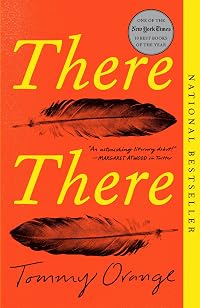








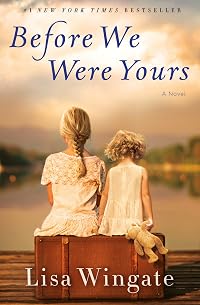







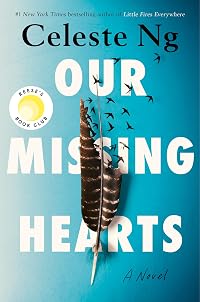

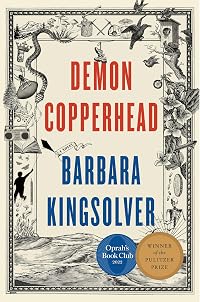











Member Recommendations

Member Reviews
It was the summer of 1962—a summer that one family would never forget. Not because of the hard work they endured under the hot Maine sun; they were accustomed to the long days of labor, the heat, the blackflies, and the evenings spent around the campfire. They cherished the comforting smell of food cooking, followed by the familiar sound of Dad's fiddle and the flickering sights of fireflies. This was the life of the Mi'kmaq family of seven during the summer, as they spent eight to twelve weeks each year picking blueberries. But this summer was different. Only six members of the family would return home to Nova Scotia. Nothing would ever be the same again. Not for the family. Not for Ruthie, the youngest daughter, still missing.
This show more is a haunting and gripping novel, powerful in its storytelling. The narrative forces us to confront the complexities of familial relationships, where love is often intertwined with betrayal. It explores family secrets and sheds light on challenging aspects of life, including the loss of a child, pregnancy loss, guilt, racism, alcoholism, the nightmares of unexplained memories, overprotective parents, and the unveiling of truth. A story that will stay with me.
Highly recommended. show less
This show more is a haunting and gripping novel, powerful in its storytelling. The narrative forces us to confront the complexities of familial relationships, where love is often intertwined with betrayal. It explores family secrets and sheds light on challenging aspects of life, including the loss of a child, pregnancy loss, guilt, racism, alcoholism, the nightmares of unexplained memories, overprotective parents, and the unveiling of truth. A story that will stay with me.
Highly recommended. show less
Every summer a Mi'kmaq family travels from Nova Scotia to Maine to pick blueberries and make some seasonal money. One summer, the youngest girl in this family, Ruthie, goes missing. The family looks for her everywhere, but she is not found. They return to Nova Scotia broken. The novel is told in alternating chapters between Joe, who was the next youngest child in the family and the last to see Ruthie, and Norma. It is quickly apparent to the reader that Norma is Ruthie and was likely kidnapped by this white family. The reader follows Norma and Joe's lives, wondering whether they will ever be reunited.
I really enjoyed this. It could have gone wrong a lot of ways - by being overly emotional or overly lecturing - but instead Peters simply show more tells a great story. She creates great characters who are fully fleshed out and creates a satisfying plot. Recommended. show less
I really enjoyed this. It could have gone wrong a lot of ways - by being overly emotional or overly lecturing - but instead Peters simply show more tells a great story. She creates great characters who are fully fleshed out and creates a satisfying plot. Recommended. show less
4.5⭐
In the early 1960s, four-year-old Ruthie, the youngest daughter of a Mi’kmaq family from Nova Scotia, disappeared from a blueberry field in Maine where her family was employed for the summer. With almost no help from the authorities on account of their “transient” status, Ruthie’s family and their coworkers desperately search for her but to no avail. Ruthie’s brother Joe, six years old at the time, was the last to see her and her disappearance would haunt him for years to come. Devastated and heartbroken, Ruthie’s family struggles to hold on to hope that she is alive and will return to them someday.
“It’s funny what you remember when something goes wrong. Something that would never stick in your memory on an show more ordinary day gets stuck there permanent.”
Norma has vague memories of her life before she was five years old. Growing up in Maine, the only child of a judge who is a tad distant and an overprotective mother, she is an inquisitive and perceptive child. Her vivid dreams, hushed conversations between her family members and her mother’s nervous reaction to her questions about their family do not escape her attention. She senses that there is much about her life that does not feel right – a belief that follows her into adulthood. Years later, after both her parents have passed on, her aunt shares the truth about their family – a revelation that will leave fifty-four-year-old Norma with more questions than answers.
“Fate is a trickster. He likes to set up all the clues just to see if you can put them together and make sense out of things you never thought to make sense of in the first place.”
The Berry Pickers by Amanda Peters is an incredibly moving story that revolves around themes of family, identity, loss, hope and grief. Spanning fifty years, the narrative is shared from dual perspectives in alternating chapters. Despite the non-linear transitions between past and present timelines, the narrative flows well and is not difficult to follow. Please note that there is no mystery here, and it is the journey of these characters that takes center stage in this novel.
The structure of the narrative allows us to explore the contrast between the trajectories of Norma’s and Joe’s lives and how one traumatic event impacts their individual worldviews. The author’s strength lies in her character development and depiction of complex human emotions. Losing Ruthie casts a shadow on Joe’s life and his being the last one to see her before she disappears haunts him throughout his adult life, and though there are aspects about adult Joe that might not arouse sympathy there's no doubt that he is a broken man and the author compels us to take a deeper look into his heart despite his flaws. Norma’s life is one of searching for a sense of belongingness despite growing up in the security of an affluent family who cares for her deeply. Given her trajectory, Norma’s reactions were commensurate with her character, though at times, especially toward the end, I thought Norma’s perspective could have been explored in more depth. However, this does not detract from the overall impact of the novel. The author approaches sensitive topics such as grief, the loss of a child, alcoholism, discrimination, and terminal illness, among others, with much sensitivity and compassion. Overall, I found this novel to be a thought-provoking, compelling read that I would not hesitate to recommend to those who enjoy emotionally charged family sagas.
I look forward to reading more from this talented debut author in the future.
“Even people who exude light and happiness have dark secrets. Sometimes, the lie becomes so entrenched it becomes the truth, hidden away in the deep recesses of the mind until death erases it, leaving the world a little different.”
I listened to the audiobook narrated by Aaliya Warbus and Jordan Waunch, who have done a wonderful job of breathing life into these characters and setting the tone for this beautifully written story.
Many thanks to RB Media and NetGalley for ALC of this novel. All opinions expressed in this review are my own. The Berry Pickers was published in the United States on October 31, 2023. show less
In the early 1960s, four-year-old Ruthie, the youngest daughter of a Mi’kmaq family from Nova Scotia, disappeared from a blueberry field in Maine where her family was employed for the summer. With almost no help from the authorities on account of their “transient” status, Ruthie’s family and their coworkers desperately search for her but to no avail. Ruthie’s brother Joe, six years old at the time, was the last to see her and her disappearance would haunt him for years to come. Devastated and heartbroken, Ruthie’s family struggles to hold on to hope that she is alive and will return to them someday.
“It’s funny what you remember when something goes wrong. Something that would never stick in your memory on an show more ordinary day gets stuck there permanent.”
Norma has vague memories of her life before she was five years old. Growing up in Maine, the only child of a judge who is a tad distant and an overprotective mother, she is an inquisitive and perceptive child. Her vivid dreams, hushed conversations between her family members and her mother’s nervous reaction to her questions about their family do not escape her attention. She senses that there is much about her life that does not feel right – a belief that follows her into adulthood. Years later, after both her parents have passed on, her aunt shares the truth about their family – a revelation that will leave fifty-four-year-old Norma with more questions than answers.
“Fate is a trickster. He likes to set up all the clues just to see if you can put them together and make sense out of things you never thought to make sense of in the first place.”
The Berry Pickers by Amanda Peters is an incredibly moving story that revolves around themes of family, identity, loss, hope and grief. Spanning fifty years, the narrative is shared from dual perspectives in alternating chapters. Despite the non-linear transitions between past and present timelines, the narrative flows well and is not difficult to follow. Please note that there is no mystery here, and it is the journey of these characters that takes center stage in this novel.
The structure of the narrative allows us to explore the contrast between the trajectories of Norma’s and Joe’s lives and how one traumatic event impacts their individual worldviews. The author’s strength lies in her character development and depiction of complex human emotions. Losing Ruthie casts a shadow on Joe’s life and his being the last one to see her before she disappears haunts him throughout his adult life, and though there are aspects about adult Joe that might not arouse sympathy there's no doubt that he is a broken man and the author compels us to take a deeper look into his heart despite his flaws. Norma’s life is one of searching for a sense of belongingness despite growing up in the security of an affluent family who cares for her deeply. Given her trajectory, Norma’s reactions were commensurate with her character, though at times, especially toward the end, I thought Norma’s perspective could have been explored in more depth. However, this does not detract from the overall impact of the novel. The author approaches sensitive topics such as grief, the loss of a child, alcoholism, discrimination, and terminal illness, among others, with much sensitivity and compassion. Overall, I found this novel to be a thought-provoking, compelling read that I would not hesitate to recommend to those who enjoy emotionally charged family sagas.
I look forward to reading more from this talented debut author in the future.
“Even people who exude light and happiness have dark secrets. Sometimes, the lie becomes so entrenched it becomes the truth, hidden away in the deep recesses of the mind until death erases it, leaving the world a little different.”
I listened to the audiobook narrated by Aaliya Warbus and Jordan Waunch, who have done a wonderful job of breathing life into these characters and setting the tone for this beautifully written story.
Many thanks to RB Media and NetGalley for ALC of this novel. All opinions expressed in this review are my own. The Berry Pickers was published in the United States on October 31, 2023. show less
Thanks to NetGalley and RB Media Recorded Books for an ARC audiobook of the Berry Pickers.
I of course was drawn to The Berry Pickers because of the beautiful cover art. It immediately caught my eye and I wanted to learn more about it.
I love a good mystery, and this novel starts off knee deep in one- where Ruthie, the youngest daughter of the Mi'kmaq family of main characters goes missing as a young child from the berry farm where the family is living and working. Where did she go? Is she still alive? Why did she leave? How did she leave? What burdens does this loss place on a family?
This book has two corresponding points of view: Joe and Norma. Joe being one of the brothers of the Mi'kmaq family that the reader gets to experience how show more the loss of his little sister as a young boy plagues him throughout his life and the decisions that he makes. Norma is a young woman, who begins to put together that everything in her rather stuffy and proper family does not exactly line up. Aailya Warbus and Jordan Waunch narrated these two characters in the story, and shout out to them because both were absolutely fantastic and I will look into more of the narrations. These narrators were so great that I truly felt like I was in the story.
One of my biggest draws to the story was learning that the main characters in the novel were First Nations peoples. I am always drawn to the stories of Indigenous people as one of my best friends and previous romantic partners was of a First Nations tribe, and also to remind people of the previous and current racial discrimination against Indigenous Peoples. Throughout the story there are instances of racism that very much mirror some of the overt racism that we currently see today against Indigenous Peoples. For example: when Ruthie initially goes missing, do the police look into her disappearance? Nope. They just 'assume' she ran off....as if 5 or 6 year olds frequently disappear without foul play involved. This parallels what is currently happening with Indigenous women and children disappearing or being murdered across the United States with little investigation taking place on their behalf. Currently 4 out of 5 Indigenous Americans have experienced violence in their lifetimes, the majority of which have experienced violence by the hand of a non-native perpetrator at least once.
The story itself was so great. The family drama, and how love can transcend beyond all of our mistakes, choices and beyond. This was a novel good for the soul. I cannot say enough great things about The Berry Pickers and will be recommending it to all of my friends and family. Bravo Amanda Peters. This was a fantastic book. show less
I of course was drawn to The Berry Pickers because of the beautiful cover art. It immediately caught my eye and I wanted to learn more about it.
I love a good mystery, and this novel starts off knee deep in one- where Ruthie, the youngest daughter of the Mi'kmaq family of main characters goes missing as a young child from the berry farm where the family is living and working. Where did she go? Is she still alive? Why did she leave? How did she leave? What burdens does this loss place on a family?
This book has two corresponding points of view: Joe and Norma. Joe being one of the brothers of the Mi'kmaq family that the reader gets to experience how show more the loss of his little sister as a young boy plagues him throughout his life and the decisions that he makes. Norma is a young woman, who begins to put together that everything in her rather stuffy and proper family does not exactly line up. Aailya Warbus and Jordan Waunch narrated these two characters in the story, and shout out to them because both were absolutely fantastic and I will look into more of the narrations. These narrators were so great that I truly felt like I was in the story.
One of my biggest draws to the story was learning that the main characters in the novel were First Nations peoples. I am always drawn to the stories of Indigenous people as one of my best friends and previous romantic partners was of a First Nations tribe, and also to remind people of the previous and current racial discrimination against Indigenous Peoples. Throughout the story there are instances of racism that very much mirror some of the overt racism that we currently see today against Indigenous Peoples. For example: when Ruthie initially goes missing, do the police look into her disappearance? Nope. They just 'assume' she ran off....as if 5 or 6 year olds frequently disappear without foul play involved. This parallels what is currently happening with Indigenous women and children disappearing or being murdered across the United States with little investigation taking place on their behalf. Currently 4 out of 5 Indigenous Americans have experienced violence in their lifetimes, the majority of which have experienced violence by the hand of a non-native perpetrator at least once.
The story itself was so great. The family drama, and how love can transcend beyond all of our mistakes, choices and beyond. This was a novel good for the soul. I cannot say enough great things about The Berry Pickers and will be recommending it to all of my friends and family. Bravo Amanda Peters. This was a fantastic book. show less
Joe and his family travel from Nova Scotia to Maine each summer to work on a berry farm. Everyone takes part, even the youngest children. Joe is just 6 years old when his 4-year-old sister Ruthie disappears without a trace. All he can remember is sitting with her on a rock near the fields, and is haunted for the rest of his life. Ruthie grows up as an only child named Norma, with frightening dreams that feel tangible, like memories. The narrative follows Joe and Ruthie into adulthood, showing the impact of this trauma on them and their families.
Ruthie and Joe are both Mi’kmaq (First Nations) people; Ruthie’s skin is light enough to “pass” as part of her white family, but as she grows up she feels increasingly out of place and show more begins to doubt the stories she’s been told about her past. Joe searches constantly for an intangible something that will bring happiness, but despite the support of a loving family, anger and alcohol are his worst enemies. Several years pass before Joe reaches a point of acceptance, and Ruthie learns the truth about her origins and … well, you’ll just have to read the book to see how things turn out for them.
Rather than relying on common tropes, this debut novel presented a well-written story with nuance and feeling. show less
Ruthie and Joe are both Mi’kmaq (First Nations) people; Ruthie’s skin is light enough to “pass” as part of her white family, but as she grows up she feels increasingly out of place and show more begins to doubt the stories she’s been told about her past. Joe searches constantly for an intangible something that will bring happiness, but despite the support of a loving family, anger and alcohol are his worst enemies. Several years pass before Joe reaches a point of acceptance, and Ruthie learns the truth about her origins and … well, you’ll just have to read the book to see how things turn out for them.
Rather than relying on common tropes, this debut novel presented a well-written story with nuance and feeling. show less
Winnipeg author Katharena Vermette is quoted thusly on the front cover: "The Berry Pickers is a triumph." I agree. Debut novelists rarely have the assurance that Amanda Peters displays in this book. She credits a number of people who mentored and encouraged her but, obviously, she had the talent to start with.
A Nova Scotian Mik'maw family go to Maine each year to work on a berry farm picking blueberries. There are five children (Ben, Mae, Charlie, Joe and four-year-old Ruthie) and their two parents. Everyone except Ruthie picks and Ruthie helps out by bringing water around for the pickers. One day after picking is through Joe and Ruthie sit at the edge of the field eating bologna sandwiches and then Joe wanders off.Ruthie is never seen show more again. The family and other pickers scour the surroundings but there is no trace. The police aren't interested in mounting a search when they are contacted and so, the family must go back to Nova Scotia without their youngest member. They are all devastated but Joe is particularly hard hit because he was the last person to see Ruthie and he feels responsible for her disappearance. Back in Nova Scotia the parents are informed that the rest of the children must go to residential school but they aren't going to allow any other of their children to be taken. Year after year the family returns to Maine to pick blueberries and to hunt for signs of Ruthie. The year Joe is fifteen something changes that. A carnival is in the nearby town and the kids go to kick up their heels but it ends in tragedy when Charlie is beaten by some men also from Nova Scotia. Charlie dies of his injuries on the trip back home and, thus, the family is reduced by another member. It's all too much for Joe who takes off to western Canada. Interspersed with Joe's story are the chapters of a young girl named Norma. She lives a conventional middle-class life with her mother and father in Maine but she has unsettling dreams about another mother and father. Obviously, Norma is Ruthie but it is a long time before Norma learns about her early years. Her mother, suffering from dementia, lets slip something that causes Norma to question everything she thought she know about her family. It is her aunt who finally fills in the details and helps her come to terms with the past.
As horrible as Norma's abduction was, it was Joe's story that really tugged at my heart strings. Losing Ruthie changed his life. Who knows what he could have done if that abduction had never happened? show less
A Nova Scotian Mik'maw family go to Maine each year to work on a berry farm picking blueberries. There are five children (Ben, Mae, Charlie, Joe and four-year-old Ruthie) and their two parents. Everyone except Ruthie picks and Ruthie helps out by bringing water around for the pickers. One day after picking is through Joe and Ruthie sit at the edge of the field eating bologna sandwiches and then Joe wanders off.Ruthie is never seen show more again. The family and other pickers scour the surroundings but there is no trace. The police aren't interested in mounting a search when they are contacted and so, the family must go back to Nova Scotia without their youngest member. They are all devastated but Joe is particularly hard hit because he was the last person to see Ruthie and he feels responsible for her disappearance. Back in Nova Scotia the parents are informed that the rest of the children must go to residential school but they aren't going to allow any other of their children to be taken. Year after year the family returns to Maine to pick blueberries and to hunt for signs of Ruthie. The year Joe is fifteen something changes that. A carnival is in the nearby town and the kids go to kick up their heels but it ends in tragedy when Charlie is beaten by some men also from Nova Scotia. Charlie dies of his injuries on the trip back home and, thus, the family is reduced by another member. It's all too much for Joe who takes off to western Canada. Interspersed with Joe's story are the chapters of a young girl named Norma. She lives a conventional middle-class life with her mother and father in Maine but she has unsettling dreams about another mother and father. Obviously, Norma is Ruthie but it is a long time before Norma learns about her early years. Her mother, suffering from dementia, lets slip something that causes Norma to question everything she thought she know about her family. It is her aunt who finally fills in the details and helps her come to terms with the past.
As horrible as Norma's abduction was, it was Joe's story that really tugged at my heart strings. Losing Ruthie changed his life. Who knows what he could have done if that abduction had never happened? show less
Family, loss and devastating secrets lie at the heart of the story Amanda Peters tells in her slow-burning debut novel, The Berry Pickers. In 1962, a Nova Scotia Mi’kmaq family travels to Maine, where they have gone for many years to spend the summer picking berries. That year there are five children, the youngest, Ruthie, just four years old. One day, Ruthie and six-year-old Joe go off together to eat their lunch. Joe, distracted by something, leaves his sister on her own, and Ruthie goes missing. Peters’ novel traces the effects of this traumatic loss on Ruthie’s family while also providing the reader with a window into Ruthie’s adult years and her search for her true identity. Peters splits the narrative into two alternating show more threads. In the first we find Joe, now in his fifties, at home with his family after many years of self-imposed exile, obsessing over past mistakes and failures. Joe is dying of cancer. The other thread follows a character named Norma, an only child raised by a husband and wife in a comfortable New England setting. Though over-protective and tight lipped about the past, her parents have been good to her, and Norma’s life has been happy. But as she grows older, unsettling questions arise that pique her curiosity and raise suspicions that all is not as it should be—questions such as why are there no photos of her as an infant, and why is her skin darker than her parents’—questions that her mother and father seem at a loss to answer. Peters follows her two main characters through their middle years and into later life. Joe, tormented by guilt over being the last family member to see Ruthie before her disappearance, and anguished over the death of older brother Charlie, resorts to booze and violence. One night, after getting drunk and striking his wife hard enough to draw blood, he leaves Nova Scotia and his family, first heading west, then returning to Maine, where for many years he works as a farm hand and manual laborer. Norma, living in New England, studies literature in college, gets a teaching job, marries, divorces. But down through the years, the mystery of Ruthie’s disappearance continues to eat away at Joe and his family, and at the same time Norma’s questions about her own origins deepen. In her first novel Amanda Peters is less concerned with sustaining a mystery than with depicting the emotional toll of profound loss and dark family secrets on the human psyche. The reader will see the resolution coming, but this takes nothing away from the experience of reading the book because Peters finds other ways to generate suspense and wraps up her story in a manner that is satisfying dramatically. This is a novel that unapologetically touches the heart, but it also raises urgent questions about identity and social justice. Moving and often gripping, The Berry Pickers is a triumph of empathetic storytelling. It also announces Amanda Peters as a writer to watch. show less
Members
- Recently Added By
Lists

Fiction: Historical
288 works; 3 members

Globe and Mail | Canadian Fiction: April 15, 2023
10 works; 1 member

Top Five Books of 2023
767 works; 317 members

Globe and Mail | Canadian Fiction: April 20, 2024
10 works; 1 member
Globe and Mail | Canadian Fiction: April 27, 2024
10 works; 1 member

Globe and Mail | Canadian Fiction: May 4, 2024
10 works; 1 member

Evergreen Award™ Winners and Nominees 2005–2024
200 works; 3 members

Globe and Mail | Canadian Fiction: December 7, 2024
10 works; 1 member

Top Five Books of 2024
795 works; 264 members
Globe and Mail | Canadian Fiction: December 14, 2024
10 works; 1 member

Globe and Mail | Canadian Fiction: January 25, 2025
10 works; 1 member
Globe and Mail | Canadian Fiction: February 1, 2025
10 works; 1 member

Books We Couldn't Put Down
443 works; 197 members

Canadian Historical Fiction 🇨🇦
157 works; 8 members

Summer 2026
17 works; 1 member

Books Read 2026
21 works; 1 member
Author Information

3 Works 2,070 Members
Awards and Honors
Awards
Distinctions
Common Knowledge
- Canonical title
- The Berry Pickers
- Original title
- The Berry Pickers:A Novel
- Original publication date
- 2023
- People/Characters
- Ruthie*; Joseph “Joe”; Mae; Ben; Charles “Charlie” Michael; Lewis (show all 15); Mother; Norma*; Lenore; Frank; June; Alice; Mark; Leah; Cora
- Important places
- Maine, USA; Nova Scotia, Canada; Boston, Massachusetts, USA
- Dedication
- For my dad. Thank you for the stories.
Wela'lin a'tukowin. - First words
- I sit with my back to the wall, my pillows flat.
- Quotations
- People will be someone other than themselves if they have people who rely on them.
Some people, I have learned, are meant to read great works and others are meant to write them. Often, these are not the same people.
That's why I found it strange that no word exists for a parent who loses a child. If children lose their parents, they are orphans. If a husband loses his wife, he's a widower. But there's no word for a parent who loses a chi... (show all)ld. I've come to believe that the event is just too big, too monstrous, too overwhelming for words. No word could ever describe the feeling, so we leave it unsaid.
Some secrets are so dark that it's best they remain buried. Even people who exude light and happiness have dark secrets. Sometimes, the lie becomes so entrenched it becomes the truth, hidden away in the deep recesses of the m... (show all)ind until death erases it, leaving the world a little different. Secrets and lies can take on a life of their own, they can be twisted and manipulated, or they can burst into the world from the mouth of someone just as they are starting to lose their mind.
Time quickens the older you get, as if the universe is trying to push you toward the finish line, to make room for the younger, the stronger, to mark your brief place in history and move on.
...time is never a friend to the sick or the old. - Last words
- (Click to show. Warning: May contain spoilers.)Beside the steps that Joe built, we buried his ashes. As I stood hand in hand with my niece, who looked a little like me, I began to let go of my ghosts.
- Blurbers
- Vermette, Katherena; Talty, Morgan; Good, Michelle; Medina, Nick; Dimaline, Cherie
- Original language
- English
Classifications
Statistics
- Members
- 1,970
- Popularity
- 10,736
- Reviews
- 87
- Rating
- (4.00)
- Languages
- 6 — Dutch, English, German, Italian, Polish, Romanian
- Media
- Paper, Audiobook, Ebook
- ISBNs
- 26
- ASINs
- 11