On This Page
Description
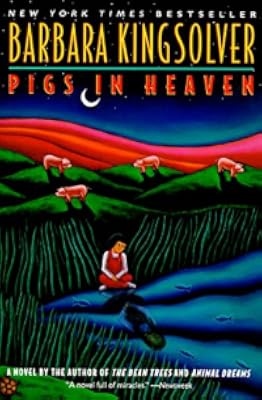
Picking up where her modern classic The Bean Trees left off, Barbara Kingsolver's bestselling Pigs in Heaven continues the tale of Turtle and Taylor Greer, a Native American girl and her adoptive mother who have settled in Tucson, Arizona, as they both try to overcome their difficult pasts. Taking place three years after The Bean Trees, Taylor is now dating a musician named Jax and has officially adopted Turtle. But when a lawyer for the Cherokee Nation begins to investigate the show more adoption-their new life together begins to crumble. Depicting the clash between fierce family love and tribal law, poverty and means, abandonment and belonging, Pigs in Heaven is a morally wrenching, gently humorous work of fiction that speaks equally to the head and the heart. show lessTags
Recommendations





























Member Recommendations

Member Reviews
In the first book of this short series, [The Bean Trees], Taylor Green has an abused Indian toddler unexpectedly thrust into her arms from the back of a car. It was a great story of making a family from those who don't share your blood, but I was constantly thinking “Wait a minute – adoptions don't happen this way – no way, no how.”
In this sequel the child called Turtle, who is still only minimally verbal, insists that she has seen a man fall into a dangerous place. Taylor believes her, and persists with unbelieving authorities until she finally gets someone to listen. The man is rescued. The resultant publicity brings Turtle to national acclaim, including tribal social workers.
It becomes a beautiful story of the conflict when show more an abused and neglected child, coming out of her shell and attached to her adoptive white Mom, is claimed by her tribe and members of her extended family.
The characters are all well realized. We see the backstory and pain of individual tribal family members and the whole of a nation whose children were removed from them.
How can there be any winners in this situation?
Highly recommended. show less
In this sequel the child called Turtle, who is still only minimally verbal, insists that she has seen a man fall into a dangerous place. Taylor believes her, and persists with unbelieving authorities until she finally gets someone to listen. The man is rescued. The resultant publicity brings Turtle to national acclaim, including tribal social workers.
It becomes a beautiful story of the conflict when show more an abused and neglected child, coming out of her shell and attached to her adoptive white Mom, is claimed by her tribe and members of her extended family.
The characters are all well realized. We see the backstory and pain of individual tribal family members and the whole of a nation whose children were removed from them.
How can there be any winners in this situation?
Highly recommended. show less
Taylor Greer adopted Turtle after finding her abandoned in her car. Turtle and Taylor settled into life as a curious mother-daughter pair and were doing fine until Annawake, a lawyer from the Cherokee Nation, recognized Turtle as being Cherokee. When Annawake informed Taylor the adoption was illegal without the Nation’s consent, they were launched into a willful struggle over Turtle and her future.
When I picked this book up at my favorite used bookstore, I already knew that I enjoyed Barbara Kingsolver’s writing based on my experience with The Poisonwood Bible. What I didn’t know was that it is a sequel to The Bean Trees, which I had not read. Fortunately, this book stood fine on its own and I was none the wiser until after I show more completed it and did some research on Kingsolver.
I enjoyed Kingsolver’s storytelling – her writing is simple and beautiful, but leaves the reader with many challenging issues to contemplate. For example, I was fascinated by the different portrayals of poverty in this book. When Taylor and Turtle are fleeing Annawake’s threats, their financial situation is grim. They live on almost nothing, need much, and Taylor’s desperation and depression are only outweighed by the pride that prevents her from asking help from anyone. In clear contrast, Annawake’s small Cherokee town is a place of joy and support. While its residents have humble lifestyles, they ask for what they need, need very little, and seem to accept life for the daily gift that it is.
There were definitely points in the book where things dragged, but the high points kept me engaged. Barbie, a wanderer who Taylor and Turtle pick up, was so bizarre and fascinating, I kept wanting to know more about her. I also really appreciated the small peek into the legal issues surrounding the Cherokee Nation. It is a shame I didn’t learn more on this subject while in law school, but the bits presented in Pigs in Heaven made me want to learn more. My only complaint was that this book really focused more on relational struggles than it did on any actual legal activity. In the end, I think that was the point – stirring up questions about poverty, family, and the balance of individual and community interests.
http://decklededges.wordpress.com/2009/06/07/review-pigs-in-heaven/ show less
When I picked this book up at my favorite used bookstore, I already knew that I enjoyed Barbara Kingsolver’s writing based on my experience with The Poisonwood Bible. What I didn’t know was that it is a sequel to The Bean Trees, which I had not read. Fortunately, this book stood fine on its own and I was none the wiser until after I show more completed it and did some research on Kingsolver.
I enjoyed Kingsolver’s storytelling – her writing is simple and beautiful, but leaves the reader with many challenging issues to contemplate. For example, I was fascinated by the different portrayals of poverty in this book. When Taylor and Turtle are fleeing Annawake’s threats, their financial situation is grim. They live on almost nothing, need much, and Taylor’s desperation and depression are only outweighed by the pride that prevents her from asking help from anyone. In clear contrast, Annawake’s small Cherokee town is a place of joy and support. While its residents have humble lifestyles, they ask for what they need, need very little, and seem to accept life for the daily gift that it is.
There were definitely points in the book where things dragged, but the high points kept me engaged. Barbie, a wanderer who Taylor and Turtle pick up, was so bizarre and fascinating, I kept wanting to know more about her. I also really appreciated the small peek into the legal issues surrounding the Cherokee Nation. It is a shame I didn’t learn more on this subject while in law school, but the bits presented in Pigs in Heaven made me want to learn more. My only complaint was that this book really focused more on relational struggles than it did on any actual legal activity. In the end, I think that was the point – stirring up questions about poverty, family, and the balance of individual and community interests.
http://decklededges.wordpress.com/2009/06/07/review-pigs-in-heaven/ show less
This is a story about the many dimensions of family and culture. Turtle Greer is the "adopted" daughter of Taylor Greer. She was abandoned to Taylor by an unknown woman in a parking lot. She had been abused as a toddler. Taylor went through a phony adoption process to give some measure of legal status to the three-year old girl, who is clearly a native American. Several years later, as the result of an incident that gave the child fleeting national exposure, an Indian lawyer from the Cherokee nation identifies the child as an Indian, most likely from the Cherokee tribe. Annawake Fourkiller, new out of law school, knows that the placement of the child with a white woman contravenes the law, which holds that Indian children cannot be show more adopted by white families without the consent of the tribe. (Annawake has had a painful family experience where her twin brother was whisked away for adoption and not seen again.) She finds out that the adoption was falsified, and, in any event, could not have been done legally without the tribe's consent. She makes inquiries of Taylor about this which causes Taylor, who has developed a deep motherly attachment to Turtle, to flee with the child to avoid the possibility she will have to give her up.
Taylor's mother, Alice, from Kentucky, has a distant connection with the Cherokees in Oklahoma. Running from a loveless marriage she goes to the reservation to reconnect with her childhood cousin, Sugar Boss from Heaven, Oklahoma. There, she finds out about the lawyer's interest in locating Turtle and trys to come up with a solution. She discovers that by distant bloodline she is eligible for membership in the tribe.
In the meantime, Taylor and the child have located to the northwest where she struggles to make ends meet. She has little contact with her family (a boyfriend and close friends) back in Arizona), not revealing to anyone where she and the child are living. It is clear that Kingsolver means to show that without the network of support that family provides, life is very lonely and difficult.
Alice realizes that family and shared cultural identity are deeply held values among the Cherokees. She experiences how the Cherokees perceive themselves as a more than extended family and how young and old share ties and common rituals that bind them to each other. Interestingly, the poverty and ramshackle nature of the nation's circumstances on the reservation do not in the slightest way mar the strong ties the tribe's members hold for each other. She wants to protect Turtle and Taylor, but she shows some ambivalence about the countermanding imperative for tribal cohesion that underlies Annawake's intent to have the child returned to tribal custody. In contrast to the tribe's unity and mutual support in the midst of great poverty, Taylor's struggles to provide for Turtle are heightened by her isolation from family.
There is a solution to the problem. Although a bit deus ex machina in nature, Kingsolver's climax involves matchmaking of Alice's cousin and acquaintances with a tribal member, Cash Stillman, who has recently returned from a self-imposed exile in Wyoming. Cash Stillman turns out to be the child's grandfather. With him in the picture, the tribal court is able to arrange joint custody so that the child can learn about her heritage while remaining with her mother. It's a tad of a stretch, but it works fine.
What's important about this fine novel is its emphasis on the meanings of the family connections that define who we are. Taylor has a love for Turtle so strong that she flees her family and tries to protect the child, though struggling terribly to make a life for them in a strange city. (Note the contrasts from where she left, near Tucson, to where they end up -- the Pacific northwest. And, see how Taylor has had a very unconventional "family", really a sort of hippieish community, but nonetheless a family.) On the other side, the deep cultural roots of the Indians are plainly to be seen. The
intertwinings of their shared society go way beyond common understood conceptions of an "extended" family.
The book tells the history of the grossly misguided attempts of white society to eradicate Indian culture and how this is the impetus behind the late day efforts (and laws) to preserve their identity. There is the opportunity in the novel to remember the displacement of Cherokees from the southeast to "territory no one else wanted" via the infamous "Trail of Tears". Cash himself is a product of the notorious boarding schools of the 20th century which were aimed at "Americanizing" Indian youth. (To be honest we must call this, along with overt slaughter of the 19th century, genocidal in nature.)
I've not yet been disappointed by Kingsolver -- The Poisonwood Bible, The Lacunae, and now Pigs in Heaven. As you start her novels you wonder "now where's she going with this?", but as you get further along you think, "oh, wow". show less
Taylor's mother, Alice, from Kentucky, has a distant connection with the Cherokees in Oklahoma. Running from a loveless marriage she goes to the reservation to reconnect with her childhood cousin, Sugar Boss from Heaven, Oklahoma. There, she finds out about the lawyer's interest in locating Turtle and trys to come up with a solution. She discovers that by distant bloodline she is eligible for membership in the tribe.
In the meantime, Taylor and the child have located to the northwest where she struggles to make ends meet. She has little contact with her family (a boyfriend and close friends) back in Arizona), not revealing to anyone where she and the child are living. It is clear that Kingsolver means to show that without the network of support that family provides, life is very lonely and difficult.
Alice realizes that family and shared cultural identity are deeply held values among the Cherokees. She experiences how the Cherokees perceive themselves as a more than extended family and how young and old share ties and common rituals that bind them to each other. Interestingly, the poverty and ramshackle nature of the nation's circumstances on the reservation do not in the slightest way mar the strong ties the tribe's members hold for each other. She wants to protect Turtle and Taylor, but she shows some ambivalence about the countermanding imperative for tribal cohesion that underlies Annawake's intent to have the child returned to tribal custody. In contrast to the tribe's unity and mutual support in the midst of great poverty, Taylor's struggles to provide for Turtle are heightened by her isolation from family.
There is a solution to the problem. Although a bit deus ex machina in nature, Kingsolver's climax involves matchmaking of Alice's cousin and acquaintances with a tribal member, Cash Stillman, who has recently returned from a self-imposed exile in Wyoming. Cash Stillman turns out to be the child's grandfather. With him in the picture, the tribal court is able to arrange joint custody so that the child can learn about her heritage while remaining with her mother. It's a tad of a stretch, but it works fine.
What's important about this fine novel is its emphasis on the meanings of the family connections that define who we are. Taylor has a love for Turtle so strong that she flees her family and tries to protect the child, though struggling terribly to make a life for them in a strange city. (Note the contrasts from where she left, near Tucson, to where they end up -- the Pacific northwest. And, see how Taylor has had a very unconventional "family", really a sort of hippieish community, but nonetheless a family.) On the other side, the deep cultural roots of the Indians are plainly to be seen. The
intertwinings of their shared society go way beyond common understood conceptions of an "extended" family.
The book tells the history of the grossly misguided attempts of white society to eradicate Indian culture and how this is the impetus behind the late day efforts (and laws) to preserve their identity. There is the opportunity in the novel to remember the displacement of Cherokees from the southeast to "territory no one else wanted" via the infamous "Trail of Tears". Cash himself is a product of the notorious boarding schools of the 20th century which were aimed at "Americanizing" Indian youth. (To be honest we must call this, along with overt slaughter of the 19th century, genocidal in nature.)
I've not yet been disappointed by Kingsolver -- The Poisonwood Bible, The Lacunae, and now Pigs in Heaven. As you start her novels you wonder "now where's she going with this?", but as you get further along you think, "oh, wow". show less
This is a truly wonderful book but then I've come to expect no less of Barbara Kingsolver. It tells the story of Turtle, a young Cherokee girl, who was handed to a young white women in a parking lot in the middle of the night. Her mother had died in an accident and her aunt, who had been caring for her, was in an abusive relationship. Her boyfriend was also abusing Turtle and the aunt felt the only way of protecting Turtle was to hand her to this stranger. Luckily for Turtle, the stranger was able to bond with Turtle (who was called that because for a long time she held on tightly to her adoptive mother just like a snapping turtle) and ended up formally adopting her. Then Turtle comes to national attention on the Oprah show and a young show more attorney for the Cherokee Nation decides the adoption was illegal and Turtle should be returned to her people. I can't reveal what comes next without spoiling the ending but I was torn between supporting the adoptive mother and agreeing that Turtle should not be separated from her roots. There are lots of great characters in the book and for that alone the book is worth reading. But the larger issues of separating native children from their tribes and child abuse and deciding what is in a child's best interest are very important themes that make the book especially important. show less
An illegal adoption and a series of events draws attention to the young girl who was adopted when it becomes apparent that the child is a Cherokee. The mother, Taylor, goes on a journey to protect her child that leads to some interesting characters and not-so-good situations. Family is strong in this novel, especially family that, isn't related by blood. I learned things about the Cherokee nation and Native Americans in general that I didn't know. I've seen the intense poverty on some of the reservations in the western US, and it is truly appalling. This book is an interesting mix of emotions, from humor to sadness to joy to discovery. The title alone has a couple of different meanings. Kingsolver is a masterful writer.
[Pigs in Heaven] by Barbara Kingsolver is the sequel to [The Bean Trees]. It's three years later. Turtle does something pretty remarkable that catches the eyes of Oprah Winfrey's minions. She and her mother appear on Oprah's TV show, where Annawake Fourkiller sees them and immediately recognizes Turtle as Cherokee. Annawake is Cherokee and a recently minted attorney who gloms onto what she sees as a child improperly separated from the tribe. She feels compelled to interfere with a mother-daughter bond to enforce a tribal bond. She reviews Oklahoma's adoption paperwork and arranges to meet Taylor Greer at her home in Tucson.
Standing in Taylor's kitchen, coffee in hand, Annawake begins their conversation with an admission:
Annawake tells Taylor of the Indian Child Welfare Act, which was enacted in 1978 because so many Indian kids were being separated from their families and put into non-Indian homes.
No sooner does the dust settle behind Annawake Fourkiller's departing rental car than Taylor is packing her car and departing Tucson with Turtle, the beginning of an odyssey to Las Vegas, Lake Tahoe, and on to the Pacific Northwest. At each stop, Taylor's resources and options dwindle.
This confrontation between maternal commitment and tribal rights is the linchpin of the plot. Yes, we read about Lucky Buster and his mother; about Barbie, who's obsessed with the outfits marketed for the doll she's named and modelled herself after; about Steve Kant, the wheelchair-bound air traffic controller. There's Gundi, Taylor's landlady, a quirky artist who's as likely as not to roam about her rental cottages in the buff. These are rich and entertaining characters. Kingsolver's a master of character and dialogue.
In the end, I felt disappointed because while the plot rummaged through the difficult, divisive, often (usually?) sorrowful issues of heritage, family, parenthood, and adoption, the characters were contrived and the plot manipulated to produce a heartwarming, everybody-wins finish. The solution in such circumstances is to have distant, dormant, unlikely-but-damned-convenient family relationships.
Bahh. show less
Standing in Taylor's kitchen, coffee in hand, Annawake begins their conversation with an admission:
show more
"I'm sorry," she
tells Taylor, "I've misled you…I'm not a reporter. I'm an attorney… I work in an office that does a lot of work for the Cherokee Nation. That's what I want to talk with you about. Turtle's adoption might not be valid."
Taylor's cup stops an inch from her lips, and for nearly half a minute she does not appear to breathe.
Annawake tells Taylor of the Indian Child Welfare Act, which was enacted in 1978 because so many Indian kids were being separated from their families and put into non-Indian homes.
"I don't mean to scare you," Annawake says quietly. "But I want you to have some background on the problem. We need to make sure our laws are respected."
Taylor turns around and faces Annawake, her hair wheeling. "I didn't take Turtle from any family, she was dumped on me. Dumped. She'd already lost her family, and she'd been hurt in ways I can't even start to tell you without crying. Sexual ways. Your people let her fall through the crack and she was in bad trouble. She couldn't talk, she didn't walk, she had the personality of—I don't know what. A bruised apple. Nobody wanted her." Taylor's hands are shaking. She crosses her arms in front of her chest and slumps forward a little in the manner of a woman heavily pregnant.
"And now that she's a cute little adorable child and gets famous and goes on television, now you want her back."
"This has nothing to do with Turtle being on television. Except that it brought her to our attention." Annawake looks away and thinks about her tone. Lawyer words will not win any cases in this kitchen. She is not so far from Oklahoma. "Please don't panic. I'm only telling you that your adoption papers may not be valid because you didn't get approval from the tribe. You need that. It might be a good idea to get it."
"And what if they won't give it?"
Annawake can't think of the right answer to that question.
Taylor demands, "How can you possibly think this is in Turtle's best interest?"
"How can you think it's good for a tribe to lose its children!" Annawake is startled by her own anger—she has shot without aiming first. Taylor is shaking her head back and forth, back and forth.
"I'm sorry, I can't understand you. Turtle is my daughter. If you walked in here and asked me to cut off my hand for a good cause, I might think about it. But you don't get Turtle."
"There's the child's best interest and the tribe's best interest, and I'm trying to think of both things."
"Horseshit." Taylor turns away, facing the window.
No sooner does the dust settle behind Annawake Fourkiller's departing rental car than Taylor is packing her car and departing Tucson with Turtle, the beginning of an odyssey to Las Vegas, Lake Tahoe, and on to the Pacific Northwest. At each stop, Taylor's resources and options dwindle.
This confrontation between maternal commitment and tribal rights is the linchpin of the plot. Yes, we read about Lucky Buster and his mother; about Barbie, who's obsessed with the outfits marketed for the doll she's named and modelled herself after; about Steve Kant, the wheelchair-bound air traffic controller. There's Gundi, Taylor's landlady, a quirky artist who's as likely as not to roam about her rental cottages in the buff. These are rich and entertaining characters. Kingsolver's a master of character and dialogue.
In the end, I felt disappointed because while the plot rummaged through the difficult, divisive, often (usually?) sorrowful issues of heritage, family, parenthood, and adoption, the characters were contrived and the plot manipulated to produce a heartwarming, everybody-wins finish. The solution in such circumstances is to have distant, dormant, unlikely-but-damned-convenient family relationships.
Bahh. show less
I am always struck by how good Kingsolver is when I start one of her books. I don't know why I forget this in between. In all of Kingsolver's books that I have read she does a great job depicting women and women's community (something I am often impatient with but which rings absolutely true for me in her books), and in Pigs in Heaven the juggling of multiple character points of view and of multiple ways of seeing the world--and the way the reader is made to empathize with all of them--is particularly well done.
Members
- Recently Added By
Published Reviews
ThingScore 63
The case for community is so one-sided and the outcome so predictable that the reader begins to suffocate in all the sweetness. You begin to cringe at treacly lines like "Heaven's on down the trail a little bit" and "I oftentimes have communication problems with my heart." Ms. Kingsolver is oftentimes a talented, funny writer in "Pigs in Heaven," but after a while you begin to wish she would show more invent a Hell, Okla., and make a case for living there, too. show less
added by jlelliott
Barbara Kingsolver's terrific new novel, "Pigs in Heaven," picks up where her highly acclaimed first novel, "The Bean Trees," left off. In this heart-twisting sequel, her feisty young heroine, Taylor Greer, is faced with the possibility of losing her 6-year-old daughter, Turtle.
added by jlelliott
Lists

Recommend the 20 best books you've read in the last five years
2,168 works; 601 members

Female Author
1,234 works; 67 members

Carole's List
445 works; 13 members

Books Read in 2017
4,249 works; 129 members
Author Information

48+ Works 99,156 Members
Barbara Kingsolver was born on April 8, 1955 in Annapolis, Maryland and grew up in Eastern Kentucky. As a child, Kingsolver used to beg her mother to tell her bedtime stories. She soon started to write stories and essays of her own, and at the age of nine, she began to keep a journal. After graduating with a degree in biology form De Pauw show more University in Indiana in 1977, Kingsolver pursued graduate studies in biology and ecology at the University of Arizona in Tucson. She earned her Master of Science degree in the early 1980s. A position as a science writer for the University of Arizona soon led Kingsolver into feature writing for journals and newspapers. Her articles have appeared in a number of publications, including The Nation, The New York Times, and Smithsonian magazines. In 1985, she married a chemist, becoming pregnant the following year. During her pregnancy, Kingsolver suffered from insomnia. To ease her boredom when she couldn't sleep, she began writing fiction Barbara Kingsolver's first fiction novel, The Bean Trees, published in 1988, is about a young woman who leaves rural Kentucky and finds herself living in urban Tucson. Since then, Kingsolver has written other novels, including Holding the Line, Homeland, and Pigs in Heaven. In 1995, after the publication of her essay collection High Tide in Tucson: Essays from Now or Never, Kingsolver was awarded an Honorary Doctorate of Letters from her alma mater, De Pauw University. Her latest works include The Lacuna and Flight Behavior. Barbara's nonfiction book, Animal, Vegetable, Miracle was written with her family. This is the true story of the family's adventures as they move to a farm in rural Virginia and vow to eat locally for one year. They grow their own vegetables, raise their own poultry and buy the rest of their food directly from farmers markets and other local sources. (Bowker Author Biography) show less
Some Editions
Awards and Honors
Awards
Distinctions
Notable Lists
Series

Belongs to Publisher Series
Work Relationships
Is contained in
Has as a student's study guide
Common Knowledge
- Canonical title*
- Les cochons au paradis
- Original title
- Pigs in Heaven
- Original publication date
- 1993 (1e édition originale américaine) (1e édition originale américaine); 1996-12-01 (1e traduction et édition française, Littérature étrangère, Rivages) (1e traduction et édition française, Littérature étrangère, Rivages); 1998-04-07 (Rééditio française, Poche, Littérature étrangère, Rivages) (Rééditio française, Poche, Littérature étrangère, Rivages)
- People/Characters
- Taylor Greer; Turtle Greer; Alice Greer; Annawake Fourkiller; Jax Thibodeaux; Cash Stillwater (show all 7); Sugar Hornbuckle
- Important places
- Heaven, Oklahoma, USA; Tucson, Arizona, USA
- Dedication
- For Camille
- First words
- Women on their own run in Alice's family.
- Last words
- (Click to show. Warning: May contain spoilers.)It's all over now but the shouting.
*Some information comes from Common Knowledge in other languages. Click "Edit" for more information.
Classifications
Statistics
- Members
- 6,533
- Popularity
- 1,863
- Reviews
- 86
- Rating
- (3.91)
- Languages
- 7 — Dutch, English, French, German, Italian, Spanish, Swedish
- Media
- Paper, Audiobook, Ebook
- ISBNs
- 46
- ASINs
- 18