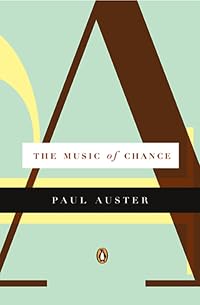
The Music of Chance
by Paul Auster
On This Page
Description
An "exceptional" (Los Angeles Times) tale of fate, loyalty, responsibility, and the real meaning of freedom, from the author of the forthcoming 4 3 2 1: A Novel A finalist for the PEN/Faulkner Award This "rich and dazzling" (Wall Street Journal) novel follows Jim Nashe who, after squandering an unexpected inheritance, picks up a young gambler named Jack Pozzi hoping to con two millionaires. But when their plans backfire, Jim and Jack are indentured by their elusive marks and are forced to show more build a meaningless wall with bricks gathered from ruins of an Irish castle. Time passes, their debts mount, and anger builds as the two struggle to dig themselves out of their Kafkaesque serfdom. New York Times-bestselling author Paul Auster (The New York Trilogy) brings us back into his strange, shape-shifting world of fiendish bargains and punitive whims, where chance is a powerful yet unpredictable force. show lessTags
Recommendations





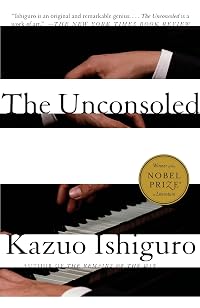
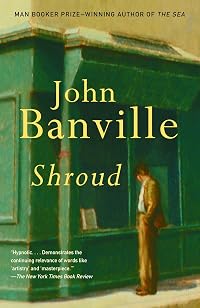
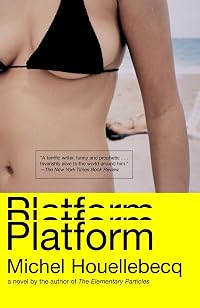
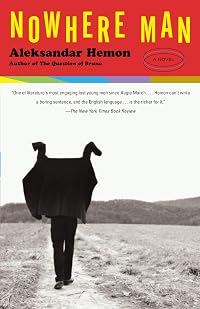
Member Recommendations
by anonymous user
Member Reviews
This turned out to be an engagingly offbeat novel about the pleasures of going with the flow of random events, which manages to convey a counterintuitively positive, upbeat message, even as we see the main character engaged in behaviour that any sensible outside observer would call self-destructive.
Nashe is a bookish, musical, college dropout who took up a career as a firefighter on a whim, worked at it for seven years, then gave it up when his family fell apart and an inheritance dropped into his lap. Since then he's been driving around randomly, using up his money; as the book opens he finds himself taking a crazy chance by investing the last chunk of it in a promising young poker player, Jack. By all the logic of the Great American show more Narrative, the young man should turn out to be Robert Redford and make Nashe's fortune for him, but apparently it doesn't work like that in Austerland, and instead Jack and Nashe find themselves trapped in a Pinteresque situation, living in a caravan in a field cut off from the rest of the world and building a useless wall for a couple of millionaires.
This obviously isn't a book that's meant to be taken too literally - Auster doesn't seem to have thought much about what it would actually be like to work for seven years as a fireman, and what that would do to your tastes and social attitudes, for instance, nor would it be very wise to follow his advice on the building of stone walls. But that sort of thing obviously isn't the point - this is a kind of anti-fable, a complete inversion of the social and economic rules of life in American society. And maybe a little dig at Robert Frost's elevation of the stone wall to mythical status at the same time? show less
Nashe is a bookish, musical, college dropout who took up a career as a firefighter on a whim, worked at it for seven years, then gave it up when his family fell apart and an inheritance dropped into his lap. Since then he's been driving around randomly, using up his money; as the book opens he finds himself taking a crazy chance by investing the last chunk of it in a promising young poker player, Jack. By all the logic of the Great American show more Narrative, the young man should turn out to be Robert Redford and make Nashe's fortune for him, but apparently it doesn't work like that in Austerland, and instead Jack and Nashe find themselves trapped in a Pinteresque situation, living in a caravan in a field cut off from the rest of the world and building a useless wall for a couple of millionaires.
This obviously isn't a book that's meant to be taken too literally - Auster doesn't seem to have thought much about what it would actually be like to work for seven years as a fireman, and what that would do to your tastes and social attitudes, for instance, nor would it be very wise to follow his advice on the building of stone walls. But that sort of thing obviously isn't the point - this is a kind of anti-fable, a complete inversion of the social and economic rules of life in American society. And maybe a little dig at Robert Frost's elevation of the stone wall to mythical status at the same time? show less
You can rely upon Paul Auster for distinctively weird and existentially unsettling vibes. I hadn't read anything by him for at least ten years according to goodreads, but remembered that much. [b:The Music of Chance|19490|The Music of Chance|Paul Auster|https://i.gr-assets.com/images/S/compressed.photo.goodreads.com/books/1392501162l/19490._SY75_.jpg|2382110] follows a man named Nashe. After his wife leaves him, he drops off his two-year-old child with his sister and drives aimlessly around America for a year. As an aside, I cannot fathom why he could possibly want to do that - obsessively taking trains I would understand, if America had any, but driving? However I did not find him completely incomprehensible as he likes reading. show more Nashe's money is about to run out when he picks up a hitchhiker named Jack Pozzi, who has just been badly beaten up. Nashe realises that Pozzi is a brilliant poker player and stakes him in a game with two weird and reclusive millionaires, Flower and Stone. It does not go as expected.
The narrative is ambiguous, arbitrary, claustrophobic, and full of dread. In my favourite sequence, the millionaires give Nashe and Pozzi a tour of their peculiar home:
It seems evident that Nashe feels just that way himself: adrift, purposeless, alone, apart. The millionaires' material preoccupations reminded me of Des Esseintes in [b:Against Nature|210255|Against Nature (À Rebours)|Joris-Karl Huysmans|https://i.gr-assets.com/images/S/compressed.photo.goodreads.com/books/1627233222l/210255._SY75_.jpg|306152], but without his refined aesthetic sensibilities. Stone's recursive model city with its prison is an extraordinary image and carries a fearful power. The result of the poker game seems to turn upon it, as Nashe and Pozzi later discuss.
The second half of the book, in which the consequences of the poker game play out, reads as a somewhat Magnus Mills-esque fable.After Pozzi loses all Nashe's money, his car, and $5,000 they don't have, the pair have no choice but to work off their debt. Flower and Stone set them to constructing a vast, completely pointless wall out of stones imported from a ruined castle in Scotland. This audaciously futile project certainly illustrates the enraging wastefulness of extreme wealth. Nashe and Pozzi are almost completely isolated and effectively imprisoned, living in a caravan on their work site. Things take a turn away from Mills' relatively gentle allegories when Pozzi tries to escape and is beaten almost to death. He is taken away to hospital and Nashe never learns whether or not he survives.
The ending is sudden and violent. After finally working off his debt, Nashe leaves Flower and Stone's estate for the first time in many months to have a drink with his overseer. After getting drunk in a bar, he asks if he can drive his old car, which Flower and Stone gave to the overseer. It's snowing, Nashe is drunk, and he hasn't driven in a long time, so it feels inevitable that he crashes into an oncoming vehicle at high speed, killing himself and probably the other two in the car.
While digesting this ending and the sequence of odd events that preceded it, I wondered what it all meant. Is Auster commenting on American masculinity? If so, the message seems to be that American men are fucked up by aggressive individualism. There could be something about America's thanatophilic car culture. I also got a strong sense that none of the main characters live in a society. Flower and Stone have so much money that they are above society and can do whatever they want, however stupid, cruel, or pointless.I assume that they cheated in order to beat Pozzi at poker, but fittingly this is never confirmed or denied. Nashe and Pozzi have deliberately or accidentally fallen outside society by not getting normal jobs and living normal lives, so must depend on their own limited resources. Their friendship is curiously touching, as it appears solely based on both being very lonely. Neither appear to have anyone else they can let their guard down around and they trust each other quickly. There is also a pervasive theme of existential emptiness: what is the point of anything that anyone is doing? Although early-twenties Pozzi wants things (to win; novelty; pleasure), mid-thirties Nashe appears entirely adrift from ambition, desire, purpose, and responsibility (not least to his toddler). There is something going on under the surface of this strange little fable, although I'm not sure what exactly. show less
The narrative is ambiguous, arbitrary, claustrophobic, and full of dread. In my favourite sequence, the millionaires give Nashe and Pozzi a tour of their peculiar home:
Flower's museum was a graveyard of shadows, a demented shrine to the spirit of nothingness. If the objects continued to call out to him, Nashe decided, it was because they were impenetrable, because they refused to divulge anything about themselves. It had nothing to do with history, nothing to do with the men who once owned them. The fascination was simply for the objects as material things, and the way they had been wrenched out of any possible context, condemned by Flower to go on existing for no reason at all: defunct, devoid of purpose, alone in themselves now for the rest of time. It was the isolation that haunted Nashe, the image of irreducible separateness that burned down into his memory, and no matter how hard he struggled, he never managed to break free of it.
It seems evident that Nashe feels just that way himself: adrift, purposeless, alone, apart. The millionaires' material preoccupations reminded me of Des Esseintes in [b:Against Nature|210255|Against Nature (À Rebours)|Joris-Karl Huysmans|https://i.gr-assets.com/images/S/compressed.photo.goodreads.com/books/1627233222l/210255._SY75_.jpg|306152], but without his refined aesthetic sensibilities. Stone's recursive model city with its prison is an extraordinary image and carries a fearful power. The result of the poker game seems to turn upon it, as Nashe and Pozzi later discuss.
The second half of the book, in which the consequences of the poker game play out, reads as a somewhat Magnus Mills-esque fable.
The ending is sudden and violent. After finally working off his debt, Nashe leaves Flower and Stone's estate for the first time in many months to have a drink with his overseer. After getting drunk in a bar, he asks if he can drive his old car, which Flower and Stone gave to the overseer. It's snowing, Nashe is drunk, and he hasn't driven in a long time, so it feels inevitable that he crashes into an oncoming vehicle at high speed, killing himself and probably the other two in the car.
While digesting this ending and the sequence of odd events that preceded it, I wondered what it all meant. Is Auster commenting on American masculinity? If so, the message seems to be that American men are fucked up by aggressive individualism. There could be something about America's thanatophilic car culture. I also got a strong sense that none of the main characters live in a society. Flower and Stone have so much money that they are above society and can do whatever they want, however stupid, cruel, or pointless.
In the early zeros, when I worked at the village IGA, Georges, one of the older baggers, came back from lunch with a stricken look on his face. He held up a receipt he found crumpled up by the bank machine across the street.
"Hey. Check!" he said, holding it too close to my face. "Balance $200,000 tabarnak! My life is fucking garbage and always will be fucking garbage."
An unhappy bagger can make for a long afternoon, so I examined the paper, clapped a chapped hand on his shoulder and said, "Only an idiot would leave $200,000 in a savings account."
This seemed to cheer him up a bit, and it gave us a good discussion topic for the rest of the day.
When Nashe, in Paul Auster's 'The Music of Chance' plops his $200,000 inheritance into a bank show more account, I know I'm in for a nervous read about a man who will run out of money somewhere awful. Will it be fast? Will it be painful? Even when he's just driving the roads to nowhere in the beginning of the book, there's a lot of suspense over that money in the bank, and later, the glove box; sort of a fiscal musical chairs where I know from the start, Nashe is going to be 'out' in a big way.
This is my first Paul Auster book, and I thought it was damn clever the way he wove suspense out of something sitting somewhere and running out. Once the money is gone, he continues to build a good story from other things running out on Nashe; strength, energy, clarity of mind, liberty, companionship, until the end where he finds out what he is made of. And the verdict isn't bad. He's lost everything, but Nashe is made of adequate stuff. He also appreciates how:
"All of a sudden, the stones were turning into a wall, and in spite of the pain it had cost him, he could not help admiring it. Whenever he stopped and looked at it now, he felt awed by what he had done."
I've never understood gambling, but the stones turning into a wall is a familiar state of mind, and I like how Auster let it sneak up on me, his lovely voice pulling me along. Does he, perhaps, feel this every time he writes a book?
And how about this:
"As Nashe and Pozzi discovered, it was one thing to lift a sixty-pound stone, but once that stone had been lifted, it was quite another thing to lift a second sixty-pound stone, and still another thing to take on the third stone after lifting the second. No matter how strong they felt while lifting the first, much of that strength would be gone by the time they came to the second... Every time they worked on the wall, Nashe and Pozzi came up against the same bewitching conundrum: all the stones were identical, and yet each stone was heavier than the one before it."
This is the best book I have ever read about art, that's not about art. For what are great works of art, especially novels, made of? Heavy-lifting and geologic patience. show less
"Hey. Check!" he said, holding it too close to my face. "Balance $200,000 tabarnak! My life is fucking garbage and always will be fucking garbage."
An unhappy bagger can make for a long afternoon, so I examined the paper, clapped a chapped hand on his shoulder and said, "Only an idiot would leave $200,000 in a savings account."
This seemed to cheer him up a bit, and it gave us a good discussion topic for the rest of the day.
When Nashe, in Paul Auster's 'The Music of Chance' plops his $200,000 inheritance into a bank show more account, I know I'm in for a nervous read about a man who will run out of money somewhere awful. Will it be fast? Will it be painful? Even when he's just driving the roads to nowhere in the beginning of the book, there's a lot of suspense over that money in the bank, and later, the glove box; sort of a fiscal musical chairs where I know from the start, Nashe is going to be 'out' in a big way.
This is my first Paul Auster book, and I thought it was damn clever the way he wove suspense out of something sitting somewhere and running out. Once the money is gone, he continues to build a good story from other things running out on Nashe; strength, energy, clarity of mind, liberty, companionship, until the end where he finds out what he is made of. And the verdict isn't bad. He's lost everything, but Nashe is made of adequate stuff. He also appreciates how:
"All of a sudden, the stones were turning into a wall, and in spite of the pain it had cost him, he could not help admiring it. Whenever he stopped and looked at it now, he felt awed by what he had done."
I've never understood gambling, but the stones turning into a wall is a familiar state of mind, and I like how Auster let it sneak up on me, his lovely voice pulling me along. Does he, perhaps, feel this every time he writes a book?
And how about this:
"As Nashe and Pozzi discovered, it was one thing to lift a sixty-pound stone, but once that stone had been lifted, it was quite another thing to lift a second sixty-pound stone, and still another thing to take on the third stone after lifting the second. No matter how strong they felt while lifting the first, much of that strength would be gone by the time they came to the second... Every time they worked on the wall, Nashe and Pozzi came up against the same bewitching conundrum: all the stones were identical, and yet each stone was heavier than the one before it."
This is the best book I have ever read about art, that's not about art. For what are great works of art, especially novels, made of? Heavy-lifting and geologic patience. show less
Có spoiler.
Một lần nữa hình bóng những người cha ám ảnh thế giới những câu chuyện của Paul Auster. Sau những mối quan hệ cha con thất bại với cha ruột và đứa con gái nhỏ Juliette (đến cuối cùng hóa ra anh lại trở thành bản sao người cha của mình, đối với Juliette, mà lúc anh rời đi nó vẫn chỉ là một đứa bé, anh để lại chỉ có một cái tên và một khoản tiền), Jim tìm thấy ở cuộc gặp gỡ tình cờ với Jack tình thương, nghĩa vụ và mối ràng buộc như thể Jack là con trai của chính anh vậy. Để trả thù những kẻ (mà anh nghĩ) đã xé nát khuôn mặt, xé nát cuộc đời Jack và ném ra show more trước mắt anh sáng hôm ấy, phút cuối cùng anh ném trả lại cuộc đời của anh và chính chúng trước ánh sáng, trong chiếc Saab đỏ đã đồng hành cùng anh hơn trăm ngàn dặm đường cô độc, với tốc độ 150km/h.
Hai cái kết của truyện và phim đều rất hay, không như Fight Club (vì sao lại thay đổi một cái kết quá tuyệt vời như vậy, đó là kết quả của chuyển thể tiểu thuyết, độc giả buộc phải hi sinh những con chữ ám ảnh kinh hoàng để đổi lấy những khung hình cliche đẹp viên mãn). Qúa đau khổ ;__; Phim vẫn hay, nhưng mà quá tiếc.
aventura-interiordesign.blogspot.com/2008/12/nhc-i-may-ri.html Một cách nghĩ rất hay :) show less
Một lần nữa hình bóng những người cha ám ảnh thế giới những câu chuyện của Paul Auster. Sau những mối quan hệ cha con thất bại với cha ruột và đứa con gái nhỏ Juliette (đến cuối cùng hóa ra anh lại trở thành bản sao người cha của mình, đối với Juliette, mà lúc anh rời đi nó vẫn chỉ là một đứa bé, anh để lại chỉ có một cái tên và một khoản tiền), Jim tìm thấy ở cuộc gặp gỡ tình cờ với Jack tình thương, nghĩa vụ và mối ràng buộc như thể Jack là con trai của chính anh vậy. Để trả thù những kẻ (mà anh nghĩ) đã xé nát khuôn mặt, xé nát cuộc đời Jack và ném ra show more trước mắt anh sáng hôm ấy, phút cuối cùng anh ném trả lại cuộc đời của anh và chính chúng trước ánh sáng, trong chiếc Saab đỏ đã đồng hành cùng anh hơn trăm ngàn dặm đường cô độc, với tốc độ 150km/h.
Hai cái kết của truyện và phim đều rất hay, không như Fight Club (vì sao lại thay đổi một cái kết quá tuyệt vời như vậy, đó là kết quả của chuyển thể tiểu thuyết, độc giả buộc phải hi sinh những con chữ ám ảnh kinh hoàng để đổi lấy những khung hình cliche đẹp viên mãn). Qúa đau khổ ;__; Phim vẫn hay, nhưng mà quá tiếc.
aventura-interiordesign.blogspot.com/2008/12/nhc-i-may-ri.html Một cách nghĩ rất hay :) show less
כתוב היטב. נקרא בקלות. מקורי ולפעמים מעורר מחשבות, אבל קצת כמו צמר גפן מסוכר - כיף לאכול אבל לא משביע. עובדה שקראתי את הספר לפני כ-27 שנים ואילולא הרישום לא הייתי יודע. הוא לא השאיר בזכרוני דבר, גם לא כשקראתי פעם שנייה.
I appreciated what this novel was trying to do, but was bothered by my complete and utter lack of attachment to the characters. The premise (lives colliding by chance) is intriguing and the narrative is beautifully executed. What was missing for me was the answer to "why?." The main character seems to be a passive observer to his own life, with a few moments of real passion interspersed.
Auster does have a gift for metaphor, using Pozzi and Nashe's wall as a symbol of perseverance and incarceration at the same time. There is a tenderness that while left largely unexplored, runs like a tiny stream throughout the story. It is this stream that saves the book. We learn how quickly solitude loses its freedom-like quality when faced with show more personal loss. show less
Auster does have a gift for metaphor, using Pozzi and Nashe's wall as a symbol of perseverance and incarceration at the same time. There is a tenderness that while left largely unexplored, runs like a tiny stream throughout the story. It is this stream that saves the book. We learn how quickly solitude loses its freedom-like quality when faced with show more personal loss. show less
There is a rhythm to The Music of Chance that suits its title. I saw the movie before I realized the book existed and both excel in their own right. It is by no means the feel good book of the year, but it is a great read none-the-less. For the most part, Paul Auster's works depend on twists, surprises, and coincidences, but despite this, they hold up for multiple reads. I feel very close to Jim and Jack and will certainly read this again.
Members
- Recently Added By
Lists

1001 Books You Must Read Before You Die
1,448 works; 1,136 members

Novels from The Guardian's Great American Novelist Tournament
148 works; 24 members

Pen/Faulkner Winners and Finalists
178 works; 9 members

living room bookshelf
150 works; 1 member
Canon de la narrativa universal del s. XX (cicutadry)
499 works; 3 members

Hilos Invisibles: Sincronicidad y el Azar en la Literatura
12 works; 1 member
Talk Discussions
Past Discussions
Group Read, September 2016: The Music of Chance in 1001 Books to read before you die (September 2016)
Author Information

106+ Works 65,112 Members
Paul Auster was born on February 3, 1947, in Newark, New Jersey. He received a B.A. and a M.A. in English and Comparative Literature from Columbia University. In addition to his career as a writer, Auster has been a census taker, tutor, merchant seaman, little-league baseball coach, and a telephone operator. He started his writing career as a show more translator. He soon gained popularity for the detective novels that make up his New York Trilogy. His other works include The Invention of Solitude; Leviathan; Moon Palace; Facing the Music; In the Country of Last Things; The Music of Chance; Mr. Vertigo; and The Brooklyn Follies. His latest novels are entitled, Invisible and Sunset Park. In addition to his novels, Auster has written screenplays and directed several films. He is the recipient of a fellowship from the National Endowment for the Arts and a French Prix Medicis for Foreign Literature. (Bowker Author Biography) show less
Some Editions
Awards and Honors
Series
Belongs to Publisher Series
Work Relationships
Is contained in
Has the adaptation
Common Knowledge
- Canonical title
- The Music of Chance
- Original title
- The Music of Chance
- Original publication date
- 1990
- People/Characters
- Jim Nashe; Jack Pozzi; Mr. Flower; Mr. Stone; Fiona; Tiffany
- Important places
- Somerville, Massachusetts, USA; Berkeley, California, USA; Millbrook, New York, USA; Plaza Hotel, New York, New York, USA; Irvington, New Jersey, USA; Bowdoin College, Brunswick, Maine, USA (show all 7); Philadelphia, Pennsylvania, USA
- Related movies
- The Music of Chance (1993 | IMDb)
- First words
- For one whole year he did nothing but drive, traveling back and forth across America as he waited for the money to run out.
- Last words
- (Click to show. Warning: May contain spoilers.)And then the light was upon him, and Nashe shut his eyes, unable to look at it anymore.
- Original language
- English
Classifications
Statistics
- Members
- 2,375
- Popularity
- 8,300
- Reviews
- 41
- Rating
- (3.81)
- Languages
- 19 — Catalan, Danish, Dutch, English, Estonian, Finnish, French, German, Hebrew, Hungarian, Italian, Japanese, Norwegian (Bokmål), Polish, Portuguese, Croatian, Spanish, Swedish, Turkish
- Media
- Paper, Audiobook, Ebook
- ISBNs
- 67
- ASINs
- 18