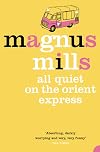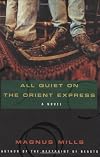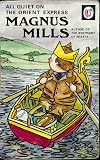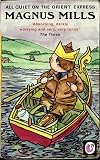
All Quiet on the Orient Express
by Magnus Mills
On This Page
Description
He's a bit of a handyman. Or so Mr Parker seems to think. No matter, he'll soon be on that train east to India from these wet lakeland fells. Just as soon as he's finished that little job Mr Parker asked him to do and payment can be discussed later.Tags
Recommendations
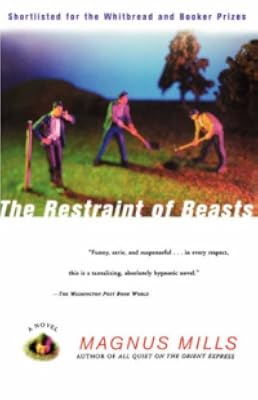











Member Recommendations
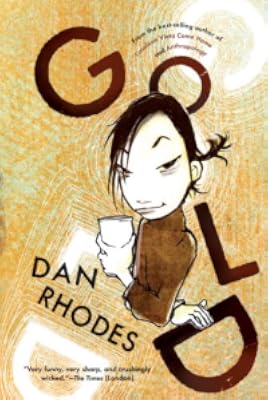
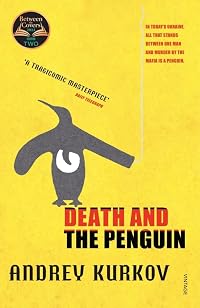
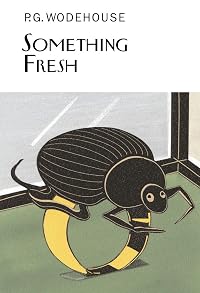
Gold by Dan Rhodes
sanddancer Both quirky books featuring outsiders on holiday in villages
by anonymous user

literarysarah Dark comedy. Well written. Very funny.
Member Reviews
This is another black comedy of the highest order from a master of novels about men and their work. It’s Mills’ second book, the third I’ve read, and the best yet for me.
We meet a man and his motorcycle, who are camping in the Lake District as a prelude to going off the India. It’s just about the end of the season, and our chap is in no hurry to get going on his road trip, so when the campsite owner, Tommy Parker, offers him some odd jobs, he’s happy to oblige. The local store owner runs out of baked beans, and won’t restock which is irksome, but he does get accepted into the darts team at the local pub, which then runs out of draught ale. The simple jobs he does all turn out to be marathon tasks, and he’s warned about show more Tommy’s temper. Meanwhile, nobody ever exchanges any money – there’s no sign of any cash coming from Tommy and his tabs are racking up – but he doesn’t like to make a fuss. The milkman is also going mad, and everyone seems to think our narrator would be good for the job – why? He can’t understand it, he’s helplessly trapped by his own helpfulness!
What Mills does so well is to take the ordinary, everyday slog and dissect it. He pares work down to the barest actions and motives. No-one is deliberately bad, indeed, their intentions are mostly good. It’s just the roundabout ways in which people do things obscure why they’re doing it ensuring that everything gets over-complicated, and this leads to confusion. Add a good dose of ‘You’re not from round these parts’ suspicion, the difficulties of getting around the terrain in winter, and the shenanigans of countrymen, (for womenfolk barely put in an appearance), and you’re bound to get events spiralling out of control into broad farce with sinister overtones.
Brilliant – I must read all his others. (10/10)
I bought this book. show less
We meet a man and his motorcycle, who are camping in the Lake District as a prelude to going off the India. It’s just about the end of the season, and our chap is in no hurry to get going on his road trip, so when the campsite owner, Tommy Parker, offers him some odd jobs, he’s happy to oblige. The local store owner runs out of baked beans, and won’t restock which is irksome, but he does get accepted into the darts team at the local pub, which then runs out of draught ale. The simple jobs he does all turn out to be marathon tasks, and he’s warned about show more Tommy’s temper. Meanwhile, nobody ever exchanges any money – there’s no sign of any cash coming from Tommy and his tabs are racking up – but he doesn’t like to make a fuss. The milkman is also going mad, and everyone seems to think our narrator would be good for the job – why? He can’t understand it, he’s helplessly trapped by his own helpfulness!
What Mills does so well is to take the ordinary, everyday slog and dissect it. He pares work down to the barest actions and motives. No-one is deliberately bad, indeed, their intentions are mostly good. It’s just the roundabout ways in which people do things obscure why they’re doing it ensuring that everything gets over-complicated, and this leads to confusion. Add a good dose of ‘You’re not from round these parts’ suspicion, the difficulties of getting around the terrain in winter, and the shenanigans of countrymen, (for womenfolk barely put in an appearance), and you’re bound to get events spiralling out of control into broad farce with sinister overtones.
Brilliant – I must read all his others. (10/10)
I bought this book. show less
Ok, please explain to me how a book where "nothing happens" and there is NO character development and only the most basic dialogue can keep me turning the pages? I literally started reading it this morning and could not stop. I knew the shit was going to hit the fan eventually, but when? How?
And when it did, I may have gasped out loud. Ha ha. Brilliant, Mr. Mills. Brilliant
And when it did, I may have gasped out loud. Ha ha. Brilliant, Mr. Mills. Brilliant
It’s the end of summer in the Lake District, England and as the sun is now abandoning Cumbria's valleys all the tourists have packed up and gone home – except one. One lone camper, the unnamed narrator of this book, remains, enjoying the piece and quiet intending to hang on for another week before heading to India on a backpacking adventure.
But then Tommy Parker, who owns the land our narrator is camping on, asks him to paint a gate he innocently agrees. Soon he is given a succession of other odd jobs to do. The jobs become more and more time-consuming and before long our narrator finds himself ensnared in the local community, with its strange, sinister, quirky characters.
There's a certain amount of dark humour as we see a young show more man seemingly unable to say 'no' and yet still struggles to do 'right' become embroiled in the ominous 'out of season' community. The book’s greatest strength lies in its simplicity. Mills’s prose is completely stripped back, he spends absolutely no time on descriptions– all the scenery, all the action, all the characterisation is painted via dialogue and he's a proves an adept listener.
Many of the characters are wonderfully eccentric and whilst I did break out into a smile occasionally, I generally found the whole story so inane and childish that it just didn't really work for me. show less
But then Tommy Parker, who owns the land our narrator is camping on, asks him to paint a gate he innocently agrees. Soon he is given a succession of other odd jobs to do. The jobs become more and more time-consuming and before long our narrator finds himself ensnared in the local community, with its strange, sinister, quirky characters.
There's a certain amount of dark humour as we see a young show more man seemingly unable to say 'no' and yet still struggles to do 'right' become embroiled in the ominous 'out of season' community. The book’s greatest strength lies in its simplicity. Mills’s prose is completely stripped back, he spends absolutely no time on descriptions– all the scenery, all the action, all the characterisation is painted via dialogue and he's a proves an adept listener.
Many of the characters are wonderfully eccentric and whilst I did break out into a smile occasionally, I generally found the whole story so inane and childish that it just didn't really work for me. show less
I've read some reviews. I identify with other people's feeling that even though nothing happens, reading this novel is extremely enjoyable. I think what makes it so is the fact that many of us just like to see life repeated in fiction. We want the difference between our lives and the stories to be restricted to the fact that the characters in the stories live elsewhere, do slightly different things, and meet slightly different people compared to those that exist in our lives. We just want to have a reasonably different experience, that's all.
Everything in this novel is pleasantly, even curiously ordinary. However, there's just this one thing, this one thing that almost ruined the book for me: the death of Deakin ! Can anyone please show more acknowledge that Deakin is dead - that Deakin, a man in his prime, has been stupidly dragged down by the stupid chain into the bottom of the stupid lake !
Our beloved protagonist and his host display brutal practicality. They just ask each other if they can swim, having established that they both can't, they go on to discuss the future of the ice-cream truck and the fucking milk-round. What bothers me most is that this kind of behaviour is extremely uncharacteristic of the protagonist. He is a sensitive character. But when it comes to Deakin, he doesn't even tell us whether they fished him out, gave him a funeral... he doesn't report the reaction of the village people. Just why?
The author treats the only extraodinary event in this story as if it's just one more ordinary event. I don't see the fucking artistic or philosophical point of this. If you think that the point from this is that it is pointless, and you're happy about that, Fuck you! show less
Everything in this novel is pleasantly, even curiously ordinary. However, there's just this one thing, this one thing that almost ruined the book for me: the death of Deakin ! Can anyone please show more acknowledge that Deakin is dead - that Deakin, a man in his prime, has been stupidly dragged down by the stupid chain into the bottom of the stupid lake !
Our beloved protagonist and his host display brutal practicality. They just ask each other if they can swim, having established that they both can't, they go on to discuss the future of the ice-cream truck and the fucking milk-round. What bothers me most is that this kind of behaviour is extremely uncharacteristic of the protagonist. He is a sensitive character. But when it comes to Deakin, he doesn't even tell us whether they fished him out, gave him a funeral... he doesn't report the reaction of the village people. Just why?
The author treats the only extraodinary event in this story as if it's just one more ordinary event. I don't see the fucking artistic or philosophical point of this. If you think that the point from this is that it is pointless, and you're happy about that, Fuck you! show less
Could think of nothing but the song "Hotel California" while reading this. If I hadn't read the blurb & jacket I'd have thought it a 'nice' story. Kept waiting for the horror or other Kafkaesque elements to come along and give me nightmares, but they never came. Mills doesn't need to disgust the reader or to describe, or even include, brutalities. And yet, the novel does reveal the horrifying nature of a closed community, and the horrifying behaviors that men* are capable of.
It also kinda reminds me of an O' Henry story. But darker in theme of course. I need to read more Saki... it's been years but I think he did stuff like this. Do you know??
I will try to read more by Mills. Engaging and insightful, showing me a perspective on human show more nature that illuminates the unfamiliar.**
*I could say mankind, but I think that Mills and I agree that women tend to establish their pecking orders and to achieve their personal goals in different ways. The only two women here were certainly outliers/ eccentrics.
**Or is it all that unfamiliar? In some ways the community very much resembles the one I grew up in, farms and villages in rural NW Wisconsin, jack-of-all trades patriarchs, plenty of bars, lots of use of the barter system instead of cash, male dominated, etc. I'll be musing on this for awhile. show less
It also kinda reminds me of an O' Henry story. But darker in theme of course. I need to read more Saki... it's been years but I think he did stuff like this. Do you know??
I will try to read more by Mills. Engaging and insightful, showing me a perspective on human show more nature that illuminates the unfamiliar.**
*I could say mankind, but I think that Mills and I agree that women tend to establish their pecking orders and to achieve their personal goals in different ways. The only two women here were certainly outliers/ eccentrics.
**Or is it all that unfamiliar? In some ways the community very much resembles the one I grew up in, farms and villages in rural NW Wisconsin, jack-of-all trades patriarchs, plenty of bars, lots of use of the barter system instead of cash, male dominated, etc. I'll be musing on this for awhile. show less
This was the first Magnus Mills book I read over 20 years ago and I decided to read it again. I feel that Magnus Mills finely tuned his craft after this novel but it is still a fantastic piece of writing. The everyday is here, getting up, eating, the weather but also there is a quiet and menacing background. There is also plenty of humour, some dark humour and some silly observational things such as the pub only having cask beer for the tourists and the shop's unwillingness to stock baked beans once the holiday season ends. His observations on how working country men talked to each other 20 or 30 years ago are often spot on. This is a novel full of men, there is only Gail, Mr Parker's daughter, and Lesley from a rival darts team and show more these are not even lightly drawn. The main character is camping at Mr Parker's and one day everyone has gone and he gradually becomes a hired hand. As in most Magnus Mills novels there is a distressing and unsettling moment but life always goes on. The writing is tight and controlled and the reader is transported to the mundanity of rural life where the newcomer only understands half of what is going on but doesn't like to pry too much and rock the boat. So much is left unsaid. Set among the beautiful scenery of the Lake District it can be hard to leave. show less
I can see this book provoking either a joyous reaction or a rather bemused one. His books aren't for everyone and this book in particular seems to be pure concentrated Mills, which of course pleases me greatly.
He is a genius at mixing everyday banalities with quiet menace, filled with dry dark humour, spot on observations of the Kafkaesque idiocy of working life. The everyday is made unsettling and shocking acts are made banal. So on the one hand this is simply a story about going on holiday to the British Lake District and never leaving, falling into the 'out of season' job trade, on the other - well read into it what you will.. every act and conversation has disturbing nuances and you are constantly on the edge waiting for the nasty show more shock. Mills writes very tight prose and no detail is left to chance; you will be wrapped up and transported into a world of darts matches, disappearing boats and the insidious repainting of everything to horrid repetitive green.
Funny, unsettling and a pure joy to read, everyone should try at least one Mills book in their lives. I am not sure where I would recommend to start but this would not be a bad choice. Go on it will only take a few hours.. well maybe… maybe you will never be able to leave either.. show less
He is a genius at mixing everyday banalities with quiet menace, filled with dry dark humour, spot on observations of the Kafkaesque idiocy of working life. The everyday is made unsettling and shocking acts are made banal. So on the one hand this is simply a story about going on holiday to the British Lake District and never leaving, falling into the 'out of season' job trade, on the other - well read into it what you will.. every act and conversation has disturbing nuances and you are constantly on the edge waiting for the nasty show more shock. Mills writes very tight prose and no detail is left to chance; you will be wrapped up and transported into a world of darts matches, disappearing boats and the insidious repainting of everything to horrid repetitive green.
Funny, unsettling and a pure joy to read, everyone should try at least one Mills book in their lives. I am not sure where I would recommend to start but this would not be a bad choice. Go on it will only take a few hours.. well maybe… maybe you will never be able to leave either.. show less
Members
- Recently Added By
Author Information

Magnus Mills lives in London. (Publisher Provided) Magnus Mills is the author of A Cruel Bird Came to the Nest and Looked In and six other novels, including The Restraint of Beasts, which won the McKitterick Prize and was shortlisted for both the Booker Prize and the Whitbread (now the Costa) First Novel Award in 1999. His most recent novel, A show more Cruel Bird Came to the Nest and Looked In, was published to great critical acclaim. His books have been translated into twenty languages. His title, The Field of the Cloth of Gold, made the Goldsmiths Prize shortlist 2015. (Bowker Author Biography) show less
Awards and Honors
Notable Lists
Common Knowledge
- Canonical title*
- Ei mitään uutta idän pikajunasta
- Original title
- All Quiet On The Orient Express
- Original publication date
- 1999
*Some information comes from Common Knowledge in other languages. Click "Edit" for more information.
Classifications
Statistics
- Members
- 540
- Popularity
- 55,160
- Reviews
- 18
- Rating
- (3.82)
- Languages
- 12 — Catalan, Danish, Dutch, English, Finnish, French, German, Italian, Norwegian (Bokmål), Portuguese, Spanish, Swedish
- Media
- Paper, Ebook
- ISBNs
- 27
- ASINs
- 3