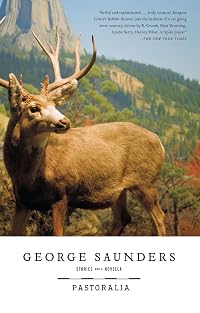
Pastoralia
by George Saunders
On This Page
Description
A stunning collection including the story "Sea Oak," from the #1 New York Times bestselling author of the Man Booker Prize-winning novel Lincoln in the Bardo and the story collection Tenth of December, a 2013 National Book Award Finalist for Fiction.Hailed by Thomas Pynchon as "graceful, dark, authentic, and funny," George Saunders gives us, in his inventive and beloved voice, this bestselling collection of stories set against a warped, hilarious, and terrifyingly recognizable show more American landscape. show less
Tags
Recommendations

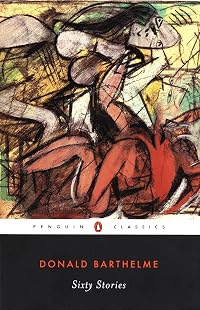
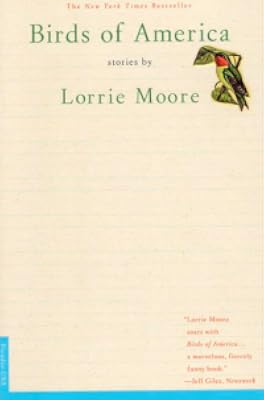
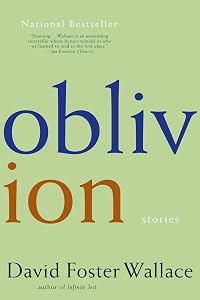
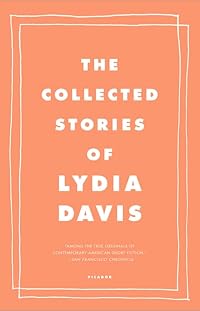
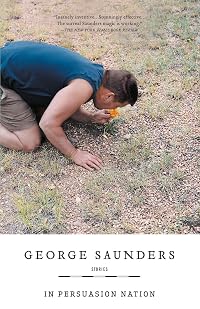
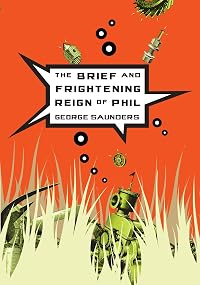
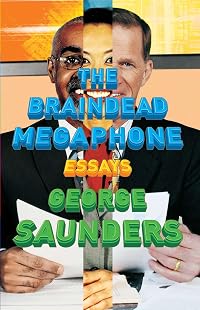
Member Recommendations
askthedust Le même style déjanté et corrosif .
Also recommended by askthedust
02
Member Reviews
Either a Kafka-esque or a Beckett-esque society collapsed under the weight of expectations. A father working the worst imaginable job to provide for his sick son. A male stripper whose family is upset that he doesn't bring home more money, and is haunted by his dead grandmother (who encourages him to show his cock). A barber trying to win a date with any girl desperate enough to have him, so long as she doesn't seem too desperate.
Each story is hilarious and heartbreaking. Deeply American and deeply for our times.
Each story is hilarious and heartbreaking. Deeply American and deeply for our times.
''His childhood dreams had been so bright, he had hoped for so much, it couldn't be true that he was a nobody.''
“Her hair looked like her hair in the dream and her eyes looked like her eyes in the dream, and as for her body, he couldn't tell, she was wearing a mumu.”
Wow! This dude is out there. This story collection is firmly in Kurt Vonnegut country. In the long opening story, we are in a historical theme park, set in a fuzzy American future and we follow a couple who live like cavemen, butchering goats, grunting and eating bugs for the tourists. They are closely monitored by the park's management, for efficiency and authenticity. The rest of the collection, is as equally wacky, but Saunders style of satire, is sharp and show more inventive and explosively funny.
Obviously, he is not for all tastes, but if he clicks for you, you are in for a deliriously, delicious ride. show less
“Her hair looked like her hair in the dream and her eyes looked like her eyes in the dream, and as for her body, he couldn't tell, she was wearing a mumu.”
Wow! This dude is out there. This story collection is firmly in Kurt Vonnegut country. In the long opening story, we are in a historical theme park, set in a fuzzy American future and we follow a couple who live like cavemen, butchering goats, grunting and eating bugs for the tourists. They are closely monitored by the park's management, for efficiency and authenticity. The rest of the collection, is as equally wacky, but Saunders style of satire, is sharp and show more inventive and explosively funny.
Obviously, he is not for all tastes, but if he clicks for you, you are in for a deliriously, delicious ride. show less
(Reprinted from the Chicago Center for Literature and Photography [cclapcenter.com]. I am the original author of this essay, as well as the owner of CCLaP; it is not being reprinted illegally.)
I had the pleasure of getting to talk with legendary author George Saunders for CCLaP's podcast last week, a rare treat given how in demand he is on this latest tour even among the major media; but that meant I had to do some serious cramming in the few weeks leading up to our talk, in that (I guiltily confess) I only became aware of his existence a month ago, because of a passionate recommendation from my friend and Chicago science-fiction author Mark R. Brand, with Saunders' new book, tour, and interview opportunity being merely a fortuitous show more coincidence. And that's because the vast majority of Saunders' output has been short stories, while regulars know that my own reading habits veer almost 100 percent to full novels, which means he's simply and unfortunately been off my radar this whole time; but of course I'm happy to make room in my life for exquisite short-fiction writers once I learn about them (see for example my revelation after reading John Cheever for the first time a few years ago), which means that I tore through all seven books now of his career in just a few weeks recently, so I thought I'd get one large essay posted here about all of them at once, instead of doing a separate small review for each book.
And indeed, as I mentioned during the podcast as well, like Cheever I think Saunders' work is going to be at its most powerful once his career is over, and all the stories collected into one giant volume that a person reads all at once, instead of debating the merits of one individual collection over another. And in fact this is something else I said in the podcast, that I find it fun to think of Saunders' stories as essentially interchangeable tales in one big comic-book-style shared universe, albeit the most f-cked-up shared universe you'll ever spend time in: a possibly post-apocalyptic America, although whether through slow erosion or one big doomsday event is hard to determine, where the only businesses that still thrive are outlandish theme parks designed for the amusement of the now "natural betters" of our new Mad Max society, and staffed by the permanent class of have-nots which now includes a large population of genetically modified freaks, a place where ghosts are real and magic exists and the new normal is extreme cruelty at all times for all other humans left in the wreckage of a crumbled United States. And so if you look at the four story collections that Saunders has now put out -- 1996's CivilWarLand in Bad Decline, 2000's Pastoralia, 2006's In Persuasion Nation and this year's Tenth of December -- you'll see that the vast majority of all these pieces fit at least somewhat into the general paradigm just described, although with others that are much more realistic in tone but still with the same unbelievable cruelty and darkness, many of them set among racially tense situations in eroding post-industrial cities.
Yeah, sounds like a big barrel of laughs, right? And in fact this was the biggest surprise for me as well when first reading them, that Saunders is not just on the stranger side of the bizarro* subgenre, but is one of the most wrist-slashingly depressing authors you will ever find, yet this Guggenheim and MacArthur grant winner is regularly on the bestseller lists, has appeared on David Letterman and The Daily Show, gets published on a steady basis in such hugely mainstream magazines as The New Yorker and GQ, and is adored by literally millions of fans out there, many of whom would never open the cover of a book from Eraserhead Press to save their life. And that's because Saunders never talks about these things specifically to be depressing, but rather as a way of highlighting how important simple humanity is to our lives, the simple act of being humane and optimistic about the world, which he does not by writing about the humane acts themselves but what a world without them would look like. And that's a clever and admirable thing to do, because it means he sneaks in sideways to the points he wants to make, not beating us over the head but forcing us to really stop and think about what he's truly trying to say, to examine why we get so upset when this fundamental humanity is missing from the stories we're reading. Ultimately Saunders believes in celebrating life, in trying to be as helpful and open-minded to strangers as you can, in being as positive about the world at large as you can stand; but like the Existentialists of Mid-Century Modernism, he examines this subject by looking at worst-case scenarios, and by showing us what exactly we miss out of in life when this positivity and love is gone.
*(For those who are new to CCLaP, "bizarro" is a hard-to-define term but one we reference here a lot; also sometimes known as "gonzo" fiction, sometimes as "The New Weird," a lot of it comes from either the wackier or more prurient edges of such existing genres as science-fiction, horror and erotica, while some of it is more like Hunter S. Thompson or William S. Burroughs, a conceptual cloud of strangeness that has a huge cult following in the world of basement presses and genre conventions, as well as such literary social networks as Goodreads.com. If you want to think of famous examples, think of people like Kathy Acker, Mark Leyner, Will Self, Chuck Palahniuk, Blake Butler, China Mieville…and, uh, George Saunders!)
Now, of course, in all honesty, there are also a few clunkers scattered here and there in these collections as well, which is simply to be expected in a career that now spans twenty years; and when it comes to the small number of other books he's put out besides story collections, I have to confess that I found those to be a much iffier proposition. For example, there's the 2000 children's book The Very Persistent Gappers of Frip, cute enough but as inessential to an adult as any children's book is; then there's his one collection of nonfiction essays, 2007's The Braindead Megaphone, an uneven compilation of random pieces which includes some real gems (one of the best being that GQ piece mentioned, where Saunders is sent George-Plimpton-style to Dubai, and instead of the usual decrying of the ultra-rich he is surprisingly charmed by all the vacationing middle-class families), but that has an equal amount of throwaway pieces done for highly specific commissions; and then there's the only stand-alone fiction book of his career so far, the 2005 novella The Brief and Frightening Reign of Phil, which I have to confess is the only thing of Saunders' career that I actively disliked -- written in the middle of the Bush atrocities, it's obviously an attempt to do an Animal Farm-style satire about those years, but is labored in its execution, too on the nose, and in general has too much of a "quirky for the sake of being quirky" vibe, the exact thing that can most quickly kill a piece of bizarro fiction. (But then again, we perhaps shouldn't blame Saunders for this; as I've talked about many times here in the past, it seems that no indignant artist was able to write satirically about Bush in the middle of the Bush Years without producing an overly obvious ranting screed, whether that's Saunders or George Clooney or Michael Moore or Robert Redford. No wonder no good books about Nazis came out until after World War Two; as we all learned in the early 2000s, it's nearly impossible to actually live under a fascist regime and also be subtle and clever in your critique of it.)
But those are all small quibbles, of course; Saunders' bread and butter is in his short fiction, and I'm convinced that he will eventually be known as one of the best short-fiction authors in history, joining a surprisingly small list that includes such luminaries as Cheever, William Faulkner, Eudora Welty, GK Chesterton and more. Plus, as a fan of edgy and strange work, I'm thrilled that a guy like Saunders is out there, serving as a gateway of sorts between mainstream society and an entire rabbithole of basement-press bizarro titles that's just waiting for newly inspired fans to tumble down. If you're going to pick up your first Saunders book soon, go ahead and pick up the newest, Tenth of December, because it's just as good as all the others and particularly easy to find right now; but I also encourage you to dig deeper into this remarkable author's career, and to see just how far he'll pull you into the murky depths of ambiguous morality before coming bobbing back to the surface. It's been a true treat to become a fan of his work this year, and I urge you to become one as well.
Out of 10 (Tenth of December): 9.6 show less
I had the pleasure of getting to talk with legendary author George Saunders for CCLaP's podcast last week, a rare treat given how in demand he is on this latest tour even among the major media; but that meant I had to do some serious cramming in the few weeks leading up to our talk, in that (I guiltily confess) I only became aware of his existence a month ago, because of a passionate recommendation from my friend and Chicago science-fiction author Mark R. Brand, with Saunders' new book, tour, and interview opportunity being merely a fortuitous show more coincidence. And that's because the vast majority of Saunders' output has been short stories, while regulars know that my own reading habits veer almost 100 percent to full novels, which means he's simply and unfortunately been off my radar this whole time; but of course I'm happy to make room in my life for exquisite short-fiction writers once I learn about them (see for example my revelation after reading John Cheever for the first time a few years ago), which means that I tore through all seven books now of his career in just a few weeks recently, so I thought I'd get one large essay posted here about all of them at once, instead of doing a separate small review for each book.
And indeed, as I mentioned during the podcast as well, like Cheever I think Saunders' work is going to be at its most powerful once his career is over, and all the stories collected into one giant volume that a person reads all at once, instead of debating the merits of one individual collection over another. And in fact this is something else I said in the podcast, that I find it fun to think of Saunders' stories as essentially interchangeable tales in one big comic-book-style shared universe, albeit the most f-cked-up shared universe you'll ever spend time in: a possibly post-apocalyptic America, although whether through slow erosion or one big doomsday event is hard to determine, where the only businesses that still thrive are outlandish theme parks designed for the amusement of the now "natural betters" of our new Mad Max society, and staffed by the permanent class of have-nots which now includes a large population of genetically modified freaks, a place where ghosts are real and magic exists and the new normal is extreme cruelty at all times for all other humans left in the wreckage of a crumbled United States. And so if you look at the four story collections that Saunders has now put out -- 1996's CivilWarLand in Bad Decline, 2000's Pastoralia, 2006's In Persuasion Nation and this year's Tenth of December -- you'll see that the vast majority of all these pieces fit at least somewhat into the general paradigm just described, although with others that are much more realistic in tone but still with the same unbelievable cruelty and darkness, many of them set among racially tense situations in eroding post-industrial cities.
Yeah, sounds like a big barrel of laughs, right? And in fact this was the biggest surprise for me as well when first reading them, that Saunders is not just on the stranger side of the bizarro* subgenre, but is one of the most wrist-slashingly depressing authors you will ever find, yet this Guggenheim and MacArthur grant winner is regularly on the bestseller lists, has appeared on David Letterman and The Daily Show, gets published on a steady basis in such hugely mainstream magazines as The New Yorker and GQ, and is adored by literally millions of fans out there, many of whom would never open the cover of a book from Eraserhead Press to save their life. And that's because Saunders never talks about these things specifically to be depressing, but rather as a way of highlighting how important simple humanity is to our lives, the simple act of being humane and optimistic about the world, which he does not by writing about the humane acts themselves but what a world without them would look like. And that's a clever and admirable thing to do, because it means he sneaks in sideways to the points he wants to make, not beating us over the head but forcing us to really stop and think about what he's truly trying to say, to examine why we get so upset when this fundamental humanity is missing from the stories we're reading. Ultimately Saunders believes in celebrating life, in trying to be as helpful and open-minded to strangers as you can, in being as positive about the world at large as you can stand; but like the Existentialists of Mid-Century Modernism, he examines this subject by looking at worst-case scenarios, and by showing us what exactly we miss out of in life when this positivity and love is gone.
*(For those who are new to CCLaP, "bizarro" is a hard-to-define term but one we reference here a lot; also sometimes known as "gonzo" fiction, sometimes as "The New Weird," a lot of it comes from either the wackier or more prurient edges of such existing genres as science-fiction, horror and erotica, while some of it is more like Hunter S. Thompson or William S. Burroughs, a conceptual cloud of strangeness that has a huge cult following in the world of basement presses and genre conventions, as well as such literary social networks as Goodreads.com. If you want to think of famous examples, think of people like Kathy Acker, Mark Leyner, Will Self, Chuck Palahniuk, Blake Butler, China Mieville…and, uh, George Saunders!)
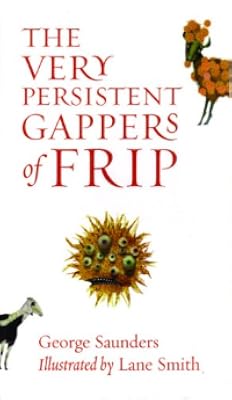
Now, of course, in all honesty, there are also a few clunkers scattered here and there in these collections as well, which is simply to be expected in a career that now spans twenty years; and when it comes to the small number of other books he's put out besides story collections, I have to confess that I found those to be a much iffier proposition. For example, there's the 2000 children's book The Very Persistent Gappers of Frip, cute enough but as inessential to an adult as any children's book is; then there's his one collection of nonfiction essays, 2007's The Braindead Megaphone, an uneven compilation of random pieces which includes some real gems (one of the best being that GQ piece mentioned, where Saunders is sent George-Plimpton-style to Dubai, and instead of the usual decrying of the ultra-rich he is surprisingly charmed by all the vacationing middle-class families), but that has an equal amount of throwaway pieces done for highly specific commissions; and then there's the only stand-alone fiction book of his career so far, the 2005 novella The Brief and Frightening Reign of Phil, which I have to confess is the only thing of Saunders' career that I actively disliked -- written in the middle of the Bush atrocities, it's obviously an attempt to do an Animal Farm-style satire about those years, but is labored in its execution, too on the nose, and in general has too much of a "quirky for the sake of being quirky" vibe, the exact thing that can most quickly kill a piece of bizarro fiction. (But then again, we perhaps shouldn't blame Saunders for this; as I've talked about many times here in the past, it seems that no indignant artist was able to write satirically about Bush in the middle of the Bush Years without producing an overly obvious ranting screed, whether that's Saunders or George Clooney or Michael Moore or Robert Redford. No wonder no good books about Nazis came out until after World War Two; as we all learned in the early 2000s, it's nearly impossible to actually live under a fascist regime and also be subtle and clever in your critique of it.)
But those are all small quibbles, of course; Saunders' bread and butter is in his short fiction, and I'm convinced that he will eventually be known as one of the best short-fiction authors in history, joining a surprisingly small list that includes such luminaries as Cheever, William Faulkner, Eudora Welty, GK Chesterton and more. Plus, as a fan of edgy and strange work, I'm thrilled that a guy like Saunders is out there, serving as a gateway of sorts between mainstream society and an entire rabbithole of basement-press bizarro titles that's just waiting for newly inspired fans to tumble down. If you're going to pick up your first Saunders book soon, go ahead and pick up the newest, Tenth of December, because it's just as good as all the others and particularly easy to find right now; but I also encourage you to dig deeper into this remarkable author's career, and to see just how far he'll pull you into the murky depths of ambiguous morality before coming bobbing back to the surface. It's been a true treat to become a fan of his work this year, and I urge you to become one as well.
Out of 10 (Tenth of December): 9.6 show less
George Saunders must surely be the master of the excoriating inner monologue. Across these six stories, his typically sad, misfit, life-bludgeoned characters find fault with themselves (and others, though usually that eventually comes round to self-criticism). It is as though Saunders has looked around him, picked out the saddest, loneliest looking people he can find and then set himself the task of imagining their inner lives. Their inner lives, it turns out, are just about as sad and lonely as their outer lives. Long passages of passionate self-examination and scab picking are then punctuated by brief actions or exchanges involving others. What is most surprising, however, is that these desperately sad characters usually end up doing show more something brave, self-sacrificing, or noteworthy. Not that anyone notices, or cares, or cares to notice. Except that Saunders himself notices and through him so do we.
The sad characters in Saunders’ stories most often have tedious, mind-numbingly inane, bureaucratically mangled jobs. In the long opening story, “Pastoralia”, the unnamed narrator spends his days as a caveman. He is working at a futuristic theme park with live action recreations of human history. He and the woman portraying his cave wife, Janet, must follow a strict code of cave behaviour throughout the day. They’ve both been at this job a long time. And the theme park isn’t doing especially well, so very few guests poke their heads in to witness the lives of cave people. Just as well as Janet is usually filing her nails or speaking in English (which is not allowed). To be forced to endure such humiliating work might be bad enough but the indignity is magnified by cost-cutting, self-serving management intent on firing as many of the staff as possible to rescue the bottom line. Every person we encounter is desperate about the few dollars that their employment can bring in for their families. Most would do anything to keep their jobs, including ratting out the poor behaviour of their peers. It is a sad and sorry world and Saunders drags us through it by the hair (caveman style). And it has no end. Because, I suppose, life, he is suggesting, has pretty much been like this since the days of our earliest ancestors. Despite its light tone and embarrassingly awkward moments for the characters, the effect is chilling.
The remaining stories, although they share satirical features with “Pastoralia”, tend toward the more hopeful endings mentioned above. It is as though we are seeing Saunders himself progress as a thinker, a writer, a humanist. In the final story of the collection, “The Falls”, the principal narrator, another self-excoriating character named Morse (which might just as well be “morose”), is dragging himself home at the end of another painfully long day at work. No need to detail his particular squalor. What is peculiar here is his action at the very end. Despite all of his convincing of himself not to do it, he goes ahead and does something wonderful. It is so startling that you might wonder whether Saunders himself was surprised by this ending. It really is remarkable.
Every story here is worthy of numerous readings. Heartily recommended. show less
The sad characters in Saunders’ stories most often have tedious, mind-numbingly inane, bureaucratically mangled jobs. In the long opening story, “Pastoralia”, the unnamed narrator spends his days as a caveman. He is working at a futuristic theme park with live action recreations of human history. He and the woman portraying his cave wife, Janet, must follow a strict code of cave behaviour throughout the day. They’ve both been at this job a long time. And the theme park isn’t doing especially well, so very few guests poke their heads in to witness the lives of cave people. Just as well as Janet is usually filing her nails or speaking in English (which is not allowed). To be forced to endure such humiliating work might be bad enough but the indignity is magnified by cost-cutting, self-serving management intent on firing as many of the staff as possible to rescue the bottom line. Every person we encounter is desperate about the few dollars that their employment can bring in for their families. Most would do anything to keep their jobs, including ratting out the poor behaviour of their peers. It is a sad and sorry world and Saunders drags us through it by the hair (caveman style). And it has no end. Because, I suppose, life, he is suggesting, has pretty much been like this since the days of our earliest ancestors. Despite its light tone and embarrassingly awkward moments for the characters, the effect is chilling.
The remaining stories, although they share satirical features with “Pastoralia”, tend toward the more hopeful endings mentioned above. It is as though we are seeing Saunders himself progress as a thinker, a writer, a humanist. In the final story of the collection, “The Falls”, the principal narrator, another self-excoriating character named Morse (which might just as well be “morose”), is dragging himself home at the end of another painfully long day at work. No need to detail his particular squalor. What is peculiar here is his action at the very end. Despite all of his convincing of himself not to do it, he goes ahead and does something wonderful. It is so startling that you might wonder whether Saunders himself was surprised by this ending. It really is remarkable.
Every story here is worthy of numerous readings. Heartily recommended. show less
Sharp satire here, sometimes brutally so, and endlessly readable. Saunders touches on his usual themes: consumerism, the pathos of humble little lives, and man’s cruelty to his fellow man via capitalism and technology. It feels a bit much to call out 3 of just 6 stories as favorites, but it’s in keeping with how strong this collection is, and I found myself liking Pastoralia, Sea Oak, and The Barber’s Unhappiness the most. Saunders’ writing is brilliant and funny; this is one to check out.
A collection of short stories that had me rolling. Absurdist comedy mixed with slice of life complaints about life sucking is the key to my heart. The author does a fantastic reading of his own material. The strength of the stories taper off toward the end and it feels a bit like a good Python sketch where it dips out when they'd stopped thinking up fun things to do with the idea, but before you're satisfied. Most of these stories could easily have been the start of a longer work.
George Saunders’ characters are disillusioned, divorced from reality, hopeless, misunderstood, at the end of their rope – or their life, heartbreaking, and hilarious. Some are plain sad, but sad in a distressingly hilarious manner. Black humor seems too mild a term for what Saunders creates in his stories.
In “Sea Oak” an eternally optimistic aunt who’s led a thankless existence comes back after death – right from the grave - to straighten out her hapless Jerry Springer Show-ready single-unmarried-mother nieces and waiter-stripper nephew. “You, mister,” Bernie says to me, “are going to start showing your cock.”
In “The end of FIRPO in the world,” Cody, a boy whose “rear smelled like hot cotton with additional show more crap cling-ons” and lives with his mother and her boyfriend “Daryl, that dick” in a house that smells “like cat pee and hamburger blood” comes to a tragic end while planning a “manly” caper meant to show everyone what he’s made of.
None of Saunders’ characters are comfortable in life and are usually their own worst enemies. Each story in Pastoralia is supremely inventive and original. show less
In “Sea Oak” an eternally optimistic aunt who’s led a thankless existence comes back after death – right from the grave - to straighten out her hapless Jerry Springer Show-ready single-unmarried-mother nieces and waiter-stripper nephew. “You, mister,” Bernie says to me, “are going to start showing your cock.”
In “The end of FIRPO in the world,” Cody, a boy whose “rear smelled like hot cotton with additional show more crap cling-ons” and lives with his mother and her boyfriend “Daryl, that dick” in a house that smells “like cat pee and hamburger blood” comes to a tragic end while planning a “manly” caper meant to show everyone what he’s made of.
None of Saunders’ characters are comfortable in life and are usually their own worst enemies. Each story in Pastoralia is supremely inventive and original. show less
Members
- Recently Added By
Published Reviews
ThingScore 83
Here it is, revisited for our entertainment in George Saunders’ second collection of satirical short stories, the new-look land of the free: themed up, dumbed down and laid out ready for embalming. Saunders has been compared to Pynchon and Vonnegut, yet the disgust that fuels his world recalls Nathaniel West. He shares too West’s taste for grotesquery yet these stories are raised above the show more level of mordant masterpieces by an extra dimension: hope. show less
added by steevohenderson
Saunders specialises in giving losers - the ugly, the weak, the self-absorbed - a flicker of appeal or delusional hope. We meet them in motivational seminars, drivers' education courses, walking home from dead-end jobs. We follow them to places like Sea Oak, with "no sea and no oak, just 100 subsidised apartments and a rear view of FedEx". Inside those apartments, the tenants are watching TV: show more "How My Child Died Violently is hosted by Matt Merton, a six-foot-five blond who's always giving the parents shoulder rubs and telling them they've been sainted by pain." show less
added by steevohenderson
There are six stories in this collection. Four of them are very good, and the other two are at least good -- a success average that is highly unusual for a short-story collection. If, like your humble reviewer, you had to regularly review short-story collections, you would soon discover that they almost always suck -- tinseling suburban dullness with some distant derivative of the Joycean show more epiphany until you want to scream: Basta! That Saunders stories are on such a high level is close to miraculous. show less
added by steevohenderson
Lists

magic realism novels
44 works; 11 members

100 New Classics
101 works; 13 members

2000s decade
85 works; 7 members

Read This Next
120 works; 3 members

Books Read in 2022
5,218 works; 111 members

NYT 100 best books of 21st C
100 works; 31 members
Author Information

50+ Works 25,490 Members
George Saunders is the author of CivilWarLand in Bad Decline and Pastoralia. (Publisher Provided) George Saunders was born in Amarillo, Texas on December 2, 1958. He received a bachelor's degree in geophysical engineering and a master's degree in creative writing from Syracuse University. He is a professor at Syracuse University and a writer of show more short stories, essays, novellas, and children's books. He won the National Magazine Award for fiction in 1994, 1996, 2000, and 2004 His books include CivilWarLand in Bad Decline, Pastoralia, The Very Persistent Gappers of Frip, The Brief and Frightening Reign of Phil, In Persuasion Nation, and Tenth of December: Stories, which won the inaugural Folio Prize in 2014. His debut novel, Lincoln in the Bardo, received the Man Booker Prize in 2017. (Bowker Author Biography) show less
Awards and Honors
Series
Belongs to Publisher Series
Mirmanda (124)
Work Relationships
Common Knowledge
- Original publication date
- 2000
- Related movies
- Sea Oak (2017 | IMDb)
- Dedication
- For Paula
- First words
- I have to admit I'm not feeling my best. Not that I'm doing so bad. Not that I really have anything to complain about. Not that I would actually verbally complain if I did have something to complain about. No. Because I'... (show all)m Thinking Positive/ Saying Positive. I'm sitting back on my haunches, waiting for people to poke in their heads. Although it's been thirteen days since anyone poked in their head and Janet's speaking English to me more and more, which is partly why I feel so, you know, crummy.
- Last words
- (Click to show. Warning: May contain spoilers.)They were frantic, calling out to him, but they were dead, as dead as the ancient dead, and he was alive, he was needed at home, it was a no-brainer, no one could possibly blame him for this one, and making a low sound of despair in his throat he kicked off his loafers and threw his long ugly body out across the water.
Classifications
Statistics
- Members
- 2,699
- Popularity
- 6,877
- Reviews
- 66
- Rating
- (4.00)
- Languages
- 14 — Catalan, Dutch, English, French, German, Italian, Norwegian (Nynorsk), Norwegian (Bokmål), Polish, Portuguese, Romanian, Spanish, Swedish, Turkish
- Media
- Paper, Audiobook, Ebook
- ISBNs
- 31
- ASINs
- 11