Zanoni
by Edward Bulwer Lytton, Baron Lytton
On This Page
Description
Edward Bulwer-Lytton was a well known English novelist in the 19th century, and he's been immortalized for coining famous phrases like "e;pursuit of the almighty dollar"e; and "e;the pen is mightier than the sword"e;. This is one of his stories about romance and the occult.Tags
Recommendations


















Member Recommendations


Member Reviews
According to the Fulham Football Club, he (Bulwer-Lytton) once resided in the original Craven Cottage, today the site of their stadium. This was not the reason for reading a novel by Bulwer-Lytton, but of course it should have been. A couple of his novels have appeared on reading lists for Victorian science fiction (or proto science fiction: as in 1842 the genre had not been invented). Bulwer-Lytton was a popular and successful novelist, (he was also a politician and a bit of a cad), Zanoni was not amongst his most popular titles and its uneven mixture of occult, romance, theology and historicism may well have puzzled a few of his readers.
The author is in a bookshop which specialises in the occult, he is interested in the Rosicrucians show more and befriends a fellow customer who invites him to his home, this new friend dies and leaves the author with a legacy: a book written in strange hieroglyphics which he wants published. The author translates the book and publishes it under the title of Zanoni and so we are reading a book within a book. It is set originally in Naples where a beautiful young opera singer (Viola) is attracting a number of admirers. Glyndon a wealthy young Englshman is one of these, but finds that his path to happiness is alternately helped and hindered by the mysterious Zanoni. There are rumours of Zanoni’s immortality and certainly he has strange powers at his disposal and saves Glyndons life. The story relocates to Rome where Zanoni meets with Mejnour a man of power who lives alone; the time line advances by a few months and we are listening in on a select dinner party in Paris hosted by Condorcet and revolution is in the air.
Glyndon cannot bring himself to propose marriage to Viola (his social position will not allow him to marry a singer) and so Zanoni spirits Viola way, meanwhile he has introduced Glyndon to the master Mejnour to learn the secrets of Rosicrucian power. A large section of the book is devoted to Glyndon’s failed apprenticeship, he is unable to evoke the Guardian of the Threshold and his inability to curb his human desires leads him to be cursed with an evil presence. Meanwhile Zanoni and Viola have a son, but the human relationship has weakened Zanoni’s powers and he realises that he must soon face his own death. Viola is troubled by Zanoni’s preoccupations and worried about her son she leaves him and meets up with Glyndon in Paris at the time of Robespierre’s reign of terror. Here the novel reaches its inevitable conclusion under the blade of the guillotine.
The path to immortality is littered with failure, only Zanoni and Mejnour have been able to sup the elixir of life. It is a power based on knowledge and sacrifice. Zanoni knows the secrets of nature, he has an in depth knowledge of plants and their properties and together with a suppression of his natural desires he is able to seek protection from death through the Guardian of the Threshold. Reading the novel with its ideas of gaining power and immortality through knowledge and sacrifice is a concept that wouldn’t be out of place today and yet the ideas of a Platonic universe with spirits inhabiting the space between the earth and the moon is medieval. The medievalism is backed up by a thread of religion that runs through the book:
“who shall argue with the most stubborn of all bigotries - the fanaticism of unbelief” “To know nature is to know there must be a God” “Knowledge and atheism is incompatible”
The Paris revolutionaries were atheists and so responsible for the reign of blood.
Bulwer-Lytton manages to evoke the mysticism that surrounds Zanoni and the master Mejnour and along the way he philosophises about art, science and religion. He is good at placing his characters in natural or unnatural settings and can convince his readers of the mystery behind the power of the Rosicrucians. I sometimes had to remind myself that I was reading a 19th century novel and yet after a few more pages I found myself immersed in 19th century thoughts. If all this sounds a little like Victorian gothic then this is exactly what it is. A well written but at times uneven gothic novel. Proto science fiction? yes why not. 3.5 stars. show less
The author is in a bookshop which specialises in the occult, he is interested in the Rosicrucians show more and befriends a fellow customer who invites him to his home, this new friend dies and leaves the author with a legacy: a book written in strange hieroglyphics which he wants published. The author translates the book and publishes it under the title of Zanoni and so we are reading a book within a book. It is set originally in Naples where a beautiful young opera singer (Viola) is attracting a number of admirers. Glyndon a wealthy young Englshman is one of these, but finds that his path to happiness is alternately helped and hindered by the mysterious Zanoni. There are rumours of Zanoni’s immortality and certainly he has strange powers at his disposal and saves Glyndons life. The story relocates to Rome where Zanoni meets with Mejnour a man of power who lives alone; the time line advances by a few months and we are listening in on a select dinner party in Paris hosted by Condorcet and revolution is in the air.
Glyndon cannot bring himself to propose marriage to Viola (his social position will not allow him to marry a singer) and so Zanoni spirits Viola way, meanwhile he has introduced Glyndon to the master Mejnour to learn the secrets of Rosicrucian power. A large section of the book is devoted to Glyndon’s failed apprenticeship, he is unable to evoke the Guardian of the Threshold and his inability to curb his human desires leads him to be cursed with an evil presence. Meanwhile Zanoni and Viola have a son, but the human relationship has weakened Zanoni’s powers and he realises that he must soon face his own death. Viola is troubled by Zanoni’s preoccupations and worried about her son she leaves him and meets up with Glyndon in Paris at the time of Robespierre’s reign of terror. Here the novel reaches its inevitable conclusion under the blade of the guillotine.
The path to immortality is littered with failure, only Zanoni and Mejnour have been able to sup the elixir of life. It is a power based on knowledge and sacrifice. Zanoni knows the secrets of nature, he has an in depth knowledge of plants and their properties and together with a suppression of his natural desires he is able to seek protection from death through the Guardian of the Threshold. Reading the novel with its ideas of gaining power and immortality through knowledge and sacrifice is a concept that wouldn’t be out of place today and yet the ideas of a Platonic universe with spirits inhabiting the space between the earth and the moon is medieval. The medievalism is backed up by a thread of religion that runs through the book:
“who shall argue with the most stubborn of all bigotries - the fanaticism of unbelief” “To know nature is to know there must be a God” “Knowledge and atheism is incompatible”
The Paris revolutionaries were atheists and so responsible for the reign of blood.
Bulwer-Lytton manages to evoke the mysticism that surrounds Zanoni and the master Mejnour and along the way he philosophises about art, science and religion. He is good at placing his characters in natural or unnatural settings and can convince his readers of the mystery behind the power of the Rosicrucians. I sometimes had to remind myself that I was reading a 19th century novel and yet after a few more pages I found myself immersed in 19th century thoughts. If all this sounds a little like Victorian gothic then this is exactly what it is. A well written but at times uneven gothic novel. Proto science fiction? yes why not. 3.5 stars. show less
Zanoni requires the same willing suspension of disbelief we afford to Frankenstein, Dracula, Faust and other literature that tends toward the supernatural. Those works raise moral, ethical and spiritual issues, and Zanoni fits in that respect as well. It also shares many characteristics with what has come to be identified as the 19th century Romance novel with all its particularities.
While Zanoni weaves a fascinating tale, set at the time of the Reign of Terror at the climax of the French Revolution, it is so fraught with a highly esoteric and mystical world view that it ultimately strains one's willingness to disbelieve. Depending on the reader's world view, the novel may be very inspiring or bordering on the absurd. Despite these show more rather extreme possibilities, the book is for the most part very well written, the characters well delineated and the historical setting quite compelling. It was really only the last forty pages — ten percent — that overmatched credulity and went sailing into the Empyrean, leaving me lost in the esotericism of its overblown prose.
Bulwer-Lytton is such an enigma to me. On the one hand, he was an incredibly popular writer in the mid nineteenth century, and his many best sellers — including Rienzi, which impressed Richard Wagner enough that he based his first opera on Bulwer-Lytton's book; and The Last Days of Pompeii, which has inspired countless movies and musical compositions — made him very wealthy. His literary career was finally eclipsed by the soaring popularity of Charles Dickens, a friend of his. On the other hand, he is mostly known nowadays as the author of purportedly the worst opening sentence in the history of literature — "It was a dark and stormy night . . . ," which opened his early novel Paul Clifford, written when he was in his late twenties. Zanoni was written a good ten years later, with many successful novels having been published in between, so presumably over time his writing improved. He has been made a laughing stock through the annual contest that bears his name challenging entrants "to compose the opening sentence to the worst of all possible novels." Unfortunately, I have not read any other of his novels and so I cannot give an opinion as to the relative merits of Zanoni. I thought it was very well written (until the end), and Bulwer-Lytton has an attractive way of doing description that makes it seem part of the action. The prose is rich and luxurious, and one is never in doubt that one is reading a nineteenth century novel.
To give a plot summary would be to risk divulging spoilers almost from the outset and to deprive the reader of taking in the narrative as it unfolds. Let me just say that it is a very unusual novel, concerned with the eternal battle between Good and Evil, and one that I mostly enjoyed — in the same way I enjoyed The Garden of Allah by Robert Hichins — with many mixed feelings. show less
While Zanoni weaves a fascinating tale, set at the time of the Reign of Terror at the climax of the French Revolution, it is so fraught with a highly esoteric and mystical world view that it ultimately strains one's willingness to disbelieve. Depending on the reader's world view, the novel may be very inspiring or bordering on the absurd. Despite these show more rather extreme possibilities, the book is for the most part very well written, the characters well delineated and the historical setting quite compelling. It was really only the last forty pages — ten percent — that overmatched credulity and went sailing into the Empyrean, leaving me lost in the esotericism of its overblown prose.
Bulwer-Lytton is such an enigma to me. On the one hand, he was an incredibly popular writer in the mid nineteenth century, and his many best sellers — including Rienzi, which impressed Richard Wagner enough that he based his first opera on Bulwer-Lytton's book; and The Last Days of Pompeii, which has inspired countless movies and musical compositions — made him very wealthy. His literary career was finally eclipsed by the soaring popularity of Charles Dickens, a friend of his. On the other hand, he is mostly known nowadays as the author of purportedly the worst opening sentence in the history of literature — "It was a dark and stormy night . . . ," which opened his early novel Paul Clifford, written when he was in his late twenties. Zanoni was written a good ten years later, with many successful novels having been published in between, so presumably over time his writing improved. He has been made a laughing stock through the annual contest that bears his name challenging entrants "to compose the opening sentence to the worst of all possible novels." Unfortunately, I have not read any other of his novels and so I cannot give an opinion as to the relative merits of Zanoni. I thought it was very well written (until the end), and Bulwer-Lytton has an attractive way of doing description that makes it seem part of the action. The prose is rich and luxurious, and one is never in doubt that one is reading a nineteenth century novel.
To give a plot summary would be to risk divulging spoilers almost from the outset and to deprive the reader of taking in the narrative as it unfolds. Let me just say that it is a very unusual novel, concerned with the eternal battle between Good and Evil, and one that I mostly enjoyed — in the same way I enjoyed The Garden of Allah by Robert Hichins — with many mixed feelings. show less
A romance about an immortal. Elements of almost lovecraftian horror. Takes a long time to draw its female protagonist before the main elements start. Mixes in some real historical characters and events. Didn't like the ending but not because its not well written more because i was so invested in the story by then, i was hoping things would turn out differently. Overall just a really good supernatural/romance story. I'm pretty sure this was adapted into the film 'Hancock' with Will Smith.
Bulwer-Lytton’s novel Zanoni romanticized Rosicrucianism for 19th-century readers, and it became a staple of occultist bookshelves. It tells the story of a Rosicrucian adept in the 18th century whose use of the elixir of life has sustained him since the ancient Babylonian empire, and who ultimately sacrifices his magical immortality.
Zanoni refers to the adept’s Holy Guardian Angel or personal genius as “Adonai,” a usage later adopted by both Anna Kingsford and Aleister Crowley, among others. Golden Dawn founder MacGregor Mathers first became interested in the occult after reading Zanoni. He used “Zanoni” as a nickname; his wife and close friends called him “Zan” in conversation.
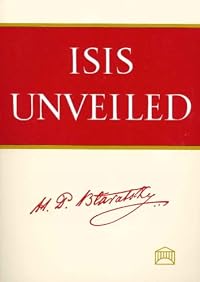
Zanoni also depicts an ordeal involving show more “The Guardian of the Threshold.” Madame Blavatsky would evolve this phrase into “the Dweller of the Threshold,” specifically citing Zanoni, and she affirmed the reality of the phenomenon, also referencing “Porphyry and other philosophers” regarding its nature. Blavatsky was so taken with the occult descriptions in Zanoni that the first volume of her Isis Unveiled quotes the novel for more than a full page. “Such,” she writes, “is the insufficient sketch of elemental beings void of divine spirit, given by one whom many with reason believed to know more than he was prepared to admit in the face of an incredulous public” (IU, I, 286).
Crowley later took up this thread in Liber Cordis Cincti Serpente, chapter IV, verse 34: “On the threshold stood the fulminant figure of Evil … .” In his commentary, he relates this figure explicitly to Zanoni’s exposition of “the Evil Persona, the Dweller on the Threshold, portrayed sensationally for the trade by Sir Edward Bulwer-Lytton.”
It is hard to overestimate the influence of Zanoni on occultists in the late 19th century, and the extent to which it was credited as an informed representation of magical adeptship. show less
Zanoni refers to the adept’s Holy Guardian Angel or personal genius as “Adonai,” a usage later adopted by both Anna Kingsford and Aleister Crowley, among others. Golden Dawn founder MacGregor Mathers first became interested in the occult after reading Zanoni. He used “Zanoni” as a nickname; his wife and close friends called him “Zan” in conversation.
Zanoni also depicts an ordeal involving show more “The Guardian of the Threshold.” Madame Blavatsky would evolve this phrase into “the Dweller of the Threshold,” specifically citing Zanoni, and she affirmed the reality of the phenomenon, also referencing “Porphyry and other philosophers” regarding its nature. Blavatsky was so taken with the occult descriptions in Zanoni that the first volume of her Isis Unveiled quotes the novel for more than a full page. “Such,” she writes, “is the insufficient sketch of elemental beings void of divine spirit, given by one whom many with reason believed to know more than he was prepared to admit in the face of an incredulous public” (IU, I, 286).
Crowley later took up this thread in Liber Cordis Cincti Serpente, chapter IV, verse 34: “On the threshold stood the fulminant figure of Evil … .” In his commentary, he relates this figure explicitly to Zanoni’s exposition of “the Evil Persona, the Dweller on the Threshold, portrayed sensationally for the trade by Sir Edward Bulwer-Lytton.”
It is hard to overestimate the influence of Zanoni on occultists in the late 19th century, and the extent to which it was credited as an informed representation of magical adeptship. show less
Fragile condition
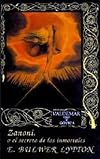
ZANONI O EL SECRETO DE LOS INMORTALES
Edward Bulwer Lytton,
el célebre autor de «Los últimos dias de Pompeya
realizó algunas sobresalientes incursiones
en la literatura fantástica,
como «Zanoniv o ca Strange Story»
La larga sombra del vampiro ha oscurecido
a los demás inmortales góticos, como Fausto
el Judio Errante, o Zanoni, el cual pertenece
a una sociedad secreta -más antigua que los Rosac
que utilizaba el poder de la vida eterma
para buenos propósitos.
El personaje central de la narración
es un ser misterioso, de origen desconocido
de quien se cuentan cosas extraordinarias
que vive consagrado a sus estudios herméticos
hasta que se enamora de la bella Viola Pisani,
ídolo de la ópera de Nápoles.
Desde ese momento, los amantes estarán show more sometidos
a toda suerte de vicisitudes; un drama mágico
que concluye durante los días del Terror,
bajo el imperio de Robespierre y la sombra
ominosa de la guillotina. show less
Edward Bulwer Lytton,
el célebre autor de «Los últimos dias de Pompeya
realizó algunas sobresalientes incursiones
en la literatura fantástica,
como «Zanoniv o ca Strange Story»
La larga sombra del vampiro ha oscurecido
a los demás inmortales góticos, como Fausto
el Judio Errante, o Zanoni, el cual pertenece
a una sociedad secreta -más antigua que los Rosac
que utilizaba el poder de la vida eterma
para buenos propósitos.
El personaje central de la narración
es un ser misterioso, de origen desconocido
de quien se cuentan cosas extraordinarias
que vive consagrado a sus estudios herméticos
hasta que se enamora de la bella Viola Pisani,
ídolo de la ópera de Nápoles.
Desde ese momento, los amantes estarán show more sometidos
a toda suerte de vicisitudes; un drama mágico
que concluye durante los días del Terror,
bajo el imperio de Robespierre y la sombra
ominosa de la guillotina. show less
Dec 28, 2018Spanish
Members
- Recently Added By
Lists

David Bowie's Top 100
97 works; 23 members

Mentioned by H.P. Lovecraft
11 works; 1 member

Lovecraft's 'Supernatural Horror in Literature' Reading List
216 works; 8 members
David Bowie’s Top 100 Favourite Reads
100 works; 3 members
Author Information

287+ Works 5,417 Members
Edward Bulwer-Lytton, Lord of Lytton, was born on May 25, 1803 in London, England. He entered Trinity College, Cambridge in 1822, won the Chancellor's Gold Medal for English verse in 1825, and received a B.A. degree the following year. He was a novelist, poet, playwright, and politician. He coined the phrases the "pursuit of the almighty dollar", show more "the pen is mightier than the sword", and the opening line "It was a dark and stormy night". He wrote in a variety of genres, including historical fiction, mystery, romance, the occult, and science fiction. His works included Falkland, Pelham, Eugene Aram, The Last Days of Pompei, Ernest Maltravers, Zanoni, The Last of the Barons, The Caxtons, and A Strange Story. He also published several volumes of poetry including Ismael and The New Timon. His best known play was The Lady of Lyons. He served as the Secretary of State for the Colonies in from 1858 to 1859 and played a large part in the organization of the new colony of British Columbia. He became Baron Lytton of Knebworth in July 1866 and thereafter took his place in the House of Peers. He died on May 23, 1873, just short of his 70th birthday. The cause of death was not clear but it was thought that an infection he had in his ear had affected his brain. (Bowker Author Biography) show less
Awards and Honors
Notable Lists
Series
Belongs to Publisher Series
Bulwer's novels (18)
Work Relationships
Common Knowledge
- Canonical title*
- Zanoni
- Original publication date
- 1842
- People/Characters
- Zanoni; Adon-Ai; Clarence Glyndon; Mejnour
- Important events
- French Revolution
- Dedication
- To John Gibson, R.A., Sculptor
- First words
- At Naples, in the latter half of the last century, a worthy artist named Gaetano Pisani lived and flourished.
Introduction: One of the peculiarities of Bulwer was his passion for occult studies. - Last words
- (Click to show. Warning: May contain spoilers.)And the old Priest, who stood amongst them, said gently: "Woman, see! the orphan smiles! THE FATHERLESS ARE THE CARE OF GOD!"
- Canonical DDC/MDS
- 823.84
*Some information comes from Common Knowledge in other languages. Click "Edit" for more information.
Classifications
Statistics
- Members
- 316
- Popularity
- 100,090
- Reviews
- 8
- Rating
- (3.93)
- Languages
- 11 — Catalan, Czech, Danish, English, Finnish, French, German, Italian, Polish, Portuguese, Spanish
- Media
- Paper, Audiobook, Ebook
- ISBNs
- 74
- ASINs
- 22