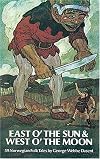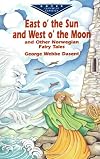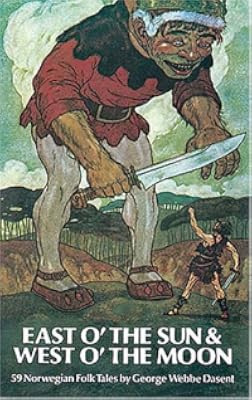
East O' the Sun and West O' the Moon: Fifty-nine Norwegian Folk Tales
by Peter Christen Asbjørnsen, Jørgen Engebretsen Moe
On This Page
Description
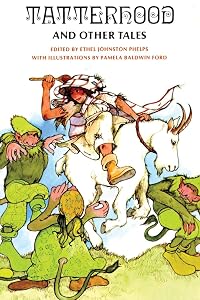
Ten stories from great Asbjørnsen and Moe collection include title story plus "Shortshanks" — the tale of a wee lad who manages to defeat giant ogres — "Princess on the Glass Hill," "Why the Sea Is Salt," "The Twelve Wild Ducks," "The Mastermaid," "Dapplegrim," "Tatterhood," and 2 other stories..
Tags
Recommendations




















Member Reviews
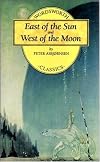
First of all, I love the cover painting on this Wordsworth Classics edition of the traditional Norwegian folk tales, collected and first published in the 19th century by Peter Asbjørnsen. It illustrates the title story, one of 33 in this collection (I don't know how many tales were in the original collection - there is no introduction or notes with this edition).
I really enjoyed reading these tales - which are the Norwegian equivalent of the Brothers Grimm. Indeed Jacob Grimm apparently said in 1850 that the 'Norwegian folk tales are the best there is.'
They fall into two types. Some are first person accounts, mainly of hunting trips or other travels in the mountains and forests, during which the narrator - often forced to take shelter show more during a storm - hears stories of strange encounters with supernatural beings: brownies and trolls, huldres and goblin-hares. Episodic and rather repetitive (as different characters try to outdo each other with similar tall tales) they include vivid descriptions of landscape and setting, and suggest a world in transition, where sophisticated, modern young gentlemen are fascinated by the wild natural world around them and with the old beliefs and superstitions which still linger in farms and villages.
Other tales in this collection fall into the 'Once upon a time' classic folk tale style - stories about poor farmers, youngest sons, youngest daughters marrying polar bears, the devil and those who outwit him, the giant who had no heart, the cormorants of Udröst (a fairy land across the sea) and, of course, three billy goats and a troll. Some of these were very familiar from more recent re-tellings or other similar versions from other countries. Others were new to me. One of the shortest and funniest was about a poor farmer who berated his wife for not working hard enough about the house, until eventually she suggested they swap jobs for the day. Not surprisingly, the man soon discovers there is more to the daily household tasks than he had reckoned, and after a series of mishaps ends up hanging in the chimney over the porridge pot with one leg tied to a rope that is attached to the cow who had been grazing on the turf roof until she fell off! The story, in the often laconic way of folk tales, does not record what the wife said to him when she returned home and cut him down...
That simple role-swapping plot has been the basis for many a comedy in different forms; with this and most of the tales, it is in the details of the telling that the particular Norwegian flavour emerges. The king and his court appear often - portrayed not in grandeur and palaces but more in the guise of a wealthy, down-to-earth farmer. Turf roofs, like the one from which the cow fell in the story mentioned above, are still visible among the older farm buildings.
If you are not planning a visit to Norway in the near future, reading these tales would be one good way of travelling there in the mind, especially to the wilder places of mountain, sea and forest. show less
I really enjoyed reading these tales - which are the Norwegian equivalent of the Brothers Grimm. Indeed Jacob Grimm apparently said in 1850 that the 'Norwegian folk tales are the best there is.'
They fall into two types. Some are first person accounts, mainly of hunting trips or other travels in the mountains and forests, during which the narrator - often forced to take shelter show more during a storm - hears stories of strange encounters with supernatural beings: brownies and trolls, huldres and goblin-hares. Episodic and rather repetitive (as different characters try to outdo each other with similar tall tales) they include vivid descriptions of landscape and setting, and suggest a world in transition, where sophisticated, modern young gentlemen are fascinated by the wild natural world around them and with the old beliefs and superstitions which still linger in farms and villages.
Other tales in this collection fall into the 'Once upon a time' classic folk tale style - stories about poor farmers, youngest sons, youngest daughters marrying polar bears, the devil and those who outwit him, the giant who had no heart, the cormorants of Udröst (a fairy land across the sea) and, of course, three billy goats and a troll. Some of these were very familiar from more recent re-tellings or other similar versions from other countries. Others were new to me. One of the shortest and funniest was about a poor farmer who berated his wife for not working hard enough about the house, until eventually she suggested they swap jobs for the day. Not surprisingly, the man soon discovers there is more to the daily household tasks than he had reckoned, and after a series of mishaps ends up hanging in the chimney over the porridge pot with one leg tied to a rope that is attached to the cow who had been grazing on the turf roof until she fell off! The story, in the often laconic way of folk tales, does not record what the wife said to him when she returned home and cut him down...
That simple role-swapping plot has been the basis for many a comedy in different forms; with this and most of the tales, it is in the details of the telling that the particular Norwegian flavour emerges. The king and his court appear often - portrayed not in grandeur and palaces but more in the guise of a wealthy, down-to-earth farmer. Turf roofs, like the one from which the cow fell in the story mentioned above, are still visible among the older farm buildings.
If you are not planning a visit to Norway in the near future, reading these tales would be one good way of travelling there in the mind, especially to the wilder places of mountain, sea and forest. show less
I grew up with this collection of Norwegian folktales, so it is hard to attempt to review it! I won't summarize all 59 stories, but the main story, East o the Sun, is about a girl who is taken by a bear to a distant land to be his wife. During the night he becomes a human, but she never sees him until she lights a candle, somehow trapping him into bear form. She then has to go on an adventure all over to try to free him from a troll curse to become her human husband. The old-fashioned illustrations are not my favorite, but they are interesting. And I have to admit that I don't actually like most of the stories in this collection! I love that they are adventurous, magical, and involve trolls, but I hate the lack of realistic characters show more and the weirdly contrived problems and solutions. Ultimately, this is why I don't enjoy reading a lot of traditional literature. I prefer realistic characters and conflicts, even if there is magic and adventure. show less
This Dover edition is (probably) the only collection that includes all 59 stories from [b:Popular Tales From The Norse|13147613|Popular Tales From The Norse|George Webbe Dasent|https://d.gr-assets.com/books/1348604280s/13147613.jpg|235331]. Be careful, readers, when buying and reviewing, and also, GR librarians, please be careful when combining!
Illustrators include:
Erik Werenskiold
Theodor Kittelsen
Per Krohg
Dagfin Werenskiold
Alf Rolfsen
Henrik Sorensen
And oh those illustrations are worth seeing! Some almost Art Deco, some more traditional, like woodcuts, but all with a special verve.
This collection is better suited for scholars than for children. The best stories have been made into picture-books already. The rest are often similar, show more sharing motifs and mixing & matching themes and morals. Also, these stories are not bowdlerized, though not as gruesome as many of the original Grimm.
A fast read for me, as I could skim all the familiar bits.
Definitely enjoyable and recommended for completists who want to know Norse tales, not just Andersen and Grimm.
I noted that the beginning was consistently Once on a time" but the ending was unique each time. I liked best the ones in which the storyteller claimed to have attended the wedding feast, and the ones that had special rhymes:
"Snip, snap, snout,
This tale's told out."
And now I'm off to find out who Ritter Red is - a brigand or mercenary, mentioned in a couple of tales, but not to be trusted, it seems..." show less
Illustrators include:
Erik Werenskiold
Theodor Kittelsen
Per Krohg
Dagfin Werenskiold
Alf Rolfsen
Henrik Sorensen
And oh those illustrations are worth seeing! Some almost Art Deco, some more traditional, like woodcuts, but all with a special verve.
This collection is better suited for scholars than for children. The best stories have been made into picture-books already. The rest are often similar, show more sharing motifs and mixing & matching themes and morals. Also, these stories are not bowdlerized, though not as gruesome as many of the original Grimm.
A fast read for me, as I could skim all the familiar bits.
Definitely enjoyable and recommended for completists who want to know Norse tales, not just Andersen and Grimm.
I noted that the beginning was consistently Once on a time" but the ending was unique each time. I liked best the ones in which the storyteller claimed to have attended the wedding feast, and the ones that had special rhymes:
"Snip, snap, snout,
This tale's told out."
And now I'm off to find out who Ritter Red is - a brigand or mercenary, mentioned in a couple of tales, but not to be trusted, it seems..." show less
I'll be moving this and other collections back and forth between my currently-reading shelf to my read and ongoing-collections shelves.
-East O' The Sun & West O' The Moon
I've read this the first time and will read it again and comment
more when I can get caught up on things. For now, I love it.
-East O' The Sun & West O' The Moon
I've read this the first time and will read it again and comment
more when I can get caught up on things. For now, I love it.
43. East of the Sun and West of the Moon by Sir G. W. Dasent (read in 1939) From page 664 of volume 55 of The American Review of Reviews: "Short, easily remembered fairy tales that will prove treasures to persons who have a knack of telling stories to children. There are fascinating tales of trolls, ogres, witches of the Northland, fairy princesses, and marvelous horses of more than human intelligence." I read it and can't remember anything about it but am reasonably sure that it is entitled to at least three stars.
Ratings
Members
- Recently Added By
Lists

Books mentioned in Fire and Hemlock by Diana Wynne Jones
33 works; 1 member
Author Information

197+ Works 4,164 Members
3 Works 1,042 Members
All Editions
Some Editions
Series
Belongs to Publisher Series
Work Relationships
Has the adaptation
Is abridged in
Common Knowledge
- Canonical title
- East O' the Sun and West O' the Moon: Fifty-nine Norwegian Folk Tales
- Original title
- Norske folke-eventyr
- Disambiguation notice
- This is the entry for original English compliation of fifty-nine stories translated by Dasent, first published 1888 . Please avoid combining with collections that contain fewer stories.
Classifications
Statistics
- Members
- 505
- Popularity
- 59,341
- Reviews
- 5
- Rating
- (4.04)
- Languages
- English
- Media
- Paper, Ebook
- ISBNs
- 12
- UPCs
- 2
- ASINs
- 17