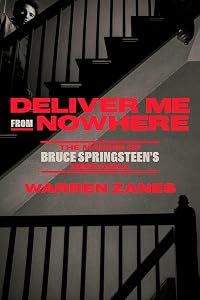
Deliver Me from Nowhere: The Making of Bruce Springsteen's Nebraska
by Warren Zanes
On This Page
Description
"An illuminating deep dive into the making of Bruce Springsteen's most surprising album, Nebraska, revealing its pivotal role in Springsteen's career--from the New York Times bestselling author of Petty: The Biography. Without Nebraska, Bruce Springsteen might not be who he is today. The natural follow-up to Springsteen's hugely successful The River should have been the hit-packed album Born in the U.S.A, but instead, in 1982, he came out with Nebraska, an album consisting of a series of show more dark songs he had recorded exclusively for himself. But almost forty years later, Nebraska is arguably Springsteen's most important record--the lasting clue if you're looking to understand not just the artist's career and the vision behind it but the man himself. Nebraska was rough and unfinished, recorded on a cassette tape with a simple multi-track recorder by Springsteen, alone in his bedroom, just as the digital future was announcing itself. And yet Springsteen now considers it his best album. Nebraska expressed a darkness that was reflective of a mood in the country but was also a symptom of trouble in the artist's life, the beginnings of a mental breakdown that Springsteen would only talk about openly decades after the album's release. Warren Zanes spoke to many people involved with making Nebraska, including Bruce Springsteen. He also interviewed more than a dozen celebrated musicians, from Rosanne Cash to Steven Van Zandt, about their reaction to the album. He interweaves these conversations with inquiries into the myriad cultural events, including Terence Malick's Badlands, that influenced Springsteen as he was writing the album's haunting songs. The result is a textured and revelatory account of not only a crucial moment in the career of an icon but also a recording that upended all expectations and predicted a home recording revolution"-- show lessTags
Recommendations










Member Reviews
Warren Zanes is one of the very best music writers of the last half century. His book on Tom Petty is one of my favorite rock biographies, and I'm not even a particular fan of Petty (although that book raised my opinion of him by quite a few notches). Zanes understands musicians, having been one himself, and the more famous musicians he writes about seem to trust him in turn. And Zanes brings, beyond the empathy that comes from having tread many of the same boards, a shrewd intelligence about human character and about art. He knows what to ask, and he understands the questions that their answers pose. Nobody else could have written this book.
My personal theory concerning Nebraska is that its fans tend to be those who have been to the show more depths. If you've been there, you can hear it in these bleak songs of despair, suicide and murder. Arguably, Springsteen didn't know he was headed for a breakdown at the time, but he was, he had it, and he's open about it now. So you can read it to see how one man turned his demons into art, and, if you're not of one of the afflicted, you can read it just for the stories and for the insight into the collaborative project of putting out a record. It's a quick read, and a good one, and more than worthwhile for anyone who's ever loved a song. show less
My personal theory concerning Nebraska is that its fans tend to be those who have been to the show more depths. If you've been there, you can hear it in these bleak songs of despair, suicide and murder. Arguably, Springsteen didn't know he was headed for a breakdown at the time, but he was, he had it, and he's open about it now. So you can read it to see how one man turned his demons into art, and, if you're not of one of the afflicted, you can read it just for the stories and for the insight into the collaborative project of putting out a record. It's a quick read, and a good one, and more than worthwhile for anyone who's ever loved a song. show less
Bruce Springsteen's Nebraska album isn't like any other album he's ever recorded — certainly nothing he had done up to that point (1982) in his career. Fresh off his first No. 1 album, The River, everyone including himself expected him to continue on that upward trajectory toward bigger and bigger stardom.
But recording his first five albums had been agony; months and months of studio time wasted while he wrote more songs, recorded and re-recorded with the E Street Band in an attempt to get the sound in his head onto tape. This time, Springsteen decided to do things differently: He wouldn't book studio time until he had written a set of songs for the next album and recorded solo demos for them. That would save time, money and tears of show more frustration.
He got a basic four-track recorder and sat in his bedroom working on a set of songs and then recording them himself onto a regular cassette tape. He wasn't too worried about quality because they were only meant to be demos. But when he and the band finally got into the studio, something strange happened. Some of the songs — "Born in the USA" for one (which ended up on the album after this one) — sounded great with the full band treatment, and the final version was nailed on just the second take. But others lost something ineffable in the studio. It didn't matter whether they tried recording with the full band, or just Bruce and his guitar attempting to recreate the vibe of the demo tape. The studio recordings were crap.
Eventually, it was decided to release the songs from the demo tape as is, without trying to re-record or overdub additional parts. Which set up a whole other technical challenge of translating something recorded on consumer-level equipment into a studio-quality record. The final album doesn't sound like anything else — it's a little muddy and a little echoey and some of the lyrics aren't quite fully fleshed out. But it's come to be considered Springsteen's masterpiece, the album that cemented his reputation as not only a great live performer but also a great songwriter.
The author, Warren Zanes, was part of the Del Fuegos band back in the day, and when he stopped being a musician he went and got himself a Ph.D and became an academic. So he's well situated to both understand the musical process and also be able to put it into a larger context. Zanes also interviewed lots of other musicians and songwriters, both famous and less so, who talk about the impact Nebraska had on their work, which added an insider facet to the story.
I will say that I am a total sucker for "behind the scenes" logistics narratives about the magic of how music gets made, probably because I love music but have zero talent myself. So I would have enjoyed this book no matter who the artist was. But of course, the artist is Bruce Springsteen and if you've been around these parts much you know how I feel about that guy. So yeah, a five-star read for me, but I think anyone who likes to read about how the musical sausage gets made would find it interesting. show less
But recording his first five albums had been agony; months and months of studio time wasted while he wrote more songs, recorded and re-recorded with the E Street Band in an attempt to get the sound in his head onto tape. This time, Springsteen decided to do things differently: He wouldn't book studio time until he had written a set of songs for the next album and recorded solo demos for them. That would save time, money and tears of show more frustration.
He got a basic four-track recorder and sat in his bedroom working on a set of songs and then recording them himself onto a regular cassette tape. He wasn't too worried about quality because they were only meant to be demos. But when he and the band finally got into the studio, something strange happened. Some of the songs — "Born in the USA" for one (which ended up on the album after this one) — sounded great with the full band treatment, and the final version was nailed on just the second take. But others lost something ineffable in the studio. It didn't matter whether they tried recording with the full band, or just Bruce and his guitar attempting to recreate the vibe of the demo tape. The studio recordings were crap.
Eventually, it was decided to release the songs from the demo tape as is, without trying to re-record or overdub additional parts. Which set up a whole other technical challenge of translating something recorded on consumer-level equipment into a studio-quality record. The final album doesn't sound like anything else — it's a little muddy and a little echoey and some of the lyrics aren't quite fully fleshed out. But it's come to be considered Springsteen's masterpiece, the album that cemented his reputation as not only a great live performer but also a great songwriter.
The author, Warren Zanes, was part of the Del Fuegos band back in the day, and when he stopped being a musician he went and got himself a Ph.D and became an academic. So he's well situated to both understand the musical process and also be able to put it into a larger context. Zanes also interviewed lots of other musicians and songwriters, both famous and less so, who talk about the impact Nebraska had on their work, which added an insider facet to the story.
I will say that I am a total sucker for "behind the scenes" logistics narratives about the magic of how music gets made, probably because I love music but have zero talent myself. So I would have enjoyed this book no matter who the artist was. But of course, the artist is Bruce Springsteen and if you've been around these parts much you know how I feel about that guy. So yeah, a five-star read for me, but I think anyone who likes to read about how the musical sausage gets made would find it interesting. show less
In many respects, "Nebraska" is my favorite album. At least, as an artistic statement, it's the record I keep coming back to, and I've often said that the lyrics and mood of the album are what made me want to be a writer.
It's an album you listen to alone. Alone in your room late at night with the lights out. Alone in your car on a long and lonely drive. It's an album that offers neither hope nor redemption. It's an album that Bruce didn't even realize he was recording, just laying down songs on a small recorder in his bedroom. But he could never find a way to release them -not with the E Street Band, nor as a solo effort with pristine studio support and rich, full guitars. The only thing that made sense was taking the single cassette show more tape he carried around in his pocket, and putting them out into the world. They were that personal, that intimate, and that haunted. Production would've only diminished the sense of isolation and lostness that the characters in the songs convey. This is song noir.
So, front loading all of that, I've always wanted to know more about how the album was created, what informed Bruce's writing, and what the thinking was behind releasing the album as, essentially, a collection of demos. This book delivers that. Zanes, who also wrote a fine biography on Tom Petty, spent time with Bruce, Jon Landau, and others to get a complete a story as one could about an album recorded in isolation. Roseanne Cash, members of The National, Steve Earle, Chuck Prophet, and other musicians chime in on what "Nebraska" means to them and how it shaped their music.
For any Springsteen fan curious about this landmark album, this is the closest you'l get to that little bedroom in Colts Neck, New Jersey, where Bruce Springsteen recorded what he believes may be his best album, the one that will stand the test of time. show less
It's an album you listen to alone. Alone in your room late at night with the lights out. Alone in your car on a long and lonely drive. It's an album that offers neither hope nor redemption. It's an album that Bruce didn't even realize he was recording, just laying down songs on a small recorder in his bedroom. But he could never find a way to release them -not with the E Street Band, nor as a solo effort with pristine studio support and rich, full guitars. The only thing that made sense was taking the single cassette show more tape he carried around in his pocket, and putting them out into the world. They were that personal, that intimate, and that haunted. Production would've only diminished the sense of isolation and lostness that the characters in the songs convey. This is song noir.
So, front loading all of that, I've always wanted to know more about how the album was created, what informed Bruce's writing, and what the thinking was behind releasing the album as, essentially, a collection of demos. This book delivers that. Zanes, who also wrote a fine biography on Tom Petty, spent time with Bruce, Jon Landau, and others to get a complete a story as one could about an album recorded in isolation. Roseanne Cash, members of The National, Steve Earle, Chuck Prophet, and other musicians chime in on what "Nebraska" means to them and how it shaped their music.
For any Springsteen fan curious about this landmark album, this is the closest you'l get to that little bedroom in Colts Neck, New Jersey, where Bruce Springsteen recorded what he believes may be his best album, the one that will stand the test of time. show less
Deliver Me from Nowhere by Warren Zanes is a fascinating look at both this superb album and the creative process in general, with plenty of input from Springsteen himself.
Though not immediately embraced on a large scale, Nebraska was loved by those who did appreciate it immediately. I was one of those and it wasn't because we, any of us, were musical experts, it was because of how it spoke to us personally. That also explains why it gained in popularity as time went on, as people experienced more of the ups and, especially, downs of life the album spoke to them more and more. This book dives into both how Springsteen captured that feeling (by capturing that sound) and why, at that point in his career, it was something he needed to do. show more For his own wellbeing and, ultimately, for the band.
The writing here is excellent and Springsteen's comments and insights are used wonderfully to highlight Zanes' journey through the research and writing of the book. While a fair amount of the information isn't new, it is presented in a more contextualized manner than the scattered anecdotes we are familiar with.
Of the many books on Springsteen I've read, I find I tend toward the more academic (or at least the less sensationalized). Several, including a recent read on women fandom, focus on audience reception as much as music production or biographical information. This volume is an ideal mix for me, serious but accessible, about the making of the music as well as the reception, and most important a lack of sensationalism just to sell the book.
Recommended for Springsteen fans (even old ones like me that still think of Born in the USA as the later Springsteen, though now I guess I would have to change that to the middle Springsteen) as well as music fans in general. Those readers who enjoy learning more about the hows and whys of an album will particularly enjoy this.
Reviewed from a copy made available by the publisher via NetGalley. show less
Though not immediately embraced on a large scale, Nebraska was loved by those who did appreciate it immediately. I was one of those and it wasn't because we, any of us, were musical experts, it was because of how it spoke to us personally. That also explains why it gained in popularity as time went on, as people experienced more of the ups and, especially, downs of life the album spoke to them more and more. This book dives into both how Springsteen captured that feeling (by capturing that sound) and why, at that point in his career, it was something he needed to do. show more For his own wellbeing and, ultimately, for the band.
The writing here is excellent and Springsteen's comments and insights are used wonderfully to highlight Zanes' journey through the research and writing of the book. While a fair amount of the information isn't new, it is presented in a more contextualized manner than the scattered anecdotes we are familiar with.
Of the many books on Springsteen I've read, I find I tend toward the more academic (or at least the less sensationalized). Several, including a recent read on women fandom, focus on audience reception as much as music production or biographical information. This volume is an ideal mix for me, serious but accessible, about the making of the music as well as the reception, and most important a lack of sensationalism just to sell the book.
Recommended for Springsteen fans (even old ones like me that still think of Born in the USA as the later Springsteen, though now I guess I would have to change that to the middle Springsteen) as well as music fans in general. Those readers who enjoy learning more about the hows and whys of an album will particularly enjoy this.
Reviewed from a copy made available by the publisher via NetGalley. show less
This account of one of the most remarkable left turns in musical history by a veteran rock musician and biographer is a must for the Springsteen aficionado. It documents Springsteen's Nebraska album, a stark contrast to the extremely popular E Street Band hit machine of the early eighties. Sitting on his bed and using but a guitar and semi-professional recording equipment, with a few other instruments dubbed in later, he produced his magnum opus, a clear-eyed vision of the life of the common man, together with some moving accounts of childhood memories. This was later made into a movie, also good, but which differs in emphases. This book expands its scope to cover other musicians and how they were influenced by the record, and has a show more little more to say about the depression which played a role in his thinking. I'm not sure this would be of high interest to anybody who hasn't heard, and preferably loved, the record, but otherwise it's faultless and a pearl of great price. show less
I find it difficult to review books by or about Bruce Springsteen because I have been a fan for 50 years now. I started this one wondering why I was reading another book about him, particularly since he so generously shared his excellent memoir with us seven years ago. Warren Zanes’s book is so much more, though. Zanes, who was the guitarist for the band, The Del Fuegos, before entering academia, brings his musician’s experience to this deep dive into Springsteen’s darkest, most unexpected (at the time) album, home-recorded on a four-track TEAC 144 at a rented house in Colts Neck, New Jersey—the album Springsteen feels “still may be” his best work. As do many musicians Zanes interviewed. The tapes were essentially demos show more slated for E Street Band development in the midst of the recording sessions for the Born in the USA album. Zanes interviewed artists influenced by the album, people connected to Springsteen, like manager Jon Landau, and the man himself. Landau recalls that the dark themes and spare and raw melodies of the tapes “concerned [him] on a friendship level,” as Springsteen was battling anxiety and depression during this period. The most fascinating aspect of the story of recording of the album, to me, was the monumental effort it took to preserve the stark quality of the original recording in transferring it from the four-track tape; i.e., the hours and hours of time and many people it took to keep it simple.
Admittedly, I was not a big fan of Nebraska when it was released in 1982. There, I said it; please don’t cancel my Spring-Nuts membership. I was a young mom with two sons under the age of three and desperate for another rocker on the heels of the fabulous double album, The River, that preceded it in 1980. Stark and depressing just didn’t cut it at the time; I was too sleep-deprived and isolated from adult interaction as it was. It took some years for it to grow on me. I feel somewhat validated: Zanes noted this phenomenon among fans, that Nebraska “had something of a time-release quality. It revealed its strange power over the years, a thing people found in their own way and on their own time. It was passed around like a rumor.” My favorite anecdote was from Steve Earle, who, tongue-in-cheek, attributes the success of his musical career to Springsteen:
Zanes observes that in many ways, Nebraska was a punk album; he fabulously describes it as “a cave painting in the age of photography.” He even takes a trip with Bruce to the room where it happened—that small bedroom in a rental house, “the orange wall-to-wall shag carpeting . . . most certainly intact, if a little washed out from the passage of time,” with its window overlooking a reservoir. I can see it now, when I put the album on and close my eyes, listen to those stories of outlaws and desperate people brought to life by a man with a gravelly voice and a lonesome guitar. show less
Admittedly, I was not a big fan of Nebraska when it was released in 1982. There, I said it; please don’t cancel my Spring-Nuts membership. I was a young mom with two sons under the age of three and desperate for another rocker on the heels of the fabulous double album, The River, that preceded it in 1980. Stark and depressing just didn’t cut it at the time; I was too sleep-deprived and isolated from adult interaction as it was. It took some years for it to grow on me. I feel somewhat validated: Zanes noted this phenomenon among fans, that Nebraska “had something of a time-release quality. It revealed its strange power over the years, a thing people found in their own way and on their own time. It was passed around like a rumor.” My favorite anecdote was from Steve Earle, who, tongue-in-cheek, attributes the success of his musical career to Springsteen:
Zanes observes that in many ways, Nebraska was a punk album; he fabulously describes it as “a cave painting in the age of photography.” He even takes a trip with Bruce to the room where it happened—that small bedroom in a rental house, “the orange wall-to-wall shag carpeting . . . most certainly intact, if a little washed out from the passage of time,” with its window overlooking a reservoir. I can see it now, when I put the album on and close my eyes, listen to those stories of outlaws and desperate people brought to life by a man with a gravelly voice and a lonesome guitar. show less
I had to read this very slowly because it's writing about one of the most difficult musical albums out there. I cried a lot, which is how it usually goes when I listen to Nebraska. The best thing about this book is that Warren Zanes gets out of the way and lets a lot of the material do most of the heavy lifting for him, because this an album with an incredible amount of material, because the people who love this album are really thoughtful, considerate people, and the conversations with other musicians and Bruce Springsteen himself are more than enough.
Members
- Recently Added By
Lists

Stuff from Bard
70 works; 1 member

Top Five Books of 2023
767 works; 317 members

Books for Dustin
19 works; 1 member
Author Information

6+ Works 501 Members
Awards and Honors
Distinctions
Work Relationships
Has the adaptation
Classifications
- Genres
- Music, Nonfiction, Biography & Memoir, General Nonfiction, Art & Design, Health & Wellness
- DDC/MDS
- 782.42164092 — Arts & recreation Music Vocal music Secular forms of vocal music Songs General principles and musical forms Traditions of secular songs {genres} Western popular songs
- LCC
- ML420 .S77 .Z35 — Music Literature on music Literature on music History and criticism Biography
- BISAC
Statistics
- Members
- 116
- Popularity
- 280,911
- Reviews
- 12
- Rating
- (4.48)
- Languages
- English, Spanish
- Media
- Paper, Audiobook, Ebook
- ISBNs
- 5
- ASINs
- 2