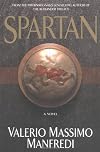
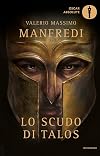
Spartan
by Valerio Massimo Manfredi
On This Page
Description
An epic story of passion, courage and adventure in ancient Sparta, by the author of the ALEXANDER trilogy.Herodotus tells us that not all of the three hundred Spartan warriors died at the hands of Xerxes, King of the Persians, in the battle of the Thermopylae: two were saved bringing a life-saving message back to the city...This is the saga of a Spartan family, torn apart by a cruel law that forces them to abandon one of their two sons-born lame-to the elements. The elder son, Brithos, is show more raised in the caste of the warriors, while the other, Talos, is spared a cruel death and is raised by a Helot shepherd, among the peasants. They live out their story in a world dominated by the clash between the Persian empire and the city-states of Greece-a ferocious, relentless conflict-until the voice of their blood and of human solidarity unites them in a thrilling, singular enterprise. show lessTags
Recommendations








Member Reviews
This is a frustrating one for me, because this one really should be an amazing book. It's about a Spartan boy born with a deformity, a disfigured leg, that forces his parents to abandon him to the wilderness by Spartan law. He is found and raised by a helot, never knowing that he is of Spartan stock, and grows up in poverty under the oppression of the people who rejected him as a child.
It sounds like a great way to start a novel, right? It is indeed, and it only gets better from there! Unfortunately, the writing just doesn't live up to the concept. It's often dense and lacking in emotion, so I often felt disconnected from the characters, and because it takes place over about 40 years of time important events often feel glossed over and show more insignificant. It also ended a bit too abruptly for my own liking, and the final passage didn't have nearly as profound an effect on me as it should have.
I really want to like this book more, but despite the great concept it didn't quite live up to my expectations. I read an English translation of the text so maybe that is a contributing factor, but ultimately I can only judge what is in front of me, so unfortunately I have to concede an average rating. show less
It sounds like a great way to start a novel, right? It is indeed, and it only gets better from there! Unfortunately, the writing just doesn't live up to the concept. It's often dense and lacking in emotion, so I often felt disconnected from the characters, and because it takes place over about 40 years of time important events often feel glossed over and show more insignificant. It also ended a bit too abruptly for my own liking, and the final passage didn't have nearly as profound an effect on me as it should have.
I really want to like this book more, but despite the great concept it didn't quite live up to my expectations. I read an English translation of the text so maybe that is a contributing factor, but ultimately I can only judge what is in front of me, so unfortunately I have to concede an average rating. show less
Segunda obra que leemos de Manfredi. Como esperábamos ha sido un recorrido muy agradable por su relato y la historia que se cruza con él.
Es de gran valor y mensaje lo que nos muestra la vida del personaje principal que no se da por vencido a pesar de las circunstancias que le toca vivir. Un carácter ejemplar en muchos de los personajes que siguen sus convicciones incluso frente a lo instituido.
La referencia a los 300 me insta a ver el film de ese nombre. También se genera interés por la historia que hace de contexto al relato. Aunque tenemos algún conocimiento básico de los espartanos y su relación complicada con sus coterraneos, aquí se enriquece esa visión.
El tema del destino siempre aparece en estos relatos de contexto show more griego. No soy muy afecto al tema pero parece inevitable. De todos modos el final tiene un toque agradable.
Cuántos se reconocerán en ese tipo de personas que llamo desgarrados, personas que podrían pertenecer a uno a otro conglomerado social pero no son ni de uno ni de otro. Interesantes los momentos de l6cha interna.
Totalmente recomendamos esta obra. show less
Es de gran valor y mensaje lo que nos muestra la vida del personaje principal que no se da por vencido a pesar de las circunstancias que le toca vivir. Un carácter ejemplar en muchos de los personajes que siguen sus convicciones incluso frente a lo instituido.
La referencia a los 300 me insta a ver el film de ese nombre. También se genera interés por la historia que hace de contexto al relato. Aunque tenemos algún conocimiento básico de los espartanos y su relación complicada con sus coterraneos, aquí se enriquece esa visión.
El tema del destino siempre aparece en estos relatos de contexto show more griego. No soy muy afecto al tema pero parece inevitable. De todos modos el final tiene un toque agradable.
Cuántos se reconocerán en ese tipo de personas que llamo desgarrados, personas que podrían pertenecer a uno a otro conglomerado social pero no son ni de uno ni de otro. Interesantes los momentos de l6cha interna.
Totalmente recomendamos esta obra. show less
The story itself was good, but agree with others [bookcrossing reviewers] that the language was some times florid, and sometimes almost childlike, which made me wonder whether the original Italian was quite like this!
Set in 504BC - 464BC in ancient Greece, this historical fiction was a thrilling read. The story begins in Sparta, and follows a young man born to a noble Spartan family, but abandoned due to his deformity. The boy is found by a Helot and raised as a servant to the Spartans. He later travels the world, and is torn between his upbringing and his heritage and the mystery surrounding his purpose.
An amazing story of courage and bravery and a fascinating look at the culture and laws of this period. Plenty of politics, intrigue, prophecy and war kept me engrossed for the duration of the book.
Highly recommended!
An amazing story of courage and bravery and a fascinating look at the culture and laws of this period. Plenty of politics, intrigue, prophecy and war kept me engrossed for the duration of the book.
Highly recommended!
I managed to get about two-thirds through this novel before giving up and deciding it really wasn’t worth my time. The story appeared to be badly translated, stilted (“this people…”) and a bit boring for tales purported to be centered around a warrior aristocracy and their fief-like subordinates. I had heard that Manfredi’s novels were good and action packed, I hope Spartan suffers from bad translation and is not indicative of his other work. This is turning out to be a bad month for reading novels.
It is fairly good. The Alexander trilogy was more entertaining.
Bello, ma non eccezionale
Members
- Recently Added By
Lists

Books Read in 2014
2,343 works; 89 members

Authors from Italy
13 works; 1 member

Books Read in 2003
258 works; 7 members

School Made Us Read It
380 works; 196 members
Author Information

122+ Works 9,429 Members
Italian historian and archaeologist Valerio Massimo Manfredi is a professor of classical archaeology at the University of Milan. He was named Man of the Year 1999 by the American Biographical Institute for this bestselling trilogy. Manfredi's books have been published in France, Germany, Greece, Russia, Spain, and the United Kingdom. (Bowker show more Author Biography) show less
Series
Belongs to Publisher Series
Work Relationships
Common Knowledge
- Canonical title
- Spartan
- Original title
- Lo scudo di Talos
- Original publication date
- 1988
- People/Characters
- Brithos; Talos
- Important places
- Ancient Greece; Sparta, Greece
- Important events
- Battle of Thermopylae
- First words*
- Con il cuore pieno di amarezza sedeva il grande Aristarchos e guardava il figlioletto Kleidemos dormire tranquillo nel grande scudo paterno che gli fungeva da culla.
- Last words*
- (Click to show. Warning: May contain spoilers.)Un giorno, se il suo popolo avesse avuto bisogno di lui, Talos, il Lupo, l'avrebbe indossata ancora.
- Original language
- Italian
*Some information comes from Common Knowledge in other languages. Click "Edit" for more information.
Classifications
- Genres
- Fiction and Literature, General Fiction, Historical Fiction
- DDC/MDS
- 853.914 — Literature & rhetoric Italian, Romanian & related literatures Italian fiction 1900- 20th Century 1945-1999
- LCC
- PQ4873 .A4776 .S38 — Language and Literature French, Italian, Spanish and Portuguese literatures Italian literature Individual authors, 1961-2000
- BISAC
Statistics
- Members
- 720
- Popularity
- 39,492
- Reviews
- 15
- Rating
- (3.55)
- Languages
- 8 — English, German, Greek, Italian, Polish, Russian, Slovenian, Spanish
- Media
- Paper, Audiobook, Ebook
- ISBNs
- 33
- ASINs
- 10