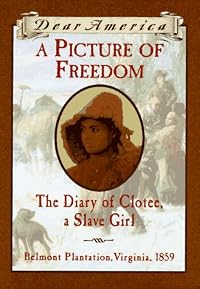
A Picture of Freedom: The Diary of Clotee, a Slave Girl, Belmont Plantation, Virginia, 1859
by Patricia C. Mckissack
Dear America - Publication Order (4), Dear America Re-issue - Publication Order (5), Dear America (1859. Civil War/Slavery: Belmont Plantation, Virginia), My Story: Girls, Dear America Collections (Dear America: Civil War/Slavery, 1859), My Story (UK) (1859), My Story
On This Page
Description
In 1859 twelve-year-old Clotee, a house slave who must conceal the fact that she can read and write, records in her diary her experiences and her struggle to decide whether to escape to freedom.Tags
Recommendations
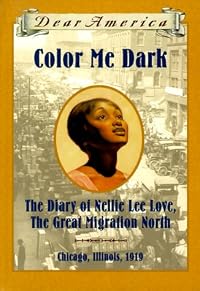
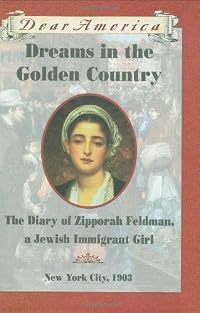
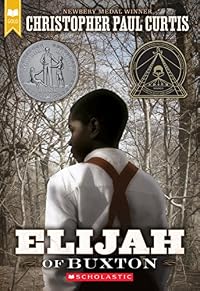
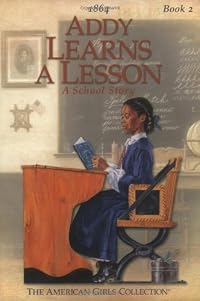
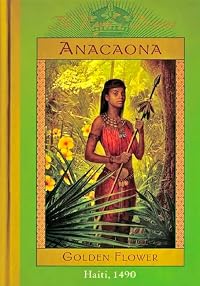
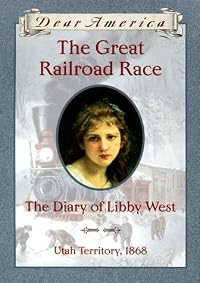
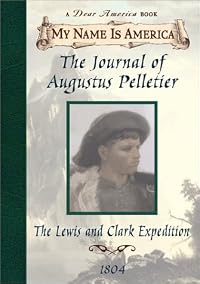
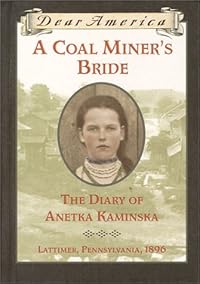
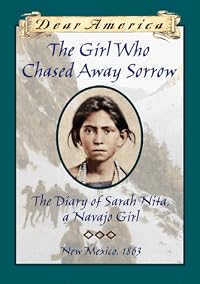
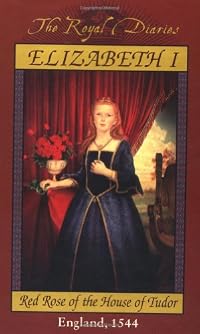
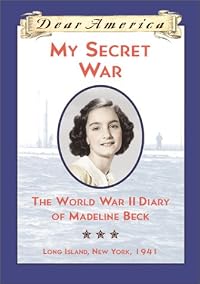
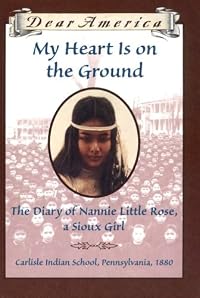
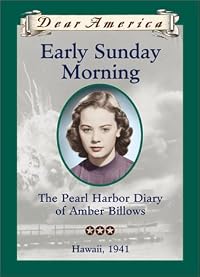
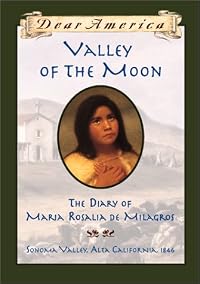
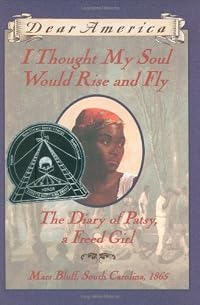
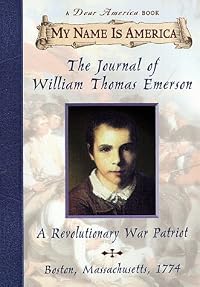


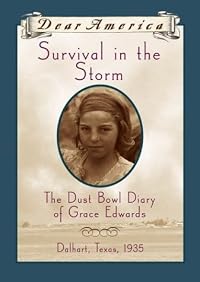
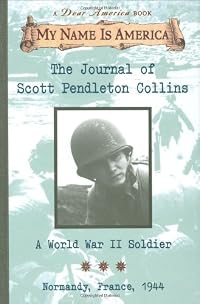
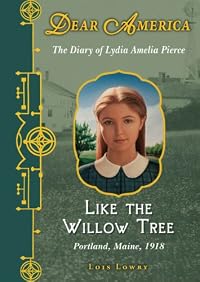
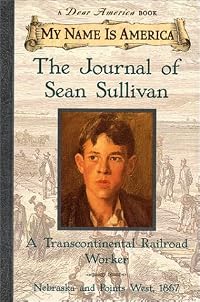
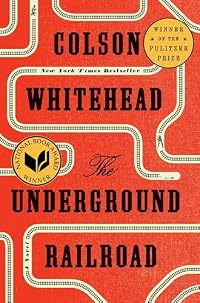
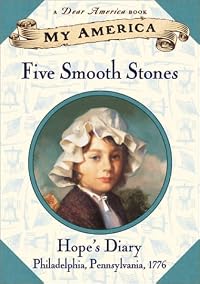
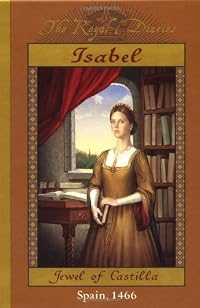
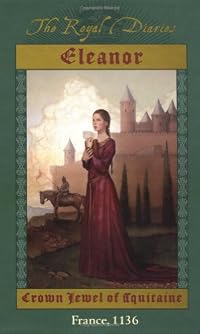
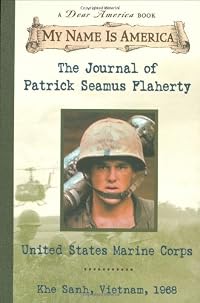
Member Recommendations
Member Reviews
The Dear America books offer a wonderful way to teach children American history. I thoroughly enjoy reading them myself.... and as a homeschooling Mom, I consider them a very valuable educational resource.
On this particular book..... the books about slaves and the civil war are some of my personal faves.... one critique I will give is the redundancy in some material.... ie; in both this book and Patsy The Freed Slave Girl, both girls learned to read while eavesdropping on school lessons..... while I'm sure this did happen at times, it's rather hard to believe that a completely uneducated slave would often learn to read and write well enough to fill a diary, with mostly proper grammar, in such a second hand way. I just feel like this show more means of creating the feasibility for diary writing from a slave, is a bit if a one trick pony.
On a second, and more important point of contention..... the aim of this series is to educate children on historical facts... therefore, the accuracy of the information included is paramount.... this book contains an excerpt in which the main protagonist claims white men steal slaves from Africa by throwing blankets over their heads and loading them on boats..... while I'm sure white ppl were Boogeymen to these poor ppl.... understandanly so.... and I'm sure stories like this were told..... I was disappointed to see the writer did not correct these assertions in the facts portion of this book.... slaves were not stolen or snatched, they were acquired in the well documented slave trade triangle... from Africa to England, then to America.... it's important to not forget the realities of everyone involved in this horrible behavior, and to remember this disgusting practice has existed around the globe for thousands of years... and still does in some countries. show less
On this particular book..... the books about slaves and the civil war are some of my personal faves.... one critique I will give is the redundancy in some material.... ie; in both this book and Patsy The Freed Slave Girl, both girls learned to read while eavesdropping on school lessons..... while I'm sure this did happen at times, it's rather hard to believe that a completely uneducated slave would often learn to read and write well enough to fill a diary, with mostly proper grammar, in such a second hand way. I just feel like this show more means of creating the feasibility for diary writing from a slave, is a bit if a one trick pony.
On a second, and more important point of contention..... the aim of this series is to educate children on historical facts... therefore, the accuracy of the information included is paramount.... this book contains an excerpt in which the main protagonist claims white men steal slaves from Africa by throwing blankets over their heads and loading them on boats..... while I'm sure white ppl were Boogeymen to these poor ppl.... understandanly so.... and I'm sure stories like this were told..... I was disappointed to see the writer did not correct these assertions in the facts portion of this book.... slaves were not stolen or snatched, they were acquired in the well documented slave trade triangle... from Africa to England, then to America.... it's important to not forget the realities of everyone involved in this horrible behavior, and to remember this disgusting practice has existed around the globe for thousands of years... and still does in some countries. show less
Overall this was an engaging book. It was hard to get a sense of Clotee's age. Having heard this as an audiobook, I may have misunderstood that she was 7 years old (explains why her job was fanning). Some of her thoughts and actions seem much older. The fact that it was a diary made me imagine some descendant finding her journal and connecting with this history.
The author's use of the 'picture' analogy seemed a little heavy handed: the number of times Clotee talks about not being able to picture freedom. This might be relevant for someone who is very visually oriented, but it implies that one cannot imagine abstract concepts.
The author's use of the 'picture' analogy seemed a little heavy handed: the number of times Clotee talks about not being able to picture freedom. This might be relevant for someone who is very visually oriented, but it implies that one cannot imagine abstract concepts.
I don't remember much of these books as individual books, but I remember reading them all as a young, avid reader. I think that ultimately these books are the reason why I love historical fiction novels so much. They all did such a great job of taking me to a different time and place and making it come alive, seeing the world through an older, historical lens. I highly recommend any of the Dear America books to younger readers who love history and need to get hooked on reading!
Clotee has lived all twelve years of her life as a slave on the Belmont Plantation in Virginia. Now it's 1859, just before the start of the Civil War. Although she has known no life other than that of a slave, she has secretly learned how to read and write, and that ability gives her a glimpse of the world out there. To practice, she keeps a secret diary that she hides in a hollowed-out tree. An orphan most of her life, Clotee has managed to make the best of her circumstances, and writing is one of the few things that brings her any joy. When a tutor comes to the plantation to teach the master's young son, Clotee figures that he'll just be another predjudiced southerner. But he's an abolitionist that further expands Clotee's horizons, show more and he may be able to give her the one thing she longs for: freedom. I highly reccomend this beautifully written account of one year in the life of a fictional slave girl who lived in circumstances typical of the time. The fact that it is told through Clotee's diary allows the reader to really get inside her head and know her innermost thoughts, hopes, and dreams. show less
In 1859, Clotee knows firsthand the horrible conditions slaves endure. She has secretly taught herself to read and write, but must keep it a secret, as slaves are forbidden to have such knowledge. Clotte eventually becomes a conductor on the Underground Railroad, helping other slaves to freedom and must decide whether she will plan her own escape. This is a very true and interesting story. I definitely recommend this chapter book for students to read.
I was very caught in to this story and thought that it was very descriptive about the live of a slave girl named clotee's life, her time period, and her thoughts about the changing world all around her. Being the time period that it was, slavery was still going on in clotee's world, and nowadays it's hard to imagine what life would be like if you were a slave who knew how to read and write, and this elaborate story helped me to picture that. I really felt like I was in clotee's world while reading this book.
Wonderful story about a slave girl who’s job it is to fan the plantation owner’s son while he takes his lessons. Of course, she learns to read and everything he knows, she learns too and she practices writing by scrawling letters in the dirt. This opens her eyes to the real world and makes her yearn for something better – she also is very valuable to the movement to free slaves in other parts of America because she can read & write. Based on other famous “go-betweens”.
Members
- Recently Added By
Lists

Learning history through first-person, young adult, historical fiction one
188 works; 4 members
Author Information

152+ Works 26,648 Members
Patricia C. McKissack was born in Smyrna, Tennessee on August 9, 1944. She received a bachelor's degree in English from Tennessee State University in 1964 and a master's degree in early childhood literature and media programming from Webster University in 1975. After college, she worked as a junior high school English teacher and a children's book show more editor at Concordia Publishing. Since the 1980's, she and her husband Frederick L. McKissack have written over 100 books together. Most of their titles are biographies with a strong focus on African-American themes for young readers. Their early 1990s biography series, Great African Americans included volumes on Frederick Douglass, Marian Anderson, and Paul Robeson. Their other works included Black Hands, White Sails: The Story of African-American Whalers and Days of Jubilee: The End of Slavery in the United States. Over their 30 years of writing together, the couple won many awards including the C.S. Lewis Silver Medal, a Newbery Honor, nine Coretta Scott King Author and Honor awards, the Jane Addams Peace Award, and the NAACP Image Award for Sojourner Truth: Ain't I a Woman?. In 1998, they received the Coretta Scott King-Virginia Hamilton Award for Lifetime Achievement. She also writes fiction on her own. Her book included Flossie and the Fox, Stitchin' and Pullin': A Gee's Bend Quilt, A Friendship for Today, and Let's Clap, Jump, Sing and Shout; Dance, Spin and Turn It Out! She won the Newberry Honor Book Award and the King Author Award for The Dark Thirty: Southern Tales of the Supernatural in 1993 and the Caldecott Medal for Mirandy and Brother Wind. She dead of cardio-respiratory arrest on April 7, 2017 at the age of 72. (Bowker Author Biography) show less
Some Editions
Awards and Honors
Series

Dear America - Publication Order
36 works (4)

Dear America Re-issue - Publication Order
17 works (5)

Dear America
43 works (1859. Civil War/Slavery: Belmont Plantation, Virginia)

My Story: Girls
31 works

Dear America Collections
78 works (Dear America: Civil War/Slavery, 1859)

My Story (UK)
59 works (1859)

My Story
224 works
Belongs to Publisher Series
Folio junior, Mon histoire (1782)
Gallimard jeunesse, Mon histoire (1859-1860)
Work Relationships
Is contained in
Has the adaptation
Common Knowledge
- Canonical title
- A Picture of Freedom: The Diary of Clotee, a Slave Girl, Belmont Plantation, Virginia, 1859
- Original title
- A Picture of Freedom: The Diary of Clotee, a Slave Girl, Belmont Plantation, Virginia, 1859
- Alternate titles
- Slave Girl: The Diary of Clotee, Virginia, USA 1859
- Original publication date
- 1997 (1e édition originale américaine, Scolastic, Nw York) (1e édition originale américaine, Scolastic, Nw York); 2005-09-15 (1e traduction et édition française, Mon histoire, Gallimard Jeunesse) (1e traduction et édition française, Mon histoire, Gallimard Jeunesse); 2017-02-16 (Nouvelle édition reformatée, Folio junior Mon histoire, N° 1782, Gallimard Jeunesse) (Nouvelle édition reformatée, Folio junior Mon histoire, N° 1782, Gallimard Jeunesse)
- People/Characters
- Clotee; Spicy; Aunt Tee
- Important places
- Virginia, USA; Belmont Plantation
- Important events
- Antebellum South; Underground Railroad; 19th century; 1850s; 1859
- Related movies
- Dear America: A Picture of Freedom (1999 | IMDb)
- Original language*
- Anglais (Etats-Unis) (Etats-Unis)
*Some information comes from Common Knowledge in other languages. Click "Edit" for more information.
Classifications
Statistics
- Members
- 2,235
- Popularity
- 8,968
- Reviews
- 26
- Rating
- (4.05)
- Languages
- Chinese, English, French, Italian
- Media
- Paper, Ebook
- ISBNs
- 17
- UPCs
- 3
- ASINs
- 3