Borderland: A Journey Through the History of Ukraine
by Anna Reid
On This Page
Description
"Borderland tells the story of Ukraine. A thousand years ago it was the center of the first great Slav civilization, Kievan Rus. In 1240, the Mongols invaded from the east, and for the next seven centuries, Ukraine was split between warring neighbors: Lithuanians, Poles, Russians, Austrians, and Tatars. Again and again, borderland turned into battlefield: during the Cossack risings of the seventeenth century, Russia's wars with Sweden in the eighteenth, the Civil War of 1918-1920, and under show more Nazi occupation. Ukraine finally won independence in 1991, with the collapse of the Soviet Union. Bigger than France and as populous as Britain, it has the potential to become one of the most powerful states in Europe. In this finely written and penetrating book, Anna Reid combines research and her own experiences to chart Ukraine's tragic past. Talking to peasants and politicians, rabbis and racketeers, dissidents and paramilitaries, survivors of Stalin's famine and of Nazi labor camps, she reveals the layers of myth and propaganda that wrap this divided land. From the Polish churches of Lviv to the coal mines of the Russian-speaking Donbass, from the Galician shtetlech to the Tatar shantytowns of Crimea, the book explores Ukraine's struggle to build itself a national identity, and identity that faces up to a bloody past, and embraces all the peoples within its borders."--Provided by publisher. show lessTags
Recommendations








Member Reviews
This is a fascinating and also rather depressing history of Ukraine. At the time of my writing this review, the Russian invasion of the country is just over a week old, and sadly represents just the latest in a many centuries long history of war, massacre and disaster, for much of which time the Ukrainians have not had their own state, but been part of Russian, Polish, Lithuanian or Austro-Hungarian states or empires. This is a book of two (uneven) halves, written during the author's various sojourns in the capital Kyiv. This is a 1000 year history of war and violence, from the founding of the Kievan Russ state and its historic decision to adopt Byzantine Christianity, separating future Russians, Ukrainians and Belarussians from their show more Polish Catholics to the west; Islam was also an option but Prince Volodomyr liked pork and wine! It is a history involving Mongols, Cossacks, Poles, Jews and many others in a colourful and violent interplay of nations and ethnic groups.
These first ten chapters were written in the mid 90s, just a few years after independence from the Soviet Union, which came suddenly after the failure of the August 1991 coup attempt again Soviet leader Mikhail Gorbachev. Despite a bumpy start to independence, the author is fairly upbeat at the end of this section that Ukraine may grow along a path towards being a prosperous and significant mainstream European country. The book was republished in 2015 with a more downbeat assessment and four extra chapters on the events of the Orange Revolution of 2005 and the 2014 Russian invasion of the Crimea and the Donbass area of Eastern Ukraine. It does indeed make you realise that Ukrainians have had among the bloodiest history of any national ethnic group in Europe over the longest period of time and in the 20th century for example suffered hideously not only during the second world war (as of course did the Russians) but also in the Great Hunger (Holodomor) of the early 1930s, Stalin's state-inspired famine when the Soviet Union was exporting grain to pay debts at the expense of millions starving mostly in Ukraine.
At the end, the author reminds us that "back in the 1990s, I closed the original edition of this book with the hope that Ukrainians were set for a happier future, and the observation that ‘after a thousand years of one of the bloodiest histories in the world, they surely deserve it’. It’s truer than ever". Indeed, in the most recent years since the Maidan Square uprising of 2014, the central and western parts of Ukraine at least have matured and bear many hallmarks of a modern European country - which is probably why current events seem all the more shocking to us in Britain. I wonder if the author will write a third edition - sadly it would be likely to contain as much grim drama as the first two editions. show less
These first ten chapters were written in the mid 90s, just a few years after independence from the Soviet Union, which came suddenly after the failure of the August 1991 coup attempt again Soviet leader Mikhail Gorbachev. Despite a bumpy start to independence, the author is fairly upbeat at the end of this section that Ukraine may grow along a path towards being a prosperous and significant mainstream European country. The book was republished in 2015 with a more downbeat assessment and four extra chapters on the events of the Orange Revolution of 2005 and the 2014 Russian invasion of the Crimea and the Donbass area of Eastern Ukraine. It does indeed make you realise that Ukrainians have had among the bloodiest history of any national ethnic group in Europe over the longest period of time and in the 20th century for example suffered hideously not only during the second world war (as of course did the Russians) but also in the Great Hunger (Holodomor) of the early 1930s, Stalin's state-inspired famine when the Soviet Union was exporting grain to pay debts at the expense of millions starving mostly in Ukraine.
At the end, the author reminds us that "back in the 1990s, I closed the original edition of this book with the hope that Ukrainians were set for a happier future, and the observation that ‘after a thousand years of one of the bloodiest histories in the world, they surely deserve it’. It’s truer than ever". Indeed, in the most recent years since the Maidan Square uprising of 2014, the central and western parts of Ukraine at least have matured and bear many hallmarks of a modern European country - which is probably why current events seem all the more shocking to us in Britain. I wonder if the author will write a third edition - sadly it would be likely to contain as much grim drama as the first two editions. show less
A readable, capable but uninspired book (published 1997 and updated 2015) about Ukraine from a British journalist who lived in Ukraine in the 1990’s.
On Ukraine: ‘Ukraine is not dead yet’ is the less-than-inspiring opening line of the present-day Ukrainian national anthem.
On Russia: Russians regarded–and still regard–Ukrainians as really just a subspecies of Russian in the first place. Any differences that did demonstrably exist between them were the artificial work of perfidious, Popish Poles–replaced in today’s Russian imagination by the meddling West in general.
I was horrified by the Russian treatment of Ukrainians and Ukrainian Jews, the massive loss of life created by the Soviet political purges and vicious economic show more policies which starved the general population, almost certainly intentionally.
I also now have some basic understanding of why some Ukrainians have difficulty thinking of themselves as an independent nation, the tensions between different areas of Ukraine and the political corruption that continued after the break up of the USSR in 1991.
In summary, an informative, articulate and probably balanced outsider’s view of Ukraine. show less
On Ukraine: ‘Ukraine is not dead yet’ is the less-than-inspiring opening line of the present-day Ukrainian national anthem.
On Russia: Russians regarded–and still regard–Ukrainians as really just a subspecies of Russian in the first place. Any differences that did demonstrably exist between them were the artificial work of perfidious, Popish Poles–replaced in today’s Russian imagination by the meddling West in general.
I was horrified by the Russian treatment of Ukrainians and Ukrainian Jews, the massive loss of life created by the Soviet political purges and vicious economic show more policies which starved the general population, almost certainly intentionally.
I also now have some basic understanding of why some Ukrainians have difficulty thinking of themselves as an independent nation, the tensions between different areas of Ukraine and the political corruption that continued after the break up of the USSR in 1991.
In summary, an informative, articulate and probably balanced outsider’s view of Ukraine. show less
An interesting look at Ukraine, focusing mostly on its history over the last two centuries or so, from the perspective of a journalist who's spent many years living in and reporting on Eastern Europe. The version of Borderland that I read consists of the original book, published in the late '90s, which talks about the history of Ukraine and its early years of post-Soviet independence; an additional section written in 2015 which brings coverage up to the Maidan Uprisings of the 2010s; and a last part which considers Russia's invasion of Ukraine in 2022. The earliest sections make for sometimes eerie and often queasily ironic reading in light of recent events. This isn't a deep analytical dive into the history or politics of the region, show more but it is an accessible overview of events. Anna Reid has a journalist's eye for good anecdotes/interesting vox pop moments. show less
A wonderful introductory history to Ukraine written soon after independence (1997) and updated in 2015, after the loss of the Crimea and the Donbass. Feels a bit more dated than it actual is considering all that has happened in the last few years. Still a wonderful primer for anyone interested in the origins of the present conflict.
Great book, actually not up-to-date - though the cover proclaims it (the final chapter is written in 2014), but giving a good introduction to the background for the war in Ukraine, including a description of the hopes of the Tatars in Crimea, the situation of the miners in Donbas and the ousting of Yanukovich.
Borderland: A Journey through the History of Ukraine is a fascinating book that combines a general history of Ukraine with the author's anecdotes of life a the Ukraine correspondent for the British Press. Her method of assigning chapters geographic locations is, in my humble opinion, genius. This way, you not only get a sense of Ukraine's history, but also its present.
Ukraine is a fascinating country, straddling Eastern and Central Europe. The very word Ukraine means "borderland" (hence the title). For the longest time, there was no country there, but rather the borders of several: Byzantium, Turkey, Poland, Russia, Austria-Hungary, among others. How this border region accidentally became an independent state is the focus of Reid's show more book.
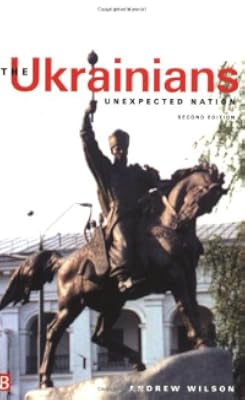
As Reid is a journalist, not a historian, this is not an academic work filled with footnotes; there are a few endnotes, but nothing more. Someone interested in an academic treatment of the subject should look to a book like Andrew Wilson's The Ukrainians. But if you just want to know a bit about modern Ukraine, or perhaps you've read Gregor von Rezzori and want to learn more about Chernivtsi (aka Czernopol), this is a book for you.
Full Review is on my 75 challenge thread, Here show less
Ukraine is a fascinating country, straddling Eastern and Central Europe. The very word Ukraine means "borderland" (hence the title). For the longest time, there was no country there, but rather the borders of several: Byzantium, Turkey, Poland, Russia, Austria-Hungary, among others. How this border region accidentally became an independent state is the focus of Reid's show more book.
As Reid is a journalist, not a historian, this is not an academic work filled with footnotes; there are a few endnotes, but nothing more. Someone interested in an academic treatment of the subject should look to a book like Andrew Wilson's The Ukrainians. But if you just want to know a bit about modern Ukraine, or perhaps you've read Gregor von Rezzori and want to learn more about Chernivtsi (aka Czernopol), this is a book for you.
Full Review is on my 75 challenge thread, Here show less
One of the best books I've read in a long time. A sympathetic account that covers the good and the bad; Kievan Rus, Batu Kahn, Poland /Lithuania, Austro Hungarian Galicia, Jews, Russia, wars and deportations. As she says,"Ukraina is literally translated as "on the edge" or "borderland", and that is exactly what it is.
Members
- Recently Added By
Lists

A Ukraine Reading List
121 works; 90 members

Books about Russia and the former USSR
67 works; 11 members
Author Information

7+ Works 1,274 Members
Common Knowledge
Classifications
- Genres
- History, Nonfiction, General Nonfiction, Travel
- DDC/MDS
- 947.7 — History & geography History of Europe Eastern European Counties and Russia Ukraine
- LCC
- DK508.51 .R45 — History of Europe, Asia, Africa and Oceania Russia. Soviet Union. Former Soviet Republics – Poland History of Russia. Soviet Union. Former Soviet Republics Local history and description Ukraine
- BISAC
Statistics
- Members
- 459
- Popularity
- 66,618
- Reviews
- 10
- Rating
- (3.94)
- Languages
- English, Polish
- Media
- Paper, Audiobook, Ebook
- ISBNs
- 18
- ASINs
- 10