On This Page
Description
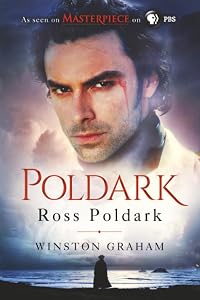
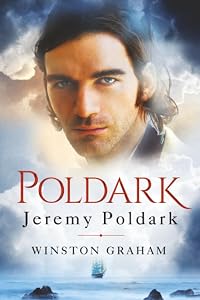
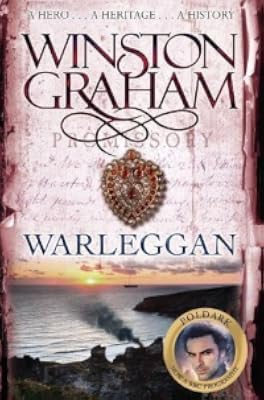
As Seen on Masterpiece? on PBS®: Book 1 of the beloved Poldark seriesIn the first novel in Winston Graham's hit series, a weary Ross Poldark returns to England from war, looking forward to a joyful homecoming with his beloved Elizabeth. But instead he discovers his father has died, his home is overrun by livestock and drunken servants, and Elizabeth—believing Ross to be dead—is now engaged to his cousin. Ross has no choice but to start his life anew.
Thus begins the Poldark series, a show more heartwarming, gripping saga set in the windswept landscape of Cornwall. With an unforgettable cast of characters that spans loves, lives, and generations, this extraordinary masterwork from Winston Graham is a story you will never forget.
. show less
Tags
Recommendations










Member Recommendations
by anonymous user

themulhern Young man trying to make his way against odds and after misfortune. A very distinctive time and place. Smuggling and details of everyday life.
Member Reviews
I love historical fiction. I also apparently have a weakness for soap opera type stories. This book combines both brilliantly. On the historical side I got many glimpses into the lives of people living in Cornwall, England during the late 1700s. It's not always pretty - children are abused, woman are harassed, miners die early deaths due to horrible working conditions and gentleman engage in bloody cockfights. On the soap opera side you have our main character - Ross Poldark - who returns home from fighting in America (our revolutionary war). His first night home he visits the home of his cousin Francis to find that his entire extended family is gathered there for a celebratory dinner. His lady love, Elizabeth, is there as well and then show more he finds out that the dinner is to celebrate her engagement to his cousin! Shocked and betrayed he returns to his family estate, only to find it in shambles after the death of his father. Ross is not one to lie low and lick his wound however, he gets to work fixing up his estate, schemes to open a copper mining venture, and rescues a young lady (a 11-12 year old girl) from an abusive father and sets her up as a housemaid. There are many juicy side stories alongside the main thread of Ross's strained relationship with his family members and his efforts to get over his love for Elizabeth. Ross lives by his own moral code - one that does not see upper class people as better than lower class people. This puts him at odds with many of the members of "his class". And he is not without his own moral flaws. But on the whole this rambling story is full of great drama, and the descriptions of the countryside and way of life at that time are top notch.
Also I listened to the audiobook version, and that added another layer of delight, as Oliver Hembrough does an excellent job with the Cornish dialect and the narration in general. Indeed, I would say it's one of the best audiobooks I've ever listened too. show less
Also I listened to the audiobook version, and that added another layer of delight, as Oliver Hembrough does an excellent job with the Cornish dialect and the narration in general. Indeed, I would say it's one of the best audiobooks I've ever listened too. show less
I was delighted and relieved to discover that this tells the same story as the first four episodes of the BBC's recent series, Poldark: Ross returns home to discover his estate is derelict and the girl he loves is engaged to his cousin; he does a better job of befriending neighbouring tenants than members of his own class and focuses on opening a mine; he rescues an urchin girl...
From my perspective, the book was a perfect mix of things that are the same - the personalities of the characters, specific lines of dialogue - and of things that added more to the story, or whose difference didn't really matter. Like the appearance of various characters.
I appreciated having a better understanding of the dynamics of the community and the show more greater nuance this gave certain events, such as the way Demelza is treated at the Christmas party. I loved getting to see more of Ross' relationship with his cousin Verity, and Verity's friendship with Demelza.
And I enjoyed Winston Graham's writing style much more than I expected to. His descriptions of Cornwall are lovely and vivid. (His descriptions of late 18th century medical practices are unsettling and frustrating - not because they're graphic but because I know that they're ineffective, or even counter-productive. But I suspect that's the point.) show less
From my perspective, the book was a perfect mix of things that are the same - the personalities of the characters, specific lines of dialogue - and of things that added more to the story, or whose difference didn't really matter. Like the appearance of various characters.
I appreciated having a better understanding of the dynamics of the community and the show more greater nuance this gave certain events, such as the way Demelza is treated at the Christmas party. I loved getting to see more of Ross' relationship with his cousin Verity, and Verity's friendship with Demelza.
And I enjoyed Winston Graham's writing style much more than I expected to. His descriptions of Cornwall are lovely and vivid. (His descriptions of late 18th century medical practices are unsettling and frustrating - not because they're graphic but because I know that they're ineffective, or even counter-productive. But I suspect that's the point.) show less
I first encountered the romantic (and Romantic) figure of Ross Poldark, veteran of the British side of the American Revolutionary War, on television, via the glorious BBC adaptation that PBS aired when I was a kid. I knew that someday I'd have to get my hands on these books to read them, because I could just tell that stuff was getting left out.
Oddly, though, this does not seem to be the case, much; the television show has proven to be very faithful to the books, or at least to this first one*. Which is to say that all the melodrama of the returned, wronged veteran plot is here, with just a dash more melancholy in the form of a prologue concerning Ross's father and uncle as the former lays dying and the latter lays plans to marry his show more son to the girl Ross has always fancied. Because everyone presumes Ross to be dead, of course.
Oh, Ross! The odds are stacked against him from the start. His father being a younger son, what patrimony there is for him is meager at best -- just enough to qualify as "landed gentry" with all the responsibilities of a country squire, not enough to afford to live at all well. The tin mine from which his father's fortune was drawn has sucked it all back down again, and a rotten pair of no-good servants have let the family pile get so run down that they're housing chickens in the living room... welcome home, war hero!
Oh, and yes, his childhood sweetheart is indeed marrying his cousin, son of the older son who got all the money and the original estate and the tin mine that's still worth a damn! Did I mention melodrama? Because melodrama.
But melodrama isn't all that's on offer here. There is also some wonderful nature porn, of which author Winston Graham was a gifted practitioner. In the high Romantic tradition, weather is often a stand in for/emphasizer of emotion, so, for example, a solitary figure standing quietly still and watching the sea can be understood as in turmoil if the waves are being especially powerful and crashy. But sometimes it's just there for the sake of being there. I'm already half in love with Cornwall, between growing up watching Poldark on television and having recently enjoyed the excellent Doc Martin series, exteriors of which were shot in Port Isaac, Cornwall (which, take a look at SF superstar Alastair Reynolds' relatively recent photo odyssey there, tracking down Doc's house and whatnot), and it's obvious that Graham was, too. With good reason.
But Graham does interiors, too, like that of a cottage in which dwell a family under Ross's care, and how the family spends its exhausted evenings. Graham gets the whole "world lit only by fire" and turns this shack into a mysterious abode of shadows and half-secrets: "On the floor Matthew Mark Martin's long bare legs glimmered like two silver trout; the rest of him was hidden in the massive pool of shadow cast by his mother."
Winston Graham is one cinematic writer, no?
But he is also, as it turns out, a writer with a real gift for honest, ordinary human emotion. Especially -- and this is quite rare -- happiness. For example, a scene, one that really just concerns Ross and Demelza rowing out to watch the yearly pilchard catch, is one of the loveliest I've read in a long time, not so much for the scenery (although that is nice) as for the rarity it captures: a moment of quiet, slightly awe-stricken joy, joy that is recognized and savored by our usually troubled hero. It's a total grace note, this scene, but I'm so glad it's there.
For Ross is a most turbulent, even exhausting character. A member of a family so ancient and steady they would probably have regarded the Cecils as gotten up parvenus, he shuns the local gentry in favor of the miners and farmers and poverty-stricken villagers who are his tenants, not out of any hipster-ish disdain for the manners and mores of the former so much as an inborn sense of decency (sharpened by the memory of his reprobate, skirt-chasing-and-catching father), which gets him into plenty of trouble when his proteges get caught poaching or when he rescues an urchin from a beating and makes the life-changing decision to adopt said urchin as a member of his household staff even after said urchin turns out to be a 13-year-old girl... and everyone in Cornwall starts thinking what you're probably thinking right now, unless you already know Ross and his story...
All in all, this first Poldark book is one of the loveliest things I've ever read; even the love story, which sort of element usually makes me retch, is a thing of beauty. I suspect this is because Graham focused on the friendliness and companionship rather than on the passion. Ross Poldark spends most of the second half of the book hopeful and happy. And Graham found a way to make these states of mind anything but boring.
For pure pleasure in reading, Ross Poldark cannot be beaten.
*Though this is, of course, in plot and tone, really, this faithfulness. One way in which the TV show is lacking is in the way it portrays the relationship between Ross and Demelza. Robin Ellis did not really sell Ross's tenderness and genuine love for her, or the sheer happiness she brought to him. But could anyone, without a lot of cheesy voice-overs? show less
Oddly, though, this does not seem to be the case, much; the television show has proven to be very faithful to the books, or at least to this first one*. Which is to say that all the melodrama of the returned, wronged veteran plot is here, with just a dash more melancholy in the form of a prologue concerning Ross's father and uncle as the former lays dying and the latter lays plans to marry his show more son to the girl Ross has always fancied. Because everyone presumes Ross to be dead, of course.
Oh, Ross! The odds are stacked against him from the start. His father being a younger son, what patrimony there is for him is meager at best -- just enough to qualify as "landed gentry" with all the responsibilities of a country squire, not enough to afford to live at all well. The tin mine from which his father's fortune was drawn has sucked it all back down again, and a rotten pair of no-good servants have let the family pile get so run down that they're housing chickens in the living room... welcome home, war hero!
Oh, and yes, his childhood sweetheart is indeed marrying his cousin, son of the older son who got all the money and the original estate and the tin mine that's still worth a damn! Did I mention melodrama? Because melodrama.
But melodrama isn't all that's on offer here. There is also some wonderful nature porn, of which author Winston Graham was a gifted practitioner. In the high Romantic tradition, weather is often a stand in for/emphasizer of emotion, so, for example, a solitary figure standing quietly still and watching the sea can be understood as in turmoil if the waves are being especially powerful and crashy. But sometimes it's just there for the sake of being there. I'm already half in love with Cornwall, between growing up watching Poldark on television and having recently enjoyed the excellent Doc Martin series, exteriors of which were shot in Port Isaac, Cornwall (which, take a look at SF superstar Alastair Reynolds' relatively recent photo odyssey there, tracking down Doc's house and whatnot), and it's obvious that Graham was, too. With good reason.
But Graham does interiors, too, like that of a cottage in which dwell a family under Ross's care, and how the family spends its exhausted evenings. Graham gets the whole "world lit only by fire" and turns this shack into a mysterious abode of shadows and half-secrets: "On the floor Matthew Mark Martin's long bare legs glimmered like two silver trout; the rest of him was hidden in the massive pool of shadow cast by his mother."
Winston Graham is one cinematic writer, no?
But he is also, as it turns out, a writer with a real gift for honest, ordinary human emotion. Especially -- and this is quite rare -- happiness. For example, a scene, one that really just concerns Ross and Demelza rowing out to watch the yearly pilchard catch, is one of the loveliest I've read in a long time, not so much for the scenery (although that is nice) as for the rarity it captures: a moment of quiet, slightly awe-stricken joy, joy that is recognized and savored by our usually troubled hero. It's a total grace note, this scene, but I'm so glad it's there.
For Ross is a most turbulent, even exhausting character. A member of a family so ancient and steady they would probably have regarded the Cecils as gotten up parvenus, he shuns the local gentry in favor of the miners and farmers and poverty-stricken villagers who are his tenants, not out of any hipster-ish disdain for the manners and mores of the former so much as an inborn sense of decency (sharpened by the memory of his reprobate, skirt-chasing-and-catching father), which gets him into plenty of trouble when his proteges get caught poaching or when he rescues an urchin from a beating and makes the life-changing decision to adopt said urchin as a member of his household staff even after said urchin turns out to be a 13-year-old girl... and everyone in Cornwall starts thinking what you're probably thinking right now, unless you already know Ross and his story...
All in all, this first Poldark book is one of the loveliest things I've ever read; even the love story, which sort of element usually makes me retch, is a thing of beauty. I suspect this is because Graham focused on the friendliness and companionship rather than on the passion. Ross Poldark spends most of the second half of the book hopeful and happy. And Graham found a way to make these states of mind anything but boring.
For pure pleasure in reading, Ross Poldark cannot be beaten.
*Though this is, of course, in plot and tone, really, this faithfulness. One way in which the TV show is lacking is in the way it portrays the relationship between Ross and Demelza. Robin Ellis did not really sell Ross's tenderness and genuine love for her, or the sheer happiness she brought to him. But could anyone, without a lot of cheesy voice-overs? show less
4.5* rounded up to five because of how surprised I was to enjoy this so much.
For those not all caught up on Masterpiece Theatre, the BBC/PBS have resurrected Winston Graham's epic, 12-novel series for its second miniseries treatment, following the 1975 production. While I've now seen both adaptations, these books passed me by until being reissued this summer.
Ross Poldark, our titular protagonist, returns home to Cornwall after fighting in the American Revolution. The war has matured him and developed his sympathies for the working poor, which is fortunate, as he returns to find his father dead, his fortune ruined, and his sweetheart engaged to his cousin. He copes with his ruined life (when not drinking) by advocating for and show more befriending a variety of poor neighbors and employees and resurrecting his family's mining operations. Along the way, he manages to offend various powerful members of his class and ruffle his family's feathers with his unconventional outlook.
I can't blame Masterpiece for getting on the epic-series-adaptation bandwagon, what with the crazy success of shows like [b:A Game of Thrones|13496|A Game of Thrones (A Song of Ice and Fire, #1)|George R.R. Martin|https://d.gr-assets.com/books/1436732693s/13496.jpg|1466917] and [b:Outlander|10964|Outlander (Outlander, #1)|Diana Gabaldon|https://d.gr-assets.com/books/1402600310s/10964.jpg|2489796]. If you enjoy Outlander's great sense of history and place but are less drawn to its fantastical elements and occasional tendency towards minutiae, Poldark might fit the bill. In some ways, the vividness Graham's writing reminded me very much of [a:C.S. Forester|932179|C.S. Forester|https://d.gr-assets.com/authors/1218219226p2/932179.jpg]'s Horatio Hornblower books, with just slightly less self-loathing and a bit more self-awareness by our hero. If historical fiction with a well-developed male POV interests you, you could certainly do much worse; with season 2 forthcoming, this is a series to rediscover. show less
For those not all caught up on Masterpiece Theatre, the BBC/PBS have resurrected Winston Graham's epic, 12-novel series for its second miniseries treatment, following the 1975 production. While I've now seen both adaptations, these books passed me by until being reissued this summer.
Ross Poldark, our titular protagonist, returns home to Cornwall after fighting in the American Revolution. The war has matured him and developed his sympathies for the working poor, which is fortunate, as he returns to find his father dead, his fortune ruined, and his sweetheart engaged to his cousin. He copes with his ruined life (when not drinking) by advocating for and show more befriending a variety of poor neighbors and employees and resurrecting his family's mining operations. Along the way, he manages to offend various powerful members of his class and ruffle his family's feathers with his unconventional outlook.
I can't blame Masterpiece for getting on the epic-series-adaptation bandwagon, what with the crazy success of shows like [b:A Game of Thrones|13496|A Game of Thrones (A Song of Ice and Fire, #1)|George R.R. Martin|https://d.gr-assets.com/books/1436732693s/13496.jpg|1466917] and [b:Outlander|10964|Outlander (Outlander, #1)|Diana Gabaldon|https://d.gr-assets.com/books/1402600310s/10964.jpg|2489796]. If you enjoy Outlander's great sense of history and place but are less drawn to its fantastical elements and occasional tendency towards minutiae, Poldark might fit the bill. In some ways, the vividness Graham's writing reminded me very much of [a:C.S. Forester|932179|C.S. Forester|https://d.gr-assets.com/authors/1218219226p2/932179.jpg]'s Horatio Hornblower books, with just slightly less self-loathing and a bit more self-awareness by our hero. If historical fiction with a well-developed male POV interests you, you could certainly do much worse; with season 2 forthcoming, this is a series to rediscover. show less
Ross Poldark returns to his native Cornwall after fighting on the British side in the American Revolutionary War. In his absence, Ross has lost his father, his lands and estate have fallen into disrepair, and the girl with whom he had an informal understanding is now engaged to his cousin. In the face of all these hardships, Ross nonetheless makes strides towards developing his own estate and re-opening a long disused mine. He also makes the spur of the moment decision to take on an urchin from a fair as his kitchen maid, a choice that will have longer ramifications than anyone suspected.
I picked up this novel after finding myself sucked into the most recent television adaptation and was not disappointed. The books are well written and show more the characters of whom I was already fond are well drawn. The advantage of print over television of course is that we get a sense of the internal motivations of the characters and it was interesting to see where my interpretation of events in the television show differed from how the book described it. Wonderful and compulsively readable historical fiction, I am immediately diving into the second book in this series. show less
I picked up this novel after finding myself sucked into the most recent television adaptation and was not disappointed. The books are well written and show more the characters of whom I was already fond are well drawn. The advantage of print over television of course is that we get a sense of the internal motivations of the characters and it was interesting to see where my interpretation of events in the television show differed from how the book described it. Wonderful and compulsively readable historical fiction, I am immediately diving into the second book in this series. show less
Warning: this review contains spoilers.
****
I was utterly swept away by this book. So much happened and was described so elegantly that when I started the book, I devoured 140 pages non-stop. It covered a lot of ground but also knew exactly where to end so that people who don't want to invest in the whole series can have a complete story, but people who want to continue have scope to do so.
One part that I found especially moving was the storyline involving Charles, Ross' uncle -- his illness and decline had personal resonance for me, as did the line about the Christmas after he died: "One did not so much feel sorrow at his absence as a sense of the unfitness of his not being here."
I also liked Demelza's forthright logic and the show more descriptions of ships and the various Cornish towns. This was a great book and I look forward to continuing the series. show less
****
I was utterly swept away by this book. So much happened and was described so elegantly that when I started the book, I devoured 140 pages non-stop. It covered a lot of ground but also knew exactly where to end so that people who don't want to invest in the whole series can have a complete story, but people who want to continue have scope to do so.
One part that I found especially moving was the storyline involving Charles, Ross' uncle -- his illness and decline had personal resonance for me, as did the line about the Christmas after he died: "One did not so much feel sorrow at his absence as a sense of the unfitness of his not being here."
I also liked Demelza's forthright logic and the show more descriptions of ships and the various Cornish towns. This was a great book and I look forward to continuing the series. show less
I started reading Winston Graham's epic Poldark series a year ago, but my introduction was via the second book, and I had to wait until memory faded to start again properly; I wasn't disappointed. Graham, along with Daphne du Maurier and Rosamunde Pilcher, expertly captures the romantic beauty and close community of Cornwall, although his books cover the county's history and the roots of its modern reputation.
The characters, all sharply hewn and honestly portrayed, are what first drew me into his novels, and they continue to entrance even after the twists and turns of the plot are now expected. Ross is the 'hero', though his outspoken pride and emotional failings save him from becoming romanticised - his unconventionality and broad show more mind are attractive in this first novel, but I recall that he quickly sheds his polished armour. However, my favourite character, christened with one of the best names in fiction, is Demelza, Poldark's (very nearly) child bride; she literally grows and matures as the pages turn, but never loses her own identity or that wonderful accent! She is one of the few 'spirited' heroines I can stomach, such is Graham's talent at portraying her. The rest of the Poldark clan, not to mention the families from the surrounding mining villages, are also a riot of local colour.
Winston Graham's novels are accessible and instructive - he writes from history, not of it - but also thoughtful, and illustrated with beautifully poetic language and sentiment (his description of Ross' new understanding of his young wife is tender, but also concise in expressing the contradiction of feelings and desires). Returning to the beginning is not a chore with these books, and I can hardly wait to savour again the comedy, tragedy and beauty of following sequels. show less
The characters, all sharply hewn and honestly portrayed, are what first drew me into his novels, and they continue to entrance even after the twists and turns of the plot are now expected. Ross is the 'hero', though his outspoken pride and emotional failings save him from becoming romanticised - his unconventionality and broad show more mind are attractive in this first novel, but I recall that he quickly sheds his polished armour. However, my favourite character, christened with one of the best names in fiction, is Demelza, Poldark's (very nearly) child bride; she literally grows and matures as the pages turn, but never loses her own identity or that wonderful accent! She is one of the few 'spirited' heroines I can stomach, such is Graham's talent at portraying her. The rest of the Poldark clan, not to mention the families from the surrounding mining villages, are also a riot of local colour.
Winston Graham's novels are accessible and instructive - he writes from history, not of it - but also thoughtful, and illustrated with beautifully poetic language and sentiment (his description of Ross' new understanding of his young wife is tender, but also concise in expressing the contradiction of feelings and desires). Returning to the beginning is not a chore with these books, and I can hardly wait to savour again the comedy, tragedy and beauty of following sequels. show less
Members
- Recently Added By
Lists

Best family sagas
244 works; 34 members

Top Five Books of 2015
811 works; 241 members

Houses and Buildings as Characters in Fiction
182 works; 29 members

Historical Books
1 work; 2 members

My Wishlist-Mystery/Fiction
14 works; 1 member

Books Read in 2015
3,299 works; 129 members

KayStJ's to-read list
1,616 works; 11 members

Best books made into television
66 works; 4 members

Classics Reading List
16 works; 1 member
Talk Discussions
Past Discussions
Group Read Poldark Series: January Installment - Ross Poldark in 2017 Category Challenge (February 2017)
Author Information

83+ Works 11,253 Members
Some Editions
Series

Work Relationships
Is contained in
Has the adaptation
Common Knowledge
- Canonical title
- Ross Poldark
- Alternate titles
- The Renegade (US) (US)
- Original publication date
- 1945
- People/Characters
- Ross Poldark; Elizabeth Chynoweth; Francis Poldark; Demelza Carne; Verity Poldark; Charles William Poldark (show all 81); Jud Paynter; Prudie Paynter; Joshua Poldark; Thomas Choake (doctor); Polly Choake; Nathanial Pearce; Agatha Poldark; Jonathan Chynoweth III; Emily Tabb; Tabb; William-Alfred Johns; Joan Chynoweth (née La Grice); Edmund Halse; Joe Triggs; Reuben Clemmow; Mrs. Zacky Martin; Clarence Odgers; Nicholas Warleggan; George Warleggan; Captain Henshawe; Mrs. Henshawe; Andrew Blamey; Elizabeth Poldark; Bartle; Mrs. Teague; Ruth Teague; Faith Teague; Hope Teague; Patience Teague; Joan Teague; Osborne Whitworth; Lady Whitworth; Margaret Vosper; Joan Pascoe; James "Jim" Henry Carter; Mark Daniel; Paul Daniel; Zacky Martin; Nick Vigus; Jack Tripp; Tom Carne; Tabitha Bethia (a cat); Darkie (a horse); Garrick (a dog); Ramoth (a horse); Horace Treneglos; Betsy Maria Martin; Inez Mary Martin; Matthew Mark Martin; Gabby Martin; Thomas Martin; Betsy Triggs; Mary Daniel; Will Nanfan; Jennifer "Jinny" May Martin; Squire (a horse); Mrs. Paul Daniel; Mrs. Will Nanfan; Old Man Greet; Jack Cobbledick; Dorothy Johns; Geoffrey Charles Poldark; Eli Clemmow; Benjamin Ross Carter; Pally Rogers; Mr. Renfrew; Mary Carter; Hugh Bodrugan; Jonathan Treneglos (John Treneglos); Constance Bodrugan; Hick (a magistrate); Maggie Martin; Jope Ishbel; Demelza Poldark; Ruth Treneglos
- Important places
- Cornwall, England, UK; Nampara, Cornwall, England, UK (fictional); Trenwith, Cornwall, England, UK (fictional); Truro, Cornwall, England, UK; Mellin Cottages, Nampara, Cornwall, England, UK (fictional); Sawle, Cornwall, England, UK (fictional) (show all 7); Wheal Leisure, Nampara, Cornwall, England, UK (fictional)
- Important events
- American Revolution (1775 | 1783); Reign of George III
- Related movies
- Poldark (1975 | IMDb); Poldark (2015 | IMDb)
- First words
- Joshua Poldark died in March 1783.
- Last words
- (Click to show. Warning: May contain spoilers.)Demelza began to sing, mischievously, and in a deep voice:
'There was an old couple and they was poor,
Tweedle, tweedle, go twee.' - Original language
- English
- Disambiguation notice
- aka The Renegade
Classifications
Statistics
- Members
- 1,981
- Popularity
- 10,655
- Reviews
- 72
- Rating
- (3.97)
- Languages
- 15 — Danish, Dutch, English, Estonian, Finnish, French, German, Hungarian, Italian, Korean, Polish, Portuguese, Spanish, Swedish, Turkish
- Media
- Paper, Audiobook, Ebook
- ISBNs
- 81
- UPCs
- 5
- ASINs
- 27