On This Page
Description
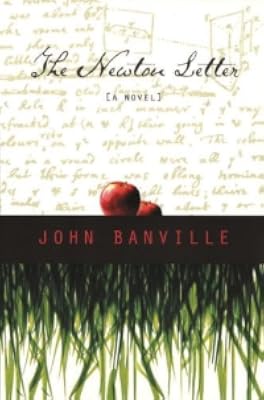
A historian, trying to finish a long-overdue book on Isaac Newton, rent a cottage not far by train from Dublin for the summer. All he need, he thinks, is a few weeks of concentrated work. Why, he must unravel, did Newton break down in 1693? What possessed him to write that strange letter to his friend John Locke? But in the long seeping summer days, old sloth and present reality take over.Tags
Recommendations
















Member Reviews
This is such a peculiar little book, not in and of itself, but because it is the third in a trilogy dealing with great historical scientists and their world-changing discoveries, and yet Isaac Newton barely features. The narrator is writing, and has abandoned near completion, a book about the physicist, but there is only one real direct exploration of Newton, via two letters written during or as a result of a nervous breakdown, and one of those letters is fictional. Instead, we have an odd little tale of an academic historian interloper who encounters a family, does questionable things and makes questionable assumptions only to have it all turned on its head. Perhaps there is some clever narrative conceit here, and the story mirrors or show more is informed by Newton's various laws, but rather it seems more like a microcosm of a world that believes one set of things to be true thrown into disarray when it turns out to be completely wrong. Having such a process re-enacted in a banal, sordid little family drama is more in keeping with the rest of the trilogy, where the great cosmic insights were set against the grinding frustrations of the prosaic everyday world. show less
A science historian writing a biography of Isaac Newton goes on a retreat to muse about his subject's breakdown and abandonment of science. The historian starts acting in ways he cannot explain in letters to presumably a lover where he discloses his affair with one woman (whom he treats badly) and his falling in love with another woman. He muses on how he can't really know these women parallels Newton's frustration that much of reality is a great mystery to him. I liked how the narrator documented his inner turmoil as his personal life crumbles, and he is really unable to explain himself, which is probably a more truthful reflection of human narratives than most other literature.
This early novella has all the buds that blossom in Banville's later novels: beautiful imagery of nature and light; sensual evocations of smells and stinks; an older man of dubious character; a younger woman - and an older one as well; a frustrated writer; complex, sometimes covert relationships, and gradual revelations of uncertain veracity.
Image: Apple blossom and fruit (Source.)
Banville himself told The Guardian that this is a good place to start with his works: "It's pretty well all there. And it's short."
Peel the Apple
This is a story about what’s beneath the skin. About flesh.
It’s a story within a story, though it’s light on plot.
A biography wrapped in an autobiography.
History wrapped in fiction.
Image: Partially peeled show more apple (Source.)
It opens with the unnamed narrator writing to Clio, explaining why he’s abandoning the book he’d been working on for seven years. It was based on a letter 50-year old Newton wrote to John Locke, when his best work was long behind him, and he was turning to the Bible and alchemy.
As he focuses on Newton’s breakdown, his own work loses momentum and fizzles out. There are parallels - and perpendiculars - between the two men, and rather than an apple falling from a tree, apocryphally onto a person, it's a person who falls from a tree.
The narrator turns his attention to the family in whose grounds he’s renting a cottage. His interests and perspective shift: imagining - mythologising - about their relationships, lives, and finances. Like a scientist, he recalibrates and modifies his assumptions as he learns more. Newton was a man of laws, but they are Lawless, and the women have an alchemical effect.
“Life will insist on tying up loose ends.”
I’m glad that Banville does not.
Other Apples
“I seem to have been only as a boy playing on the seashore, and diverting myself in now and then finding a smoother pebble or a prettier shell than ordinary, whilst the great ocean of truth lay all undiscovered before me.” Sir Isaac Newton
Apart from that opening quote, Newton barely features explicitly, apples even less (though there are apple trees in the garden), and there’s not much plot. Yet afterwards, my reveries were mainly of apples.
Apples feature in so many proverbs, myths, and fairytales, they are weighted with symbolism, whether poisoned, golden, forbidden, or ordinary. Most fundamentally, they are associated with revelation and insight: Eden and Newton, both. But knowledge isn’t necessarily good, or even recognised and understood, as the Newton quote suggests.
Image: Descendant of Newton’s apple tree, Trinity College, Cambridge (Source.)
See Also
Banville’s Revolutions Trilogy / Scientific Tetralogy
This is one of three short novels Banville wrote, connected to scientists, the rest of which I’ve yet to read. Some add Mefisto and call it a tetralogy:
• Doctor Copernicus (1976)
• Kepler (1981)
• The Newton Letter (1982)
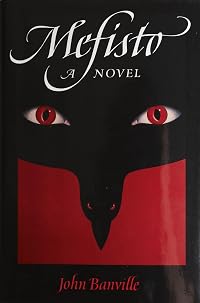
• Mefisto (1986)
Banvilles I’ve Reviewed
“It was devious, and heartless, and horribly pleasurable. Who knows the sweet stink of power like the disenchanted lover renouncing all claim to loyalty?”
That is a quote from this, but it could just as easily be Max Morden (in The Sea) or Alex Cleave.
Because I’d read The Sea (written 13 years after this), I noticed references to smell in this far more than I would otherwise. See my review HERE.
The Alex and Cass Cleave trio can be read in any order, as all switch back and forth, like waves breaking on a beach:
• Eclipse (2000). See my review HERE.
• Shroud (2002). See my review HERE
• Ancient Light (2012). See my review HERE.
Elective Affinities
Long ago, I read Goethe’s Elective Affinities, because I was on a Kafka kick, and heard it was a favourite of his. Only after finishing this novella, did I realise similarities between Goethe’s and Banville’s stories: the names of the wife, husband, and orphaned young adult niece that the unnamed interloper encounters, as well as something of the muddied, shifting relationships in a claustrophobic house and garden. See my very brief review HERE.
Quotes
• “The weather… sunny and still, and tinged with sadness.”
• “The sycamores were stirring faintly, almost surreptitiously in the bright air, ,ike dancers practising steps in their heads.”
• “A pond… overhung by the sadness of willows.”
• “In an alcove a clock feathered the silence and let drop a single wobbly chime.”
• “I confess I enjoyed the sexual freemasonry with its secret signs and glances and the covert smiles.”
• “We were so quiet I could hear the rain’s whispered exclamations at the window.”
• “The chestnut tree murmured softly in its green dreaming.”
• “The bruised light of late afternoon conjured other days, their texture felt but they themselves unremembered.”
• “In moments like that you can feel memory gathering its material, beady-eyed and voracious.”
• “Is it possible to love someone of whom one has so little?”
• “It was an eighteenth-century day, windswept and bright, the distances all small and sharply defined, as if painted on porcelain.”
• “The flat insinuating odour of other people’s intimacies.”
• “The night came in, smelling of wet and the distant sea.”
• “The gaseous light of dawn.”
But I found this sex scene more comical than was probably intended:
“In the city of the flesh I travel without maps, a worried tourist: and was a [sic] very Venice. I stumbled lost in the blue shade of her pavements… Then, when I least expected it, suddenly I stepped out into the great square, the sunlight, and she was a flock of birds scattering with soft cries in my arms. We lay, damp and chill as stranded fish.” show less
Image: Apple blossom and fruit (Source.)
Banville himself told The Guardian that this is a good place to start with his works: "It's pretty well all there. And it's short."
Peel the Apple
This is a story about what’s beneath the skin. About flesh.
It’s a story within a story, though it’s light on plot.
A biography wrapped in an autobiography.
History wrapped in fiction.
Image: Partially peeled show more apple (Source.)
It opens with the unnamed narrator writing to Clio, explaining why he’s abandoning the book he’d been working on for seven years. It was based on a letter 50-year old Newton wrote to John Locke, when his best work was long behind him, and he was turning to the Bible and alchemy.
As he focuses on Newton’s breakdown, his own work loses momentum and fizzles out. There are parallels - and perpendiculars - between the two men, and rather than an apple falling from a tree, apocryphally onto a person, it's a person who falls from a tree.
The narrator turns his attention to the family in whose grounds he’s renting a cottage. His interests and perspective shift: imagining - mythologising - about their relationships, lives, and finances. Like a scientist, he recalibrates and modifies his assumptions as he learns more. Newton was a man of laws, but they are Lawless, and the women have an alchemical effect.
“Life will insist on tying up loose ends.”
I’m glad that Banville does not.
Other Apples
“I seem to have been only as a boy playing on the seashore, and diverting myself in now and then finding a smoother pebble or a prettier shell than ordinary, whilst the great ocean of truth lay all undiscovered before me.” Sir Isaac Newton
Apart from that opening quote, Newton barely features explicitly, apples even less (though there are apple trees in the garden), and there’s not much plot. Yet afterwards, my reveries were mainly of apples.
Apples feature in so many proverbs, myths, and fairytales, they are weighted with symbolism, whether poisoned, golden, forbidden, or ordinary. Most fundamentally, they are associated with revelation and insight: Eden and Newton, both. But knowledge isn’t necessarily good, or even recognised and understood, as the Newton quote suggests.
Image: Descendant of Newton’s apple tree, Trinity College, Cambridge (Source.)
See Also
Banville’s Revolutions Trilogy / Scientific Tetralogy
This is one of three short novels Banville wrote, connected to scientists, the rest of which I’ve yet to read. Some add Mefisto and call it a tetralogy:
• Doctor Copernicus (1976)
• Kepler (1981)
• The Newton Letter (1982)
• Mefisto (1986)
Banvilles I’ve Reviewed
“It was devious, and heartless, and horribly pleasurable. Who knows the sweet stink of power like the disenchanted lover renouncing all claim to loyalty?”
That is a quote from this, but it could just as easily be Max Morden (in The Sea) or Alex Cleave.
Because I’d read The Sea (written 13 years after this), I noticed references to smell in this far more than I would otherwise. See my review HERE.
The Alex and Cass Cleave trio can be read in any order, as all switch back and forth, like waves breaking on a beach:
• Eclipse (2000). See my review HERE.
• Shroud (2002). See my review HERE
• Ancient Light (2012). See my review HERE.
Elective Affinities
Long ago, I read Goethe’s Elective Affinities, because I was on a Kafka kick, and heard it was a favourite of his. Only after finishing this novella, did I realise similarities between Goethe’s and Banville’s stories: the names of the wife, husband, and orphaned young adult niece that the unnamed interloper encounters, as well as something of the muddied, shifting relationships in a claustrophobic house and garden. See my very brief review HERE.
Quotes
• “The weather… sunny and still, and tinged with sadness.”
• “The sycamores were stirring faintly, almost surreptitiously in the bright air, ,ike dancers practising steps in their heads.”
• “A pond… overhung by the sadness of willows.”
• “In an alcove a clock feathered the silence and let drop a single wobbly chime.”
• “I confess I enjoyed the sexual freemasonry with its secret signs and glances and the covert smiles.”
• “We were so quiet I could hear the rain’s whispered exclamations at the window.”
• “The chestnut tree murmured softly in its green dreaming.”
• “The bruised light of late afternoon conjured other days, their texture felt but they themselves unremembered.”
• “In moments like that you can feel memory gathering its material, beady-eyed and voracious.”
• “Is it possible to love someone of whom one has so little?”
• “It was an eighteenth-century day, windswept and bright, the distances all small and sharply defined, as if painted on porcelain.”
• “The flat insinuating odour of other people’s intimacies.”
• “The night came in, smelling of wet and the distant sea.”
• “The gaseous light of dawn.”
But I found this sex scene more comical than was probably intended:
“In the city of the flesh I travel without maps, a worried tourist: and was a [sic] very Venice. I stumbled lost in the blue shade of her pavements… Then, when I least expected it, suddenly I stepped out into the great square, the sunlight, and she was a flock of birds scattering with soft cries in my arms. We lay, damp and chill as stranded fish.” show less
An author rents a cottage on an estate in Ireland to finish writing his book on Isaac Newton, and instead becomes obsessed with a family living in the big house. His obsession leads him to imagine lives for the members of the family that are a far cry from the truth.
It's a beautifully written narrative of a man's thoughts and the motivation that propels his actions and inaction. There were moments when I could not like the man, and moments when I sympathized with him. The ending was disquieting and I wonder if the author meant for the reader to come to their own conclusions.
It's a beautifully written narrative of a man's thoughts and the motivation that propels his actions and inaction. There were moments when I could not like the man, and moments when I sympathized with him. The ending was disquieting and I wonder if the author meant for the reader to come to their own conclusions.
Don't read this book if you want to learn about Newton's letter - the two letter's by Newton referred to in this book, one historical, one fantasy, are seen only out of the corner of the eye, never in full view, and, for much of the book, forgotten all together. The main character in this brief novella- the narrator with no name - spends a few months in a rented cottage to finish his book about Newton, but gets wrapped up in the goings on at the main house. Although his mis-conceptions about this family become apparent as the story approaches the end, much is left unknown, or at least unspoken. No tidy package at the end. Banville's prose sets the mood well, with a strong sense of place. However, neither the place nor any of the people show more that populate this story seem very likeable, including the narrator. Thus, it's tough to get drawn into the story. It may be realism, but the ending is unsatisfying. Still, it's worth the short time to read it, especially as part of Banville's impressive body of work.
Os. show less
Os. show less
Did you ever had the feeling that everything is different? Standing before this new experience where you realize that everything you know is just a smooth stone on a beach before an endless ocean.
If you know this feeling it won't be hard to sympathize with the nameless historian in John Banville's Newtons Letter. On the other hand, the author does a good job in showing this emotion of disengagement. We meet this historian who is renting a cottage to write the final chapter of his seven year study on Newton. But, here, on the countryside everything seems to be different. No quiet peace, but a shattering noise of birds that all look alike.
Even the historian himself is a stranger to himself. He makes love with a woman, but he thinks he show more is in love with her aunt. A women who is a kind, quiet, kind of mystical being. He doesn't recognize himself and there is no possibility for planned action anymore.
These confrontations with reality are contrasted with (made up) reflections on Newtons last letter to Locke. As a reader we are to believe that, also the great scientist saw that there is this abundance of 'being'.
This all very strongly done. We can ask why the protagonist is behaving this way, but we don't find a direct answer. He only is, without a plan. John Banville makes this all very convincing and shows us that the believes we have are not always the 'right' ones.
At the end I was a bit disappointed. The protagonist is not a hero. He doesn't get any further than accepting that he doesn't know. But maybe, that is for us, the readers, to find out in our own life. show less
If you know this feeling it won't be hard to sympathize with the nameless historian in John Banville's Newtons Letter. On the other hand, the author does a good job in showing this emotion of disengagement. We meet this historian who is renting a cottage to write the final chapter of his seven year study on Newton. But, here, on the countryside everything seems to be different. No quiet peace, but a shattering noise of birds that all look alike.
Even the historian himself is a stranger to himself. He makes love with a woman, but he thinks he show more is in love with her aunt. A women who is a kind, quiet, kind of mystical being. He doesn't recognize himself and there is no possibility for planned action anymore.
These confrontations with reality are contrasted with (made up) reflections on Newtons last letter to Locke. As a reader we are to believe that, also the great scientist saw that there is this abundance of 'being'.
This all very strongly done. We can ask why the protagonist is behaving this way, but we don't find a direct answer. He only is, without a plan. John Banville makes this all very convincing and shows us that the believes we have are not always the 'right' ones.
At the end I was a bit disappointed. The protagonist is not a hero. He doesn't get any further than accepting that he doesn't know. But maybe, that is for us, the readers, to find out in our own life. show less
So a historian is writing on Newton and decides he should rent a cottage in the Irish country side to concentrate on writing and answering the question of what led to Newton’s break down in 1693 and his writing such a strange letter to his friend John Locke. Instead of writing he becomes obsessed with the family he rents the cottage from; the niece he sleeps with, the aunt holding the family together that he feels he is in love with, the friendly drunk uncle, and a young boy who doesn’t seem to belong to anyone. Instead of getting to know the family more than superficially, the unnamed narrator is content to judge their character and presume their story.
To call this a novel is generous, my edition weighed in at 81 pages, and I show more don’t think very good use was made of these scant pages. In a book where nothing much happens I always think that the characters need to make up the difference. Yet the author fixated on the superficial details of an unlikeable narrator instead of providing background or relationships that would make the story or characters interesting. The narrator is too wrapped up in trying to answer a pointless question about a man long dead, that he doesn’t even take the time to look at the lives of the people he is closest to. show less
To call this a novel is generous, my edition weighed in at 81 pages, and I show more don’t think very good use was made of these scant pages. In a book where nothing much happens I always think that the characters need to make up the difference. Yet the author fixated on the superficial details of an unlikeable narrator instead of providing background or relationships that would make the story or characters interesting. The narrator is too wrapped up in trying to answer a pointless question about a man long dead, that he doesn’t even take the time to look at the lives of the people he is closest to. show less
Members
- Recently Added By
Author Information

91+ Works 28,103 Members
Some Editions
Awards and Honors
Notable Lists
Series

Belongs to Publisher Series
Work Relationships
Is contained in
Common Knowledge
- Canonical title
- The Newton Letter
- Original title
- The Newton Letter: An Interlude
- Alternate titles*
- Newtons brief : een intermezzo
- Original publication date
- 1982
- People/Characters
- Charlotte Lawless; Edward Lawless; Ottilie (niece of Charlotte Lawless); Michael; Clio (Cliona); Cliona (Clio) (show all 7); Isaac Newton
- Important places
- Fern House, Ferns, County Wexford, Ireland; The lodge at Fern House, Ferns, County Wexford, Ireland
- Epigraph
- "I seem to have been only as a boy playing on the sea-shore, and diverting myself in now and then finding a smoother pebble or a prettier shell than ordinary, while the great ocean of truth lay all undiscovered before me." -... (show all) Sir Isaac Newton
- Dedication
- To Vincent Lawrence
- First words
- Words fail me, Clio.
- Last words
- (Click to show. Warning: May contain spoilers.)Shall I awake in a few months, a few years, broken and deceived in the midst of new ruins?
- Original language
- English
*Some information comes from Common Knowledge in other languages. Click "Edit" for more information.
Classifications
Statistics
- Members
- 418
- Popularity
- 74,367
- Reviews
- 13
- Rating
- (3.38)
- Languages
- 7 — Dutch, English, Estonian, French, German, Italian, Spanish
- Media
- Paper, Ebook
- ISBNs
- 19
- ASINs
- 5