
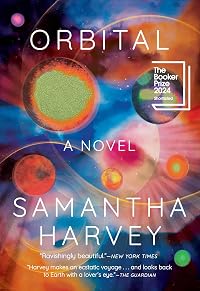
Orbital
by Samantha Harvey
On This Page
Description
A slender novel of epic power, Orbital deftly snapshots one day in the lives of six women and men hurtling through space--not towards the moon or the vast unknown, but around our planet. Selected for one of the last space station missions of its kind before the program is dismantled, these astronauts and cosmonauts--from America, Russia, Italy, Britain, and Japan--have left their lives behind to travel at a speed of over seventeen thousand miles an hour as the earth reels below. We glimpse show more moments of their earthly lives through brief communications with family, their photos and talismans; we watch them whip up dehydrated meals, float in gravity-free sleep, and exercise in regimented routines to prevent atrophying muscles; we witness them form bonds that will stand between them and utter solitude. Most of all, we are with them as they behold and record their silent blue planet. Their experiences of sixteen sunrises and sunsets and the bright, blinking constellations of the galaxy are at once breathtakingly awesome and surprisingly intimate. So are the marks of civilization far below, encrusted on the planet on which we live. Profound, contemplative and gorgeous, Orbital is an eloquent meditation on space and a moving elegy to our humanity, environment, and planet. show lessTags
Recommendations

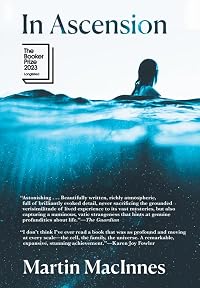
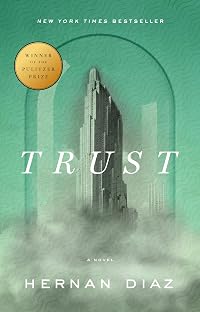
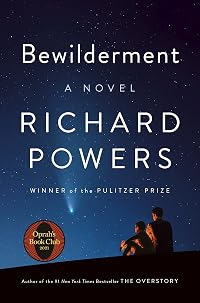
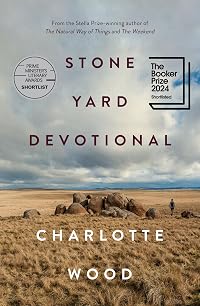










Member Recommendations
Member Reviews
In Orbital, Samantha Harvey’s Booker Prize-winning novel, we spend a single day aboard the International Space Station, where six astronauts from Japan, the United States, Britain, Italy, and Russia circle the Earth sixteen times. The book resists developing a traditional plot in favor of a more meditative structure in which each chapter corresponds to some or all of a 90-minute orbit, immersing the reader in the astronauts’ routines, their occasional interactions, and the profound solitude that comes with being in space. As they perform their duties, news from Earth—a parent’s death, a typhoon threatening friends and loved ones—seeps into their insulated world, prompting reflections on mortality, love, and the fragility of show more the planet below. Through glimpses into their backstories—memories of a mother’s survival in Nagasaki, regrets over a loveless marriage, longing for a distant spouse—the astronauts’ inner lives surface and disappear, much like the shifting view of Earth through their portholes.
I would love nothing more than to say that I found this brief novel to be thoroughly captivating, but, sadly, that was simply not the case. Certainly, the author's prose is wholly exquisite: lyrical in its depictions of the planet that remains the bond connecting the men and women on the space station and heartfelt in its consideration of their innermost thoughts. The problem for me was that nothing much really happens in the book to hold the reader’s interest and move the story along, unless you count periodic observations of a developing storm cell in the South Pacific from 250 miles above the Earth to be a compelling plotline. Indeed, there are only so many ways that one can express the awe and majesty of looking down at the home planet before that whole trope starts to wear thin. This is a novel that will very likely appeal to readers whose taste in literary fiction leans to atmosphere and reflection over action, but those readers who prefer the books they read to tell an engaging story should probably look elsewhere. show less
I would love nothing more than to say that I found this brief novel to be thoroughly captivating, but, sadly, that was simply not the case. Certainly, the author's prose is wholly exquisite: lyrical in its depictions of the planet that remains the bond connecting the men and women on the space station and heartfelt in its consideration of their innermost thoughts. The problem for me was that nothing much really happens in the book to hold the reader’s interest and move the story along, unless you count periodic observations of a developing storm cell in the South Pacific from 250 miles above the Earth to be a compelling plotline. Indeed, there are only so many ways that one can express the awe and majesty of looking down at the home planet before that whole trope starts to wear thin. This is a novel that will very likely appeal to readers whose taste in literary fiction leans to atmosphere and reflection over action, but those readers who prefer the books they read to tell an engaging story should probably look elsewhere. show less
When I heard that the 2024 Booker Prize winner was a novel set aboard the International Space Station, I knew I had to read it. I thought the science fiction genre had finally been accepted as serious literature. Now that I've read it I would say it is not so much science fiction as science philosophy but that's still quite a departure for the Booker Prize jury.
There are six people living aboard the International Space Station, four men and two women. Two of the men are Russian, one man is from Italy, one from the US, one woman is British and the other is Japanese. The book is set during one day while the astronauts wake up, do exercises, conduct experiments, clean the station, share a dinner and watch a movie and then fall asleep. The show more station makes 16 orbits of the earth with each one covering a slightly different path around the planet. During this day, another group of astronauts are on their way to the moon where they will make the first moon landing since 1972. The people aboard the ISS follow the flight closely. Most wish they had been chosen for that mission. Nevertheless, they are all entranced by being above the Earth. They spend a lot of free time looking out the windows at the planet. One of the major sights this day is a typhoon developing in the Pacific which is heading for the Philippine archipelago. Two of them have spent time in the Philippines and worry about the people they met there. The novel ends with some of those people taking refuge in a church, praying for deliverance from the storm.
Even though this group of people are from different countries, they realize during their time on the ISS that there are no borders visible from space. Harvey's writing is particularly beautiful in describing their observations of our planet.
"...the senses begin to broaden and deepen and it's the daytime earth they come to love. It's the humanless simplicity of land and sea. The way the planet seems to breathe, an animal unto itself. It's the planet's indifferent turning in indifferent space and the perfection of the sphere which transcends all language. It's the black hole of the Pacific becoming a field of gold or French Polynesia dotted below, the islands like cell samples, the atolls opal lozenges; then the spindle of Central america which drops away beneath them now to bring to view the Bahamas and Florida and the arc of smoking volcanoes on the Caribbean Plate. It's Uzbekistan in an expanse of ochre and brown, the snowy mountainous beauty of Kyrgyzstan. The clean and brilliant Indian Ocean of blues untold. The apricot desert of Takla Makan traced about with the faint confluencing and parting lines of creek beds. It's the diagonal beating path of the galaxy, an invitation in the shunning void." (pp.106-107) show less
There are six people living aboard the International Space Station, four men and two women. Two of the men are Russian, one man is from Italy, one from the US, one woman is British and the other is Japanese. The book is set during one day while the astronauts wake up, do exercises, conduct experiments, clean the station, share a dinner and watch a movie and then fall asleep. The show more station makes 16 orbits of the earth with each one covering a slightly different path around the planet. During this day, another group of astronauts are on their way to the moon where they will make the first moon landing since 1972. The people aboard the ISS follow the flight closely. Most wish they had been chosen for that mission. Nevertheless, they are all entranced by being above the Earth. They spend a lot of free time looking out the windows at the planet. One of the major sights this day is a typhoon developing in the Pacific which is heading for the Philippine archipelago. Two of them have spent time in the Philippines and worry about the people they met there. The novel ends with some of those people taking refuge in a church, praying for deliverance from the storm.
Even though this group of people are from different countries, they realize during their time on the ISS that there are no borders visible from space. Harvey's writing is particularly beautiful in describing their observations of our planet.
"...the senses begin to broaden and deepen and it's the daytime earth they come to love. It's the humanless simplicity of land and sea. The way the planet seems to breathe, an animal unto itself. It's the planet's indifferent turning in indifferent space and the perfection of the sphere which transcends all language. It's the black hole of the Pacific becoming a field of gold or French Polynesia dotted below, the islands like cell samples, the atolls opal lozenges; then the spindle of Central america which drops away beneath them now to bring to view the Bahamas and Florida and the arc of smoking volcanoes on the Caribbean Plate. It's Uzbekistan in an expanse of ochre and brown, the snowy mountainous beauty of Kyrgyzstan. The clean and brilliant Indian Ocean of blues untold. The apricot desert of Takla Makan traced about with the faint confluencing and parting lines of creek beds. It's the diagonal beating path of the galaxy, an invitation in the shunning void." (pp.106-107) show less
Orbital follows six astronauts and cosmonauts over a single day aboard the International Space Station. They circle the planet at absurd speed, moving through routines that keep bodies functioning and minds from drifting too far. Between those tasks, the book keeps returning to what they see out the window and what seeing it does to them.
This is not plot driven. It is interior, observational, and insistently human, even when the humans are floating. The international mix matters, not as a badge, but as a pressure system: different histories, different private loyalties, the same small habitat, the same blue world below. The novel understands how intimacy forms in containment, how tenderness can be practical, how solitude has its own show more gravity. The characters feel real in the way real people do when you only know them in flashes, through the things they repeat, the things they avoid, the small objects they keep close, the brief communications that expose more than they intend.
Harvey’s best trick is scale. She can make a dehydrated meal and a regimented exercise session sit beside a view of oceans and weather and land without either feeling cute. The ordinary holds. The spectacular lands. And the book’s environmental grief is not delivered as a lecture. It sneaks up on you through attention, through awe that keeps catching on dread.
There are limits. The slimness is part of the point, but it also means some inner lives stay more sketched than fully inhabited, and the repetition can blur if you want narrative escalation. A few passages lean harder on description than on revelation, and the balance wobbles.
Still. Beautiful.
When I finished, the world outside my window looked newly temporary. Check it out. show less
This is not plot driven. It is interior, observational, and insistently human, even when the humans are floating. The international mix matters, not as a badge, but as a pressure system: different histories, different private loyalties, the same small habitat, the same blue world below. The novel understands how intimacy forms in containment, how tenderness can be practical, how solitude has its own show more gravity. The characters feel real in the way real people do when you only know them in flashes, through the things they repeat, the things they avoid, the small objects they keep close, the brief communications that expose more than they intend.
Harvey’s best trick is scale. She can make a dehydrated meal and a regimented exercise session sit beside a view of oceans and weather and land without either feeling cute. The ordinary holds. The spectacular lands. And the book’s environmental grief is not delivered as a lecture. It sneaks up on you through attention, through awe that keeps catching on dread.
There are limits. The slimness is part of the point, but it also means some inner lives stay more sketched than fully inhabited, and the repetition can blur if you want narrative escalation. A few passages lean harder on description than on revelation, and the balance wobbles.
Still. Beautiful.
When I finished, the world outside my window looked newly temporary. Check it out. show less
I could say that this is a novel about six astronauts/cosmonauts on the International Space Station, orbiting for 24 hours as sixteen sunrises and sunsets pass on the Earth below them, but that description is so inadequate as to feel like a lie. Better, perhaps, to say that it's an extended prose poem, and a 200-page exercise in perspective as we look down at Earth, out towards space, and into ourselves, contemplating and celebrating all the profundity, mundanity, fragility, beauty, and hope of space travel, of humanity, of life, and of our home world.
It's gorgeously written, philosophical, meaningful, affecting, and, since Samantha Harvey clearly cares deeply about getting the details right, it also feels true.
As someone who cries at show more documentaries about the Apollo program and can become positively verklempt thinking about Carl Sagan's description of Earth's "pale blue dot," it feels astonishingly as if this were written with the sole purpose of being the perfect book for me personally. I don't know quite what I did to deserve that, but I am deeply grateful for it. show less
It's gorgeously written, philosophical, meaningful, affecting, and, since Samantha Harvey clearly cares deeply about getting the details right, it also feels true.
As someone who cries at show more documentaries about the Apollo program and can become positively verklempt thinking about Carl Sagan's description of Earth's "pale blue dot," it feels astonishingly as if this were written with the sole purpose of being the perfect book for me personally. I don't know quite what I did to deserve that, but I am deeply grateful for it. show less
I promise this review is about Samantha Harvey's Orbital. But in order to explain just why I found this book so dispiriting, I must first do what Harvey does not, and lay the groundwork for the story I seek to tell. A few years back I wrote a sci-fi novel about a man who decides to commit suicide by piloting his spacecraft into a black hole. As part of this story, I had my protagonist muse on the endless void of space and, at two crucial points in the narrative, hover in his craft above Earth and reveal his thoughts as he looked down on its impossible beauty.
I tried to get this story published. I sometimes managed to get it into the hands of agents and, on one promising occasion, I worked editorially with a first-rate agent over a show more number of months. Eventually the opportunity broke down, in large part because I was unwilling to compromise on some things I felt were important for it as literature, but that the agent wanted to cut as being "uncommercial", or repackage in order to meet their conception of what the "market" would accept. The collaboration finally died a death with the announcement of the Covid lockdown. When that purgatory finally ended, with this unpublished novel still under my feet, I decided to clear the decks by self-publishing it, and it has faded into unread obscurity.
I mention this not to tout my own work, though I remain very proud of it, but because when reading Orbital over the last few days, I could only think of how many doors author Samantha Harvey has complacently walked through that remain walls to me. For every clichéd, cretinous rumination on humankind in space, I thought back to each hard-won philosophical concept I discovered and polished throughout my own writing. For every overcooked waft of purple prosing or tautological metaphor, I thought back to my own painstaking attempts to streamline every sentence, and the disagreeable pushback I got from the aforementioned agent when I wanted to keep certain phrases – sometimes even single words.
Searching in vain for an ounce of plot or character development in Orbital, I remembered how I strained the limits of my own small talent in re-casting the hard-set mould of my novel to incorporate new character arcs, inject pacing, and provide moments that thrilled alongside the more meditative moments that came more naturally to the concept. And I remembered how none of it mattered, in the end; how this unknown, unconnected, young (then) working-class writer was rejected at every turn – often ignored completely – and found his labour of love unread by all except a very scarce few. And yet Orbital, this static, stale and complacent piece of guff from yet another god-damned Creative Writer with industry connections, not only received the indulgence of our increasingly sterile and unrepresentative publishing industry, and the production values and marketing backing of the same, but has now been awarded the Booker Prize.
I mention all of this because not only is it disappointing – as always – to read a book that fails to do anything other than amuse the fancies of its author and stroke the egos of those who commissioned it, but because the frustration is deeper with that first-hand experience of knowing that the industry refuses to entertain anyone who offers something different, or original, or challenging – or who is outside their self-satisfied clique. They tell you your book is good, but unmarketable – at least, those few who even bother to acknowledge your existence – and then have the chutzpah to market this instead, forcing this dross upon you with a brazen disregard for what the real people in that supposed "market" truly thirst for.
I realise it's bad form to mention one's own book, but damn it where else is it likely to be recognised? Not in the publishing industry, which is too busy engaged in commissioning and garlanding babble like Orbital. There is a trend nowadays for what I call "chic vapid" – wafty, delicate, purple prose-poems that are about nothing very much, with no dynamism or depth. They are commissioned by the middle-class London-based publishing industry because that vapidity seems to them profound and chic, but which to anyone who is genuinely searching for something to stir their soul comes across as empty, insulting and demoralising. Books like this are crowding out the books that could be genuinely good, denying them their place in the sun like weeds that have grown to the size of trees.
More simply, my review could just state once and for all an inconvenient truth, in bold and in as large a font as you like: Creative Writing is not writing. Orbital proves this as much as any book can; a complacent, plotless meander of a "story" that makes no effort at character development or insight, and is just an excuse for using every tired, hackneyed, unreflective technique the author learned and taught in Creative Writing class. There's no wisdom or real motivation. It's not a surprise that Harvey herself would have one of her "characters" define art as "a set of illusions and tricks and artifices within life" (pg. 6), when every execrable line, every verbose sentence, reads as unearned and insincere, every bloated paragraph a slap in the face to every earnest writer and every honest reader. "Raw space is a panther," Harvey writes on the very first page. Earth is "a hunk of tourmaline, no a cantaloupe, an eye, lilac orange almond mauve white magenta bruised textured shellac-ed splendour," she writes on page 79.
Perhaps everything mentioned so far is harsh on the writer and the particular book in question. Perhaps it's not their fault they are compromised by these Creative Writing traits, like the weed growing up in the fetid manure of the ground it was birthed into. But one can move away from Harvey's "hazy pale green shimmering sea, hazy tangerine land" (pg. 25), her "paint-splattered, ink-leached, crumpled-satin, crumbled-pastel overflowing-fruit-bowl continent of chaotic perfection" (pg. 91) and see more conscious choices.
Other reviewers have found fault with Harvey's seeming fetishization of Russia, a particularly bad look at a time when Russia has unleashed a holocaust of terror on its neighbour Ukraine and threatened a nuclear holocaust to the rest of the world if they intervene. Russia of course has a proud history of spaceflight, and cannot realistically be ignored in a book set on the International Space Station, but when Harvey chooses to lionize Sergei Krikalev, a former cosmonaut and active political player in Putin's government, as like "a god" (pg. 134), it might be said to be more than the misfortune of events. Elsewhere, a casual misandry permeates Harvey's prose; twice she repeats the old saw that men made rockets to fire into space because they are phallic and thrusting (pp53, 60) and not, y'know, because of the principle of aerodynamics. She also makes a weird, unchallenged assertion that men are statistically more likely to get struck by lightning because they "live dumb, die young" (pg. 130) and not because, well, around the world they are statistically more likely to work outdoors in more perilous jobs.
Even if the honest reader chooses not to bite at any of the political bait, they will still be staggered by how badly Harvey fumbles the ball, how she makes the romance of space exploration and the beauty of Earth from space as joyless, banal and bathetic as, well, a Creative Writing seminar. Orbital indulges that casual, complacent nihilism that human beings don't matter, the void is meaningless and further endeavour is futile. The Booker Prize judges seem to have looked on Orbital as though it has invented the wheel, but in truth there's not a single sentiment here that hasn't been explored ad nauseum by generations of science-fiction writers – and, almost exclusively, with greater flair, integrity, talent and originality. In seeking to become more relevant by awarding a book that can (by only the most liberal of definitions) be deemed sci-fi, they have instead only shown how out of touch they really are.
Orbital reduces star-gazing to navel-gazing, and what is more the characters to whom those navels belong are non-entities on the page. Beyond their wafty, superficial prosing about the view of Earth from space, Harvey's astronauts make lists about random things (lists which Harvey reproduces in their entirety), dream about once seeing a monkey on a lead (pp93, 119) and remember visiting a sweet shop as a kid (pg. 97). It is, to use one of our prize-winning wordsmith's own lines, "nothingy" (pg. 28).
Orbital indulges every bad habit of Creative Writing. It evidences every complacent behaviour both of those who are afforded the privilege to write in our society and those in the industry who enable them. In doing so, and being lauded for it by yet more industry cretins, it demoralises real writers who are shouting unheard – and unpaid – into the void, and insults, even if they don't know it, every reader who grants it an audience. If an asteroid had appeared at any point in the interminable dirge of Orbital's words, I'd have willed for it to hit us. show less
I tried to get this story published. I sometimes managed to get it into the hands of agents and, on one promising occasion, I worked editorially with a first-rate agent over a show more number of months. Eventually the opportunity broke down, in large part because I was unwilling to compromise on some things I felt were important for it as literature, but that the agent wanted to cut as being "uncommercial", or repackage in order to meet their conception of what the "market" would accept. The collaboration finally died a death with the announcement of the Covid lockdown. When that purgatory finally ended, with this unpublished novel still under my feet, I decided to clear the decks by self-publishing it, and it has faded into unread obscurity.
I mention this not to tout my own work, though I remain very proud of it, but because when reading Orbital over the last few days, I could only think of how many doors author Samantha Harvey has complacently walked through that remain walls to me. For every clichéd, cretinous rumination on humankind in space, I thought back to each hard-won philosophical concept I discovered and polished throughout my own writing. For every overcooked waft of purple prosing or tautological metaphor, I thought back to my own painstaking attempts to streamline every sentence, and the disagreeable pushback I got from the aforementioned agent when I wanted to keep certain phrases – sometimes even single words.
Searching in vain for an ounce of plot or character development in Orbital, I remembered how I strained the limits of my own small talent in re-casting the hard-set mould of my novel to incorporate new character arcs, inject pacing, and provide moments that thrilled alongside the more meditative moments that came more naturally to the concept. And I remembered how none of it mattered, in the end; how this unknown, unconnected, young (then) working-class writer was rejected at every turn – often ignored completely – and found his labour of love unread by all except a very scarce few. And yet Orbital, this static, stale and complacent piece of guff from yet another god-damned Creative Writer with industry connections, not only received the indulgence of our increasingly sterile and unrepresentative publishing industry, and the production values and marketing backing of the same, but has now been awarded the Booker Prize.
I mention all of this because not only is it disappointing – as always – to read a book that fails to do anything other than amuse the fancies of its author and stroke the egos of those who commissioned it, but because the frustration is deeper with that first-hand experience of knowing that the industry refuses to entertain anyone who offers something different, or original, or challenging – or who is outside their self-satisfied clique. They tell you your book is good, but unmarketable – at least, those few who even bother to acknowledge your existence – and then have the chutzpah to market this instead, forcing this dross upon you with a brazen disregard for what the real people in that supposed "market" truly thirst for.
I realise it's bad form to mention one's own book, but damn it where else is it likely to be recognised? Not in the publishing industry, which is too busy engaged in commissioning and garlanding babble like Orbital. There is a trend nowadays for what I call "chic vapid" – wafty, delicate, purple prose-poems that are about nothing very much, with no dynamism or depth. They are commissioned by the middle-class London-based publishing industry because that vapidity seems to them profound and chic, but which to anyone who is genuinely searching for something to stir their soul comes across as empty, insulting and demoralising. Books like this are crowding out the books that could be genuinely good, denying them their place in the sun like weeds that have grown to the size of trees.
More simply, my review could just state once and for all an inconvenient truth, in bold and in as large a font as you like: Creative Writing is not writing. Orbital proves this as much as any book can; a complacent, plotless meander of a "story" that makes no effort at character development or insight, and is just an excuse for using every tired, hackneyed, unreflective technique the author learned and taught in Creative Writing class. There's no wisdom or real motivation. It's not a surprise that Harvey herself would have one of her "characters" define art as "a set of illusions and tricks and artifices within life" (pg. 6), when every execrable line, every verbose sentence, reads as unearned and insincere, every bloated paragraph a slap in the face to every earnest writer and every honest reader. "Raw space is a panther," Harvey writes on the very first page. Earth is "a hunk of tourmaline, no a cantaloupe, an eye, lilac orange almond mauve white magenta bruised textured shellac-ed splendour," she writes on page 79.
Perhaps everything mentioned so far is harsh on the writer and the particular book in question. Perhaps it's not their fault they are compromised by these Creative Writing traits, like the weed growing up in the fetid manure of the ground it was birthed into. But one can move away from Harvey's "hazy pale green shimmering sea, hazy tangerine land" (pg. 25), her "paint-splattered, ink-leached, crumpled-satin, crumbled-pastel overflowing-fruit-bowl continent of chaotic perfection" (pg. 91) and see more conscious choices.
Other reviewers have found fault with Harvey's seeming fetishization of Russia, a particularly bad look at a time when Russia has unleashed a holocaust of terror on its neighbour Ukraine and threatened a nuclear holocaust to the rest of the world if they intervene. Russia of course has a proud history of spaceflight, and cannot realistically be ignored in a book set on the International Space Station, but when Harvey chooses to lionize Sergei Krikalev, a former cosmonaut and active political player in Putin's government, as like "a god" (pg. 134), it might be said to be more than the misfortune of events. Elsewhere, a casual misandry permeates Harvey's prose; twice she repeats the old saw that men made rockets to fire into space because they are phallic and thrusting (pp53, 60) and not, y'know, because of the principle of aerodynamics. She also makes a weird, unchallenged assertion that men are statistically more likely to get struck by lightning because they "live dumb, die young" (pg. 130) and not because, well, around the world they are statistically more likely to work outdoors in more perilous jobs.
Even if the honest reader chooses not to bite at any of the political bait, they will still be staggered by how badly Harvey fumbles the ball, how she makes the romance of space exploration and the beauty of Earth from space as joyless, banal and bathetic as, well, a Creative Writing seminar. Orbital indulges that casual, complacent nihilism that human beings don't matter, the void is meaningless and further endeavour is futile. The Booker Prize judges seem to have looked on Orbital as though it has invented the wheel, but in truth there's not a single sentiment here that hasn't been explored ad nauseum by generations of science-fiction writers – and, almost exclusively, with greater flair, integrity, talent and originality. In seeking to become more relevant by awarding a book that can (by only the most liberal of definitions) be deemed sci-fi, they have instead only shown how out of touch they really are.
Orbital reduces star-gazing to navel-gazing, and what is more the characters to whom those navels belong are non-entities on the page. Beyond their wafty, superficial prosing about the view of Earth from space, Harvey's astronauts make lists about random things (lists which Harvey reproduces in their entirety), dream about once seeing a monkey on a lead (pp93, 119) and remember visiting a sweet shop as a kid (pg. 97). It is, to use one of our prize-winning wordsmith's own lines, "nothingy" (pg. 28).
Orbital indulges every bad habit of Creative Writing. It evidences every complacent behaviour both of those who are afforded the privilege to write in our society and those in the industry who enable them. In doing so, and being lauded for it by yet more industry cretins, it demoralises real writers who are shouting unheard – and unpaid – into the void, and insults, even if they don't know it, every reader who grants it an audience. If an asteroid had appeared at any point in the interminable dirge of Orbital's words, I'd have willed for it to hit us. show less
This beautifully written and personally evocative novel describes a day on the International Space Station, consisting of 17 sunrises and sunsets, and the lives of the four astronauts (American, British, Italian, Japanese) and two cosmonauts (Russian) who form an extraterrestrial family of sorts. The day is filled with mundane chores, such as clearing dishes from meals and cleaning the two toilets, one for the Russians and one for the others, along with experiments, on animals, plants and themselves, data gathering, both in space and on Earth, and marveling at what their unique vantage points provide them. They get to witness a powerful typhoon forming in the South Pacific, which fills them with awe and dread, and they witness the show more effects that man and climate change have on Earth and its atmosphere.
The astronauts are simultaneously trapped by living in the cramped conditions of the space station, yet liberated from the confines of planet Earth, particularly when they escape the capsule to perform tasks. Their Earth families are never far from their minds, and it seems as if they have dual complimentary lives.
Reading Orbital was a very enjoyable journey, as it gave me a glimpse into the day to day lives of astronauts, and Harvey's skill as a writer made me feel as if I was a fellow astronaut. It brought back fond memories of being an 8 year old boy watching the Apollo 11 mission, and watching Walter Cronkite of CBS News describe the moon landing with as much excitement as I had, and, to a slightly lesser degree, the first space shuttle mission.
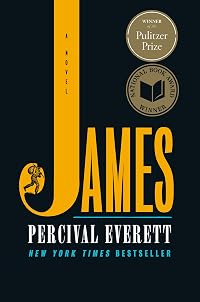
Orbital is definitely deserving of inclusion in this year's Booker Prize longlist, and even though I would rank it slightly behind Percival Everett's brilliant novel James I would not be the least bit disappointed if it won. show less
The astronauts are simultaneously trapped by living in the cramped conditions of the space station, yet liberated from the confines of planet Earth, particularly when they escape the capsule to perform tasks. Their Earth families are never far from their minds, and it seems as if they have dual complimentary lives.
Reading Orbital was a very enjoyable journey, as it gave me a glimpse into the day to day lives of astronauts, and Harvey's skill as a writer made me feel as if I was a fellow astronaut. It brought back fond memories of being an 8 year old boy watching the Apollo 11 mission, and watching Walter Cronkite of CBS News describe the moon landing with as much excitement as I had, and, to a slightly lesser degree, the first space shuttle mission.
Orbital is definitely deserving of inclusion in this year's Booker Prize longlist, and even though I would rank it slightly behind Percival Everett's brilliant novel James I would not be the least bit disappointed if it won. show less
In poetic and surprisingly compelling prose, Samantha Harvey describes “a day in the life” of those on board the International Space Station. The six-person crew hail from the US, UK, Italy, Russia, and Japan, and spend their days conducting experiments to learn about life in space, logging their own bodies’ response to conditions, and trying to counter the effects through daily exercise. Their craft will orbit the earth 16 times over 24 hours, with a shifting view of the planet. On this day, a typhoon threatens the Philippines and the crew is able to provide Mission Control with valuable information about the storm’s path. Crew members spend a lot of time in their own heads, reacting to events of the day and thinking about show more their lives on earth and loved ones left behind. Their inner monologues were surprisingly moving and the prose captured the transformative nature of life in space. This unusual book was difficult to put down; a unique reading experience. show less
Members
- Recently Added By
Published Reviews
ThingScore 100
The beauty of the book is at work less in its explicit hymns of praise than deep in its rhythms and structures. And it’s here that some of the most compelling thinking goes on – about the spectacular and the ordinary, distance and intimacy.
added by Nevov
Lists

Books recommended by Barack Obama
295 works; 28 members

Female Author
1,235 works; 67 members

Overdue Podcast
806 works; 9 members

Obama Reads
181 works; 3 members

Wishlist
50 works; 1 member

Top Five Books of 2024
795 works; 264 members

Books Read in 2025
4,091 works; 97 members
2025 Tournament of Books
18 works; 8 members

2025
42 works; 1 member

Books Read in 2024
4,623 works; 126 members

2024-25 reading
36 works; 1 member
Top Five Books of 2025
954 works; 303 members

Book Riot Read Harder 2026
80 works; 1 member
Books Read 2026
9 works; 1 member

WBS - Book Club
71 works; 1 member

Books Read in 2026
1,891 works; 66 members

Booker Prize Longlist 2024
13 works; 5 members
Author Information

6 Works 3,943 Members
Some Editions
Awards and Honors
Common Knowledge
- Canonical title
- Orbital
- Original title
- Orbital
- Original publication date
- 2023-12-05
- People/Characters
- Anton; Roman; Nell; Chie; Shaun; Pietro
- Important places
- International Space Station; Kennedy Space Center, Florida, USA
- First words
- Rotating about the earth in their spacecraft they are so together and so alone, that even their thoughts, their internal mythologies, at times convene. Sometimes they dream the same dreams - of fractals and blue spheres and f... (show all)amiliar faces engulfed in dark, and of the bright energetic black of space that slams their senses. Raw space is a panther, feral and primal; they dream it stalking through their quarters. -Orbit minus 1
- Quotations
- This is a strange thing, it seems to her. All your dreams of adventure and freedom and discovery culminate in the aspiration to become an astronaut, and then you go up here and you are trapped, and spend your days packing and... (show all) unpacking things, and fiddle in a laboratory with pea shoots and cotton roots, and go nowhere but round and round with the same old thoughts going round and round with you.
They will each be here for nine months or so, nine months of this weightless drifting, nine months of this swollen head, nine months of this sardine living, nine months of this earthward gaping, then back to the patient plane... (show all)t below. - Last words
- (Click to show. Warning: May contain spoilers.)Its light is an ensemble of a trillion things which rally and unify for a few short moments before falling back into the rain-tin-tin and jumbled tumbling of static galactic woodwind rainforest trance of a wild and lilting world.
- Blurbers
- Quatro, Jamie; Haddon, Mark; Filer, Nathan; Moss, Sarah; Porter, Max
- Original language
- English
- Canonical DDC/MDS
- 823.92
- Canonical LCC
- PR6108.A7875
Classifications
Statistics
- Members
- 2,905
- Popularity
- 6,171
- Reviews
- 163
- Rating
- (3.60)
- Languages
- 13 — Catalan, English, Finnish, French, German, Galician, Italian, Polish, Portuguese, Slovenian, Spanish, Swedish, Turkish
- Media
- Paper, Audiobook, Ebook
- ISBNs
- 35
- ASINs
- 17