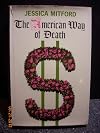
The American Way of Death
by Jessica Mitford
On This Page
Description
" ... Here is a whole complex of commercial operations that result in funerals whose expense, display and mumbo jumbo are unrelated to any Christian or Jewish tradition and virtually unheard of in any other country today. And there is precise information on what is being done to lower the cost and raise the dignity of burial in the United States."Tags
Recommendations







































Member Recommendations

Beyond the Body Farm: A Legendary Bone Detective Explores Murders, Mysteries, and the Revolution in Forensic Science by Bill Bass
SomeGuyInVirginia AWD tangential to forensic anthropology. Of special interest is the chapter in BBF on exhuming the body of the Big Bopper and details of his embalming and burial vault, and discussion of likely types of decomposition.
Member Reviews
Those, in the animal kingdom, who feast on death are called scavengers and the word 'noble' is not one associated with them! So it is with funeral directors, a bunch of ignoble turkey-necked vultures seeking to clean the bones of a lifetime of hard work and savings in one fell swoop. The American model is more successful than that of many countries, including the UK, because of the carefuly-nurtured acceptance, nay, great desire for, open-coffin funerals.
In countries where a closed-coffin is the norm, as in the UK, there is a lot of expenditure that can be saved. A coffin only need look respectable from the outside, it doesn't need fancy interior fittings and faux-satin bed sheets. The dead don't have to be embalmed at great cost nor do show more they have to have their faces stuffed with bits of paper to simulate plumpness, then make-up so they can look as though they were just asleep, wigs, special back-less shoes, clothes or anything else.
Then there is the desire for preservation. A bit like potted meat it's not enough to preserve the body, the container must be one that also lasts. So there the funeral directors have you with hermetically-sealed metal coffins of immense strength, strong enough to enclose all the explosive gases the decaying body will generate, that cost an awful lot of money. Then there are their first-cousins in rapacity, the florists. Wreaths can cost in the hundreds and with a good relationship with a funeral director a florist can expect to make thousands from each funeral.
The marketing techniques of these scavengers is worse even than ambulance-chasing lawyers. They play on the emotions of the bereaved, and if the bereaved don't seem to care to give their late loved one 'the best possible send-off', then they add a bit of guilt into the mixure. And if the dearly-departed was clued-in enough to have a funeral policy all paid-up, a million small-print clauses are invoked in order to milk money from the bereaveds' possible inheritance. One way or another that day is going to cost some as many thousands as the funeral directors can milk. The average cost of a funeral in the US, without the cost of a plot, church expenses or a headstone, is $12-15,000.
Two groups of people are totally immune to this. Muslims and Jews who bury their dead as simply and as fast as possible in plain shrouds and boxes without flowers, leaving no time or opportunity for the vultures to hook their claws in except perhaps for a hearse with no extras.
The green movement isn't much better. My niece, who left a little boy turned four a few days later, had a green funeral. She was buried under a tree in a willow basket. The cost of this coffin was over $800 and the rest of the funeral costs, the cars etc were the same as any other
So how do you get out of all of that? You research it yourself first and lay down strict instructions with people who have both the power and the desire to follow them. Then you have to hope they don't succumb to emotional pressure.
I know how I'm going to be buried. I want to be cremated and my ashes cast with concrete as a reef ball, resting in a coral reef. On my little contribution will be a brass plaque with my names and dates. My nearest and dearest will witness me being dropped overboard and will forever have the co-ordinates, latitude and longitude of where I lie and shelter fishes in my nooks and crannies decorated with sea-urchin flowers and gently waving seaweeds. Or if that's too much trouble, just drop me overboard somewhere wrapped in an old sail and I'll feed the fishes directly.
Either way, the money I worked hard for will go in great part to my sons and not the men with the cultivated sad expressions who sit in their offices waiting for the death knell and then rush out dressed in black rubbing their hands. Business!
The book is years old and a bit out of date, new techniques for milking money from the grieving have been developed, a business must grow or else stagnate and errr, die. show less
In countries where a closed-coffin is the norm, as in the UK, there is a lot of expenditure that can be saved. A coffin only need look respectable from the outside, it doesn't need fancy interior fittings and faux-satin bed sheets. The dead don't have to be embalmed at great cost nor do show more they have to have their faces stuffed with bits of paper to simulate plumpness, then make-up so they can look as though they were just asleep, wigs, special back-less shoes, clothes or anything else.
Then there is the desire for preservation. A bit like potted meat it's not enough to preserve the body, the container must be one that also lasts. So there the funeral directors have you with hermetically-sealed metal coffins of immense strength, strong enough to enclose all the explosive gases the decaying body will generate, that cost an awful lot of money. Then there are their first-cousins in rapacity, the florists. Wreaths can cost in the hundreds and with a good relationship with a funeral director a florist can expect to make thousands from each funeral.
The marketing techniques of these scavengers is worse even than ambulance-chasing lawyers. They play on the emotions of the bereaved, and if the bereaved don't seem to care to give their late loved one 'the best possible send-off', then they add a bit of guilt into the mixure. And if the dearly-departed was clued-in enough to have a funeral policy all paid-up, a million small-print clauses are invoked in order to milk money from the bereaveds' possible inheritance. One way or another that day is going to cost some as many thousands as the funeral directors can milk. The average cost of a funeral in the US, without the cost of a plot, church expenses or a headstone, is $12-15,000.
Two groups of people are totally immune to this. Muslims and Jews who bury their dead as simply and as fast as possible in plain shrouds and boxes without flowers, leaving no time or opportunity for the vultures to hook their claws in except perhaps for a hearse with no extras.
The green movement isn't much better. My niece, who left a little boy turned four a few days later, had a green funeral. She was buried under a tree in a willow basket. The cost of this coffin was over $800 and the rest of the funeral costs, the cars etc were the same as any other
So how do you get out of all of that? You research it yourself first and lay down strict instructions with people who have both the power and the desire to follow them. Then you have to hope they don't succumb to emotional pressure.
I know how I'm going to be buried. I want to be cremated and my ashes cast with concrete as a reef ball, resting in a coral reef. On my little contribution will be a brass plaque with my names and dates. My nearest and dearest will witness me being dropped overboard and will forever have the co-ordinates, latitude and longitude of where I lie and shelter fishes in my nooks and crannies decorated with sea-urchin flowers and gently waving seaweeds. Or if that's too much trouble, just drop me overboard somewhere wrapped in an old sail and I'll feed the fishes directly.
Either way, the money I worked hard for will go in great part to my sons and not the men with the cultivated sad expressions who sit in their offices waiting for the death knell and then rush out dressed in black rubbing their hands. Business!
The book is years old and a bit out of date, new techniques for milking money from the grieving have been developed, a business must grow or else stagnate and errr, die. show less
It may seem morbid but that's truly the American Way of Death--to think discussing death is morbid.
When I read this long time ago, I wanted to know what was involved with standard burials. I had just returned to the States and felt slightly like a fish out of water. For some reason this was something I felt that, as a new adult, I should know more about. Not coincidentally that's also when I decided I'd rather be cremated.
Published in 1963 this book prompted Federal legislation to prevent funeral homes from gouging grieving families. Yay you, Ms. Mitford!
P.S. Funny how I've been on GR over 10 years and just remembered having read this book. I was playing a book bingo, came to the prompt "borrowed," and oddly up popped this book to my show more mind. I think it might be because it was the first adult non-fiction book I ever borrowed from our library and thought it was mighty progressive of them to carry a book on this "taboo" subject. Oh, how quaint we were back then. show less
When I read this long time ago, I wanted to know what was involved with standard burials. I had just returned to the States and felt slightly like a fish out of water. For some reason this was something I felt that, as a new adult, I should know more about. Not coincidentally that's also when I decided I'd rather be cremated.
Published in 1963 this book prompted Federal legislation to prevent funeral homes from gouging grieving families. Yay you, Ms. Mitford!
P.S. Funny how I've been on GR over 10 years and just remembered having read this book. I was playing a book bingo, came to the prompt "borrowed," and oddly up popped this book to my show more mind. I think it might be because it was the first adult non-fiction book I ever borrowed from our library and thought it was mighty progressive of them to carry a book on this "taboo" subject. Oh, how quaint we were back then. show less
First published in 1963 this book is an expose of the American funeral industry - Mitford presents the facts, which she researched extensively, and does so in a manner which leaves you open-mouthed with disbelief, furious, and amused - all at the same time. Apparently after the book was first published the annual turnover of undertakers in the US dropped by 30% - although I'm not sure that funeral homes have changed their practices very much in the intervening years. The funeral business is, after all, a business and it is involved in selling 'services' to people at their most fragile moments. A very good book.
A good account of the American funeral industry circa 1960. Practices have changed rather little in the intervening 60 years for those mourners who are coerced to embalm and display their dead relatives before burial. Fortunately cremations have increasingly replaced some of the pointless expenditures.
Jessica Mitford writes about the funeral industry, and how it plays on people's grief to make rather extraordinary profits from rather extraordinarily expensive funerals. Some of this book is very dated. Some of it is not, unfortunately.
Pathbreaking expose of funeral industry in America. A delightful muckraking experience.
A sure sign of how hard up American communists were by the early 1960's is that one of their more able propagandists devoted a book to denouncing that great capitalist horror: lavish funerals. Evelyn Waugh said everything necessary on that subject in The Loved One. Jessica Mitford's overheated polemic, read 45 years later, is almost as funny, but unintentionally so. Includes a section on how to organize a properly socialist "memorial society".
Members
- Recently Added By
Lists

David Bowie's Top 100
97 works; 23 members

Read-alike - From here to eternity by Caitlin doughty
8 works; 1 member

David Bowie's List of Top 100 Books
94 works; 6 members

Read This Next
120 works; 3 members
David Bowie’s Top 100 Favourite Reads
100 works; 3 members

Books Cited in Digging Up the Dead by Michael Kammen
183 works; 1 member

My Mad Men Reading List
47 works; 1 member
Author Information

14+ Works 4,155 Members
Awards and Honors
Distinctions
Notable Lists
Work Relationships
Has the (non-series) sequel
Common Knowledge
- Canonical title
- The American Way of Death
- Original publication date
- 1963
- Important places
- USA
- Epigraph
- Funerals are becoming more and more a part of the American way of life. Howard C. Raether, Executive Secretary, National Funeral Directors Association
- Dedication
- Dedicated to my husband Robert Treuhaft with much gratitude for his untiring collaboration in all phases of the preparation of this book
- First words
- O death, where is thy sting?
- Last words
- (Click to show. Warning: May contain spoilers.)Instead, for those who wish to pursue the subject further, I have appended a list of books, a list of articles in magazines of gneral circulation, and a list of funeral trade magazines with addresses.
- Disambiguation notice
- Title/ISBN mismatch
Classifications
- Genres
- Sociology, Nonfiction, General Nonfiction, History
- DDC/MDS
- 338.4 — Society, government, & culture Economics Production Secondary industries and services
- LCC
- GT3203 .M5 — Geography, Anthropology and Recreation Manners and customs (General) Manners and customs (General) Customs relative to private life
Statistics
- Members
- 559
- Popularity
- 53,273
- Reviews
- 11
- Rating
- (3.94)
- Languages
- English, Spanish
- Media
- Paper
- ISBNs
- 11
- ASINs
- 25