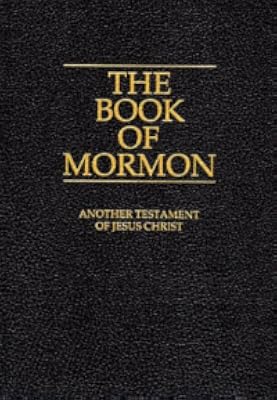
The Book of Mormon: Another Testament of Jesus Christ
by Joseph Smith  , The Church of Jesus Christ of Latter-day Saints (Author)
Standard Works of The Church of Jesus Christ of Latter-day Saints
On This Page
Description
This sacred text of the Later Day Saint movement was first published by Joseph Smith in 1830. "The Book of Mormon" was purportedly the result of divine revelation. According to the legend, Joseph Smith was visited by the Angel Moroni, who revealed to him the location of a secret collection of ancient writings, engraved on golden plates by ancient prophets. These plates told of a time six hundred years before the birth of Christ when God brought a group of his people to the Western show more hemisphere. This work, as viewed by the Mormon religion, is the transcription of those plates, and would become the foundational text for the Later Day Saint movement. While many regard this text as simply the fabrication of Joseph Smith and not a product of divine revelation, "The Book of Mormon" would ultimately help to create a denomination of Christianity with millions of members. show lessTags
Recommendations









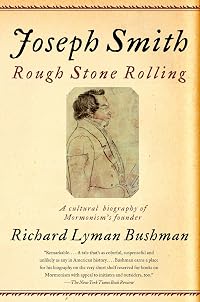









Member Recommendations
richjj A careful review of the narrative structure and literary elements of the Book of Mormon.
20
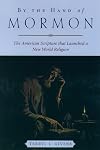
By the Hand of Mormon: The American Scripture that Launched a New World Religion by Terryl L. Givens
richjj A thoughtful telling of the emergence of the Book of Mormon and how it influenced the development of the Mormon religion.

neverstopreading It is important to understand the creator of the Book of Mormon as you read it.
23
richjj A scholarly study of how Mormons and outsiders thought about and used the Book of Mormon, since the time of its publication up to today.
Member Reviews
Terribly repetitive, racist at it's core, anachronistic, boring, and wholly unoriginal.
It lifts big chunks, word for word, straight out of the KJ Old Testament. What isn't stolen from the Bible seems to be taken from 1. [b:View of the Hebrews 1825: Or the Tribes of Israel in America|981827|View of the Hebrews 1825 Or the Tribes of Israel in America|Ethan Smith|https://d.gr-assets.com/books/1349044745s/981827.jpg|966716] 2. [b:The Late War Between the United States and Great Britain: From June 1812 to February 1815, Written in the Ancient Historical Style: Containing Also, a Sketch of the Late Algerine War ... the Commercial Treaty with Great Britain, and the Treaty...|14219538|The Late War Between the United States and Great Britain show more From June 1812 to February 1815, Written in the Ancient Historical Style Containing Also, a Sketch of the Late Algerine War ... the Commercial Treaty with Great Britain, and the Treaty...|Gilbert J. Hunt|https://d.gr-assets.com/books/1349068390s/14219538.jpg|19858281] and 3. [b:The First Book of Napoleon, the Tyrant of the Earth|14450358|The First Book of Napoleon, the Tyrant of the Earth|Anonymous|https://d.gr-assets.com/books/1348271326s/14450358.jpg|20092752].
The linguistic, anachronistic, scientific and archaeological evidence against this being an accurate history of the Americas is absolutely staggering. That being said, a lot of people get a lot of hope out of this book, so they must not mind picking the rotten parts to get to a morsel of decency here and there.
p.s. If you absolutely must read it, try to get your hands on the 1st edition text, it's quite a bit different than what is published today. show less
It lifts big chunks, word for word, straight out of the KJ Old Testament. What isn't stolen from the Bible seems to be taken from 1. [b:View of the Hebrews 1825: Or the Tribes of Israel in America|981827|View of the Hebrews 1825 Or the Tribes of Israel in America|Ethan Smith|https://d.gr-assets.com/books/1349044745s/981827.jpg|966716] 2. [b:The Late War Between the United States and Great Britain: From June 1812 to February 1815, Written in the Ancient Historical Style: Containing Also, a Sketch of the Late Algerine War ... the Commercial Treaty with Great Britain, and the Treaty...|14219538|The Late War Between the United States and Great Britain show more From June 1812 to February 1815, Written in the Ancient Historical Style Containing Also, a Sketch of the Late Algerine War ... the Commercial Treaty with Great Britain, and the Treaty...|Gilbert J. Hunt|https://d.gr-assets.com/books/1349068390s/14219538.jpg|19858281] and 3. [b:The First Book of Napoleon, the Tyrant of the Earth|14450358|The First Book of Napoleon, the Tyrant of the Earth|Anonymous|https://d.gr-assets.com/books/1348271326s/14450358.jpg|20092752].
The linguistic, anachronistic, scientific and archaeological evidence against this being an accurate history of the Americas is absolutely staggering. That being said, a lot of people get a lot of hope out of this book, so they must not mind picking the rotten parts to get to a morsel of decency here and there.
p.s. If you absolutely must read it, try to get your hands on the 1st edition text, it's quite a bit different than what is published today. show less
Uncharitably, I can say the Book of Mormon reads like a meme: “I forced an AI to spend 1000 hours reading the Bible and then write a new Bible based on that information.” I found it derivative, repetitive, hackneyed, and nigh unreadable for long boring stretches.
The problem with this assessment is two-fold. First, I don’t want to be uncharitable. Second, this assessment is too lazy. It’s not hard to sit outside and criticize. What I tried to do instead was understand why Mormonism caught fire when it did in the way that it did, and I do have some thoughts.
First, there’s a deliberate simplicity to the Book of Mormon. “Plain speaking” recurs often as a mark of the righteous, in contrast to the “priestcrafts” of those who show more bury the truth in convoluted theologies that bind the laity to a caste of theologians who care nothing for the poor and the downtrodden.
Many “plain spoken” teachings of the book resonate, I suspect, with many an average church-goer today. The fall into sin was not only accounted for in God’s plan, but required because without sin there is no free will — and God would never trammel a man’s free will.
There’s no reason to ask why prophecy and healing and tongues ceased, because they never ceased — God is the same yesterday and today and forever. The revelation of Jesus was not limited to one corner of the globe — salvation is only through the name of Jesus and all have heard his name.
The atonement is not limited but infinite, and guarantees resurrection for all from the first death. We’re responsible to live righteously in this probationary period if we want to escape the second death. There’s an internally logical simplicity to the Book of Mormon that could appeal to someone who’s exhausted by lofty churchmen with their complicated empty words and conceited empty lives.
Also, none of the weird stuff is in the Book of Mormon. Plural marriage is outright condemned in Jacob 2-3 and Ether 10, and is tacitly absent in the social welfare system of Mosiah 21. There’s not a trace of the complicated system of righteous men achieving exaltation to godhood. I assume these were later revelations, but I’m open to correction from someone who knows more than I do.
If you’re not theologically grounded, there isn’t anything freaky here to put your back up. I can understand how the “plain speaking” of the Book of Mormon might appeal as an alternative to crusty orthodoxies that seem more interested in their own power structures than in living like Jesus.
Second, the Book of Mormon is very much a work of its time. Americans were fascinated by the vanished Mound Builders, so the idea of great precursor civilizations was in the air. The agnostic teachings of the false prophet Korihor sound an awful lot like 19th-century scientific materialism.
In the east, the social panic of Anti-Masonry echoes in the secret rites of the Gadianton robbers. In the west, the opening of the hinterlands to settlement provides an obvious escape route for persecuted Mormons in the same way that Lehi and his family fled to the American wilderness ahead of judgment.
I even find theological justification for “management” of Native American populations. In the account of the final triumph of the godless Lamanites over the apostate Nephites, the path to redemption for the Lamanites includes laying aside weapons and forswearing violence.
Since Mormon anthropology considers Native American tribes as degraded remnants of the Lamanites, it’s not difficult to sense the prejudices of expanding white America. Tribes that submit peacefully are on the path to redemption, and those that resist are wicked Lamanites practically begging for conquest.
As I read it, the Book of Mormon appeared at the only time it could have found such explosive success. Rising tensions over slavery threatened the geopolitical order, rising materialism undermined the spiritual order, rising disillusionment with organized religion left people religiously hungry but spiritually adrift, and rising consciousness of extinct civilizations made the discovery of ancient records plausible. If this is right, then the rise of Mormonism is not as hard to understand as it might first appear.
I set out in this review to be charitable, and I’m not sure I succeeded. No doubt, a devout Mormon would consider this nothing but a polite attack on their faith, a reduction of a movement of God to a quirky side effect of social and historical forces.
There’s probably some truth to that. I didn’t finish my reading of the Book of Mormon with an inclination to convert, but I do feel I understand its appeal in its time. Even today, progressive Mormons like fantasy author Brandon Sanderson, who seems to acknowledge the fictional nature of the book’s narrative, considers it a story through which God molds the character of his people.
Given this sort of adaptability in the teeth of advancing knowledge, not to mention Mormonism’s long track record of cohesive community and hard work, I suspect that both the faith and its book will survive for some time regardless of how strange or outdated it appears outside the walls of the temple. show less
The problem with this assessment is two-fold. First, I don’t want to be uncharitable. Second, this assessment is too lazy. It’s not hard to sit outside and criticize. What I tried to do instead was understand why Mormonism caught fire when it did in the way that it did, and I do have some thoughts.
First, there’s a deliberate simplicity to the Book of Mormon. “Plain speaking” recurs often as a mark of the righteous, in contrast to the “priestcrafts” of those who show more bury the truth in convoluted theologies that bind the laity to a caste of theologians who care nothing for the poor and the downtrodden.
Many “plain spoken” teachings of the book resonate, I suspect, with many an average church-goer today. The fall into sin was not only accounted for in God’s plan, but required because without sin there is no free will — and God would never trammel a man’s free will.
There’s no reason to ask why prophecy and healing and tongues ceased, because they never ceased — God is the same yesterday and today and forever. The revelation of Jesus was not limited to one corner of the globe — salvation is only through the name of Jesus and all have heard his name.
The atonement is not limited but infinite, and guarantees resurrection for all from the first death. We’re responsible to live righteously in this probationary period if we want to escape the second death. There’s an internally logical simplicity to the Book of Mormon that could appeal to someone who’s exhausted by lofty churchmen with their complicated empty words and conceited empty lives.
Also, none of the weird stuff is in the Book of Mormon. Plural marriage is outright condemned in Jacob 2-3 and Ether 10, and is tacitly absent in the social welfare system of Mosiah 21. There’s not a trace of the complicated system of righteous men achieving exaltation to godhood. I assume these were later revelations, but I’m open to correction from someone who knows more than I do.
If you’re not theologically grounded, there isn’t anything freaky here to put your back up. I can understand how the “plain speaking” of the Book of Mormon might appeal as an alternative to crusty orthodoxies that seem more interested in their own power structures than in living like Jesus.
Second, the Book of Mormon is very much a work of its time. Americans were fascinated by the vanished Mound Builders, so the idea of great precursor civilizations was in the air. The agnostic teachings of the false prophet Korihor sound an awful lot like 19th-century scientific materialism.
In the east, the social panic of Anti-Masonry echoes in the secret rites of the Gadianton robbers. In the west, the opening of the hinterlands to settlement provides an obvious escape route for persecuted Mormons in the same way that Lehi and his family fled to the American wilderness ahead of judgment.
I even find theological justification for “management” of Native American populations. In the account of the final triumph of the godless Lamanites over the apostate Nephites, the path to redemption for the Lamanites includes laying aside weapons and forswearing violence.
Since Mormon anthropology considers Native American tribes as degraded remnants of the Lamanites, it’s not difficult to sense the prejudices of expanding white America. Tribes that submit peacefully are on the path to redemption, and those that resist are wicked Lamanites practically begging for conquest.
As I read it, the Book of Mormon appeared at the only time it could have found such explosive success. Rising tensions over slavery threatened the geopolitical order, rising materialism undermined the spiritual order, rising disillusionment with organized religion left people religiously hungry but spiritually adrift, and rising consciousness of extinct civilizations made the discovery of ancient records plausible. If this is right, then the rise of Mormonism is not as hard to understand as it might first appear.
I set out in this review to be charitable, and I’m not sure I succeeded. No doubt, a devout Mormon would consider this nothing but a polite attack on their faith, a reduction of a movement of God to a quirky side effect of social and historical forces.
There’s probably some truth to that. I didn’t finish my reading of the Book of Mormon with an inclination to convert, but I do feel I understand its appeal in its time. Even today, progressive Mormons like fantasy author Brandon Sanderson, who seems to acknowledge the fictional nature of the book’s narrative, considers it a story through which God molds the character of his people.
Given this sort of adaptability in the teeth of advancing knowledge, not to mention Mormonism’s long track record of cohesive community and hard work, I suspect that both the faith and its book will survive for some time regardless of how strange or outdated it appears outside the walls of the temple. show less
Love, love, love. This is one of those rare shows where the first viewing is entertainment, the second is appreciation of structure, and the third is just admiration for how confidently it commits to its own ridiculousness.
I saw it three times in the early years, and the soundtrack is still on my iPod, which feels like the most honest possible archival record of obsession.
It is sharp, chaotic, and far more musically clever than it has any right to be given its general emotional chaos.
I saw it three times in the early years, and the soundtrack is still on my iPod, which feels like the most honest possible archival record of obsession.
It is sharp, chaotic, and far more musically clever than it has any right to be given its general emotional chaos.
The cover of my copy of The Book of Mormon proclaims it to be "Another Testament of Jesus Christ". As I read the book, I had in mind the other testaments, namely the Bible. I was especially mindful as to how well the three testaments fit together. The problem was, The Book of Mormon never quite fit. It tells the tale of Lehi, an Israelite from one of the tribes of Joseph. He is a righteous man, living in Jerusalem around 600 BC, soon before the Babylonians will come and destroy the city and take the people into captivity. God calls Lehi to take his family and leave Jerusalem, which they do, and head towards a new promised land across the waters. They settle in this new country, but troubles arise even as they leave Jerusalem. Sons Laman show more and Lemuel go along but are not totally on board with Dad and his spirituality. The younger Nephi, however, is a faithful son and heir to his father's faith. The reader is then treated to about a thousand years worth of rebellions and revivals among the children of Lehi, punctuated by prophecies and then a post-resurrection appearance of Jesus Christ.
So that kind of sounds like the history of the children of Israel, right? Well, compare my pedestrian prose above to the rich text of the Old Testament, and you can start to understand my big beef with The Book of Mormon. Except where it quotes the Bible, the text of The Book of Mormon is very bland. Instead of the thought provoking imagery of Isaiah, Jeremiah and Ezekiel detailing the transgressions of Israel, you get a regular refrain of "Repent ye, repent ye!" over a generic set of sins. Instead of complex characters like David, Ahab or Nebuchadnezzar, you get guys like Nephi or Ammoron who come across as complex as 1950s television characters.
Of course, beyond that, there's the theology. I'm a Lutheran Christian, so I was raised hearing that we're saved by faith in Jesus, not by our own good works. In The Book of Mormon, it's all about the good pious people versus the nasty rebels. Jesus will forgive you, sure, but only after you turn yourself around and start behaving. It goes against what I've been taught. And since The Book of Mormon doesn't read like it's in the same class as the Bible, I'm not inclined to question my current beliefs.
--J. show less
So that kind of sounds like the history of the children of Israel, right? Well, compare my pedestrian prose above to the rich text of the Old Testament, and you can start to understand my big beef with The Book of Mormon. Except where it quotes the Bible, the text of The Book of Mormon is very bland. Instead of the thought provoking imagery of Isaiah, Jeremiah and Ezekiel detailing the transgressions of Israel, you get a regular refrain of "Repent ye, repent ye!" over a generic set of sins. Instead of complex characters like David, Ahab or Nebuchadnezzar, you get guys like Nephi or Ammoron who come across as complex as 1950s television characters.
Of course, beyond that, there's the theology. I'm a Lutheran Christian, so I was raised hearing that we're saved by faith in Jesus, not by our own good works. In The Book of Mormon, it's all about the good pious people versus the nasty rebels. Jesus will forgive you, sure, but only after you turn yourself around and start behaving. It goes against what I've been taught. And since The Book of Mormon doesn't read like it's in the same class as the Bible, I'm not inclined to question my current beliefs.
--J. show less
DO NOT READ THIS IF YOU DON"T WANT A FRANK OPINION!
Seldom have I encountered such hog-wash disguised as a religious tract. Come on! Who in their right mind would believe this junk?
A synopsis: During America's Great Religious Revival in the late 1820's, a New York farmer, plowing his field, uncovers gold plates upon which are written an archaic script. The angel Moroni appears and helps the farmer (Joseph Smith) decode this text. Once decoded, the plates disappear! It turns out to be the account of the Lost Tribe of Israel who had landed on the shores of North America after becoming lost in the Sinai when following Moses in the flight from Egypt! Yes, sir. It describes how the tribe found themselves lost on the shore of the show more Mediterranean, how they cut down a great forest to make ships that would transport them to the Land of Milk and Honey - Canaan. (Nobody thought of following the shore eastward?) Then they set sail, passed between Sicily and Tunisia (OK they might have been right in the middle of the 90 mile gap and didn't see either shore.) and out through the Pillars of Hercules (less than a 10 mile gap) to land on the east coast of what became the United States where they founded a vast civilization of advanced cities but, because of conflict within the tribe, wars of attrition involving chariots and cavalry, ruined the civilization. Later, during the three days Jesus had descended into Hell (according to all Christian catechisms)he actually visited North America where he preached the Gospel to redeem the descendants of the Lost Tribe.
Seriously? Has anyone discovered any such ancient city? What about horses? There is no evidence of horses in the New World until the Conquistadors arrived.
I do not doubt the sincerity of any Mormon, but, God gave us brains. show less
Seldom have I encountered such hog-wash disguised as a religious tract. Come on! Who in their right mind would believe this junk?
A synopsis: During America's Great Religious Revival in the late 1820's, a New York farmer, plowing his field, uncovers gold plates upon which are written an archaic script. The angel Moroni appears and helps the farmer (Joseph Smith) decode this text. Once decoded, the plates disappear! It turns out to be the account of the Lost Tribe of Israel who had landed on the shores of North America after becoming lost in the Sinai when following Moses in the flight from Egypt! Yes, sir. It describes how the tribe found themselves lost on the shore of the show more Mediterranean, how they cut down a great forest to make ships that would transport them to the Land of Milk and Honey - Canaan. (Nobody thought of following the shore eastward?) Then they set sail, passed between Sicily and Tunisia (OK they might have been right in the middle of the 90 mile gap and didn't see either shore.) and out through the Pillars of Hercules (less than a 10 mile gap) to land on the east coast of what became the United States where they founded a vast civilization of advanced cities but, because of conflict within the tribe, wars of attrition involving chariots and cavalry, ruined the civilization. Later, during the three days Jesus had descended into Hell (according to all Christian catechisms)he actually visited North America where he preached the Gospel to redeem the descendants of the Lost Tribe.
Seriously? Has anyone discovered any such ancient city? What about horses? There is no evidence of horses in the New World until the Conquistadors arrived.
I do not doubt the sincerity of any Mormon, but, God gave us brains. show less
As ancient history, the book suffers from heavily debated anachronisms that make it difficult to place in a traditional historical framework. As American literature, the book fares slightly better. It has many interesting stories and sermons, but the prose lacks polish and can often be repetitive.
However, as scripture, the work glows. It outlines the essential tenets of a religion that has become a mainstream branch of Christianity and has, for nearly two centuries, inspired millions of people worldwide to be their best selves — myself included.
A worthwhile read for anyone seeking a clearer outlook on life, a deeper sense of purpose, and richer relationships with themselves, others, and God.
However, as scripture, the work glows. It outlines the essential tenets of a religion that has become a mainstream branch of Christianity and has, for nearly two centuries, inspired millions of people worldwide to be their best selves — myself included.
A worthwhile read for anyone seeking a clearer outlook on life, a deeper sense of purpose, and richer relationships with themselves, others, and God.
Ok, so I didn't actually read all of it, but a pretty reasonable chunk across most of its books and I'd broadly agree with many of the other two star reviews here - as a work of fiction it's a bit of a clunker but means well.
As a philosophical work, Alma seems to have the most interesting bits to say but not a great deal of insight that wasn't already readily available in the bible and by pretending to be contemporaneous with it, missed what was perhaps a golden opportunity to update the more doctrinal aspects of those texts for a contemporary society's mores.
As a philosophical work, Alma seems to have the most interesting bits to say but not a great deal of insight that wasn't already readily available in the bible and by pretending to be contemporaneous with it, missed what was perhaps a golden opportunity to update the more doctrinal aspects of those texts for a contemporary society's mores.
Members
- Recently Added By
Published Reviews
Lists

You Couldn't Pay Me to Read That (Take 2)
203 works; 86 members

Worst religious books
19 works; 8 members

Faithful to Atheist: Books on your Journey
14 works; 5 members

Christianity Books You've Read
179 works; 19 members

Unread books
1,063 works; 87 members

Books I've Read More Than Once
602 works; 49 members
GreatBooks Worldview Academy Lists
133 works; 4 members

Blue Pyramid 1,276 Best Books of All Time
1,248 works; 32 members

The Joe Rogan Experience Library
254 works; 3 members

Robert B. Downs's Books that Changed America
15 works; 1 member

Books We Love to Reread
688 works; 297 members

Books Read in 2026
2,068 works; 69 members
Author Information

171+ Works 13,397 Members
Joseph Smith, Jr. was the founder to The Church of Jesus Christ of Latter-day Saints.
Joseph Smith has a Legacy Library. Legacy libraries are the personal libraries of famous readers, entered by LibraryThing members from the Legacy Libraries group.

Series

Work Relationships
Is contained in
Is retold in
Has the adaptation
Is abridged in
Is parodied in
Inspired
Has as a reference guide/companion
Has as a study
By the Hand of Mormon: The American Scripture that Launched a New World Religion by Terryl L. Givens
From Jerusalem to Zarahemla: Literary and historical studies of the Book of Mormon (Religious Studies Center specialized by S. Kent Brown
Has as a commentary on the text
Has as a concordance
Has as a student's study guide
Has as a teacher's guide
Common Knowledge
- Canonical title
- The Book of Mormon: Another Testament of Jesus Christ
- Original title
- The Book of Mormon
- Original publication date
- 1830-03-26
- People/Characters
- Nephi; Lehi; Laman; Lemuel; Sariah; Sam (show all 31); Jacob, son of Lehi; Joseph; Enos; Omni; Mormon; King Mosiah; King Benjamin; King Noah; Alma; Amulon; Helaman; Captain Moroni; Pahoran; Ether; Jared; Brother of Jared; Coriantumr; Moroni; Alma the Younger; Aaron, the Levite; King Lamoni; Amalickiah; Aha—Nephite military officer [c. 80 B.C.]; Ahah—Jaredite king, son of Seth; Abinadi—Nephite prophet [c. 150 B.C.]
- Important places
- Jerusalem; Palmyra, New York, USA (The Hill Cumorah); Cumorah; Harmony, Pennsylvania, USA; Zarahemla; Ablom—Jaredite city
- Important events
- Translation of the Book of Mormon; Birth of Jesus Christ; Death of Jesus Christ; Jesus Christ's appearance in Americas; Destruction of Jerusalem
- Related movies
- The Book of Mormon Movie, Volume 1: The Journey (2003 | IMDb)
- First words
- I, Nephi, having been born of goodly parents, therefore I was taught somewhat in the learning of my father; and having seen many afflictions in the course of my days, nevertheless, having been highly favored of the Lord in al... (show all)l my days: yea, having had a great knowledge of the goodness and the mysteries of God, therefore I make a record of my proceedings in my days.
Brief Analysis of the Book of Mormon: Three classes of Record Plates are indicated on the title-page of the Book of Mormon, namely: 1. The Plates of Nephi... 2. The Plates of Mormon... 3. The Plates of Ether... - Last words
- (Click to show. Warning: May contain spoilers.)I soon go to rest in the paradise of God, until my spirit and body shall again reunite, and I am brought forth triumphant through the air, to meet you before the pleasing bar of the great Jehovah, the Eternal judge of both quick and dead.
- Disambiguation notice
- This work is for editions that contain the Book of Mormon only. Do not combine with editions that also contain other works such as the Doctrine and Covenants or the Pearl of Great Price.
Classifications
- Genres
- Religion & Spirituality, Nonfiction
- DDC/MDS
- 289.322 — Religion Christian denominations Other denominations and sects Mormonism Scriptures
- LCC
- BX8623 — Philosophy, Psychology and Religion Christian Denominations Christian Denominations Protestantism Other Protestant denominations Mormons. Church of Jesus Christ of Latter-Day Saints
- BISAC
Statistics
- Members
- 8,199
- Popularity
- 1,353
- Reviews
- 100
- Rating
- (3.24)
- Languages
- 52 — Albanian, Amharic, Arabic, Armenian, Bosnian, Bulgarian, Catalan, Chinese, Czech, Danish, Dutch, English, Estonian, Finnish, French, German, Greek, Hawaiian, Hebrew, Hindi, Hungarian, Icelandic, Italian, Japanese, Khmer, Korean, Lao, Lithuanian, Maori, Mongolian, Mayan languages, Navajo, Norwegian (Bokmål), Norwegian, Farsi/Persian, Polish, Portuguese, Romanian, Russian, Croatian, Slovenian, Spanish, Swahili, Swedish, Tai (Other), Tamil, Thai, Turkish, Ukrainian, Urdu, Vietnamese, Welsh
- Media
- Paper, Audiobook, Ebook
- ISBNs
- 139
- ASINs
- 251