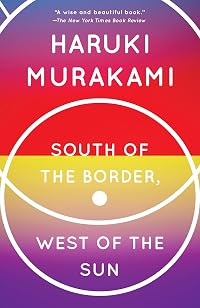
South of the Border, West of the Sun
by Haruki Murakami
On This Page
Description
South of the Border, West of the Sun is the beguiling story of a past rekindled, and one of Haruki Murakami’s most touching novels.Hajime has arrived at middle age with a loving family and an enviable career, yet he feels incomplete. When a childhood friend, now a beautiful woman, shows up with a secret from which she is unable to escape, the fault lines of doubt in Hajime’s quotidian existence begin to give way. Rich, mysterious, and quietly dazzling, in South of the Border, West of show more the Sun the simple arc of one man’s life becomes the exquisite literary terrain of Murakami’s remarkable genius. show less
Tags
Recommendations

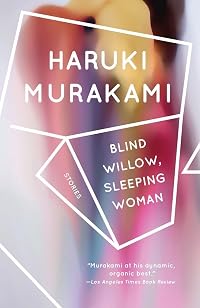
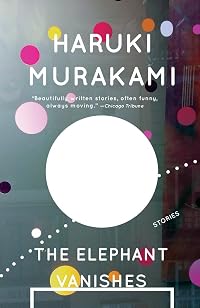
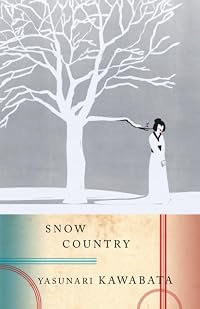
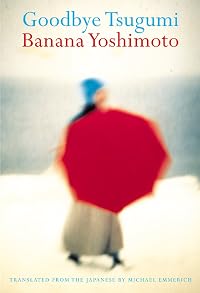

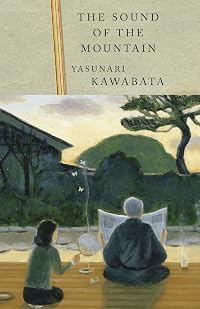

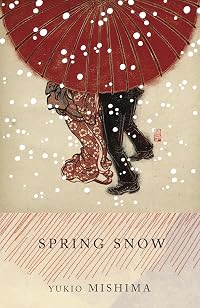
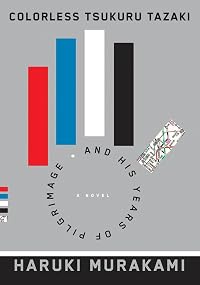
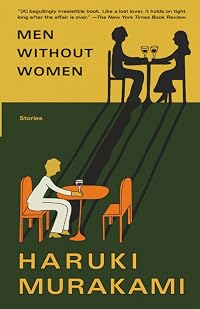
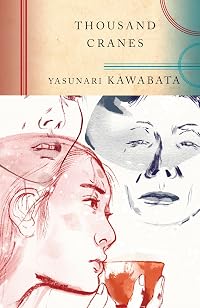
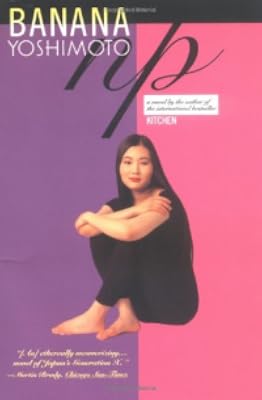
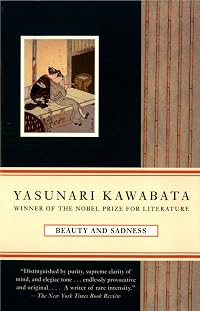
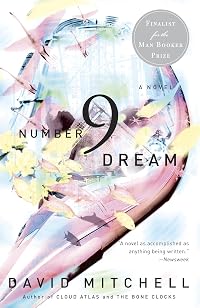
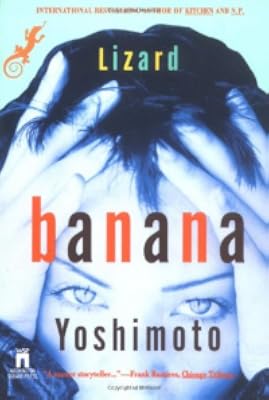

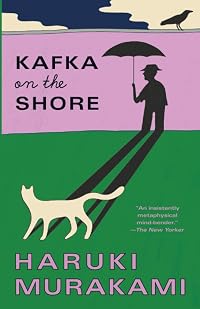
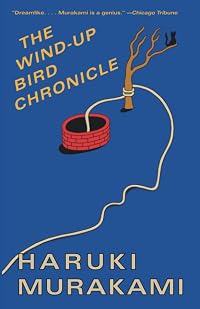

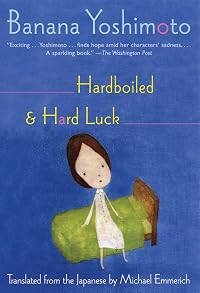
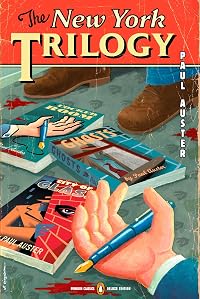
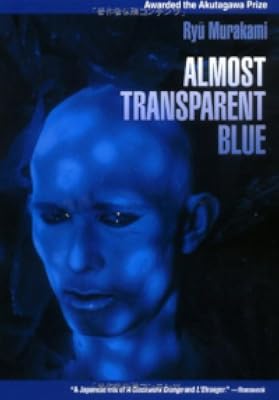
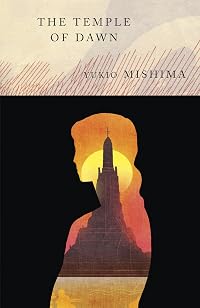
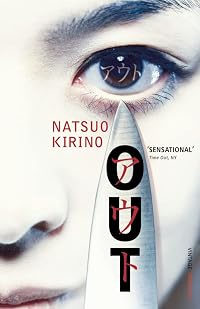
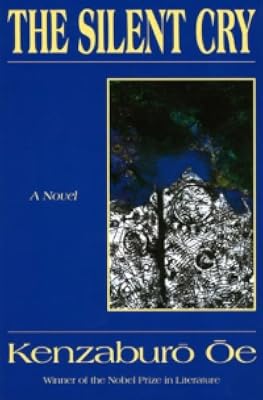
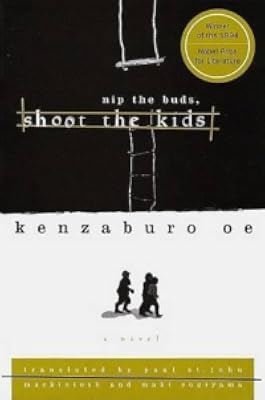

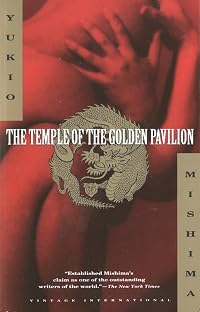
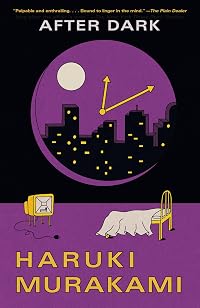

Member Recommendations
Member Reviews
I fancied a short book so opted to pick this off my TBR and give it a shot. I have loved the previous books I've read by Murakami this year and hoped this would not let me down.
Hajime bears a lot of similarities with Murakami himself in that he has a love of literature and opens a Jazz bar in Japan. Music plays a huge part in this book and somehow Murakami manages to really pick the perfect story for the music. Star Crossed Lovers by Duke Ellington is mentioned a few times in the book so I decided to dig it up on youtube. In short, its perfect for the story, or the story is perfect for the tune.
The female characters are melancholic, mysterious women who rarely let us into their inner thoughts. I always find the female characters far show more more interesting than the male ones and it make me wonder what happened to Murakami in his early life to lead him to create the female characters that he does.
Like Norwegian Wood this book creates wonderful dream like images in my mind. I don't know how he catches the mood in the way he does, he is like a god damn wizard :smile: He manages to grab my emotions like no other writer and he really gets inside my head and my heart. After finishing this I felt pretty emotionally drained, again, I have no idea how he does this.
I have more to say but I don't know what or how. This is a book that will resonate in my head for a long time to come. show less
Hajime bears a lot of similarities with Murakami himself in that he has a love of literature and opens a Jazz bar in Japan. Music plays a huge part in this book and somehow Murakami manages to really pick the perfect story for the music. Star Crossed Lovers by Duke Ellington is mentioned a few times in the book so I decided to dig it up on youtube. In short, its perfect for the story, or the story is perfect for the tune.
The female characters are melancholic, mysterious women who rarely let us into their inner thoughts. I always find the female characters far show more more interesting than the male ones and it make me wonder what happened to Murakami in his early life to lead him to create the female characters that he does.
Like Norwegian Wood this book creates wonderful dream like images in my mind. I don't know how he catches the mood in the way he does, he is like a god damn wizard :smile: He manages to grab my emotions like no other writer and he really gets inside my head and my heart. After finishing this I felt pretty emotionally drained, again, I have no idea how he does this.
I have more to say but I don't know what or how. This is a book that will resonate in my head for a long time to come. show less
This is not a very Murakami-esque book, but its depth can still blow you away. There are so many ways of thinking about this book, and what it is saying about life. South of the Border, West of the Sun describes, respectively, a place that you thought was desirable but might not be so, and an unreachable state. For reasons never explained, Hajime and Shimamoto cannot be together (it makes you wonder if Shimamoto is married or having an affair with a triad boss; she has never worked but dresses very well and can only meet Hajime for a while). And yet even if they are together, would that be better for both of them? Hajime's 'hole' may be filled, but he would be abandoning his wife, Yukiko, and children. Yukiko turned out to be the book's show more surprise. Almost invisible, she impresses with her clarity and strength of character. Towards the end of the book, she told Hajime that "you don't ask anything". Indeed, we are often so self-centred that we neglect the people around us. Everything may appear well but in truth it is not. show less
Most of the time I read murakami books for their immersive dreamlike environment. Once finished though, I find that I rarely think about the book I've just finished. This was not the case with this book. There were important themes about Life choices. Having to choose between different desires -- some raw passion vs wise -- and having to live with the consequences of those choices. Hajime was a flawed character but also relatable. Shimamoto made me think of the ones that got away. Izumi made me think of all of those folks that hurt me or vice versa in love and life. Yukiko the stable virtuous partner that doesn't cause someone pain and as such doesn't elicit passion. Even the themes around her father being a corrupt businessman or the show more early story about being an only child or interesting and have stayed with me. show less
The Short of It:
Success and happiness don’t always go hand in hand.
The Rest of It:
Okay, guys. My love for Murakami is approaching full-on creep level. If I could shrink him down and put him in my pocket, I’d carry him around all day long. Weird, huh?
I saved this book for a long time because it was the last translated novel that I had not read but when my father passed away and I was unable to pull myself out of bed, I reached for it and Murakami’s writing did what I expected it to. It soothed, refreshed, made me ponder life in a big way, and all of a sudden all these feelings were rushing through me again.
This is probably one of my favorite novels, ever. It’s right up there with Kafka on the Shore and The Wind-Up Bird Chronicle. show more It’s a plain, simple story about a middle-aged man by the name of Hajime. He has a loving wife, and two beautiful daughters. He owns a couple of very successful Jazz clubs and enjoys the life he’s earned. But deep down, there’s something missing.
Not fully understanding this sense of longing, he’s reminded of a girl he knew in childhood by the name of Shimamoto. She was his everything but that was a long time ago. Is it possible that she even remembers him?
Memory plays a big role in this story and it’s beautifully handled. Murakami paints vivid, broad strokes when it comes to Shimamoto so it’s easy to see why Hajime is so taken with her. In childhood she’s this beautiful, delicate untouchable thing but when she walks into his club one rainy evening, Hajime begins to doubt his own existence and is no longer sure what happiness is.
This novel is full of romantic interludes but I hesitate to call it a romance because it’s much deeper than your typical romance novel. If you are familiar with Murakami’s writing at all, you know that his books can walk the surreal line. Some of his books are way out there, like Kafka and Wind-up but others are more subtle and this one is definitely one of the quiet ones but oh, how I loved it. That last page! That last line. Sigh.
If I want to try Murakami, which book should I read first?
Everyone always asks me which book to read first. It’s really hard to say. I read Kafka on the Shore first and it was like an acid trip. At page 50 I was about to give up on it and then something clicked. But that’s me. I like it when an author surprises me. But I think about 75% of you would run screaming from a room if you picked that one up first.
So then, to be on the safe side, I usually suggest After Dark, which dips into the surreal but not overly so but if you like excitement then that one might not work for you. Then, there are his short story collections. Some of you adore short stories and some of you don’t. But, I have to say that South of the Border, West of the Sun is the one I will recommend for first time readers from here on out. It’s beautifully written and well-balanced. Not too much of any one thing which makes it a good read for first-time readers of his work.
For more reviews, visit my blog: Book Chatter. show less
Success and happiness don’t always go hand in hand.
The Rest of It:
Okay, guys. My love for Murakami is approaching full-on creep level. If I could shrink him down and put him in my pocket, I’d carry him around all day long. Weird, huh?
I saved this book for a long time because it was the last translated novel that I had not read but when my father passed away and I was unable to pull myself out of bed, I reached for it and Murakami’s writing did what I expected it to. It soothed, refreshed, made me ponder life in a big way, and all of a sudden all these feelings were rushing through me again.
This is probably one of my favorite novels, ever. It’s right up there with Kafka on the Shore and The Wind-Up Bird Chronicle. show more It’s a plain, simple story about a middle-aged man by the name of Hajime. He has a loving wife, and two beautiful daughters. He owns a couple of very successful Jazz clubs and enjoys the life he’s earned. But deep down, there’s something missing.
Not fully understanding this sense of longing, he’s reminded of a girl he knew in childhood by the name of Shimamoto. She was his everything but that was a long time ago. Is it possible that she even remembers him?
Memory plays a big role in this story and it’s beautifully handled. Murakami paints vivid, broad strokes when it comes to Shimamoto so it’s easy to see why Hajime is so taken with her. In childhood she’s this beautiful, delicate untouchable thing but when she walks into his club one rainy evening, Hajime begins to doubt his own existence and is no longer sure what happiness is.
This novel is full of romantic interludes but I hesitate to call it a romance because it’s much deeper than your typical romance novel. If you are familiar with Murakami’s writing at all, you know that his books can walk the surreal line. Some of his books are way out there, like Kafka and Wind-up but others are more subtle and this one is definitely one of the quiet ones but oh, how I loved it. That last page! That last line. Sigh.
If I want to try Murakami, which book should I read first?
Everyone always asks me which book to read first. It’s really hard to say. I read Kafka on the Shore first and it was like an acid trip. At page 50 I was about to give up on it and then something clicked. But that’s me. I like it when an author surprises me. But I think about 75% of you would run screaming from a room if you picked that one up first.
So then, to be on the safe side, I usually suggest After Dark, which dips into the surreal but not overly so but if you like excitement then that one might not work for you. Then, there are his short story collections. Some of you adore short stories and some of you don’t. But, I have to say that South of the Border, West of the Sun is the one I will recommend for first time readers from here on out. It’s beautifully written and well-balanced. Not too much of any one thing which makes it a good read for first-time readers of his work.
For more reviews, visit my blog: Book Chatter. show less
South of the Border, West of the Sun is one of Murakami's better works, if only because it eschews all that is unnecessary. It has long struck me (and as a diehard Murakami fan from a young age, it should be understood that this critique is quite tempered) that Mr. Murakami's greatest weakness as a writer is his longwindedness. Often his work has a floating quality to it, but he so expertly captures the mundane qualities of ordinary life that the reader manages to stay grounded anyway, to plod along and discover what that ineffable something is that rests at the bottom of all of these wells.
South of the Border, West of the Sun does not suffer from this problem.
Instead, it is a novel which is immaculately compact and feels just in place. show more The loneliness of the only child is captured more completely by this novel than anything else I have ever read, and I defy a man in his 20s to not find something of profound resonance in these pages. The prose is stark and clean but still maintains that impossible-to-appropriately-describe Murkamian magick that keeps so many of us coming back for more.
If you only read one piece of literature by Haruki Murakami, it should probably be this one. show less
South of the Border, West of the Sun does not suffer from this problem.
Instead, it is a novel which is immaculately compact and feels just in place. show more The loneliness of the only child is captured more completely by this novel than anything else I have ever read, and I defy a man in his 20s to not find something of profound resonance in these pages. The prose is stark and clean but still maintains that impossible-to-appropriately-describe Murkamian magick that keeps so many of us coming back for more.
If you only read one piece of literature by Haruki Murakami, it should probably be this one. show less
I was feeling a bit feverish as I finished this book, and its sum effect on my could best be described as surreal. I found myself repeatedly re-reading certain sections of the book, trying to figure out if events had actually occured that way, or if I had somehow stopped understanding the words on the page and started simply hallucinating. Particularly at the end.
I don't mean that as a bad thing.
I don't mean that as a bad thing.
Hajime tells the story of his relationships from age twelve through thirty-seven. When he was twelve, he developed a close friendship with Shimamoto, and even when they moved away from each other, she stayed in his mind and heart. At age seventeen, his first intense relationship is with Izumi, whom he hurts deeply. He meets his future wife, Yukiko, at age thirty. Her father helps him go into business as the manager of two jazz bars. Hajime and Yukiko seem to have a wonderful life together, but their relationship is strained when Shimamoto comes back into the picture.
The primary focus of this book is how a relationship can succeed or fail based on choices, how people can get hurt even when intentions are good, and the harmful show more consequences of obsession. It also questions the nature of reality, even to the point where I wondered if some of what appears to have really happened may have been Hajime’s imagination. Of course, the more I read Murakami’s works, the more I appreciate that figuring out what is real (and not) is part of the charm. show less
The primary focus of this book is how a relationship can succeed or fail based on choices, how people can get hurt even when intentions are good, and the harmful show more consequences of obsession. It also questions the nature of reality, even to the point where I wondered if some of what appears to have really happened may have been Hajime’s imagination. Of course, the more I read Murakami’s works, the more I appreciate that figuring out what is real (and not) is part of the charm. show less
Members
- Recently Added By
Lists

Japanese Literature
230 works; 40 members

Top Five Books of 2016
795 works; 229 members

Books Read in 2014
2,343 works; 89 members

Books Read in 2016
4,666 works; 197 members

A Good Read (Radio 4)
221 works; 1 member

recalling favorites...
105 works; 2 members

Books Read in 2020
4,379 works; 124 members

Read in 2016
107 works; 7 members
Author Information

293+ Works 174,637 Members
Haruki Murakami was born on January 12, 1949 in Kyoto, Japan and studied at Tokyo's Waseda University. He opened a coffeehouse/jazz bar in the capital called Peter Cat with his wife. He became a full-time author following the publication of his first novel, Hear the Wind Sing, in 1979. He writes both fiction and non-fiction works. His fiction show more works include Norwegian Wood, Colorless Tsukuru Tazaki and His Years of Pilgrimage, The Strange Library, and Men Without Women. Several of his stories have been adapted for the stage and as films. His nonfiction works include What I Talk About When I Talk About Running. He has received numerous literary awards including the Franz Kafka Prize for Kafka on the Shore, the Yomiuri Prize for The Wind-Up Bird Chronicle, and the Jerusalem Prize. He has translated into Japanese literature written by F. Scott Fitzgerald, Raymond Carver, Truman Capote, John Irving, and Paul Theroux. (Bowker Author Biography) show less
Some Editions
Awards and Honors
Distinctions
Notable Lists
Series
Belongs to Publisher Series
Common Knowledge
- Canonical title
- South of the Border, West of the Sun
- Original title
- Kokkyō no minami, taiyō no nishi; 国境の南、太陽の西
- Alternate titles*
- Ten zuiden van de grens, ten westen van de zon
- Original publication date
- 1992 (original Japanese) (original Japanese); 1998; 1999 (English: Gabriel) (English: Gabriel); 2003 (Spanish) (Spanish); 2000 (German) (German)
- People/Characters
- Hajime; Shimamoto; Izumi; Yukiko
- Important places
- Japan; Kyoto, Japan; Tokyo, Japan; Honshū, Japan
- First words
- My birthday is January 4, 1951. The first week of the first month of the first year of the second half of the twentieth century.
- Quotations*
- Gli esseri umani, a volte, sono destinati, per il solo fatto di esistere, a fare del male a qualcuno.
- Last words
- (Click to show. Warning: May contain spoilers.)Until someone came and rested a hand lightly on my shoulder, my thoughts were of the sea.
- Original language
- Japanese
*Some information comes from Common Knowledge in other languages. Click "Edit" for more information.
Classifications
- Genres
- General Fiction, Fiction and Literature
- DDC/MDS
- 895.635 — Literature & rhetoric Literatures of other languages Literatures of East and Southeast Asia Japanese Japanese fiction 1945–2000
- LCC
- PL856 .U673 .S68 — Language and Literature Languages and literatures of Eastern Asia, Africa, Oceania Languages of Eastern Asia, Africa, Oceania Japanese language and literature Japanese literature Individual authors and works
- BISAC
Statistics
- Members
- 6,507
- Popularity
- 1,869
- Reviews
- 131
- Rating
- (3.81)
- Languages
- 28 — Arabic, Catalan, Chinese, Czech, Danish, Dutch, English, Estonian, Finnish, French, German, Greek, Hungarian, Icelandic, Italian, Japanese, Lithuanian, Norwegian (Bokmål), Polish, Romanian, Russian, Serbian, Sinhalese, Spanish, Thai, Turkish, Vietnamese, Portuguese (Portugal)
- Media
- Paper, Audiobook, Ebook
- ISBNs
- 110
- UPCs
- 1
- ASINs
- 23