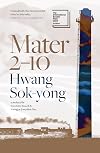
Mater 2-10
by Hwang Sok-Yong
On This Page
Description
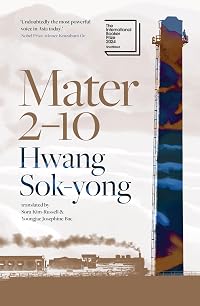
In contemporary Seoul, a laid-off worker stages a months-long sit-in atop a sixteen-storey factory chimney. During the long and lonely nights, he talks to his ancestors, chewing on the meaning of life, on wisdom passed down the generations. Through the lives of those ancestors, three generations of railroad workers, Mater 2-10 vividly portrays the struggles of ordinary Koreans, starting from the Japanese colonial era, continuing through Liberation, and right up to the twenty-first century. show more It is at once a gripping account of a nation's longing to be free from oppression, a lyrical folktale that reflects the blood, sweat, and tears shed by modern industrial labourers, and a culmination of Hwang's career - a masterpiece thirty years in the making. A true voice of a generation, Hwang shows again why he is unmatched when it comes to depicting the roots and reality of a divided nation and bringing to life the trials and tribulations of the Korean people. show lessTags
Recommendations




Member Reviews
Well…wouldn’t you know it. The little I knew about the Korean war from my U.S. education was shamefully wrong. No wonder governments and the people who shill for them are afraid of writers.
In her piece for The Nation marking the 70th anniversary of the Armistice between the bifurcated Koreas, Grace M. Cho states that “writers such as Hyun Ki-Young and Hwang Sok-Yong, who shed light on civilian massacres through their fictional works, faced imprisonment, torture, and exile. To be a south Korean citizen who did not actively disavow communism or who was related to a suspected communist was to risk a terrible fate at the hands of the state.”
Hwang Sok-yong faced some or all of that for his works. The brilliant Mater 2-10 is my show more first encounter with his writing.
Mater 2-10 is a multi-generational novel that highlights the struggles of the Korean people and workers for independence from Imperial powers and against the oppression of elite capitalism and the state mechanisms that support it. The clever narrative mechanism to relate the story is a striking worker staging a sit-in atop a factory chimney and his conversations with the ghosts of his ancestors and other family acquaintances who take him back generations to tell the story of his family and nation(s). I had no real idea of how the Koreans were used and suffered from the imperial Japanese and U.S. occupations. I highly recommend this book to anyone trying to fill in the huge holes in how most of us understand this history.
I’ll be on the lookout for other books of his, especially the one about his reluctant service in the Republic of Korea Marine Corps supporting the U.S. show less
In her piece for The Nation marking the 70th anniversary of the Armistice between the bifurcated Koreas, Grace M. Cho states that “writers such as Hyun Ki-Young and Hwang Sok-Yong, who shed light on civilian massacres through their fictional works, faced imprisonment, torture, and exile. To be a south Korean citizen who did not actively disavow communism or who was related to a suspected communist was to risk a terrible fate at the hands of the state.”
Hwang Sok-yong faced some or all of that for his works. The brilliant Mater 2-10 is my show more first encounter with his writing.
Mater 2-10 is a multi-generational novel that highlights the struggles of the Korean people and workers for independence from Imperial powers and against the oppression of elite capitalism and the state mechanisms that support it. The clever narrative mechanism to relate the story is a striking worker staging a sit-in atop a factory chimney and his conversations with the ghosts of his ancestors and other family acquaintances who take him back generations to tell the story of his family and nation(s). I had no real idea of how the Koreans were used and suffered from the imperial Japanese and U.S. occupations. I highly recommend this book to anyone trying to fill in the huge holes in how most of us understand this history.
I’ll be on the lookout for other books of his, especially the one about his reluctant service in the Republic of Korea Marine Corps supporting the U.S. show less
[b:Mater 2-10|61921635|Mater 2-10|Hwang Sok-yong|https://i.gr-assets.com/images/S/compressed.photo.goodreads.com/books/1678280130l/61921635._SY75_.jpg|97614487] is an epic story of labour agitation and political repression in twentieth and twenty-first century Korea, told via one extended family. The novel opens and closes with Yi Jino protesting against the factory where he worked shutting down and all the workers getting fired. He moves into a power plant chimney, or rather a narrow ledge around it, and resolves to stay there until the factory owners are willing to negotiate with the dismissed workers. Living for months alone in this tiny space, Jino is visited by the ghosts of friends and family. The reader learns that participation show more in strikes, protests, and resistance to oppression have run in the family for generations.
I found the lives of Jino's grandfather and great uncle Icheol and Ilcheol particularly powerful and these occupy a considerable portion of the narrative. Icheol joins the communist party during the Japanese occupation of Korea and fights for workers rights. Ilcheol concentrates on his career and family until the supposed liberation of Korea and American occupation after the end of the Second World War. He then becomes a union leader and thus, like his brother, a police target. Jino's female relatives are not neglected either, with Geumi and Juan-daek having particularly notable roles. The division of Korea into north and south abruptly splits the family, as it did so many.
I found [b:Mater 2-10|61921635|Mater 2-10|Hwang Sok-yong|https://i.gr-assets.com/images/S/compressed.photo.goodreads.com/books/1678280130l/61921635._SY75_.jpg|97614487] fascinating and beautifully crafted. As the author's afterword notes, substantial novels focusing on industrial workers are rare. (I find this true of English as well as Korean literature.) Hwang Sok-yong weaves a memorable, complex, and moving family story into the ongoing fight for labour rights in Korea. The combination of ghostly visitations and vivid material details is deftly done. There is nothing naïve or simplistic about this depiction of work and leftist politics; Jino's family history demonstrates that the struggle for workers' rights is slow and difficult but essential. show less
I found the lives of Jino's grandfather and great uncle Icheol and Ilcheol particularly powerful and these occupy a considerable portion of the narrative. Icheol joins the communist party during the Japanese occupation of Korea and fights for workers rights. Ilcheol concentrates on his career and family until the supposed liberation of Korea and American occupation after the end of the Second World War. He then becomes a union leader and thus, like his brother, a police target. Jino's female relatives are not neglected either, with Geumi and Juan-daek having particularly notable roles. The division of Korea into north and south abruptly splits the family, as it did so many.
I found [b:Mater 2-10|61921635|Mater 2-10|Hwang Sok-yong|https://i.gr-assets.com/images/S/compressed.photo.goodreads.com/books/1678280130l/61921635._SY75_.jpg|97614487] fascinating and beautifully crafted. As the author's afterword notes, substantial novels focusing on industrial workers are rare. (I find this true of English as well as Korean literature.) Hwang Sok-yong weaves a memorable, complex, and moving family story into the ongoing fight for labour rights in Korea. The combination of ghostly visitations and vivid material details is deftly done. There is nothing naïve or simplistic about this depiction of work and leftist politics; Jino's family history demonstrates that the struggle for workers' rights is slow and difficult but essential. show less
This took me awhile to get through. The book is long but at some point I connected with it and then I sailed through the rest. A fictional distillation of many real people's stories. The author wanted felt that the struggles of Korea's leftists in the 20th century had not been adequately been recorded in the countries literature. He is well-versed in this history himself so it is coming from someone who knows what he is writing about. A mix of realism with bits of Korean "magical realism" combine to tell the stories of largely forgotten people on an epic scale. These people had it rough. They enjoyed about one day as a free country between the time that the colonizers of Japan were defeated and the colonizers of American arrived to take show more control. Admittedly, this is not gonna work for everyone but it's an important piece of Korean literature and preserve (via fiction) the stories of people that time might otherwise forget. Tales of brave people, from the tops of smokestacks to the basements of Japanese torture cells.. show less
I was so looking forward to this story of Korea under Japanese rule, through WW2, until the separation of north and south--and then into the unions' fights for rights for their workers.
The family parts of this story--home life, food, work, ghosts, Jino on his perch--were fine and interesting.
The union parts were like baseball play-by-play without a color commentator. Very dull. It read like a boring history text, but this is fiction! Way too long, too many meetings and meetings to set up meetings and meetings over soup and walking around to avoid being seen meeting.
Second book from the IB longlist in which train employment is an important part of the story. A very different look at that employment here though.
The family parts of this story--home life, food, work, ghosts, Jino on his perch--were fine and interesting.
The union parts were like baseball play-by-play without a color commentator. Very dull. It read like a boring history text, but this is fiction! Way too long, too many meetings and meetings to set up meetings and meetings over soup and walking around to avoid being seen meeting.
Second book from the IB longlist in which train employment is an important part of the story. A very different look at that employment here though.
I didn't finish this book. I got about half-way through and then it had to go back to the library. I might take it out again once I don't have so many books that "must be read".
Ratings
Members
- Recently Added By
Author Information

26 Works 907 Members
Some Editions
Awards and Honors
Awards
Distinctions
The Guardian Book of the Day (2023-06-03)
Common Knowledge
- Original title
- 철도원 삼대
- Original publication date
- 2020
- Important places
- Seoul, South Korea
- First words
- Yi Jino set up his toilet on the opposite side of the catwalk, as far away from his tent as possible.
Classifications
- Genres
- General Fiction, Fiction and Literature, Historical Fiction
- DDC/MDS
- 895.734 — Literature & rhetoric Literatures of other languages Literatures of East and Southeast Asia Korean Korean fiction 1945–2000
- LCC
- PL992.29 .S6 .M38 — Language and Literature Languages and literatures of Eastern Asia, Africa, Oceania Languages of Eastern Asia, Africa, Oceania Korean language and literature Korean literature Individual authors and works
- BISAC
Statistics
- Members
- 106
- Popularity
- 305,581
- Reviews
- 6
- Rating
- (3.45)
- Languages
- English, Spanish
- Media
- Paper, Ebook
- ISBNs
- 9
- ASINs
- 1