
On This Page
Description
In this breathtaking Agatha Christie mystery, the Third Girl sharing a London flat with two others announces to Hercule Poirot that she’s a murderer and then disappears. The masterful investigator must figure out whether the missing girl is a criminal, a victim, or merely insane.Three young women share a London flat. The first is a coolly efficient secretary. The second is an artist. The third interrupts Hercule Poirot’s breakfast confessing that she is a murderer—and then promptly show more disappears.Slowly, Poirot learns of the rumors surrounding the mysterious third girl, her family, and her disappearance. Yet hard evidence is needed before the great detective can pronounce her guilty, innocent, or insane.… show lessTags
Recommendations















Member Reviews
Summary: A young girl disturbs Poirot’s breakfast claiming she may have murdered someone, then leaves, telling Poirot “You’re too old.”
Poirot is enjoying his breakfast when George, his servant, interrupts to announce a woman who thinks she might have committed a murder wishes to see him. When he asks her to tell her story, she decides she cannot, telling him as she leaves, “You’re too old.”
She has disturbed Poirot. Not just by her insult. But also by her manner. Something is off. Then he learns his mystery writer friend Mrs. Oliver sent her to him. They’d met at a literary party. Her name is Norma Restarick. Her father has only recently returned after many years abroad to take up the family business. Norma’s mother, show more who had raised her, has died. Her father has returned with a new wife, Mary. They are living with his maternal Uncle, Sir Roderick Horsfield, a former intelligence officer writing his memoirs. Norma is ill at ease there. Part of this has to do with their disapproval of Norma’s boyfriend David, an artist.
And that is how she has become the “third girl,” living in a flat with two other girls. One is Claudia, her father’s very efficient secretary. The other is Frances, who represents an art gallery.
As Poirot investigates, he learns some disturbing facts. There had been a recent death at Borodene Mansions, where the girls live. A woman, living one floor up, fell to her death from her balcony. It appeared to be an accident or suicide. But could she have been pushed? Also, Mary Restarick has suffered several bouts of intestinal illness coinciding with Norma’s visits. The illness is traced to arsenic in her food.
But where is Norma? That’s where Mrs. Oliver comes in. She spots Norma and David at a cafe and calls Poirot. Shortly after he arrives, David leaves, and she decides to follow him, having taken it upon herself to join Poirot once again as co-sleuth, despite his warnings. He intuits that something dangerous is going on. After she leaves, Norma recognizes him. This time she shares more, including gaps in her memory and disturbing events, like finding herself holding a revolver. She doesn’t want to see a doctor, and in the end, walks out on Poirot once more.
Next thing we know, a man is caring for her after she’d nearly been killed by a speeding car. He’s a doctor by the name of Stillingfleet and persuades her after a long conversation to go to a “convalescent” home.
Who is this mysterious doctor who saves Norma in the nick of time, and what is he going to do with her? And what is Poirot doing, other than gathering information from an investigator (Goby) and thinking? Mrs Oliver keeps pressing him to do something, especially since he “lost” Norma.
The signs seem to point to Norma as a murderer. But things don’t add up. The principal of Norma’s school saw no sign of mental illness in Norma. Several of the characters also capture his attention from David, found searching Norma’s room at the Restarick’s, to unaccounted absences by Mary, and a painting where it would not be expected.
The mystery was published in 1966. There is a drug theme that runs through the story. One wonders if Mrs. Christie also struggled with questions of whether she were too old, and is trying to be “with it”. It feels like there is a lot of Christie in Mrs. Oliver, who is eager to not just write mysteries but solve crimes. Is there a commentary here on the difference between being a crime writer and a real detective?
In the end, it will be apparent that Poirot has been doing more than meets the eye. And despite some implausibilities, so has Christie, spinning a tale with enough twists and turns to keep at least this reader engaged. show less
Poirot is enjoying his breakfast when George, his servant, interrupts to announce a woman who thinks she might have committed a murder wishes to see him. When he asks her to tell her story, she decides she cannot, telling him as she leaves, “You’re too old.”
She has disturbed Poirot. Not just by her insult. But also by her manner. Something is off. Then he learns his mystery writer friend Mrs. Oliver sent her to him. They’d met at a literary party. Her name is Norma Restarick. Her father has only recently returned after many years abroad to take up the family business. Norma’s mother, show more who had raised her, has died. Her father has returned with a new wife, Mary. They are living with his maternal Uncle, Sir Roderick Horsfield, a former intelligence officer writing his memoirs. Norma is ill at ease there. Part of this has to do with their disapproval of Norma’s boyfriend David, an artist.
And that is how she has become the “third girl,” living in a flat with two other girls. One is Claudia, her father’s very efficient secretary. The other is Frances, who represents an art gallery.
As Poirot investigates, he learns some disturbing facts. There had been a recent death at Borodene Mansions, where the girls live. A woman, living one floor up, fell to her death from her balcony. It appeared to be an accident or suicide. But could she have been pushed? Also, Mary Restarick has suffered several bouts of intestinal illness coinciding with Norma’s visits. The illness is traced to arsenic in her food.
But where is Norma? That’s where Mrs. Oliver comes in. She spots Norma and David at a cafe and calls Poirot. Shortly after he arrives, David leaves, and she decides to follow him, having taken it upon herself to join Poirot once again as co-sleuth, despite his warnings. He intuits that something dangerous is going on. After she leaves, Norma recognizes him. This time she shares more, including gaps in her memory and disturbing events, like finding herself holding a revolver. She doesn’t want to see a doctor, and in the end, walks out on Poirot once more.
Next thing we know, a man is caring for her after she’d nearly been killed by a speeding car. He’s a doctor by the name of Stillingfleet and persuades her after a long conversation to go to a “convalescent” home.
Who is this mysterious doctor who saves Norma in the nick of time, and what is he going to do with her? And what is Poirot doing, other than gathering information from an investigator (Goby) and thinking? Mrs Oliver keeps pressing him to do something, especially since he “lost” Norma.
The signs seem to point to Norma as a murderer. But things don’t add up. The principal of Norma’s school saw no sign of mental illness in Norma. Several of the characters also capture his attention from David, found searching Norma’s room at the Restarick’s, to unaccounted absences by Mary, and a painting where it would not be expected.
The mystery was published in 1966. There is a drug theme that runs through the story. One wonders if Mrs. Christie also struggled with questions of whether she were too old, and is trying to be “with it”. It feels like there is a lot of Christie in Mrs. Oliver, who is eager to not just write mysteries but solve crimes. Is there a commentary here on the difference between being a crime writer and a real detective?
In the end, it will be apparent that Poirot has been doing more than meets the eye. And despite some implausibilities, so has Christie, spinning a tale with enough twists and turns to keep at least this reader engaged. show less
Terrific, and a lovely break from the book before it (I put down, metaphorically, an audiobook version of Gallows Court which I did not care for, largely because of the narrator, actually, and picked up, metaphorically, an audiobook version of Third Girl with such a good narrator that I'm seeking out his other work—he seems to specialize in Christie).
And I'm partial to Ariadne Oliver, so anything she shows up in is an extra treat. The attempt at modernity didn't bother me (it seemed apt, for the time period—youth were certainly openly trying drugs, and dressing in their own fashions, instead of aping the look of their elders). But mostly it just flowed, and breathed, and I wondered what happened next throughout (or what had show more happened, it's a mystery after all)—it held my interest—I was close to the solution by the end, but had only worked out about 1/3 of it, so there were still surprising payoffs.
(I've only actually guessed fully right on a Christie novel once before, out of about 80, so even randomly you'd think I'd do better. She has wonderful misdirection).
And I'd thought I'd read every single thing she'd written (save the romances), but I'm pretty sure this was new to me. Not one character or incident tweaked a memory. So it was a delight to get to gobble up a new Christie, after so long!
(Note: 5 stars = amazing, wonderful, 4 = very good book, 3 = decent read, 2 = disappointing, 1 = awful, just awful. I'm fairly good at picking for myself so end up with a lot of 4s). show less
And I'm partial to Ariadne Oliver, so anything she shows up in is an extra treat. The attempt at modernity didn't bother me (it seemed apt, for the time period—youth were certainly openly trying drugs, and dressing in their own fashions, instead of aping the look of their elders). But mostly it just flowed, and breathed, and I wondered what happened next throughout (or what had show more happened, it's a mystery after all)—it held my interest—I was close to the solution by the end, but had only worked out about 1/3 of it, so there were still surprising payoffs.
(I've only actually guessed fully right on a Christie novel once before, out of about 80, so even randomly you'd think I'd do better. She has wonderful misdirection).
And I'd thought I'd read every single thing she'd written (save the romances), but I'm pretty sure this was new to me. Not one character or incident tweaked a memory. So it was a delight to get to gobble up a new Christie, after so long!
(Note: 5 stars = amazing, wonderful, 4 = very good book, 3 = decent read, 2 = disappointing, 1 = awful, just awful. I'm fairly good at picking for myself so end up with a lot of 4s). show less
I love Poirot novels, but this one has been a chore to read. I persevered because it's my goal to read all the Agatha Christie mysteries, and I still wanted to see the solution to the case, but apart from that, it was a pain. It feels weird to give such a harsh judgement because usually I give high ratings - I think I'm quite selective about what I read and what I expect, and rate accordingly - but this one just had too many aspects getting on my nerves.
- Ariadne Oliver: I know many people like her, but she's just not a character I enjoy reading about. Just too much of a female caricature.
- The storytelling: It was just rambling. It was dragging most of the time, it was not coherent, and every time when I thought the pace would get show more better and the case would finally pick up, the next chapter was about something completely different and slowing down again. Frustrating!
- Sexism: The portrayal of women in this novel made me angry. I know that there are questionable characterizations in many Agatha Christie stories, and usually I put up with them as the Zeitgeist of their time, but this was just too much. Describing every woman who does not act as is expected of her as hysterical? To write about suicide as something unavoidable if a woman leads her life in a certain way? To write lightheartedly about mental illnesses, drugs, psychological problems, and judge every single woman very severely regarding her appearance and her manner? Not ok!
And likewise, it is mentioned several times that it's not possible to distinguish young men from women anymore because they have shoulder-length hair and wear colors now. Seriously??
- The case itself: While I thought that the original premise was interesting and new - a young woman visiting Poirot because she thinks she has murdered someone, but isn't sure of it - the development of the case and the final solution just felt like a mix of previous cases, it was rather predictable after a certain point and I felt like I had seen it all before.
The case still did interest me from time to time and there were some chapters that were a little more exciting, so that is what the one and a half stars are for. But, it's safe to say that I'm not a fan of the later Poirot novels. I really prefer the classic ones, taking place in a village or a country house. This just had too much negative energy and I'm not reading these kinds of mysteries for that.
Of course I'll go on with my project of reading all the Agatha Christies, but next time I'm reading a late one, I'll know to be a bit more cautious about what to expect from it. show less
- Ariadne Oliver: I know many people like her, but she's just not a character I enjoy reading about. Just too much of a female caricature.
- The storytelling: It was just rambling. It was dragging most of the time, it was not coherent, and every time when I thought the pace would get show more better and the case would finally pick up, the next chapter was about something completely different and slowing down again. Frustrating!
- Sexism: The portrayal of women in this novel made me angry. I know that there are questionable characterizations in many Agatha Christie stories, and usually I put up with them as the Zeitgeist of their time, but this was just too much. Describing every woman who does not act as is expected of her as hysterical? To write about suicide as something unavoidable if a woman leads her life in a certain way? To write lightheartedly about mental illnesses, drugs, psychological problems, and judge every single woman very severely regarding her appearance and her manner? Not ok!
And likewise, it is mentioned several times that it's not possible to distinguish young men from women anymore because they have shoulder-length hair and wear colors now. Seriously??
- The case itself: While I thought that the original premise was interesting and new - a young woman visiting Poirot because she thinks she has murdered someone, but isn't sure of it - the development of the case and the final solution just felt like a mix of previous cases, it was rather predictable after a certain point and I felt like I had seen it all before.
The case still did interest me from time to time and there were some chapters that were a little more exciting, so that is what the one and a half stars are for. But, it's safe to say that I'm not a fan of the later Poirot novels. I really prefer the classic ones, taking place in a village or a country house. This just had too much negative energy and I'm not reading these kinds of mysteries for that.
Of course I'll go on with my project of reading all the Agatha Christies, but next time I'm reading a late one, I'll know to be a bit more cautious about what to expect from it. show less
Imagine, if you will, being a famous female mystery author. You’ve been publishing for over forty-five years, and you’ve become more than a bit tired of your fans’ favorite detective, the egg-headed Hercule Poirot. What’s a person to do? Try a mystery where there’s no murder, only a confused, drugged twenty-something who is sure she’s committed one. Poirot, of course, has his suspicions early on:
“She is not one who can cope with difficulties. She is not one of those who can see before hand the dangers that must come. She is one of whom others will look round and say, ‘We want a victim. That one will do.'”
I enjoyed this one very much, and intend on acquiring a paper copy. It is quintessential Christie, and while show more somewhat rooted in the time period (those dirty, sexually ambiguous youth of the 60s is a frequent topic of conversation among the more mature), at least it wasn’t offensively so. Poirot is present from page one, and mystery writer and friend Mrs. Oliver appears not long after. I can’t help but feel as if Christie was having a bit of meta fun in this one, playing off her detective and alter ego against each other. Poirot has just finished a literary magnum opus and feels he needs a new challenge (!). When Mrs. Oliver happens to be involved in this non-mystery, she leaps in, certain ‘real’ detectives ‘do’ things. There’s also the usual commentary about authors and being famous. See what I mean by meta?
“‘Who told this girl about you, Monsieur Poirot?’
‘No one, so far as I know. Naturally, she had heard about me, no doubt.’
Mrs. Oliver thought that ‘naturally’ was not the word at all. What was natural was that Poirot himself was sure that everyone had always heard of him. Actually large numbers of people would only look at you blankly if the name of Hercule Poirot was mentioned, especially the younger generation.”
It’s definitely a slow progression, seeing how there isn’t precisely a known murder. It has the feel of a character study, a more full one than some of her early books. Reminds me perhaps, just a bit, of Crooked House, although the people here are far less eccentric. Many feel quite real, and quite of their time period. There’s more than a little indirect commentary when Poirot uses the pretense of an old war connection to meet with the elderly Sir Roderick. They engage in their remembrances, and after Poirot leaves, Sir Roderick confides to his assistant that he can’t remember who the man is at all, but humored Poirot out of the war connection. It’s a story built on those kind of moments. The build is definitely a ‘think, think,’ kind of story, not at all an action one.
For me, it was a four star read, but I read Christie for very different reasons than most. I’ve been reading her works for over three decades now, and I’m almost positive I’ve read all of the Poirot and Marple more than a few times. Still, I was never methodical about it, so I’m always kind of hoping to run into one I might have missed. Because of that, most the stories never reach the type of suspense a brand-new mystery does–not that they aren’t good, or enjoyable as one watches the intricate puzzle pieces click into place–but I don’t need to finish them. As I’ve aged, I’ve noted that Christie often relies on a cultural characterization of ‘madness’ that is more than a bit outdated. However, on reflection, I realize it’s more often a red herring, like something her readers expect her to address but she then subverts. I mostly read Christie because she’s really a marvelously intricate character writer who does so much with a few choice words. It’s a pleasure for the little grey cells. show less
“She is not one who can cope with difficulties. She is not one of those who can see before hand the dangers that must come. She is one of whom others will look round and say, ‘We want a victim. That one will do.'”
I enjoyed this one very much, and intend on acquiring a paper copy. It is quintessential Christie, and while show more somewhat rooted in the time period (those dirty, sexually ambiguous youth of the 60s is a frequent topic of conversation among the more mature), at least it wasn’t offensively so. Poirot is present from page one, and mystery writer and friend Mrs. Oliver appears not long after. I can’t help but feel as if Christie was having a bit of meta fun in this one, playing off her detective and alter ego against each other. Poirot has just finished a literary magnum opus and feels he needs a new challenge (!). When Mrs. Oliver happens to be involved in this non-mystery, she leaps in, certain ‘real’ detectives ‘do’ things. There’s also the usual commentary about authors and being famous. See what I mean by meta?
“‘Who told this girl about you, Monsieur Poirot?’
‘No one, so far as I know. Naturally, she had heard about me, no doubt.’
Mrs. Oliver thought that ‘naturally’ was not the word at all. What was natural was that Poirot himself was sure that everyone had always heard of him. Actually large numbers of people would only look at you blankly if the name of Hercule Poirot was mentioned, especially the younger generation.”
It’s definitely a slow progression, seeing how there isn’t precisely a known murder. It has the feel of a character study, a more full one than some of her early books. Reminds me perhaps, just a bit, of Crooked House, although the people here are far less eccentric. Many feel quite real, and quite of their time period. There’s more than a little indirect commentary when Poirot uses the pretense of an old war connection to meet with the elderly Sir Roderick. They engage in their remembrances, and after Poirot leaves, Sir Roderick confides to his assistant that he can’t remember who the man is at all, but humored Poirot out of the war connection. It’s a story built on those kind of moments. The build is definitely a ‘think, think,’ kind of story, not at all an action one.
For me, it was a four star read, but I read Christie for very different reasons than most. I’ve been reading her works for over three decades now, and I’m almost positive I’ve read all of the Poirot and Marple more than a few times. Still, I was never methodical about it, so I’m always kind of hoping to run into one I might have missed. Because of that, most the stories never reach the type of suspense a brand-new mystery does–not that they aren’t good, or enjoyable as one watches the intricate puzzle pieces click into place–but I don’t need to finish them. As I’ve aged, I’ve noted that Christie often relies on a cultural characterization of ‘madness’ that is more than a bit outdated. However, on reflection, I realize it’s more often a red herring, like something her readers expect her to address but she then subverts. I mostly read Christie because she’s really a marvelously intricate character writer who does so much with a few choice words. It’s a pleasure for the little grey cells. show less
"Third Girl" was a strange and dispiriting journey for me.
At the start of the book, I was pleasantly surprised at the contemporary (1960's) feel of the novel. There was much more humour in it than I'd expected but there was also more violence and a deeper sense of threat than in other Poirot novels I've read.
I loved the opening where Norma, (a young woman who is constantly referred to as a girl) interrupts Poirot's breakfast, insisting that she needs to talk to him about a murder and then leaves without giving him any details, telling him that, having met him face to face, she can see he's too old to be able to help her. This was a splendid inversion of the Philip Marlowe type of opening scene where the femme fatale uses her allure to show more get the hard-bitten gumshoe's help. It was also perfectly calculated to ensure Poirot's enthusiastic engagement.
I also greatly enjoyed seeing the inimitable and indomitable Adriadne Oliver playing detective. She was a complete hoot, a wonderful example of misplaced confidence arising from a broad imagination married to narrow experience.
All the best scenes in the book had Adriadne in them. Her presence brought the dialogue alive. She's so much easier to like than Poirot and her pen sketches of the young people in the allegedly swinging London of 1966 were refreshing: the young man with the pretty hair and the gaudy clothes that she calls "The Peacock", the artist working in oils that she refers to simply as "The Dirty One" and the young model who she describes as throwing herself into Burne-Jones poses with admirable flexibility. There's no malice here, just a naive observation by someone who has no qualms about not being in tune with the times.
I had no idea what was going on or how the plot strands would come together but I was enjoying the journey.
By the time I was midway through the book, my disappointment had begun. I continued to enjoy Poirot's dry wit, Ariadne's blustering slapstick and the carefully nuanced descriptions of people's characters but those things began to be outweighed by the large chunks of clumsy plot exposition that even Hugh Fraser's narration couldn't make interesting. I was also starting to be irritated by the deeply conservative attitudes towards gender and mental health. I felt as though I was dipping blindly into a box of Bertie Bott's Every Flavour Beans: I might get something that made me smile or something that made me want to wash the taste away.
The last third of the book was a chore. There were repeated attempts at sharing Poirot's thought processes, which was irritating as they were mostly plot recaps, lacked any analysis and reached no conclusions. The psychiatrist who is instrumental in resolving the plot managed, despite having all the credibility of a cardboard cutout, to be deeply offensive both as a person and as a mental health practitioner.
The plot, when it finally emerged from the detritus-ridden undergrowth we had all wriggled through, was moderately clever but was spoiled for me by one of the early Mission Impossible TV Series moments when a mask is pulled off a main character and he or she is instantly revealed to be someone else. This was limp at best.
What disappointed me even more than the cheat in the big reveal was the way in which Norma was treated. The outcome stretched my willingness to suspend disbelief and angered me because it so demeaned the woman who, as the novel progressed moved from main character to semi-plausible plot-device, to the punchline of a French farce.
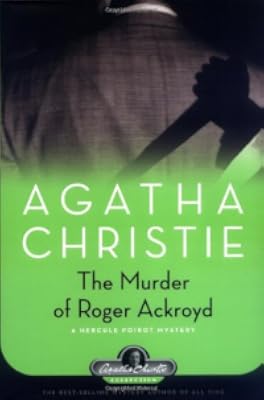
If this has been my first Agatha Christie, it might well have been my last. As it is, I'm going to read "The Murder Of Roger Ackroyd" in the hope of demonstrating to myself that Poirot stories once had substance. show less
At the start of the book, I was pleasantly surprised at the contemporary (1960's) feel of the novel. There was much more humour in it than I'd expected but there was also more violence and a deeper sense of threat than in other Poirot novels I've read.
I loved the opening where Norma, (a young woman who is constantly referred to as a girl) interrupts Poirot's breakfast, insisting that she needs to talk to him about a murder and then leaves without giving him any details, telling him that, having met him face to face, she can see he's too old to be able to help her. This was a splendid inversion of the Philip Marlowe type of opening scene where the femme fatale uses her allure to show more get the hard-bitten gumshoe's help. It was also perfectly calculated to ensure Poirot's enthusiastic engagement.
I also greatly enjoyed seeing the inimitable and indomitable Adriadne Oliver playing detective. She was a complete hoot, a wonderful example of misplaced confidence arising from a broad imagination married to narrow experience.
All the best scenes in the book had Adriadne in them. Her presence brought the dialogue alive. She's so much easier to like than Poirot and her pen sketches of the young people in the allegedly swinging London of 1966 were refreshing: the young man with the pretty hair and the gaudy clothes that she calls "The Peacock", the artist working in oils that she refers to simply as "The Dirty One" and the young model who she describes as throwing herself into Burne-Jones poses with admirable flexibility. There's no malice here, just a naive observation by someone who has no qualms about not being in tune with the times.
I had no idea what was going on or how the plot strands would come together but I was enjoying the journey.
By the time I was midway through the book, my disappointment had begun. I continued to enjoy Poirot's dry wit, Ariadne's blustering slapstick and the carefully nuanced descriptions of people's characters but those things began to be outweighed by the large chunks of clumsy plot exposition that even Hugh Fraser's narration couldn't make interesting. I was also starting to be irritated by the deeply conservative attitudes towards gender and mental health. I felt as though I was dipping blindly into a box of Bertie Bott's Every Flavour Beans: I might get something that made me smile or something that made me want to wash the taste away.
The last third of the book was a chore. There were repeated attempts at sharing Poirot's thought processes, which was irritating as they were mostly plot recaps, lacked any analysis and reached no conclusions. The psychiatrist who is instrumental in resolving the plot managed, despite having all the credibility of a cardboard cutout, to be deeply offensive both as a person and as a mental health practitioner.
The plot, when it finally emerged from the detritus-ridden undergrowth we had all wriggled through, was moderately clever but was spoiled for me by one of the early Mission Impossible TV Series moments when a mask is pulled off a main character and he or she is instantly revealed to be someone else. This was limp at best.
What disappointed me even more than the cheat in the big reveal was the way in which Norma was treated. The outcome stretched my willingness to suspend disbelief and angered me because it so demeaned the woman who, as the novel progressed moved from main character to semi-plausible plot-device, to the punchline of a French farce.
If this has been my first Agatha Christie, it might well have been my last. As it is, I'm going to read "The Murder Of Roger Ackroyd" in the hope of demonstrating to myself that Poirot stories once had substance. show less
His visitor was a girl of perhaps twenty-odd. Long straggly hair of indeterminate color strayed over her shoulders. Her eyes, which were large, bore a vacant expression and were of a greenish blue. She wore what were presumably the chosen clothes of her generation--black high leather boots, white open-work woolen stockings of doubtful cleanliness, a skimpy skirt, and a long and sloppy pullover of heavy wool.
Anyone of Poirot's age and generation would have had only one desire--to drop the girl into a bath as soon as possible. He had often felt this same reaction walking along the streets. There were hundreds of girls looking exactly the same. They all looked dirty. And yet--a contradiction in terms--this one had the look of having been show more recently drowned and pulled out of a river. Such girls, he reflected, were not perhaps really dirty. They merely took enormous care and pains to look so.
Published in 1966, Third Girl drips with disapproval of mod young people. I actually found all the disdain amusing. It's a good thing Christie/Poirot didn't live to see the grunge era.
So this girl, this dirty little hippie girl, shows up at Poirot's home, saying that she thinks she may have committed a murder, but seeing Poirot, she decides he's too old to understand and runs off. Poirot gets help from his old friend Ariadne Oliver, who realizes she's the one who told the girl (Norma) about him during a weekend in the country. Together they eventually track down the girl and get to the bottom of the whole affair, which includes dysfunctional family, an artist boyfriend who's too attractive for his own good, disguises, drugs, and lots more fun. Worth reading if you're a Christie/Poirot completist, but not one of her best.
Solution: Norma didn't kill anyone. Instead a man posing as her father (who abandoned the family when she was 5) and his partner have been drugging Norma to set her up take the blame for murder. The eventual victim is Norma's pretty artist boyfriend. He painted a portrait of the fake father to replace the actual (dead) father's portrait, then had to be killed because he knew the truth. The real father's former girlfriend also had to be offed because she could recognize the fake father as an imposter. Who committed the murders? The woman posing as both Norma's new step-mother and Norma's roommate (just a wig and a few other changes necessary). show less
Anyone of Poirot's age and generation would have had only one desire--to drop the girl into a bath as soon as possible. He had often felt this same reaction walking along the streets. There were hundreds of girls looking exactly the same. They all looked dirty. And yet--a contradiction in terms--this one had the look of having been show more recently drowned and pulled out of a river. Such girls, he reflected, were not perhaps really dirty. They merely took enormous care and pains to look so.
Published in 1966, Third Girl drips with disapproval of mod young people. I actually found all the disdain amusing. It's a good thing Christie/Poirot didn't live to see the grunge era.
So this girl, this dirty little hippie girl, shows up at Poirot's home, saying that she thinks she may have committed a murder, but seeing Poirot, she decides he's too old to understand and runs off. Poirot gets help from his old friend Ariadne Oliver, who realizes she's the one who told the girl (Norma) about him during a weekend in the country. Together they eventually track down the girl and get to the bottom of the whole affair, which includes dysfunctional family, an artist boyfriend who's too attractive for his own good, disguises, drugs, and lots more fun. Worth reading if you're a Christie/Poirot completist, but not one of her best.
Solution:
Feb. 2021 reread:
While the basis of the plot was ingenious, Christie's comments about life in the mid-1960s England felt dated and, to be frank, somewhat of the disgruntled elder who disliked the culture & attitudes of the youth of the time. But on the plus side, I always enjoy when Ariadne Oliver is a major character.
While the basis of the plot was ingenious, Christie's comments about life in the mid-1960s England felt dated and, to be frank, somewhat of the disgruntled elder who disliked the culture & attitudes of the youth of the time. But on the plus side, I always enjoy when Ariadne Oliver is a major character.
Members
- Recently Added By
Lists

Crime and Mysteries to Read
746 works; 31 members

British Mystery
469 works; 14 members

Agatha Christie Poirot
43 works; 2 members

Books About Murder
313 works; 7 members

Books Set in London
49 works; 3 members

Books Read in 2024
4,727 works; 128 members

TBR
77 works; 1 member

My Mad Men Reading List
47 works; 1 member

Agatha Christie Chronology
93 works; 1 member
Author Information

2,183+ Works 441,721 Members
One of the most successful and beloved writer of mystery stories, Agatha Mary Clarissa Christie was born in 1890 in Torquay, County Devon, England. She wrote her first novel, The Mysterious Affair at Styles, in 1920, launching a literary career that spanned decades. In her lifetime, she authored 79 crime novels and a short story collection, 19 show more plays, and six novels written under the name of Mary Westmacott. Her books have sold over a billion copies in the English language with another billion in 44 foreign languages. Some of her most famous titles include Murder on the Orient Express, Mystery of the Blue Train, And Then There Were None, 13 at Dinner and The Sittaford Mystery. Noted for clever and surprising twists of plot, many of Christie's mysteries feature two unconventional fictional detectives named Hercule Poirot and Miss Jane Marple. Poirot, in particular, plays the hero of many of her works, including the classic, The Murder of Roger Ackroyd (1926), and Curtain (1975), one of her last works in which the famed detective dies. Over the years, her travels took her to the Middle East where she met noted English archaeologist Sir Max Mallowan. They married in 1930. Christie accompanied Mallowan on annual expeditions to Iraq and Syria, which served as material for Murder in Mesopotamia (1930), Death on the Nile (1937), and Appointment with Death (1938). Christie's credits also include the plays, The Mousetrap and Witness for the Prosecution (1953; film 1957). Christie received the New York Drama Critics' Circle Award for 1954-1955 for Witness. She was also named Dame Commander of the Order of the British Empire in 1971. Christie died in 1976. (Bowker Author Biography) show less
Some Editions
Series


Belongs to Publisher Series
Work Relationships
Common Knowledge
- Canonical title
- Third Girl
- Original title
- Third Girl
- Original publication date
- 1966-11-01; 1966
- People/Characters
- Ariadne Oliver; Hercule Poirot; Norma Restarick; Claudia Reece-Holland; Francis Cary; Andrew Restarick (show all 12); Mary Restarick; Sir Roderick Restarick; Mr. Goby; Felicity Lemon; Dr Stillingfleet; David Baker
- Important places*
- London, England, UK
- Related movies
- Third Girl (2010 | IMDb)
- Dedication
- To Norah Blackmore
- First words
- Hercule Poirot was sitting at the breakfast table.
- Quotations
- “An Ophelia devoid of physical attraction.”
- Last words
- (Click to show. Warning: May contain spoilers.)"You do think of things, don't you."
- Original language
- English
*Some information comes from Common Knowledge in other languages. Click "Edit" for more information.
Classifications
Statistics
- Members
- 3,833
- Popularity
- 4,141
- Reviews
- 69
- Rating
- (3.41)
- Languages
- 27 — Bulgarian, Catalan, Chinese, Czech, Danish, Dutch, English, Estonian, Finnish, French, German, Greek, Hungarian, Indonesian, Italian, Macedonian, Norwegian (Bokmål), Norwegian, Polish, Serbian, Croatian, Slovenian, Spanish, Swedish, Turkish, Ukrainian, Portuguese (Portugal)
- Media
- Paper, Audiobook, Ebook
- ISBNs
- 140
- UPCs
- 1
- ASINs
- 62