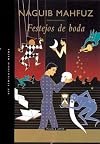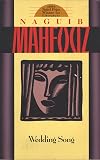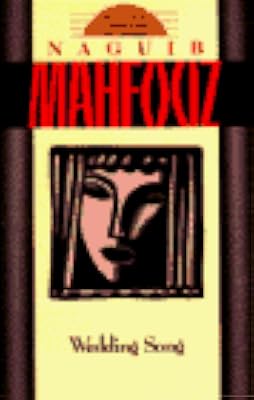
Wedding Song
by Naguib Mahfouz
On This Page
Description
Set against the backdrop of the the theater, this novel is a taut psychological drama on and off the stage. First published in 1981, this brilliant novel focuses on how time transforms people and their emotions.Tags
Recommendations

















Member Reviews
The construction of this novel is what makes it unique and fun to read. It’s almost like a looking through a window on each side of a square house. What you see differs depending in which direction you’re standing and whether you’re looking into or out of each window.
Here’s how this analogy applies to Mahfouz’s novel. Each chapter is written in the voice of a different person. The first is an actor, the second is the theater’s prompter, the third is that prompter’s wife, and last is that couple’s son. The story is told mostly in conversations from the point of view of each narrator, but what complicates the matter is that Abbas, the son, is a playright who also wrote the story of the story. This play had been performed show more at the theater to rousing audience approval. Confused? Don’t be because it’s all very clear in the story.
Because this novel is so cleverly done, you don’t know which characters to like and which to dislike. You see individuals in a different light as each subsequent narrator takes over. In addition, you will have no idea where the story is headed. I think Mahfouz is playing a bit with his readers here, but that’s okay. This is a quick read and one sure to entertain. Grab it now! show less
Here’s how this analogy applies to Mahfouz’s novel. Each chapter is written in the voice of a different person. The first is an actor, the second is the theater’s prompter, the third is that prompter’s wife, and last is that couple’s son. The story is told mostly in conversations from the point of view of each narrator, but what complicates the matter is that Abbas, the son, is a playright who also wrote the story of the story. This play had been performed show more at the theater to rousing audience approval. Confused? Don’t be because it’s all very clear in the story.
Because this novel is so cleverly done, you don’t know which characters to like and which to dislike. You see individuals in a different light as each subsequent narrator takes over. In addition, you will have no idea where the story is headed. I think Mahfouz is playing a bit with his readers here, but that’s okay. This is a quick read and one sure to entertain. Grab it now! show less
3.5 stars, as I enjoyed this rather dark tale quite a bit. I was worried that I would find it a bit obscure at first, but I was soon drawn into the story and the characters of the (4) narrators. Reminds me of all that can be covered in a short novel. And has me pondering the redemptive qualities of artistic creation.
Four perspectives of seemingly one reality. A powerful tale that drives forward relentlessly - and then back over the same ground as each character's perspective reveals itself. It is a prime example of Dr. George Engel's point of view - "Where you think you stand determines what you think you see." Beautifully constructed and executed.
A portuguese translation of the arabic original Afrah al-Qubba, this short novel has a very curious construction: the same story is told four times by four different narrators-protagonists. Each time the story is told from a different point of view, by a more idealist and symphatetic character. Each time extra details are added. So, our understanding of the story is slowly built and modified along the book. A very beautiful and intriguing book by the famous egiptian writer.
Festejos de boda
Naguib Mahfuz
Publicado: 1984 | 146 páginas
Drama
Los preparativos para el estreno de una obra de teatro despertarán amargos recuerdos en Tariq, un actor en decadencia, que representará sobre las tablas el último papel importante de su carrera. Así, asistiremos a la relación que mantuvo con la actriz Tahiya, la huida de ésta con Abbás -el director de la función- y la posterior muerte de la misma Tahiya. El éxito del espectáculo y la desaparición de Abbás abocarán a los protagonistas a una serie de reflexiones y sentimientos en los que el deseo y la realidad, los celos y el amor se sucederán unos a otros vertiginosamente.
Naguib Mahfuz
Publicado: 1984 | 146 páginas
Drama
Los preparativos para el estreno de una obra de teatro despertarán amargos recuerdos en Tariq, un actor en decadencia, que representará sobre las tablas el último papel importante de su carrera. Así, asistiremos a la relación que mantuvo con la actriz Tahiya, la huida de ésta con Abbás -el director de la función- y la posterior muerte de la misma Tahiya. El éxito del espectáculo y la desaparición de Abbás abocarán a los protagonistas a una serie de reflexiones y sentimientos en los que el deseo y la realidad, los celos y el amor se sucederán unos a otros vertiginosamente.
En un ambiente viciado por el odio y la desesperanza, el joven Abbás inicia una brillante carrera como autor teatral, plasmando en su primera obra los secretos más íntimos y sórdidos de su familia, hecho que desencadena muy diversas reacciones. La misma historia se nos cuenta cuatro veces desde cuatro puntos de vista distintos, como si nos hallásemos en una sala de espejos. Realidad y ficción se entrecruzan para mostrar una única escapatoria ante el absurdo de la existencia y la muerte: la voluntad de trascender cualquier suceso de la propia vida en un intento de corregir los estragos del tiempo, que acaban convirtiendo el amor en odio, la belleza en fealdad, la lealtad en traición, y el idealismo en corrupción. Mediante unos show more personajes enfrentados a la fatalidad, Mahfuz compone un bellísimo canto a la esperanza, lo único capaz de desvelar los espejismos de la naturaleza humana. show less
Jul 19, 2011Spanish
Los preparativos para el estreno de una obra de teatro despertarán amargos recuerdos en Tariq, un actor en decadencia, que representará sobre las tablas el último papel importante de su carrera. Así, asistiremos a la relación que mantuvo con la actriz Tahiya, la huida de ésta con Abbás -el director de la función- y la posterior muerte de la misma Tahiya. El éxito del espectáculo y la desaparición de Abbás abocarán a los protagonistas a una serie de reflexiones y sentimientos en los que el deseo y la realidad, los celos y el amor se sucederán unos a otros vertiginosamente.
Mar 20, 2023Spanish
Members
- Recently Added By
Author Information

323+ Works 19,240 Members
Naguib Mahfouz was born in Cairo, Egypt on December 11, 1911. He received a degree in philosophy from the University of Cairo. He took on several civil service and government department jobs to supplement his income while writing, but retired from that career in 1971. During his lifetime, he wrote more than 30 novels including The Games of Fate, show more The Cairo Trilogy, Children of Gebelawi, The Thief and the Dogs, Autumn Quail, Small Talk on the Nile, and Miramar. He received numerous awards including the Egyptian State Prize, the Presidential Medal from the American University in Cairo, and the Nobel Prize for Literature in 1988. He died as a result of a head injury on August 30, 2006 at the age of 94. (Bowker Author Biography) show less
Some Editions
Work Relationships
Is contained in
Common Knowledge
- Original publication date
- 1981 (original Arabic) (original Arabic); 1984 (English: Kenny) (English: Kenny)
- People/Characters
- Tariq Ramadan; Abbas Younis; Karam Younis; Halima al-Kabsh; Sirhan al-Hilaly; Umm Hany (show all 7); Tahiya
- First words
- September. The beginning of autumn.
- Last words
- (Click to show. Warning: May contain spoilers.)This ecstasy at its peak may glow on a body stripped by penury, bared to its own aridity, but on a will that the challenge of joy has made free.
- Blurbers
- Said, Edward
Classifications
- Genres
- Fiction and Literature, General Fiction
- DDC/MDS
- 892.736 — Literature & rhetoric Literatures of other languages Afro-Asiatic literatures Arabic (Egypt, Lebanon, Palestine, Saudi Arabia, Sudan) Arabic fiction 1945–2000
- LCC
- PJ7846 .A46 .A6913 — Language and Literature Oriental languages and literatures Oriental philology and literature Arabic Arabic literature Individual authors or works
- BISAC
Statistics
- Members
- 191
- Popularity
- 172,354
- Reviews
- 7
- Rating
- (3.73)
- Languages
- 6 — Arabic, English, Italian, Portuguese, Russian, Spanish
- Media
- Paper, Ebook
- ISBNs
- 14
- ASINs
- 4