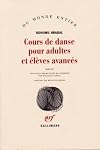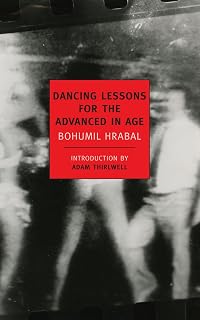
Dancing Lessons for the Advanced in Age
by Bohumil Hrabal
On This Page
Description
Classic Literature. Fiction. Literature. HTML:Rake, drunkard, aesthete, gossip, raconteur extraordinaire: the narrator of Bohumil Hrabal’s rambling, rambunctious masterpiece Dancing Lessons for the Advanced in Age is all these and more. Speaking to a group of sunbathing women who remind him of lovers past, this elderly roué tells the story of his life—or at least unburdens himself of a lifetime’s worth of stories. Thus we learn of amatory conquests (and humiliations), of scandals both show more private and public, of military adventures and domestic feuds, of what things were like “in the days of the monarchy” and how they’ve changed since. As the book tumbles restlessly forward, and the comic tone takes on darker shadings, we realize we are listening to a man talking as much out of desperation as from exuberance.Hrabal, one of the great Czech writers of the twentieth century, as well as an inveterate haunter of Prague’s pubs and football stadiums, developed a... show less
Tags
Recommendations
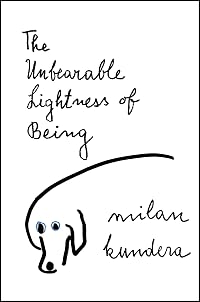
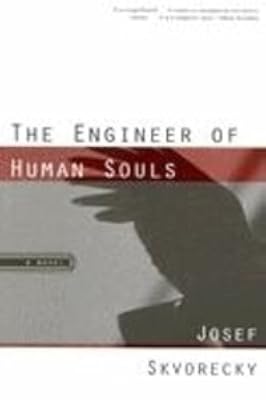
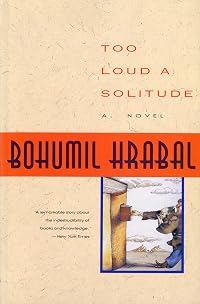

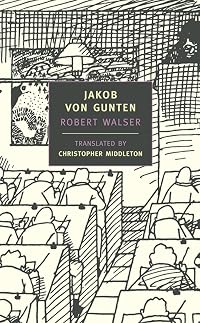



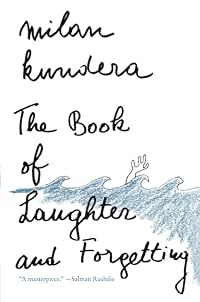
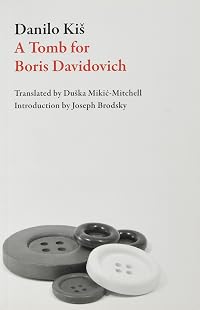
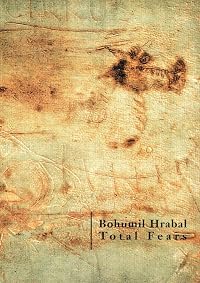
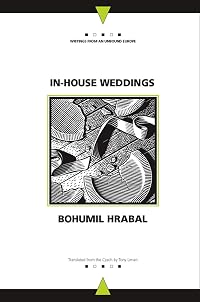



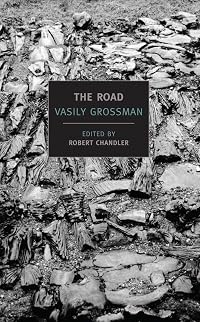
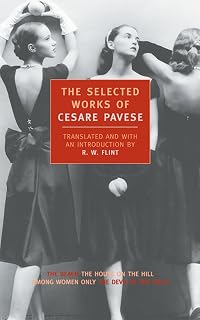
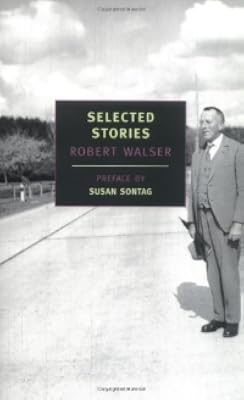


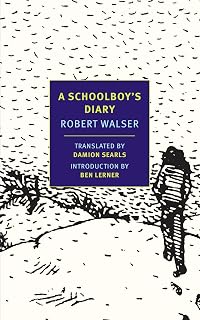
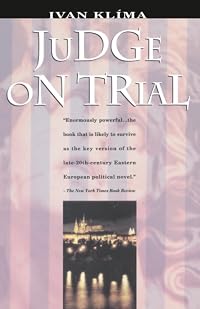
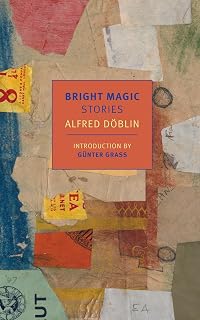

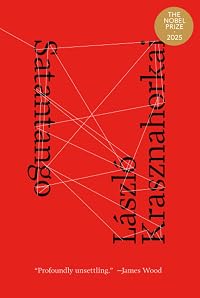
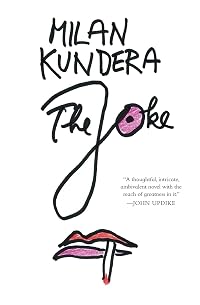
Member Recommendations
Member Reviews
Bohumil Hrabal developed a literary technique that he called palavering: gabbing endlessly in a stream of consciousness fashion. Hrabal called palaverers,
people who, thanks to their madness, transcend themselves through experiment and spontaneity, and through their ridiculousness they achieve a kind of grandeur, because they end up where no one expected them or expects them. Quoted from the introduction by [[Adam Thirlwell]]
Hrabal took palavering to the extreme in this short novel which lacks a single period. The narrator of this nonstop monologue is a man nearing seventy who is chatting up some women in a pub/brothel. He is by turns reminiscing, trying to entertain the ladies, and losing himself in the past with a touch of dementia. show more The stories can be laugh out loud funny, nostalgic, folklorish, or all three at the same time. As the novel winds down, so does the narrator, and one senses the beginning of a repetition that will change the narrator from a funny, harmless rake into a sad, senile old man.
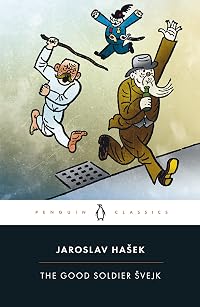
I thoroughly enjoyed this story with it's irreverent pokes at Christianity, the monarchy, and sex. The narrator is wildly entertaining and well worth the concentration it takes to follow his rambling, disjointed speech. After finishing, I read the introduction by Adam Thirlwell, which provides a thorough look at palavering in its historical context (Joyce's [Ulysses], Hašek's [Good Soldier Svejk], etc.). I would recommend not reading the introduction first, however, as it quotes extensively from the novel, which detracts from the freshness of the narrative. show less
people who, thanks to their madness, transcend themselves through experiment and spontaneity, and through their ridiculousness they achieve a kind of grandeur, because they end up where no one expected them or expects them. Quoted from the introduction by [[Adam Thirlwell]]
Hrabal took palavering to the extreme in this short novel which lacks a single period. The narrator of this nonstop monologue is a man nearing seventy who is chatting up some women in a pub/brothel. He is by turns reminiscing, trying to entertain the ladies, and losing himself in the past with a touch of dementia. show more The stories can be laugh out loud funny, nostalgic, folklorish, or all three at the same time. As the novel winds down, so does the narrator, and one senses the beginning of a repetition that will change the narrator from a funny, harmless rake into a sad, senile old man.
I thoroughly enjoyed this story with it's irreverent pokes at Christianity, the monarchy, and sex. The narrator is wildly entertaining and well worth the concentration it takes to follow his rambling, disjointed speech. After finishing, I read the introduction by Adam Thirlwell, which provides a thorough look at palavering in its historical context (Joyce's [Ulysses], Hašek's [Good Soldier Svejk], etc.). I would recommend not reading the introduction first, however, as it quotes extensively from the novel, which detracts from the freshness of the narrative. show less
A book that begs to be read in one sitting, a drunken monologue rendered by Hrabal in a fantastically erudite and maddening run-on sentence (to which this paltry review pays homage) while the aged, weathered, but oh-so-wise Jirka addresses an unspecified group of "young ladies" on subjects ranging from the role of the Czech monarchy in its heyday, the pursuit of love and sex through Jirka's inebriated and senile recollections ("it's interesting how young poets think of death while old fogies think of girls"), the proper fermentation processes for making different kinds of beer, the strange, tragicomic suicides and deaths that make up the history of his community, the influence of what he calls "the European Renaissance," beekeeping, show more poetics, Strauss, sexual anatomy and urine and far too many pissing contests, and the meaning of dreams being rather like life itself—the exact opposite and often a puzzling inverse of what one sees and comprehends at first glance. show less
I'm always fascinated by experiments that just don't work, and here's one: yes, this novella is one unfinished sentence, supposedly. But Hrabal is too good a writer not to compose units of meeting within that sentence, so really it's a bunch of sentences with commas instead of full stops. That's not much of a criticism, because it's very well written (and/or very well translated).
Otherwise, there's not much to say. It's short, it's heartbreaking, it's hilarious, and, as other reviewers have noted, your enjoyment is entirely reliant on how engaging or interesting your find the monologist. I found him very interesting: so many of his little stories end in death, he's plainly a fool, but he's also very funny. Given the option of reading show more the last chapter of Ulysses, which apparently inspired this rant, and reading this book again, I'll take this every time.
Special bonus points for Adam Thirlwell's excellent introduction. show less
Otherwise, there's not much to say. It's short, it's heartbreaking, it's hilarious, and, as other reviewers have noted, your enjoyment is entirely reliant on how engaging or interesting your find the monologist. I found him very interesting: so many of his little stories end in death, he's plainly a fool, but he's also very funny. Given the option of reading show more the last chapter of Ulysses, which apparently inspired this rant, and reading this book again, I'll take this every time.
Special bonus points for Adam Thirlwell's excellent introduction. show less
Mother of God, isn't life breathtakingly beautiful.
Joel bought me this book several years ago. It appeared so disjointed that I never truly considered it. Today the world was revealed as damp and overcast; reconciling myself to those conditions, Manchester United lost to City 6-1 and I slumped, to be polite. Reaching out, I heartily stumbled upstairs to scan our shelves and returned with Dancing Lessons for the Advanced in Age, coincidentally just as my wife was browsing reviews of such on this wicked site. That was wonky weird. I read the book in a pair of sittings and while it isn't explosive, it is a meandering monologue for the ages. It reminds me of Moscow To The End of the Line, but Hrabal's novella is better.
Joel bought me this book several years ago. It appeared so disjointed that I never truly considered it. Today the world was revealed as damp and overcast; reconciling myself to those conditions, Manchester United lost to City 6-1 and I slumped, to be polite. Reaching out, I heartily stumbled upstairs to scan our shelves and returned with Dancing Lessons for the Advanced in Age, coincidentally just as my wife was browsing reviews of such on this wicked site. That was wonky weird. I read the book in a pair of sittings and while it isn't explosive, it is a meandering monologue for the ages. It reminds me of Moscow To The End of the Line, but Hrabal's novella is better.
I like Bohumil Hrabal's writing very much, but I know that one of his favourite things is to write long run-on sentences; in this case, the sentence lasts for the duration of the book, and while I understand that this is to make it seem like the narrator is breathlessly relating everything he can think to talk about in a single extended breath, there's really no reason not to have included some full stops.
Dancing Lessons for the Advanced in Age is a bizarre book that I loved. very funny at moments. It is one long sentence long. the author takes jabs at the monarchy and the catholic church among others. Its manner of telling the story, essentially a soliloquy is appealing. It's as if the reader is his therapist and he is telling you his story. Difficult to catch your breath.
I enjoyed the film version of Hrabel's I Served the King of England, so I thought I'd give this little book a try. I could not get through it; I stopped after about 20 pages. The entire book is one long, rambling sentence that jumps from one topic to another, from a woman's retrieving her glass eye from under and theatre seat and popping it back in to baking to nose picking to red pumps. I know that is what the author intended as a kind of stylistic experiment, a post-surreal stream of consciousness, but it didn't work for me. I found it more irritating than amusing.
Members
- Recently Added By
Lists

the old and the restless
62 works; 14 members

Books as Objects & Metatextual Works
32 works; 3 members

Books Read in 2024
4,623 works; 126 members
Author Information

166+ Works 7,917 Members
Hrabal worked as a lawyer, clerk, railwayman, traveling salesman, steelworker, and laborer before turning to literature in 1962. In his tragic-comic novels and short stories he concentrates on the everyday lives of ordinary people. Thomas Lask says, "Hrabal shows an offbeat, original mind, a fey imagination and a sure hand in constructing his show more tales" (N.Y. Times Bk. Review). Hrabal's novel Closely Watched Trains (1965) was made into an internationally successful movie. (Bowker Author Biography) show less
Some Editions
Awards and Honors
Notable Lists
Series
Belongs to Publisher Series
Common Knowledge
- Canonical title
- Dancing Lessons for the Advanced in Age
- Original title
- Taneční hodiny pro starší a pokročilé
- Original publication date
- 1964
- Epigraph
- Not only may one imagine that what is higher derives always and only from what is lower; one may imagine that—given the polarity and, more important, the ludicrousness of the world—everything derives from its opposite:... (show all) day from night, frailty from stength, deformity from beauty, fortune from misfortune. Victory is made up exclusively of beatings.
-Ladislav Klíma - First words
- Just like I come here to see you, young ladies, I used to go to church to see my beauties...
- Quotations*
- … o i russi che fanno prove di volo attorno alla terra con la propulsione a getto, e sfrecciano così veloci che, appena il tempo di decollare, e già devono mettersi a frenare, per cui uno sfaccendato che stava lì aveva d... (show all)etto che non è poi così lontano il tempo che, durante uno di questi viaggi attorno alla terra, un aereo a reazione come quello riuscirà a vedersi la coda, e che poi la gente su un arioplano del genere ci salirà e immediatamente ci ridiscenderà giù, si viaggerà così veloci che la cosa migliore sarà restarsene seduti a casa propria, …
… invece i negri sono piuttosto dei poeti, loro credono solo a come rimpinzarsi, e schiamazzano e zompano di qua e di là, e il loro re se ne sta nudo sul trono con in mano un forcone, e la loro regina indossa solo una sort... (show all)a di straccetto, per impedire che le mosche le si posino sul cinematografo, e quando a loro muore qualcuno, loro una metà la seppelliscono mentre l'altra se la pappano, …
… il poeta Bondy mi ripeteva che la vera poesia deve ferire, come se vi foste dimenticati una lametta nel fazzoletto e soffiandovi il naso ve lo foste tagliuzzato, per questo un libro che si rispetti non serve per far sì c... (show all)he il lettore riesce a prendere sonno meglio, ma perché lui se ne salti giù dal letto e ancora con i mutandoni addosso se ne corra in tutta fretta a spaccare il grugno allo scrittore, … - Last words
- (Click to show. Warning: May contain spoilers.)...stared at me like I was an apparition while in fact I ws only a loyal reader of the illustrated weeklies and Havlíček and Mr. Batista's book on sexual hygiene
- Blurbers
- Park, Ed; Roth, Philip
*Some information comes from Common Knowledge in other languages. Click "Edit" for more information.
Classifications
- Genres
- General Fiction, Fiction and Literature
- DDC/MDS
- 891.8 — Literature & rhetoric Literatures of other languages East Indo-European and Celtic literatures West and South Slavic languages (Bulgarian, Slovene, Polish, Czech, Slovak, Serbo-Croatian, and Macedonian)
- LCC
- PG5039.18 .R2 .T313 — Language and Literature Slavic languages and literatures. Baltic languages. Albanian language Slavic. Baltic. Albanian Slavic Czech
- BISAC
Statistics
- Members
- 481
- Popularity
- 62,422
- Reviews
- 12
- Rating
- (3.60)
- Languages
- 12 — Czech, Dutch, English, Finnish, French, German, Hebrew, Hungarian, Italian, Norwegian (Nynorsk), Polish, Spanish
- Media
- Paper, Ebook
- ISBNs
- 29
- ASINs
- 5