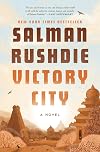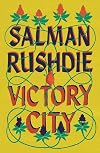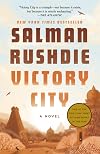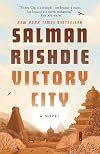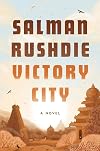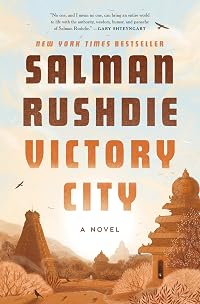
Victory City
by Salman Rushdie
On This Page
Description
"In the wake of an insignificant battle between two long-forgotten kingdoms in fourteenth-century southern India, a nine-year-old girl has a divine encounter that will change the course of history. After witnessing the death of her mother, the grief-stricken Pampa Kampana becomes a vessel for the goddess Parvati, who begins to speak out of the girl's mouth. Granting her powers beyond Pampa Kampana's comprehension, the goddess tells her that she will be instrumental in the rise of a great show more city called Bisnaga--literally "victory city"--the wonder of the world. Over the next two hundred and fifty years, Pampa Kampana's life becomes deeply interwoven with Bisnaga's, from its literal sowing out of a bag of magic seeds to its tragic ruination in the most human of ways: the hubris of those in power. Whispering Bisnaga and its citizens into existence, Pampa Kampana attempts to make good on the task that Parvati set for her: to give women equal agency in a patriarchal world. But all stories have a way of getting away from their creator, and Bisnaga is no exception. As years pass, rulers come and go, battles are won and lost, and allegiances shift, the very fabric of Bisnaga becomes an ever more complex tapestry--with Pampa Kampana at its center"-- show lessTags
Recommendations






Member Reviews
The Vijayanagar Empire ruled large parts of southern India from the fourteenth to the sixteenth century. It comes up in the margins of foreign travellers' accounts of India from Ibn Battuta to Portuguese and Venetian merchant adventurers, and it seems to have experienced a revival of interest lately from historians who see it as a model of Hindu resistance to the military and political advance of Islam.
Rushdie takes the history of the rise and fall of Vijayanagar as the framework for a magic-realist historical novel in which he is setting out quite a different kind of agenda. His narrator (through a Long Lost Manuscript), the prophet and matriarch Pampa Kampana, whose adult life corresponds exactly to the two hundred and fifty year show more life of the city she founded, has a vision of her creation as a liberal paradise founded on principles of equal opportunity and religious toleration. Well, we all know how that's going to end, don't we...? Bigotry, ambition, and (male) selfishness undermine her ambitions time and time again, and in the end the city is destroyed by a coalition of enemies.
In the circumstances, this somehow felt like a far less bitter and pessimistic book than the one Rushdie might have written. He may not have much faith in humanity's competence to run a city or a planet without messing up, but he is prepared to give a lot of credit to individuals for trying to make the world less awful. Especially if they happen to be ninja princesses. And he peppers the narrative with his usual half-buried literary jokes where we least expect them — I particularly enjoyed the little nod to R K Narayan which popped up out of nowhere at one of the darker moments in the story. show less
Rushdie takes the history of the rise and fall of Vijayanagar as the framework for a magic-realist historical novel in which he is setting out quite a different kind of agenda. His narrator (through a Long Lost Manuscript), the prophet and matriarch Pampa Kampana, whose adult life corresponds exactly to the two hundred and fifty year show more life of the city she founded, has a vision of her creation as a liberal paradise founded on principles of equal opportunity and religious toleration. Well, we all know how that's going to end, don't we...? Bigotry, ambition, and (male) selfishness undermine her ambitions time and time again, and in the end the city is destroyed by a coalition of enemies.
In the circumstances, this somehow felt like a far less bitter and pessimistic book than the one Rushdie might have written. He may not have much faith in humanity's competence to run a city or a planet without messing up, but he is prepared to give a lot of credit to individuals for trying to make the world less awful. Especially if they happen to be ninja princesses. And he peppers the narrative with his usual half-buried literary jokes where we least expect them — I particularly enjoyed the little nod to R K Narayan which popped up out of nowhere at one of the darker moments in the story. show less
Pampa Kampana watches her mother and all the women of her village self-immolate in protest of war when their husbands are killed in battle. Pampa makes a deal with a goddess that gives her unnaturally long life, along with other mystical powers. She grows a city from some from a few simple seeds, and weaved the population's memories through a whispering prayer. Her goal is to create a place of love and art, egalitarian in all ways. But her creation exercises its free will, as is human nature. Over centuries, Tampa tries to right the ship, every action resulting in unforeseen, and sometimes seen, consequences to thwart her vision.
Rushdie's newest story is reminiscent of Allende and Shafak in his meticulous world building. But he alone show more can infect a narrative with such a playful tone that the reader doesn't see him proselytizing. A delight to read.
5 bones!!!!!
Highly Recommended show less
Rushdie's newest story is reminiscent of Allende and Shafak in his meticulous world building. But he alone show more can infect a narrative with such a playful tone that the reader doesn't see him proselytizing. A delight to read.
5 bones!!!!!
Highly Recommended show less
The more I read of this scintillating novel, the more I felt that Rushdie would have been really enjoying himself as he wrote it. Victory City is a purported epic chronicle, in the same company as India's other great Hindu epics, the Ramayana and the Mahabharata. But Rushdie being Rushdie, this novel about a medieval empire is more than that. It's about the importance of storytelling, about truth in historical texts, and about the long history of silencing women in India.
Vijayanagar empire and city (Wikipedia)
Today, the Vijayanagar Empire is in ruins though its Pampapathi temple is still intact, and its capital city Hampi is a World Heritage site. The city was sacked by a coalition of Muslim Sultanates in 1565 and its king Aliya Rama show more Raya was beheaded. The destruction was thorough; its cultural history almost vanquished. What is known of this vast empire comes only from the memoirs of Portuguese and Persian traders. Rushdie has stepped into the breach with Victory City.
The novel introduces itself with an unnamed narrator who has found Pampa Kampana's chronicle hidden in a clay pot, thereby regaining a lost history from the ruins. The Jayaparajaya ('Victory and Defeat' in Sanskrit) holds the secrets of the lost empire, eclipsing the passage of time, the imperfections of memory, and the falsehoods of those who came after.
But note: we are not reading the chronicle. We are told that we are reading a re-telling of the chronicle with occasional quotations from Pampa Kampana's verses, even though we are told that her verses are the equivalent of the Ramayana itself (and should not need tampering with, eh?).
The narrator inserts him/herself into the story, commenting here and there on this and that, drawing attention to omissions and inconsistencies, occasionally speculating about the purpose or accuracy of the content. This narrator can't leave well enough alone.
(Which *chuckle* makes me think our narrator is a man, keen to celebrate the achievements of an amazing woman but not able to stop himself from mansplaining all the same. As I said, Salman Rushdie is having fun with his story and with us.)
Anyway...
Victory City begins with an horrific scene.
Aged only nine, Pampa Kampana witnesses the aftermath of one of the insignificant battles of that era...
Our narrator is dismissive of this second-rate raya (king) and the commonplace no-name battles of this period. But...
Silencing themselves forever.
Is this shocking because the death of any woman like this is shocking, or because it was a mass suicide? Rushdie is reminding us that not so long ago India's culture expected this type of ritual suicide in the wake of a husband's death. Imagine living your life, knowing that this was its expected ending, knowing that your society believed that your life had no worth without attachment to a man.
To read the rest of my review please visit https://anzlitlovers.com/2023/03/05/victory-city-2023-by-salman-rushdie/ show less
Vijayanagar empire and city (Wikipedia)
Today, the Vijayanagar Empire is in ruins though its Pampapathi temple is still intact, and its capital city Hampi is a World Heritage site. The city was sacked by a coalition of Muslim Sultanates in 1565 and its king Aliya Rama show more Raya was beheaded. The destruction was thorough; its cultural history almost vanquished. What is known of this vast empire comes only from the memoirs of Portuguese and Persian traders. Rushdie has stepped into the breach with Victory City.
The novel introduces itself with an unnamed narrator who has found Pampa Kampana's chronicle hidden in a clay pot, thereby regaining a lost history from the ruins. The Jayaparajaya ('Victory and Defeat' in Sanskrit) holds the secrets of the lost empire, eclipsing the passage of time, the imperfections of memory, and the falsehoods of those who came after.
But note: we are not reading the chronicle. We are told that we are reading a re-telling of the chronicle with occasional quotations from Pampa Kampana's verses, even though we are told that her verses are the equivalent of the Ramayana itself (and should not need tampering with, eh?).
This is that story, retold in plainer language by the present author, who is neither a scholar nor a poet but merely a spinner of yarns, and who offers this version for the simple entertainment and the possible edification of today's readers, the old and the young, the educated and the not so educated, those in search of wisdom and those amused by folly, northerners and southerners, followers of gods and of no gods, the broad-minded and the narrow-minded, men and women and members of the genders beyond and in between, scions of the nobility and rank commoners, good people and rogues, charlatans and foreigners, humble sages, and egotistical fools. (p.4)
The narrator inserts him/herself into the story, commenting here and there on this and that, drawing attention to omissions and inconsistencies, occasionally speculating about the purpose or accuracy of the content. This narrator can't leave well enough alone.
(Which *chuckle* makes me think our narrator is a man, keen to celebrate the achievements of an amazing woman but not able to stop himself from mansplaining all the same. As I said, Salman Rushdie is having fun with his story and with us.)
Anyway...
Victory City begins with an horrific scene.
Aged only nine, Pampa Kampana witnesses the aftermath of one of the insignificant battles of that era...
...in the fourteenth century of the Common Era in the south of what we now call India, Bharat, Hindustan. The old king whose rolling head got everything going wasn't much of a monarch, just the type of ersatz ruler who crops up between the decline of one great kingdom and the rise of another.
Our narrator is dismissive of this second-rate raya (king) and the commonplace no-name battles of this period. But...
After the insignificant battle, surprisingly, there was an event of the kind that changes history. The story goes that the women of the tiny, defeated kingdom, most of them recently widowed as a result of the no-name battle, left the fourth-rate fortress, after making final offerings at the fifth-rate temple, crossed the river in small boats, improbably defying the turbulence of the water, walked some distance to the west along the southern bank, and then lit a great bonfire and committed mass suicide in the flames. (p.5)
Silencing themselves forever.
Is this shocking because the death of any woman like this is shocking, or because it was a mass suicide? Rushdie is reminding us that not so long ago India's culture expected this type of ritual suicide in the wake of a husband's death. Imagine living your life, knowing that this was its expected ending, knowing that your society believed that your life had no worth without attachment to a man.
To read the rest of my review please visit https://anzlitlovers.com/2023/03/05/victory-city-2023-by-salman-rushdie/ show less
"History is the consequence not only of people's actions, but also of their forgetfulness."
A remarkable novel, an epitome of allegory. This unpredictable tale, where magic intersperses with reality, takes you to a different world a number of centuries ago - but maybe not so different (?...), as the parallels with the current state of the world are obvious. In a clever move of a seasoned story teller, Rushdie exposes the negative qualities of all religions, not sparing any one of them. He unquestionably hails feminist ideas and uses bitter satire to expose history and governing in general - hard lessons that humanity fails to learn again and again. I also have to add that even when Rushdie goes into seemingly long and unimportant details show more of this or that person or event - it's always with a purpose (!), there is always some gem there... You have to admire how he mixes satire, levity, and tragedy in a way that's incredibly amazing. And somehow, whatever the ending of this mystical tale - the author's optimism comes through in a subtle but definite way, as if he is saying - come on, it's not too late yet!... Very much worth reading! show less
A remarkable novel, an epitome of allegory. This unpredictable tale, where magic intersperses with reality, takes you to a different world a number of centuries ago - but maybe not so different (?...), as the parallels with the current state of the world are obvious. In a clever move of a seasoned story teller, Rushdie exposes the negative qualities of all religions, not sparing any one of them. He unquestionably hails feminist ideas and uses bitter satire to expose history and governing in general - hard lessons that humanity fails to learn again and again. I also have to add that even when Rushdie goes into seemingly long and unimportant details show more of this or that person or event - it's always with a purpose (!), there is always some gem there... You have to admire how he mixes satire, levity, and tragedy in a way that's incredibly amazing. And somehow, whatever the ending of this mystical tale - the author's optimism comes through in a subtle but definite way, as if he is saying - come on, it's not too late yet!... Very much worth reading! show less
Victory City, Salman Rushdie, author, Sid Sagar, narrator
Centuries ago, when Pampa Kampana was 9 years old, in India, she watched, horrified, as her mother entered the funeral pyre, following other women who had gone before her. It was the common practice of the day for widows, but Pampa was unprepared for what she witnessed. As her mother self-immolated, in what was the common practice of suicide for widows in those days, the spirit of a goddess entered Pampa. This Goddess called Parvati, speaking directly through her, told her of her future. She would live for an additional 200 years after she created a magnificent city and future empire. After her death, her story would remain hidden for 450 years. She would not have the power to show more prevent any of this from happening. It was her fate. After this possession of her spirit by Parvati Pampa did not speak for the following 9 years.
Suddenly, Pampa discovered she was literate. She was given a bag of seeds by the Goddess which she passed on to two brothers. They become the architects of her city, simply by planting them. As they watched the magical rising of a city from seeds, like plants, the magic astounded them. Suddenly they were filled with thoughts of grandeur and decided that they would become the heirs to the throne in this city, and so they became the future rulers, beginning the march toward Pampa’s end. Although the city would rise and become spectacular, with hopes for a world of beauty and love, the human frailties of greed and the desire for power would bring about its demise.
The tale, often requiring the suspension of disbelief, as it uses magical realism, anthropomorphism and transmogrification to illustrate and mock the shallowness and pettiness of the values we live by and cherish, often foolishly, our similarities and differences appear in stark contrast. The novel will demonstrate how our stubbornness to adhere to destructive desires will bring about the eventual end of what was meant to be a utopian world, that instead, descended into a world filled with injustice, and man’s inhumanity to man.
Because the prose is so beautiful, and the narrator reads the words with such feeling, it is difficult to stop listening, even when the tale gets so entangled in ideas, unknown places and characters that it grows confusing. As the author presents a fantasy that mocks our world, a world often rife with petty grievances, it is often humorous and often sarcastic. The readers cannot help thinking about the situation in our current culture that causes unrest and wars as they watch Pampa Kampana’s life reveal itself.
Pampa does not age and is forced to watch as her lovers, husbands and children age before her, eventually dying and leaving her behind. Using real cities and people from history, Rushdie blends facts and fiction to create this allegory. His message about the moral decadence of our world is obvious although it is hidden in this very creative, if not always easy to read, fantasy. Rushdie mocks our religious beliefs, and our social and cultural mores as he exposes, among other things, the racism, xenophobia, conflicting religious practices, sexual deviance, homophobia, greed, jealousy, and hunger for fame, fortune and power that humans are heir to. He deftly reveals the cracks in our own society that he seems to feel will eventually destroy us, as well, because of our human frailties. Sometimes crude, sometimes outlandish, it is always on point exposing society’s ills. It is very provocative as it questions every value we cling to, values that are often self-destructive and condescending. Sexual behavior is often exaggerated or stressed as Pampa suffers the consequences of the exigencies of her life. Occasionally, the language seems unnecessarily crude, but I expect that the author is also mocking our use of language to hurt others. Words can cause destruction. The allusion to pink monkeys warring with monkeys of other colors, is obviously an illusion to racism and the use of elephants reminded me that there are many elephants in the room that we ignore. show less
Centuries ago, when Pampa Kampana was 9 years old, in India, she watched, horrified, as her mother entered the funeral pyre, following other women who had gone before her. It was the common practice of the day for widows, but Pampa was unprepared for what she witnessed. As her mother self-immolated, in what was the common practice of suicide for widows in those days, the spirit of a goddess entered Pampa. This Goddess called Parvati, speaking directly through her, told her of her future. She would live for an additional 200 years after she created a magnificent city and future empire. After her death, her story would remain hidden for 450 years. She would not have the power to show more prevent any of this from happening. It was her fate. After this possession of her spirit by Parvati Pampa did not speak for the following 9 years.
Suddenly, Pampa discovered she was literate. She was given a bag of seeds by the Goddess which she passed on to two brothers. They become the architects of her city, simply by planting them. As they watched the magical rising of a city from seeds, like plants, the magic astounded them. Suddenly they were filled with thoughts of grandeur and decided that they would become the heirs to the throne in this city, and so they became the future rulers, beginning the march toward Pampa’s end. Although the city would rise and become spectacular, with hopes for a world of beauty and love, the human frailties of greed and the desire for power would bring about its demise.
The tale, often requiring the suspension of disbelief, as it uses magical realism, anthropomorphism and transmogrification to illustrate and mock the shallowness and pettiness of the values we live by and cherish, often foolishly, our similarities and differences appear in stark contrast. The novel will demonstrate how our stubbornness to adhere to destructive desires will bring about the eventual end of what was meant to be a utopian world, that instead, descended into a world filled with injustice, and man’s inhumanity to man.
Because the prose is so beautiful, and the narrator reads the words with such feeling, it is difficult to stop listening, even when the tale gets so entangled in ideas, unknown places and characters that it grows confusing. As the author presents a fantasy that mocks our world, a world often rife with petty grievances, it is often humorous and often sarcastic. The readers cannot help thinking about the situation in our current culture that causes unrest and wars as they watch Pampa Kampana’s life reveal itself.
Pampa does not age and is forced to watch as her lovers, husbands and children age before her, eventually dying and leaving her behind. Using real cities and people from history, Rushdie blends facts and fiction to create this allegory. His message about the moral decadence of our world is obvious although it is hidden in this very creative, if not always easy to read, fantasy. Rushdie mocks our religious beliefs, and our social and cultural mores as he exposes, among other things, the racism, xenophobia, conflicting religious practices, sexual deviance, homophobia, greed, jealousy, and hunger for fame, fortune and power that humans are heir to. He deftly reveals the cracks in our own society that he seems to feel will eventually destroy us, as well, because of our human frailties. Sometimes crude, sometimes outlandish, it is always on point exposing society’s ills. It is very provocative as it questions every value we cling to, values that are often self-destructive and condescending. Sexual behavior is often exaggerated or stressed as Pampa suffers the consequences of the exigencies of her life. Occasionally, the language seems unnecessarily crude, but I expect that the author is also mocking our use of language to hurt others. Words can cause destruction. The allusion to pink monkeys warring with monkeys of other colors, is obviously an illusion to racism and the use of elephants reminded me that there are many elephants in the room that we ignore. show less
"Words are the only victors." What an absolutely amazing storyteller Rushdie is! He teaches by example and he teaches by telling stories in the most magnificent way. I'm not usually into historical fiction, and I'm not even sure this is one. It is a wonderful, colourful, mesmerising tale delivered by one of the world's best storytellers.
It starts with a punch to the stomach, and I was wondering if he wanted to make us vegetarians. However, somehow all the horrible events, all the betrayals flow so smoothly with the story and the parts that teach love, acceptance, kindness, hope, without being didactic for even a second, that it is not a heavy reading, it is light and magical.
It was fun to recognise allusions to well-known stories (and show more probably missing some others), I loved his dry wit, references to the problems of writing, the beautiful and melancholic, but never heavy atmosphere of the book. I really don’t know how this is possible.
“Yes, she reminded herself, terrible things happened, a terrible thing had happened to her, but life on earth was still bountiful, still plenteous, still good.She might be blind, but she could see that there was light. ”
Also, I hadn't realised the empire, the city, and around half the characters were real, with accurate dates and names, until the very end of the book, where I found works about the history of an empire of the same name as the one in the book. I started to read the Wikipedia pages, but that account wasn’t engaging enough after this perfect tale. show less
It starts with a punch to the stomach, and I was wondering if he wanted to make us vegetarians. However, somehow all the horrible events, all the betrayals flow so smoothly with the story and the parts that teach love, acceptance, kindness, hope, without being didactic for even a second, that it is not a heavy reading, it is light and magical.
It was fun to recognise allusions to well-known stories (and show more probably missing some others), I loved his dry wit, references to the problems of writing, the beautiful and melancholic, but never heavy atmosphere of the book. I really don’t know how this is possible.
“Yes, she reminded herself, terrible things happened, a terrible thing had happened to her, but life on earth was still bountiful, still plenteous, still good.
Also, I hadn't realised the empire, the city, and around half the characters were real, with accurate dates and names, until the very end of the book, where I found works about the history of an empire of the same name as the one in the book. I started to read the Wikipedia pages, but that account wasn’t engaging enough after this perfect tale. show less
"All that remains is the city of words. Words are the only victors."
In Victory City, Rushdie blends historical fact, religion, and fiction into this story of Bisnaga, the victory city, created by and with history told by the poet Pampa Kampana. In the end we are left with the question of what is truth and what is history. We cannot truly know what people thought, did, or experienced. We only know the words and evidence they left behind.
I really liked this book. It was thought provoking and left me wanting to research the historical events. It seems to me that it has a lot to say, not only about history, but about story-telling as well.
In Victory City, Rushdie blends historical fact, religion, and fiction into this story of Bisnaga, the victory city, created by and with history told by the poet Pampa Kampana. In the end we are left with the question of what is truth and what is history. We cannot truly know what people thought, did, or experienced. We only know the words and evidence they left behind.
I really liked this book. It was thought provoking and left me wanting to research the historical events. It seems to me that it has a lot to say, not only about history, but about story-telling as well.
Members
- Recently Added By
Published Reviews
With sly and incisive asides from the narrator about the vicissitudes of human nature and the tides of conquest and insurrection, tyranny and freedom, Rushdie's bewitching and suspenseful, romantic and funny, tragic and incisive tale, rooted in the history of Vijayanagar, the fallen capital of a vanquished kingdom in southern India, is resplendent in its celebration of women and the ago-old show more magic of storytelling. show less
added by Lemeritus
Rushdie reflects throughout on the nature of history and storytelling, with Pampa Kampana's creations learning who they are only through the "imaginary narrative" that is whispered to them as they sleep and with Vijayanagar's rulers, along with their subjects, the victims of historical amnesia who "exist now only in words." A grand entertainment, in a tale with many strands, by an ascended show more master of modern legends. show less
added by Lemeritus
Lists

Books Read in 2023
5,547 works; 145 members

Borrowed Books 2023 (Books We Have Read BUT do NOT Own)
41 works; 1 member

Top Five Books of 2023
767 works; 317 members

Books We Discovered On LibraryThing
530 works; 130 members
Author Information

91+ Works 69,855 Members
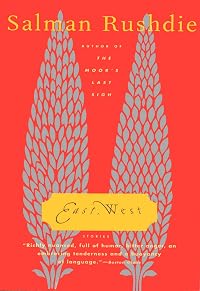
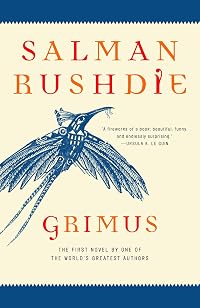
Salman Rushdie was born in India on June 19, 1947. He was raised in Pakistan and educated in England. His novels include Grimus, Shame, The Satanic Verses, Haroun and the Sea of Stories, The Moor's Last Sigh, The Ground Beneath Her Feet, Fury, Shalimar the Clown, The Enchantress of Florence, Luka and the Fire of Life, and The Golden House. His show more non-fiction works include Joseph Anton, Imaginary Homelands, The Jaguar Smile, and Step across This Line. He also wrote a collection of short stories entitled East, West. He has received numerous awards including the Whitbread Prize for Best Novel twice, the James Tait Black Prize, the French Prix du Meilleur Livre Étranger, the Booker Prize in 1981 for Midnight's Children, and the 2014 PEN/Pinter Prize. (Bowker Author Biography) show less
Awards and Honors
Awards
Distinctions
Notable Lists
Common Knowledge
- Canonical title
- Victory City
- Original title
- Victory City; Victory City: A Novel
- Original publication date
- 2023
- People/Characters
- Pampa Kampana
- Dedication
- For Hanan
- First words
- On the last day of her life, when she was two hundred and forty-seven years old, the blind poet, miracle worker, and prophetess Pampa Kampana completed her immense narrative poem about Bisnaga and buried it in a clay pot sea... (show all)led with wax in the heart of the ruined Royal Enclosure, as a message to the future.
- Last words
- (Click to show. Warning: May contain spoilers.)Words are the only victors.
- Blurbers
- McCann, Colum; Cunningham, Michael; Homes, A.M.; Shteyngart, Gary; Trethewey, Natasha; Kunzru, Hari
- Original language
- English
- Canonical DDC/MDS
- 823.92
- Canonical LCC
- PR6068.U757
Classifications
Statistics
- Members
- 889
- Popularity
- 30,317
- Reviews
- 24
- Rating
- (3.79)
- Languages
- 11 — Danish, Dutch, English, Finnish, French, German, Hungarian, Polish, Portuguese, Spanish, Swedish
- Media
- Paper, Audiobook, Ebook
- ISBNs
- 34
- ASINs
- 11