On This Page
Description
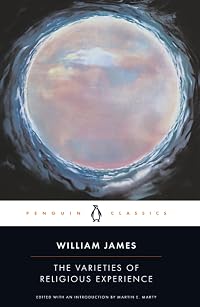
Harvard psychologist and philosopher William James' The Varieties of Religious Experience: A Study in Human Nature explores the nature of religion and, in James' observation, its divorce from science when studied academically. After publication in 1902 it quickly became a canonical text of philosophy and psychology, remaining in print through the entire century. "Scientific theories are organically conditioned just as much as religious emotions are; and if we only knew the facts intimately show more enough, we should doubtless see 'the liver' determining the dicta of the sturdy atheist as decisively as it does those of the Methodist under conviction anxious about his soul. When it alters in one way the blood that percolates it, we get the Methodist, when in another way, we get the atheist form of mind." show lessTags
Recommendations














Member Recommendations

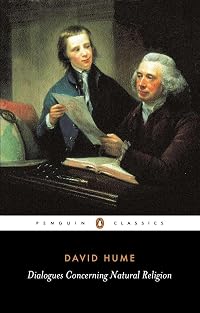
Bill-once Bucke's work inspired James'
12
by anonymous user
Member Reviews
This book is a study of religious experiences that treats them with both sincerity and critical scientific discernment. William James, the pragmatist philosopher and Harvard psychologist, concludes that religious experience is psychologically meaningful. Whether those experiences actually reflect connection to the divine, in a spiritual sense, is ultimately beside the point. What make religious experiences meaningful is that they describe a reaching out, a desire to engage with the divine, to feel its immensity, and to formulate belief about its nature so as to fix a course of action through which we attempt to understand or put to use our understanding of the world.
Religious belief (broadly defined, see below), in other words, is part show more of the enterprise of knowing, and not only is it not to be stood apart and in diminished light from other ways of knowing, but it should be seen as both comparable to other forms of inquiry and perhaps as an essential part of that inquiry insofar as we grapple with the unknown, form beliefs, and act upon those beliefs across many forms of inquiry (secular and religious). The broader intellectual exercise that James wants to situate religious experience against is the heart of what Charles Sanders Peirce (another pragmatist) called “abductive reasoning” or the forward progress of thought made through leaps of reasoning based on belief.
The book is pretty remarkable considering what James was trying to accomplish and where. This book is a collection of twenty lectures given as part of the Gifford Lecture series, an ongoing lecture series intended “to promote and diffuse the study of natural theology in the widest sense of the term” by inviting a variety of different viewpoints on the topic. James’ account is grounded in psychology through which he attempted to understand the religious mindset without emptying it of its religious significance by reducing it to classification of mental states or mental aberrations (9, 13). Instead, he offers a descriptive account of religious experience based on first hand accounts as evidence of developing understanding.
Defining the Subject
James defines religion as “the feelings, acts, and experiences of individual men in their solitude, so far as they apprehend themselves to stand in relation to whatever they may consider the divine” (31). Notably, religion by this definition is inclusive of secular manifestations, including the scientific. He says “we must interpret the term ‘divine’ very broadly, as denoting any object that is godlike, whether it be a concrete deity of not” (34). It is “a primal reality” that the individual “feels impelled to respond to solemnly and gravely” (38). One can imagine particle physicists, anatomists, biologists, chemists all peering into the divine through their work and seeing a hint of something grander than what their awareness and knowledge currently allows them to apprehend. What that beyond is … is unknown but it is felt as a gap, something missing that we strive to understand the truth of.
James picks up the point that people acting on behalf of a religious belief do so out of respect for what is unseen but that they understand to be consistent with the divine. Importantly, this belief in what is unseen forms the basis for action. “Many persons (how many we cannot tell) possess the objects of their belief, not in the form of mere conceptions which the intellect accepts as true, but rather in the form of the quasi-sensible realities directly apprehended” (64).
The Healthy-Minded and Sick Souls
The religious experiences that James wants to understand, ultimately, pertain to our engagement with the divine and the impediments toward that engagement/understanding. To this point, James describes the healthy-minded and the sick souls. The healthy-minded are attracted to the ineffability of the divine, seek to understand it through their deeds (121). Sick souls are those who have a troubled engagement with the world that prevents their engagement with the divine. This might be conventionally understood as vice or sin or some other obstruction that may be removed through repentance (128).
Conversion and Saintliness
It is in this context of the sick soul that James discusses accounts of conversion, a working through the psychological state of the divided self whose connection to the divine is impeded. A conversion is the expulsion of one state (e.g., ignorance) via transformation (194). Here, too, we can see this kind of mental state in a secular way. A religious convert is one who can see “the group of ideas to which he devotes himself, and from which he works […] the habitual centre of his personal energy” (196) and when one is converted, those ideas which had been obscured, unfocused, our in the periphery move to the center and come into focus (196). James pursues this understanding through stories of transformations whereby people claim to be cured of drunkenness, wrath, etc., enabling them to adopt normative moral standards and catch some glimpse of the divine.
He also describes saintliness as a state of perfected being in which people of a religious inclination feel that they are participating in a world that is wider and more significant than that of self-based interests (272). They have given themselves to the ideal and feel a sense of freedom to pursue that knowledge (273), accompanied by great devotion to a god or a more extra-individual pursuit (290). Quite a bit follows on this subject and on mysticism as a form of inaccessible knowing.
Religious Experience, Knowing, and Belief
Religion is founded on beliefs that 1) the visible world is part of a spiritual or ideal world 2) to which we want to align our understanding and thinking and we do so through 3) commune or interaction with the ideal (485). Religious experience taps into our subconscious awareness of the world.
“If religion be a function by which either God’s cause or man’s cause is to be really advanced, then he who lives the life of it, however narrowly, is a better servant than he who merely knows about it, however much” (489). Virtue is in knowledge through action. Religious experience, understood more broadly as the formation and fixation of belief is a kind of knowledgable engagement with the world through which we 1) grasp our imperfect understanding, 2) develop the desire to strive toward a perfection, and 3) form the beliefs (sometimes subconsciously) upon which to act and bring about that perfection or develop knowledge of it that is 4) testable by reason and experiences, and 5) subject to such verification, understanding that the realm of experience must also include other individuals similarly striving (498-501; 508)
James also attempts to understand whether philosophical approaches can help us understand the significance of religious experience but concludes that it is of limited value because it does not easily get at feelings or beliefs, which are the grounds from which we seek rational or empirical confirmation. “Thought in movement has for its only conceivable motive the attainment of belief, or thought at rest. Only when our thought about a subject has found its rest in belief can our notion on the subject firmly and safely begin. Beliefs, in short, are rules for action; and the whole function of thinking is but one step in the production of active habits” (444). And because beliefs are born from feelings from connection to the divine, we must do away with dogmatic theology, which substitutes inquiry and feeling with ritual and observance (448). Belief becomes the basis for acting and acting is the testbed from which we gather experience that we can rationalize about and form the basis of new beliefs (450). Religious mindset is the willingness to engage in that feeling and to develop those beliefs. show less
Religious belief (broadly defined, see below), in other words, is part show more of the enterprise of knowing, and not only is it not to be stood apart and in diminished light from other ways of knowing, but it should be seen as both comparable to other forms of inquiry and perhaps as an essential part of that inquiry insofar as we grapple with the unknown, form beliefs, and act upon those beliefs across many forms of inquiry (secular and religious). The broader intellectual exercise that James wants to situate religious experience against is the heart of what Charles Sanders Peirce (another pragmatist) called “abductive reasoning” or the forward progress of thought made through leaps of reasoning based on belief.
The book is pretty remarkable considering what James was trying to accomplish and where. This book is a collection of twenty lectures given as part of the Gifford Lecture series, an ongoing lecture series intended “to promote and diffuse the study of natural theology in the widest sense of the term” by inviting a variety of different viewpoints on the topic. James’ account is grounded in psychology through which he attempted to understand the religious mindset without emptying it of its religious significance by reducing it to classification of mental states or mental aberrations (9, 13). Instead, he offers a descriptive account of religious experience based on first hand accounts as evidence of developing understanding.
Defining the Subject
James defines religion as “the feelings, acts, and experiences of individual men in their solitude, so far as they apprehend themselves to stand in relation to whatever they may consider the divine” (31). Notably, religion by this definition is inclusive of secular manifestations, including the scientific. He says “we must interpret the term ‘divine’ very broadly, as denoting any object that is godlike, whether it be a concrete deity of not” (34). It is “a primal reality” that the individual “feels impelled to respond to solemnly and gravely” (38). One can imagine particle physicists, anatomists, biologists, chemists all peering into the divine through their work and seeing a hint of something grander than what their awareness and knowledge currently allows them to apprehend. What that beyond is … is unknown but it is felt as a gap, something missing that we strive to understand the truth of.
James picks up the point that people acting on behalf of a religious belief do so out of respect for what is unseen but that they understand to be consistent with the divine. Importantly, this belief in what is unseen forms the basis for action. “Many persons (how many we cannot tell) possess the objects of their belief, not in the form of mere conceptions which the intellect accepts as true, but rather in the form of the quasi-sensible realities directly apprehended” (64).
The Healthy-Minded and Sick Souls
The religious experiences that James wants to understand, ultimately, pertain to our engagement with the divine and the impediments toward that engagement/understanding. To this point, James describes the healthy-minded and the sick souls. The healthy-minded are attracted to the ineffability of the divine, seek to understand it through their deeds (121). Sick souls are those who have a troubled engagement with the world that prevents their engagement with the divine. This might be conventionally understood as vice or sin or some other obstruction that may be removed through repentance (128).
Conversion and Saintliness
It is in this context of the sick soul that James discusses accounts of conversion, a working through the psychological state of the divided self whose connection to the divine is impeded. A conversion is the expulsion of one state (e.g., ignorance) via transformation (194). Here, too, we can see this kind of mental state in a secular way. A religious convert is one who can see “the group of ideas to which he devotes himself, and from which he works […] the habitual centre of his personal energy” (196) and when one is converted, those ideas which had been obscured, unfocused, our in the periphery move to the center and come into focus (196). James pursues this understanding through stories of transformations whereby people claim to be cured of drunkenness, wrath, etc., enabling them to adopt normative moral standards and catch some glimpse of the divine.
He also describes saintliness as a state of perfected being in which people of a religious inclination feel that they are participating in a world that is wider and more significant than that of self-based interests (272). They have given themselves to the ideal and feel a sense of freedom to pursue that knowledge (273), accompanied by great devotion to a god or a more extra-individual pursuit (290). Quite a bit follows on this subject and on mysticism as a form of inaccessible knowing.
Religious Experience, Knowing, and Belief
Religion is founded on beliefs that 1) the visible world is part of a spiritual or ideal world 2) to which we want to align our understanding and thinking and we do so through 3) commune or interaction with the ideal (485). Religious experience taps into our subconscious awareness of the world.
“If religion be a function by which either God’s cause or man’s cause is to be really advanced, then he who lives the life of it, however narrowly, is a better servant than he who merely knows about it, however much” (489). Virtue is in knowledge through action. Religious experience, understood more broadly as the formation and fixation of belief is a kind of knowledgable engagement with the world through which we 1) grasp our imperfect understanding, 2) develop the desire to strive toward a perfection, and 3) form the beliefs (sometimes subconsciously) upon which to act and bring about that perfection or develop knowledge of it that is 4) testable by reason and experiences, and 5) subject to such verification, understanding that the realm of experience must also include other individuals similarly striving (498-501; 508)
James also attempts to understand whether philosophical approaches can help us understand the significance of religious experience but concludes that it is of limited value because it does not easily get at feelings or beliefs, which are the grounds from which we seek rational or empirical confirmation. “Thought in movement has for its only conceivable motive the attainment of belief, or thought at rest. Only when our thought about a subject has found its rest in belief can our notion on the subject firmly and safely begin. Beliefs, in short, are rules for action; and the whole function of thinking is but one step in the production of active habits” (444). And because beliefs are born from feelings from connection to the divine, we must do away with dogmatic theology, which substitutes inquiry and feeling with ritual and observance (448). Belief becomes the basis for acting and acting is the testbed from which we gather experience that we can rationalize about and form the basis of new beliefs (450). Religious mindset is the willingness to engage in that feeling and to develop those beliefs. show less
Undoubtedly William James most popular book, I found this to be, as it always is with James, a joy to read. His style kept me going when both the combination strange ideas and impenetrable prose of his cited examples retarded my progress. His focus on the individuality of experience was what struck me as central and certainly most important to me - the mature individualist that I am. While I was not convinced by the mysticism surveyed or the various rationalizations of religious pondering, I came away with a better sense of this type of thought. Unlike Santayana I was not bothered by the focus on "religious disease" or "sick souls", but my perspective, unlike his, is a bit more rational, if not more reasonable. On the whole a very good show more book about a subject that is spiritual in many ways. show less
I was first introduced to William James while earning my degree in psychology. His essay "Habit" struck me as one of the most practical writings of early psychology and the physiological background he grounded his studies in led me to view him as the golden needle hidden in the haystack of psychoanalytic thought that dominates historical discussion.
I had often wondered why he did not receive the attention he deserved while Freud, Jung, etc. get the limelight of history. So, feeling cheated, this was the first psychology book that I read after graduating. It was his masterpiece after all, so what if it is about religion. I quickly found out why he was not given more space in the standard curriculum. This was speaking positively about show more mystical and religious experiences, not simply categorizing and attempting to control them. Without control (power), then "why bother?" seems to be the modus operandi of current psychology.
It wasn't until nearly a decade later that I came across this title from Aleister Crowley's reading list in his Liber E instructions. I had already changed my personal prejudices about mystical experiences, having earned a few, so I gave this work another try. Reading from a mystical to psychological instead of vice versa provides a much more illuminating and interesting read of this book.
The book is organized from lectures that he presented, and as such I decided to read no more than a lecture a day, as if I was going to a class. Allowing the content of each lecture to sink in throughout the day instead of being replaced by the next lecture. I highly encourage such a reading of this book to anyone who performed well in an academic setting. Some lectures are appropriately dense and may appear simple until you repeat a phrase later on in the day and realize that it has deeper meaning.
The token pragmatism of James shows in the way he focuses on qualitative understanding with each topic, with a phenomenological perspective. This pragmatism is also the source of criticism for James. He does not travel too far away from the Protestant Christian framework that he is most familiar with. I consider this critique unfounded. Had James talked at length about Hinduism, Buddhism, or any other religion we would probably criticize him speaking with an ignorance of those belief systems. Instead we criticize him for wisely avoiding subjects he knew nothing about. A catch-22 many critics seem to be oddly unaware of.
While psychology students may be barking up the wrong tree with this book (but would benefit from other writings of James), I feel that the religious scholar and religious practitioner can gain quite a bit of insight. There are of course dense passages and due to the age of the material, a trip or two to an appropriately dated dictionary. (Online definitions are unlikely to be the same as the ones James was using and intending.)
Varieties is not without other critiques and deserves a critical reading from anyone, but like most of William James, it is still useful. show less
I had often wondered why he did not receive the attention he deserved while Freud, Jung, etc. get the limelight of history. So, feeling cheated, this was the first psychology book that I read after graduating. It was his masterpiece after all, so what if it is about religion. I quickly found out why he was not given more space in the standard curriculum. This was speaking positively about show more mystical and religious experiences, not simply categorizing and attempting to control them. Without control (power), then "why bother?" seems to be the modus operandi of current psychology.
It wasn't until nearly a decade later that I came across this title from Aleister Crowley's reading list in his Liber E instructions. I had already changed my personal prejudices about mystical experiences, having earned a few, so I gave this work another try. Reading from a mystical to psychological instead of vice versa provides a much more illuminating and interesting read of this book.
The book is organized from lectures that he presented, and as such I decided to read no more than a lecture a day, as if I was going to a class. Allowing the content of each lecture to sink in throughout the day instead of being replaced by the next lecture. I highly encourage such a reading of this book to anyone who performed well in an academic setting. Some lectures are appropriately dense and may appear simple until you repeat a phrase later on in the day and realize that it has deeper meaning.
The token pragmatism of James shows in the way he focuses on qualitative understanding with each topic, with a phenomenological perspective. This pragmatism is also the source of criticism for James. He does not travel too far away from the Protestant Christian framework that he is most familiar with. I consider this critique unfounded. Had James talked at length about Hinduism, Buddhism, or any other religion we would probably criticize him speaking with an ignorance of those belief systems. Instead we criticize him for wisely avoiding subjects he knew nothing about. A catch-22 many critics seem to be oddly unaware of.
While psychology students may be barking up the wrong tree with this book (but would benefit from other writings of James), I feel that the religious scholar and religious practitioner can gain quite a bit of insight. There are of course dense passages and due to the age of the material, a trip or two to an appropriately dated dictionary. (Online definitions are unlikely to be the same as the ones James was using and intending.)
Varieties is not without other critiques and deserves a critical reading from anyone, but like most of William James, it is still useful. show less
_The Varieties of Religious Experience_ builds to the climax of James explaining his philosophy of Pragmatism. What I think is important here to the religion vs. rationalism debate is that James has no time for established religion, dogma, or theology. Rather, he focuses on the mystical, individual life-changing experiences people have in sensing the presence of a higher power. These experiences are as real as falling in love - they are a psychological phenomenon that, according to James, bubble up from the subconscious and have direct, pragmatic, positive effects on a person's life. What is missing here is a discussion of cultural influence on these experiences - why do people in Christian culture only frame these experiences in terms show more of Christianity? Do people lack a language outside of their culture to describe these mystical experiences? show less
This is a classic text intersecting religion and psychology and what I found most intriguing was the relevance of James's insights on religion that still resonate today. Debates in the merit, barbarity, utility, and experience of religion are all addressed. In this way I believe it could be a helpful resource to depolarize what I find is a dead-end debate between fundamentalist atheists and fundamentalists Christians because both points of view are seriously engaged without the assertion of a big T truth.
Compiled in 1901 from a series of lectures its author gave at the University of Edinburgh, The Varieties of Religious Experience is a seminal book in the study of comparative religions. It may have been a classic in its time, but it has not aged well, ironically due in part to the advances in the study of comparative religions that it helped to shepherd in.
Whether it be his belief in the superiority of Christianity over non-Christian belief systems (of which even the author admits he knows little), the superiority of Protestantism over Roman Catholicism, or his adherence to the socioeconomic, political, and gender biases of the early 20th century, James's prejudices shine like beacons throughout the text. The technical aspects of his show more writing (noting of sources, research methods, and the like) are also antiquated. James relies heavily on personal conjecture to build his case, often using select quotations and anecdotes to shore up his arguments instead of the other way around.
That said, there are some true gems of insight in this volume, which are made more stunning in light of the fact that James was so obviously not working from a position of rigorous scholarly objectivity. A good volume on comparative religions this sure ain't, but it is certainly still of interest as a relic of contemporary religious thought and interpretation. show less
Whether it be his belief in the superiority of Christianity over non-Christian belief systems (of which even the author admits he knows little), the superiority of Protestantism over Roman Catholicism, or his adherence to the socioeconomic, political, and gender biases of the early 20th century, James's prejudices shine like beacons throughout the text. The technical aspects of his show more writing (noting of sources, research methods, and the like) are also antiquated. James relies heavily on personal conjecture to build his case, often using select quotations and anecdotes to shore up his arguments instead of the other way around.
That said, there are some true gems of insight in this volume, which are made more stunning in light of the fact that James was so obviously not working from a position of rigorous scholarly objectivity. A good volume on comparative religions this sure ain't, but it is certainly still of interest as a relic of contemporary religious thought and interpretation. show less
An interestingly objective viewpoint on religious philosophy, at least as restricted to personal, uniquely religious mindsets. The author includes a plethora of genuinely interesting excerpts from individual monologues related to the topic that do serve to illustrate his eventual position. However, given the date of the material (1902), most of the tools necessary for hard exploration of the topic in the fashion that the author's position necessitates have yet to be developed.
Members
- Recently Added By
Lists

25 Greatest Science Books of All Time
33 works; 6 members

Modern Library 100 Best Nonfiction Books
100 works; 8 members

Filosofía - Clásicos
217 works; 1 member

Mustich's 1000 Books to Read Before You Die: A Life Changing List
1,001 works; 19 members

Books in the Bibliography of The Mind in the Cave by David Lewis-Williams
257 works; 1 member

Non-Universality of the Good Life
5 works; 1 member

Books That Changed Our Perspective
423 works; 168 members

Recommended Reading : 600 Classics Reviewed, Editors of Salem Press, 2015
634 works; 6 members

My List
302 works; 1 member

New Lifetime Reading Plan by Fadiman and Major
225 works; 5 members
How to Read a Book's Recommended Reading List
309 works; 10 members

Greatest Books, allegedly
484 works; 9 members

Five star books
1,757 works; 108 members

Best 20th Century Books as of 1924
100 works; 6 members

Tom's Bookstore
346 works; 2 members

KIB Non-Fiction Book Cloud
41 works; 1 member

Trinity College Booklist (1951): Class Three, Philosophy and Religion
80 works; 3 members
Harold Bloom - The Western Canon: C. The Democratic Age
336 works; 15 members

In Our Time books
4,934 works; 2 members

Newsweek's Top 100 Books: The Meta-List
100 works; 18 members
Author Information

137+ Works 14,628 Members
William James, oldest of five children (including Henry James and Alice James) in the extraordinary James family, was born in New York City on January 11, 1842. He has had a far-reaching influence on writers and thinkers of the nineteenth and twentieth centuries. Broadly educated by private tutors and through European travel, James initially show more studied painting. During the Civil War, however, he turned to medicine and physiology, attended Harvard medical school, and became interested in the workings of the mind. His text, The Principles of Psychology (1890), presents psychology as a science rather than a philosophy and emphasizes the connection between the mind and the body. James believed in free will and the power of the mind to affect events and determine the future. In The Will to Believe (1897) and The Varieties of Religious Experience (1902), he explores metaphysical concepts and mystical experiences. He saw truth not as absolute but as relative, depending on the given situation and the forces at work in it. He believed that the universe was not static and orderly but ever-changing and chaotic. His most important work, Pragmatism (1907), examines the practical consequences of behavior and rejects the idealist philosophy of the transcendentalists. This philosophy seems to reinforce the tenets of social Darwinism and the idea of financial success as the justification of the means in a materialistic society; nevertheless, James strove to demonstrate the practical value of ethical behavior. Overall, James's lifelong concern with what he called the "stream of thought" or "stream of consciousness" changed the way writers conceptualize characters and present the relationship between humans, society, and the natural world. He died due to heart failure on August 26, 1910. (Bowker Author Biography) show less
Some Editions
Awards and Honors
Awards
Notable Lists
Series

Belongs to Publisher Series
Work Relationships
Is contained in
Is abridged in
Has as a study
Has as a student's study guide
Common Knowledge
- Canonical title*
- Die Vielfalt religiöser Erfahrung
- Original title
- The Varieties of Religious Experience: A Study in Human Nature
- Original publication date
- 1902
- Dedication
- To
E.P.G.
IN FILIAL GRATITUDE AND LOVE - First words
- Preface:
This book would never have been written had I not been honored with an appointment as Gifford Lecturer on Natural Religion at the University of Edinburgh.
It is with no small amount of trepidation that I take my place behind this desk, and face this learned audience. To us Americans, the experience of receiving instruction from the living voice, as well as from the books, of Eu... (show all)ropean scholars, is very familiar. At my own University of Harvard, not a winter passes without its harvest, large or small, of lectures from Scottish, English, French, or German representatives of the science or literature of their respective countries whom we have either induced to cross the ocean to address us, or captured on the wing as they were visiting our land. It seems the natural thing for us to listen whilst the Europeans talk. The contrary habit, of talking whilst the Europeans listen, we have not yet acquired; and in him who first makes the adventure it begets a certain sense of apology being due for so presumptuous an act. Particularly must this be the case on a soil as sacred to the American imagination as that of Edinburgh. The glories of the philosophic chair of this university were deeply impressed on my imagination in boyhood. Professor Fraser’s Essays in Philosophy, then just published, was the first philosophic book I ever looked into, and I well remember the awestruck feeling I received from the account of Sir William Hamilton’s classroom therein contained. Hamilton’s own lectures were the first philosophic writings I ever forced myself to study, and after that I was immersed in Dugald Stewart and Thomas Brown. Such juvenile emotions of reverence never get outgrown; and I confess that to find my humble self promoted from my native wilderness to be actually for the time an official here, and transmuted into a colleague of these illustrious names, carries with it a sense of dreamland quite as much as of reality. - Last words
- (Click to show. Warning: May contain spoilers.)But all these statements are unsatisfactory from their brevity, and I can only say that I hope to return to the same questions in another book.
- Original language
- English
- Disambiguation notice
- This is (famously) by the same author as Principles of Psychology, The Will to Believe, Essays in Radical Empiricism, etc.
*Some information comes from Common Knowledge in other languages. Click "Edit" for more information.
Classifications
- Genres
- Philosophy, Religion & Spirituality, Nonfiction, General Nonfiction
- DDC/MDS
- 291.42 — Religion Other religions [Formerly: General Religious Topics] Religious experience, life, practice Religious Psychology and Experience
- LCC
- BR110 .J3 — Philosophy, Psychology and Religion Christianity Christianity
- BISAC
Statistics
- Members
- 5,863
- Popularity
- 2,214
- Reviews
- 44
- Rating
- (3.90)
- Languages
- 16 — Catalan, Chinese, Czech, Danish, Dutch, English, Estonian, Finnish, French, German, Italian, Polish, Portuguese, Spanish, Swedish, Turkish
- Media
- Paper, Audiobook, Ebook
- ISBNs
- 190
- UPCs
- 2
- ASINs
- 140