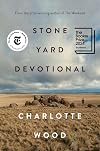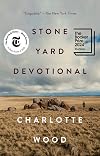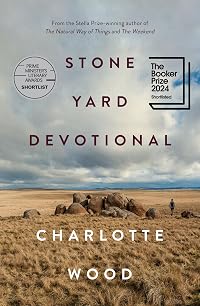
Stone Yard Devotional
by Charlotte Wood
On This Page
Description
"Burnt out and in need of retreat, a middle-aged woman leaves Sydney to return to the place she grew up, taking refuge in a small religious community hidden away on the stark plains of rural Australia. She doesn't believe in God, or know what prayer is, and finds herself living this strange, reclusive existence almost by accident. But disquiet interrupts this secluded life with three visitations. First comes a terrible mouse plague, each day signaling a new battle against the rising show more infestation. Second is the return of the skeletal remains of a sister who disappeared decades before, presumed murdered. And finally, a troubling visitor plunges the narrator further back into her past"-- show lessTags
Recommendations






Member Reviews
58. Stone Yard Devotional by Charlotte Wood
OPD: 2023
format: 293-page paperback
acquired: August 17 read: Aug 31 – Sep 4 time reading: 7:01, 1.4 mpp
rating: 4½
genre/style: contemporary fiction theme: Booker 2024
locations: contemporary rural Australia
about the author: An Australian novelist born in Cooma, New South Wales in 1965. She currently resides in Syndey.
My fifth from the Booker longlist is very different from the other books. It has a depth and pace and complexity that stands out distinctly from the other four books i’ve read, and it offers more freedom to the reader in how to respond. It was a mind change for me. The previous four were long books. This slowed the heart but whipped by quick.
This one is spare. Like the show more narrator tells us she is, it's "stripped down to the bedrock". She visits an isolated monastery with eight nuns in part I. In part II she has left her life, including her husband, largely not telling anyone what she's doing, joined the monastery as a nun. We slowly work out she's about 60, but we learn early she lost her parents 35 years ago. She's not a believer, but she embraces the isolated life, taking responsibilities, doing her share, becoming a dedicated part of this quiet uncommunicative isolated nun community. Then come the mice, and problems from her past life.
If you really want to know what the mouse plague was like, in 2020, google and brace yourself. But Wood doesn't freak out our senses. Her text is more cerebral. But also the mice are there. The prose itself is always spare, and it drifts between our narrator's stark daily life, hinting at its symbolic implications, and her memories. She thinks back on all the traumatic, and sometime beautiful things that happened around her. The back and forth gives a nice pace, at least for me, taking me where I wanted to be. Between her history and this interesting Covid-mouse-plague year, there is a lot here.
The symbolism is worth thinking about, if not essential to enjoy the book. I've been thinking a lot about the mice. On our Facebook group one person suggested "To me, the mice are a metaphor for the constant anxiety about death lurking and surprising us at every turn. No matter how much we try to banish the thoughts, it's hard to eradicate them because life thrusts it in our faces over and over. It's omnipresent. Like the mice."
I like that idea so much. These mice are certainly constant and insistent reminders of something. Maybe anxiety about death. Maybe - also/or - anxiety about something else. And now that she highlighted that, I can see it throughout the texture of the book. Our narrator is hiding from something. Yet it’s always there scratching away, no matter what it is she is thinking about.
There's also some irony in how this mouse plague works out vs this narrator's history. Things go flipped around backward on her.
But what I most liked about this book was the opportunity to slow down and reflect. It's spareness means we can think about what we want. But it kept me involved at the same time. I found it moving and cathartic.
Recommended for the hectic reader who needs a moment of quiet.
2024
https://www.librarything.com/topic/362165#8617056 show less
OPD: 2023
format: 293-page paperback
acquired: August 17 read: Aug 31 – Sep 4 time reading: 7:01, 1.4 mpp
rating: 4½
genre/style: contemporary fiction theme: Booker 2024
locations: contemporary rural Australia
about the author: An Australian novelist born in Cooma, New South Wales in 1965. She currently resides in Syndey.
My fifth from the Booker longlist is very different from the other books. It has a depth and pace and complexity that stands out distinctly from the other four books i’ve read, and it offers more freedom to the reader in how to respond. It was a mind change for me. The previous four were long books. This slowed the heart but whipped by quick.
This one is spare. Like the show more narrator tells us she is, it's "stripped down to the bedrock". She visits an isolated monastery with eight nuns in part I. In part II she has left her life, including her husband, largely not telling anyone what she's doing, joined the monastery as a nun. We slowly work out she's about 60, but we learn early she lost her parents 35 years ago. She's not a believer, but she embraces the isolated life, taking responsibilities, doing her share, becoming a dedicated part of this quiet uncommunicative isolated nun community. Then come the mice, and problems from her past life.
If you really want to know what the mouse plague was like, in 2020, google and brace yourself. But Wood doesn't freak out our senses. Her text is more cerebral. But also the mice are there. The prose itself is always spare, and it drifts between our narrator's stark daily life, hinting at its symbolic implications, and her memories. She thinks back on all the traumatic, and sometime beautiful things that happened around her. The back and forth gives a nice pace, at least for me, taking me where I wanted to be. Between her history and this interesting Covid-mouse-plague year, there is a lot here.
The symbolism is worth thinking about, if not essential to enjoy the book. I've been thinking a lot about the mice. On our Facebook group one person suggested "To me, the mice are a metaphor for the constant anxiety about death lurking and surprising us at every turn. No matter how much we try to banish the thoughts, it's hard to eradicate them because life thrusts it in our faces over and over. It's omnipresent. Like the mice."
I like that idea so much. These mice are certainly constant and insistent reminders of something. Maybe anxiety about death. Maybe - also/or - anxiety about something else. And now that she highlighted that, I can see it throughout the texture of the book. Our narrator is hiding from something. Yet it’s always there scratching away, no matter what it is she is thinking about.
There's also some irony in how this mouse plague works out vs this narrator's history. Things go flipped around backward on her.
But what I most liked about this book was the opportunity to slow down and reflect. It's spareness means we can think about what we want. But it kept me involved at the same time. I found it moving and cathartic.
Recommended for the hectic reader who needs a moment of quiet.
2024
https://www.librarything.com/topic/362165#8617056 show less
When life gets to be too much for you, what to do? Well, join a group of nuns in rural Australia, of course (despite not being a nun or even religious). And then stick it out through a mouse plague (which was truly repulsive and gave me nightmares).
But our main character is reflective. She takes us back to childhood and young adult memories. She's repentant for past wrongs. She tries to make sense of her life. Many times while reading this book, some phrase or sentence or story made me to put it down and think about my own choices. I'd recommend it for quiet days of consideration, for a way to slow down. Especially powerful for me were the scenes about how she and her peers treated a classmate. Why are we so cruel? Why does it take us show more 30 or 40 or 50 years before we realize what we've done to someone?
"If you don't live the life you are born for, it makes you ill. That's what Helen Parry told us this morning, dispensing wisdom. Helen's Buddhist friends in Thailand say it is a matter of your dharma, she said. You must live according to your own dharma, even if you could be very successful at living someone else's."
At times this book will cause you to dig deeper for understanding, but one of my favorite things about the main character's voice is not that she's reflective—it's that she can be sarcastic. She's human. show less
But our main character is reflective. She takes us back to childhood and young adult memories. She's repentant for past wrongs. She tries to make sense of her life. Many times while reading this book, some phrase or sentence or story made me to put it down and think about my own choices. I'd recommend it for quiet days of consideration, for a way to slow down. Especially powerful for me were the scenes about how she and her peers treated a classmate. Why are we so cruel? Why does it take us show more 30 or 40 or 50 years before we realize what we've done to someone?
"If you don't live the life you are born for, it makes you ill. That's what Helen Parry told us this morning, dispensing wisdom. Helen's Buddhist friends in Thailand say it is a matter of your dharma, she said. You must live according to your own dharma, even if you could be very successful at living someone else's."
At times this book will cause you to dig deeper for understanding, but one of my favorite things about the main character's voice is not that she's reflective—it's that she can be sarcastic. She's human. show less
This strangely beautiful novel is a reflective narrative as a woman looks back on selected points in her earlier life, more than 30 years ago, from a nunnery in rural Australia, near where she grew up, and where she has now come to retreat from the world.
I am not sure what I expected when I started reading, and am not sure I fully understood everything. There is mention of the narrator's husband, Alex - clearly the marriage has come to an end. Originally she comes for a week and stays as a paying guest, but 4 years later she is a permanent resident, an "oblate", not a nun but someone who has committed to living in this community. The community is struggling to find ways to make ends meet and support itself without losing the seclusion, show more the retreat and the religious nature that are its reasons to exist.
The narrator thinks about the deaths of her parents, first her father and then her mother, well over 30 years ago, on the end of her marriage, on the hurts and the end of friendships caused by her decision to come and live at the nunnery. Then there is unwelcome news that a former resident's body is being repatriated to be buried at the convent, accompanied by the narrator's former classmate.
I am still thinking about this novel a few weeks after reading it, and all the questions it leaves unanswered. It isn't a novel of plot, it is one of thought, memory and reflection, and of a difficult balance between solitude and living in a community. show less
I am not sure what I expected when I started reading, and am not sure I fully understood everything. There is mention of the narrator's husband, Alex - clearly the marriage has come to an end. Originally she comes for a week and stays as a paying guest, but 4 years later she is a permanent resident, an "oblate", not a nun but someone who has committed to living in this community. The community is struggling to find ways to make ends meet and support itself without losing the seclusion, show more the retreat and the religious nature that are its reasons to exist.
The narrator thinks about the deaths of her parents, first her father and then her mother, well over 30 years ago, on the end of her marriage, on the hurts and the end of friendships caused by her decision to come and live at the nunnery. Then there is unwelcome news that a former resident's body is being repatriated to be buried at the convent, accompanied by the narrator's former classmate.
I am still thinking about this novel a few weeks after reading it, and all the questions it leaves unanswered. It isn't a novel of plot, it is one of thought, memory and reflection, and of a difficult balance between solitude and living in a community. show less
An unnamed narrator flees the ills of the world, her failing job and her failing marriage for the seclusion of a convent. And then the world tracks her down. A drought, a long ago murder, and a plague of mice all conspire to break the nuns and their monastery. Instead, they turn inward becoming even more themselves - keeping order, maintaining decorum, saying their prayers.
If we are our most essential selves during a crisis, then these Australian nuns are machina even in the absence of deus. But the narrator at the heart of the book is a sacrament of connections, assumptions and disillusionments.
If we are our most essential selves during a crisis, then these Australian nuns are machina even in the absence of deus. But the narrator at the heart of the book is a sacrament of connections, assumptions and disillusionments.
A middle-aged woman leaves her life's work as an environmentalist to live in a religious community in the small rural Australian town in which she was brought up. A shock to all who know her, as she has no religious faith, despite being raised a Catholic.
'You do not announce on Facebook that you, an atheist, are leaving your job and your home and your husband to join a cloistered religious community. I mean you could, and it might be a better way than I chose, which was not to announce anything to anyone. People were wounded. Very wounded. They told me so in the letters that came for a time in a steady river, to let me know of the hurt and damage I had caused by my disappearance, how much it was still rippling. Alex's letters were not show more so full of fury, though injury still lay between the lines of his unbearably formal notes about legal things to be resolved. And he would drop in details of his projects – the Guinea mangroves, biodiversity funding, the rest; 'actually making a difference' – to underline his faith, his commitment, my abdication.'
But the peace of the community is disturbed when the bones of a previous community member are discovered, and brought back for burial. And accompanying the bones comes Helen Parry, with whom the narrator shares an uncomfortable history from their schooldays in the same town. And as the bones sit awaiting burial the mice around the convent multiply until it seems that a plague is on its way...
This is a thoughtful book dealing with fundamental questions of grief and forgiveness and friendship amongst the minutiae of the convent's daily life. Highly recommended. show less
'You do not announce on Facebook that you, an atheist, are leaving your job and your home and your husband to join a cloistered religious community. I mean you could, and it might be a better way than I chose, which was not to announce anything to anyone. People were wounded. Very wounded. They told me so in the letters that came for a time in a steady river, to let me know of the hurt and damage I had caused by my disappearance, how much it was still rippling. Alex's letters were not show more so full of fury, though injury still lay between the lines of his unbearably formal notes about legal things to be resolved. And he would drop in details of his projects – the Guinea mangroves, biodiversity funding, the rest; 'actually making a difference' – to underline his faith, his commitment, my abdication.'
But the peace of the community is disturbed when the bones of a previous community member are discovered, and brought back for burial. And accompanying the bones comes Helen Parry, with whom the narrator shares an uncomfortable history from their schooldays in the same town. And as the bones sit awaiting burial the mice around the convent multiply until it seems that a plague is on its way...
This is a thoughtful book dealing with fundamental questions of grief and forgiveness and friendship amongst the minutiae of the convent's daily life. Highly recommended. show less
Slow, meditative novels dominated the 2024 Booker Prize for Fiction. This title was on the shortlist.
The narrator is an unnamed woman who worked in a Threatened Species Rescue Centre. She leaves her job and her marriage in Sydney and joins a convent in her childhood town in New South Wales. She doesn’t convert; she becomes an oblate, not a member of the religious order but offering herself in service to it. She despairs about the state of the world and wants to withdraw and reflect on her life. She believes the routine, solitude, and quiet of the convent will allow her to contemplate grief, forgiveness, and atonement.
There is minimal plot. Only three events occur: the remains of Sister Jenny, a nun murdered years ago in Thailand, are show more repatriated; Helen Parry, an activist nun working on environmental and human rights issues, arrives and brings the noise of the world with her; and the region suffers a plague of mice which swarm the convent after a drought in the north.
The description of the mice is visceral. The narrator admits to hating them: “Their stink, their rapaciousness and skittering feet. . . . At night . . . No birds, no psalm practice, no miscellaneous noises . . . Only mice feet overhead, pattering across the ceiling and inside the walls.” The narrator wakes up to “see that the flyscreen over my closed window is crawling with leaping, climbing mice.” At one point the mice begin to feed on their own dead. The scene where the woman opens the car door and feels “a squirming sensation” at her back only to discover a dozen mice will not leave me.
It is the flashbacks to the narrator’s childhood that were most interesting to me. Her relationship with her mother receives most attention. It’s obvious that she was deeply influenced by her mother: “I never knew anyone else who had her reverence for the earth itself.” A major regret is her not having understood her mother better and therefore not helping her more as her death approached. The woman realizes her inability to recover from her parents’ death; she describes this as “a source of lifelong shame to me.”
For me, it is not the narrator who is most memorable; it is Helen Parry who steals the show. Helen and the narrator were classmates and she remembers Helen as a vulnerable, needy child with a negligent mother; Helen was treated as an outcast and terribly bullied. Now she seems invulnerable and so confident that she requires no affirmation from anyone. Her comment at the end shows wisdom: “’I loved my mother, and she – tried, as much as she was able, to love me.’” I’d love to read a book focusing on Helen and her development into “the radical environmentalist nun.”
The novel asks what is the appropriate response when there are so many problems that require our attention. Sister Jenny insisted “on the immorality of staying” but her friend who stayed at the convent has difficulty forgiving Jenny for leaving. The narrator admits that she can accurately be described as “Choosing disappearance, while Helen has chosen the opposite.” Is retreat or escape an ethical choice when problems like climate change need action?
As I read, I found myself identifying with a comment made by the narrator: “It feels always that I am on the edge of some comprehension here but never breaking through to the other side.” I still feel that I’ve missed a lot in this novel, as if I’m the stone yard, arid ground, which has not absorbed much.
Note: Please check out my reader's blog (https://schatjesshelves.blogspot.com/) or substack (https://doreenyakabuski.substack.com/) for over 1,100 of my book reviews. show less
The narrator is an unnamed woman who worked in a Threatened Species Rescue Centre. She leaves her job and her marriage in Sydney and joins a convent in her childhood town in New South Wales. She doesn’t convert; she becomes an oblate, not a member of the religious order but offering herself in service to it. She despairs about the state of the world and wants to withdraw and reflect on her life. She believes the routine, solitude, and quiet of the convent will allow her to contemplate grief, forgiveness, and atonement.
There is minimal plot. Only three events occur: the remains of Sister Jenny, a nun murdered years ago in Thailand, are show more repatriated; Helen Parry, an activist nun working on environmental and human rights issues, arrives and brings the noise of the world with her; and the region suffers a plague of mice which swarm the convent after a drought in the north.
The description of the mice is visceral. The narrator admits to hating them: “Their stink, their rapaciousness and skittering feet. . . . At night . . . No birds, no psalm practice, no miscellaneous noises . . . Only mice feet overhead, pattering across the ceiling and inside the walls.” The narrator wakes up to “see that the flyscreen over my closed window is crawling with leaping, climbing mice.” At one point the mice begin to feed on their own dead. The scene where the woman opens the car door and feels “a squirming sensation” at her back only to discover a dozen mice will not leave me.
It is the flashbacks to the narrator’s childhood that were most interesting to me. Her relationship with her mother receives most attention. It’s obvious that she was deeply influenced by her mother: “I never knew anyone else who had her reverence for the earth itself.” A major regret is her not having understood her mother better and therefore not helping her more as her death approached. The woman realizes her inability to recover from her parents’ death; she describes this as “a source of lifelong shame to me.”
For me, it is not the narrator who is most memorable; it is Helen Parry who steals the show. Helen and the narrator were classmates and she remembers Helen as a vulnerable, needy child with a negligent mother; Helen was treated as an outcast and terribly bullied. Now she seems invulnerable and so confident that she requires no affirmation from anyone. Her comment at the end shows wisdom: “’I loved my mother, and she – tried, as much as she was able, to love me.’” I’d love to read a book focusing on Helen and her development into “the radical environmentalist nun.”
The novel asks what is the appropriate response when there are so many problems that require our attention. Sister Jenny insisted “on the immorality of staying” but her friend who stayed at the convent has difficulty forgiving Jenny for leaving. The narrator admits that she can accurately be described as “Choosing disappearance, while Helen has chosen the opposite.” Is retreat or escape an ethical choice when problems like climate change need action?
As I read, I found myself identifying with a comment made by the narrator: “It feels always that I am on the edge of some comprehension here but never breaking through to the other side.” I still feel that I’ve missed a lot in this novel, as if I’m the stone yard, arid ground, which has not absorbed much.
Note: Please check out my reader's blog (https://schatjesshelves.blogspot.com/) or substack (https://doreenyakabuski.substack.com/) for over 1,100 of my book reviews. show less
An agnostic environmentalist, suffering from unresolved grief, leaves her husband and disassociates from the world by moving back to her childhood hometown in New South Wales, Australia. After taking numerous retreats to the small local abbey, she decides to join them. Though she does not take the veil, she assists the nuns by managing the kitchen and running errands in town. The slim storyline revolves around a high-profile nun, Helen Parry, who is doing important climate change work abroad. Helen had grown up in the same small town as the protagonist and had been subjected to abusive treatment by both her mother and her schoolmates. The protagonist had been one of those schoolmates and is ashamed of her role in the bullying.
Another show more nun from this small abbey, Sister Jenny, was murdered while engaging in missionary work, and Helen is accompanying her remains back to the abbey for burial. There has been inner conflict among nuns – particularly between those who believe in living a life of contemplation and prayer versus those who believe in living their faith through action in the outside world. The novel takes the form of a journal being written by our unnamed protagonist. The present-day storyline takes place during the COVID-19 pandemic in 2020, which was also a time of the “plague of mice” in New South Wales.
I could easily relate to the protagonist’s desire to disconnect from our world. She gave up her environmental work completely. I would have liked to understand more about her reasons, but one can infer them from her diary entries. I imagine the point is that she continues the effort on a smaller scale, one that is controllable at the individual level, by growing the abbey’s food and preparing it in a more ecologically sound manner. I would have preferred less about the plague of mice, but I realize it is connected to one of the author’s themes about the damage humanity has done to our planet.
It is an introspective book written in short direct prose in keeping with diary or journal entries. It explores grief, guilt, forgiveness, and mortality. Some may view this as a novel of despair, but I do not see it that way. I think it shows the many tiny ways we can attempt to make a difference in a world that often seems full of chaos, noise, conflict, and resistance to change. We can simplify. We can create calm by following routines and limiting our exposure. We do not have to be celebrities or activists to make a difference. There are many other ways to interpret this book, and I think it would make an excellent choice to discuss in a group. show less
Another show more nun from this small abbey, Sister Jenny, was murdered while engaging in missionary work, and Helen is accompanying her remains back to the abbey for burial. There has been inner conflict among nuns – particularly between those who believe in living a life of contemplation and prayer versus those who believe in living their faith through action in the outside world. The novel takes the form of a journal being written by our unnamed protagonist. The present-day storyline takes place during the COVID-19 pandemic in 2020, which was also a time of the “plague of mice” in New South Wales.
I could easily relate to the protagonist’s desire to disconnect from our world. She gave up her environmental work completely. I would have liked to understand more about her reasons, but one can infer them from her diary entries. I imagine the point is that she continues the effort on a smaller scale, one that is controllable at the individual level, by growing the abbey’s food and preparing it in a more ecologically sound manner. I would have preferred less about the plague of mice, but I realize it is connected to one of the author’s themes about the damage humanity has done to our planet.
It is an introspective book written in short direct prose in keeping with diary or journal entries. It explores grief, guilt, forgiveness, and mortality. Some may view this as a novel of despair, but I do not see it that way. I think it shows the many tiny ways we can attempt to make a difference in a world that often seems full of chaos, noise, conflict, and resistance to change. We can simplify. We can create calm by following routines and limiting our exposure. We do not have to be celebrities or activists to make a difference. There are many other ways to interpret this book, and I think it would make an excellent choice to discuss in a group. show less
Members
- Recently Added By
Lists

Books Read in 2024
4,727 works; 128 members

Booker Prize Longlist 2024
13 works; 5 members

Top Five Books of 2024
795 works; 264 members

Extremism
31 works; 1 member

Spirituality
195 works; 1 member

Books Read in 2025
4,128 works; 98 members
Top Five Books of 2025
954 works; 303 members

Books Read in 2026
1,993 works; 67 members

WBS - Book Club
71 works; 1 member
Author Information

17+ Works 2,637 Members
Charlotte Wood was born in 1965 in Wales. She received a BA from Charles Sturt University and a Master of Creative Arts from UTS. She is the author several books including Pieces of a Girl, The Submerged Cathedral, The Children, Animal People, and The Natural Way of Things, which was named Indie Book of the Year for 2016, won the 2016 Stella Prize show more for women's writing and she became a joint winner of the 2016 Prime Ministers Award for fiction. She has also written a collection of short personal reflections on cooking entitled Love and Hunger. She was also editor of the anthology of writing about siblings entitled Brothers and Sisters. She won the 2013 People's Choice Award, NSW Premier's Literary Award for Animal People. In 2016, she was awarded the University of Sydney's $100,000 Charles Perkins Centre Writer in Residence fellowship. (Bowker Author Biography) show less
Some Editions
Awards and Honors
Awards
Distinctions
The Guardian Book of the Day (2024-03-15)
Common Knowledge
- Canonical title
- Stone Yard Devotional
- Original publication date
- 2023
- Epigraph
- I felt chastened by the world - Nick Cave
this is what I have decided to do with my life just now. I will do this work of transformed and even distorted memory and lead this life, the one I am leading today - Elizabeth... (show all) Hardwick - Dedication
- For Jane Palfreyman
- First words
- Arrive finally at about three.
Classifications
Statistics
- Members
- 936
- Popularity
- 31,304
- Reviews
- 43
- Rating
- (3.90)
- Languages
- English, German
- Media
- Paper, Audiobook, Ebook
- ISBNs
- 18
- ASINs
- 10