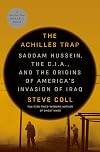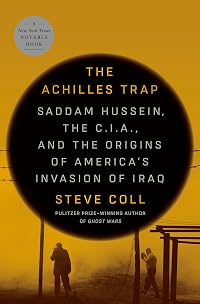
The Achilles Trap: Saddam Hussein, the C.I.A., and the Origins of America's Invasion of Iraq
by Steve Coll
On This Page
Description
"From bestselling and Pulitzer Prize-winning author Steve Coll, the definitive story of the decades-long relationship between the United States and Saddam Hussein, and a deeply researched and news breaking investigation into how human error, cultural miscommunication, and hubris led to one of the greatest geopolitical conflicts of our time When the United States invaded Iraq in 2003, its message was clear: Iraq, under the control of strongman Saddam Hussein, possessed weapons of mass show more destruction which, if left unchecked, posed grave danger to the world. But when no WMDs were found, the US and its allies were forced to consider that their political and intelligence failures had led to one of the most disastrous conflicts of our time. And a more integral question remained unsolved: Why had Saddam seemingly sacrificed his long reign in power by giving the impression that he possessed hidden stocks of dangerous weapons? The Achilles Trap masterfully untangles the people, ploys of power, and geopolitics that led to America's disastrous war with Iraq, and, for the first time, dramatizes America's fundamental miscalculations during its decades-long relationship with Saddam Hussein. Beginning with Saddam's rise to power in 1979 and the birth of Iraq's secret nuclear weapons program, Steve Coll traces Saddam's motives by way of his inner circle. He brings to life the diplomats, scientists, family members, and generals who had no choice but to defer to their leader-a leader directly responsible for the deaths of hundreds of thousands of Iraqis, as well as the torture or imprisonment of hundreds of thousands more. This was a man whose reasoning was impossible to reduce to a simple explanation, and the CIA and successive presidential administrations failed to grasp integral nuances of his paranoia, resentments, and inconsistencies - even when the stakes were incredibly high. Calling on unpublished and under-reported sources, interviews with surviving participants, and Saddam's own transcripts and audio files, many of which have never been made public, Coll pulls together an incredibly comprehensive portrait of a man who was convinced the world was out to get him, and acted accordingly. A work of great historical significance, The Achilles Trap is the definitive account of how corruptions of power, lies of diplomacy, and vanity - on both sides - led to avoidable errors of statecraft, ones that would enact immeasurable human suffering and forever change the political landscape as we know it"-- show lessTags
Recommendations















Member Reviews
There have been numerous books written about the events that led to America’s invasion of Iraq in 2003, most from the American perspective. In The Achilles Trap, journalist Steve Coll has created a sweeping overview that includes the Iraqi side of the story as well. Like Nixon, Saddam Hussein taped many of his interactions with his officials. Coll uses this treasure trove, as well as interviews with key figures in both countries, to create a definitive account of the decades of events leading to the war’s outbreak.
When Saddam took power in 1979, despite the brutality of his regime, America viewed him as an ally against Iran. After Iraq went to war with Iran, the CIA fed Saddam critical information to insure that his forces would show more not be defeated on the field of battle. This was done despite Iraq’s illegal use of chemical weapons. Even with this support, Saddam feared that the CIA was actively working to remove him from office. This led him in the 1980s to order his scientists to begin work on creating an atomic weapon. Saddam’s invasion of Kuwait in 1990 fractured the America-Iraq relationship and led to the US entering the fray. Soundly beaten, but allowed to stay in power, Saddam ordered the destruction of any evidence that he had attempted to create weapons of mass destruction (WMD).
After 1990, all official contact between the US and Iraq were cut off, which led to the CIA having no idea what was taking place in Iraq. Because of this rupture, American officials continued to believe Saddam was still working to develop WMDs. In the years following, Coll shows how the lack of communication between the two countries led each to grow increasingly distrustful of the other. Having destroyed his WMD program, Saddam was convinced that the CIA had to know they had no such weapons. But since he continued to try to obstruct the UN inspectors' search for them in his country, the US still felt the threat was real. Despite the UN inspectors finally concluding there was no such weapon program, following 9/11, ignoring these findings, President George W. Bush made the decision to send troops into Iraq to overthrow Saddam.
This book presents a fascinating picture of how miscalculations on both sides led to a war that would devastate Iraq and result in a deadly civil war there. It is a gripping story and a well told one. This deep dive into the circumstances leading to the conflict is an essential read, and timely. Today, just as then, the lack of formal communications between countries could well be the spark that ignites another needless conflict. show less
When Saddam took power in 1979, despite the brutality of his regime, America viewed him as an ally against Iran. After Iraq went to war with Iran, the CIA fed Saddam critical information to insure that his forces would show more not be defeated on the field of battle. This was done despite Iraq’s illegal use of chemical weapons. Even with this support, Saddam feared that the CIA was actively working to remove him from office. This led him in the 1980s to order his scientists to begin work on creating an atomic weapon. Saddam’s invasion of Kuwait in 1990 fractured the America-Iraq relationship and led to the US entering the fray. Soundly beaten, but allowed to stay in power, Saddam ordered the destruction of any evidence that he had attempted to create weapons of mass destruction (WMD).
After 1990, all official contact between the US and Iraq were cut off, which led to the CIA having no idea what was taking place in Iraq. Because of this rupture, American officials continued to believe Saddam was still working to develop WMDs. In the years following, Coll shows how the lack of communication between the two countries led each to grow increasingly distrustful of the other. Having destroyed his WMD program, Saddam was convinced that the CIA had to know they had no such weapons. But since he continued to try to obstruct the UN inspectors' search for them in his country, the US still felt the threat was real. Despite the UN inspectors finally concluding there was no such weapon program, following 9/11, ignoring these findings, President George W. Bush made the decision to send troops into Iraq to overthrow Saddam.
This book presents a fascinating picture of how miscalculations on both sides led to a war that would devastate Iraq and result in a deadly civil war there. It is a gripping story and a well told one. This deep dive into the circumstances leading to the conflict is an essential read, and timely. Today, just as then, the lack of formal communications between countries could well be the spark that ignites another needless conflict. show less
“The Achilles Trap,” by Steve Coll, is a fascinating, racy account of the events leading to Saddam Hussein’s arrest and the war on Iraq. I have not read other books on the events leading to the misplaced war against Iraq; however, Steve Coll’s book exposes how leaders on both sides made critical judgment errors.
The book starts with a brief exposition of Saddam’s background, which is critical in helping understand his nature. I discovered Saddam Hussein was an assassin who rose to power in Iraq. His childhood influenced his psychology. While he brooked no dissent and tortured dissenters, Saddam was not entirely irrational. As with many authoritarian leaders, the problem is that he did not care for dissent, leading him to make show more critical errors, like the attack on Kuwait.
Steve Coll’s book also exposes the Americans who did not care about Kuwaiti citizens but only for their geopolitical position in the Middle East. The book does not explicitly state Israel’s critical role in helping American strategy, but it lets the reader make the obvious inference.
The book contains fascinating quotes; for instance, Condoleezza Rice expressed an evident lack of concern for the plight of the Iraqis suffering because of American sanctions. He quotes George Bush Jr, who recalled thinking: If a dictator who tortures and gasses his people is not immoral, who is? However, Steve Coll did not take the next step by questioning the immorality of a President who lies to his people and sends his army to an immoral war.
Americans and the British could have avoided the war; this much is evident. Leaders in both countries did not care to investigate the case: they based their case on war on presumptions and lingering hatred. These incidents must make any sensible person question the perspicacity of men and women who hold the reins of power.
The book is well-paced but lacks deep analysis, which is a critical flaw, considering the material at his command. Why, for instance, did no one investigate and indict the American and British leaders, especially when the date proved their duplicity? I believe he should have asked this critical question.
However, he allows discerning readers to make their judgments. show less
The book starts with a brief exposition of Saddam’s background, which is critical in helping understand his nature. I discovered Saddam Hussein was an assassin who rose to power in Iraq. His childhood influenced his psychology. While he brooked no dissent and tortured dissenters, Saddam was not entirely irrational. As with many authoritarian leaders, the problem is that he did not care for dissent, leading him to make show more critical errors, like the attack on Kuwait.
Steve Coll’s book also exposes the Americans who did not care about Kuwaiti citizens but only for their geopolitical position in the Middle East. The book does not explicitly state Israel’s critical role in helping American strategy, but it lets the reader make the obvious inference.
The book contains fascinating quotes; for instance, Condoleezza Rice expressed an evident lack of concern for the plight of the Iraqis suffering because of American sanctions. He quotes George Bush Jr, who recalled thinking: If a dictator who tortures and gasses his people is not immoral, who is? However, Steve Coll did not take the next step by questioning the immorality of a President who lies to his people and sends his army to an immoral war.
Americans and the British could have avoided the war; this much is evident. Leaders in both countries did not care to investigate the case: they based their case on war on presumptions and lingering hatred. These incidents must make any sensible person question the perspicacity of men and women who hold the reins of power.
The book is well-paced but lacks deep analysis, which is a critical flaw, considering the material at his command. Why, for instance, did no one investigate and indict the American and British leaders, especially when the date proved their duplicity? I believe he should have asked this critical question.
However, he allows discerning readers to make their judgments. show less
Ratings
Members
- Recently Added By
Lists

Remember Shuffle Podcast| Iraq War Series: Parts I - VI
13 works; 1 member
Author Information

9+ Works 5,019 Members
Winner of a 1990 Pulitzer Prize for explanatory journalism, Steve Coll has been managing editor of The Washington Post since 1998 and covered Afghanistan as the Post's South Asia bureau chief between 1989 and 1992. Coll is the author of four books, He lives with his wife and three children in Maryland
Awards and Honors
Awards
Distinctions
Notable Lists
Classifications
Statistics
- Members
- 216
- Popularity
- 151,226
- Reviews
- 2
- Rating
- (4.37)
- Languages
- English
- Media
- Paper, Audiobook, Ebook
- ISBNs
- 7
- ASINs
- 2