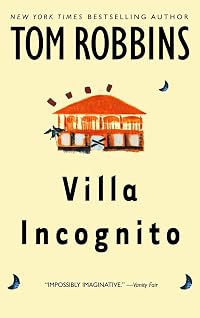
Villa Incognito
by Tom Robbins
On This Page
Description
Imagine that there are American MIAs who chose to remain missing after the Vietnam War. Imagine that there is a family in which four generations of strong, alluring women have shared a mysterious connection to an outlandish figure from Japanese folklore. Imagine just those things (don't even try to imagine the love story) and you'll have a foretaste of Tom Robbins's eighth and perhaps most beautifully crafted novel--a work as timeless as myth yet as topical as the latest international show more threat. On one level, this is a book about identity, masquerade and disguise--about the false mustache of the worldo--but neither the mists of Laos nor the smog of Bangkok, neither the overcast of Seattle nor the fog of San Francisco, neither the murk of the intelligence community nor the mummery of the circus can obscure the linguistic phosphor that illuminates the pages of Villa Incognito. A female fan once wrote to Tom Robbins: Your books make me think, they make me laugh, they make me horny and they make me aware of the wonder of everything in life.o Villa Incognito will surely arouse a similar response in many readers, for in its lusty, amusing way it both celebrates existence and challenges our ideas about it. To say much more about a novel as fresh and surprising as Villa Incognito would run the risk of diluting the sheer fun of reading it. As his dedicated readers worldwide know full well, it's best to climb aboard the Tom Robbins tilt-a-whirl, kiss preconceptions and sacred cows goodbye and simply enjoy the ride. show lessTags
Recommendations



Member Reviews
Villa Incognito, the eighth novel by acclaimed author Tom Robbins, begins with the memorable phrase, “It has been reported that Tanuki fell from the sky using his scrotum as a parachute.”
Welcome to Robbins country, a place where maniacal humour, pointed social commentary, and fantastic plot twists take the place of literary realism. That’s just as well, as he wouldn’t have it any other way.
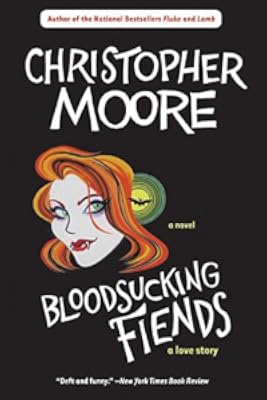
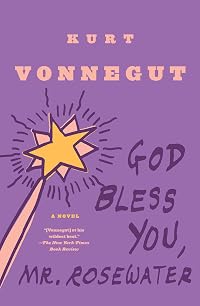
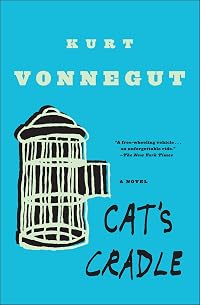
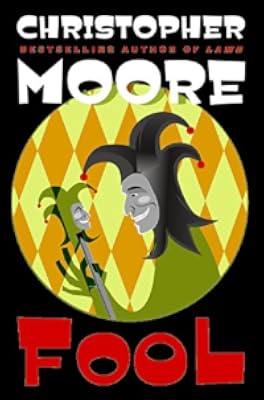
Robbins has made a name for himself with a series of alternately daft and deft novels, marked by a singularity of vision and prose that few can match. Along with quirky contemporaries such as Christopher Moore and Neal Stephenson, and owing more than a great deal to the genre-bending works of Kurt Vonnegut, Jr., Robbins’ works are, at show more their best, devastatingly funny and quick-witted masterpieces, while also serving as sometimes overly blunt satires of the world we live in. If all this comes at the expense of plot, it is a price his fans are willing to pay.
Villa Incognito’s storyline, such as it is, concerns three American MIAs who have chosen to remain missing rather than return to America. As befits a man who once crafted a main character out of an empty tin of baked beans (the tour de force Skinny Legs and All), Robbins manages to incorporate such disparate elements as terrorism, clown fetishists, drug smugglers, Vietnam War, high-wire artists, and a badger-like manifestation from Japanese folklore.
The plots of Robbins’ compositions, as in the best of Vonnegut, exist only to function as a curtain rod over which he drapes his wonderful digressions. No topic is too minor nor too sacred a cow to skewer: He attacks 9/11 and America’s so-called solution to the drug problem with as much manic fervour as he espouses the magical qualities of mayonnaise.
The constant asides onto whatever subject he deems important are what make his tales both so enjoyable to read, and difficult to encapsulate. (For ample proof of this, look no further than the atrocious Hollywood adaptation of his novel Even Cowgirls Get the Blues.)
As such, the plot of Villa incognito is slight. Too slight. There lacks a concrete base to fully support the weight of themes. His characters, excepting the likable Dickie Goldwire and the Colonel Kurtz-like figure of Mars Albert Stubblefield, fail to make any impact beyond the printed page. Like the high-wire performers he describes, Robbins’ story is precariously balanced on too fine a foundation. It falters, and finally tumbles.
Yet that should not dissuade the uninitiated from reveling in the many pleasures to be found. Writer’s Digest proclaimed Robbins “one of the best writers of the 20th century.” Perhaps in his finest works, he is.
Here, however, he’s merely on a quick stroll though the offbeat avenues of his mind. That the result may lack importance doesn’t detract from its entertainment value. show less
Welcome to Robbins country, a place where maniacal humour, pointed social commentary, and fantastic plot twists take the place of literary realism. That’s just as well, as he wouldn’t have it any other way.
Robbins has made a name for himself with a series of alternately daft and deft novels, marked by a singularity of vision and prose that few can match. Along with quirky contemporaries such as Christopher Moore and Neal Stephenson, and owing more than a great deal to the genre-bending works of Kurt Vonnegut, Jr., Robbins’ works are, at show more their best, devastatingly funny and quick-witted masterpieces, while also serving as sometimes overly blunt satires of the world we live in. If all this comes at the expense of plot, it is a price his fans are willing to pay.
Villa Incognito’s storyline, such as it is, concerns three American MIAs who have chosen to remain missing rather than return to America. As befits a man who once crafted a main character out of an empty tin of baked beans (the tour de force Skinny Legs and All), Robbins manages to incorporate such disparate elements as terrorism, clown fetishists, drug smugglers, Vietnam War, high-wire artists, and a badger-like manifestation from Japanese folklore.
The plots of Robbins’ compositions, as in the best of Vonnegut, exist only to function as a curtain rod over which he drapes his wonderful digressions. No topic is too minor nor too sacred a cow to skewer: He attacks 9/11 and America’s so-called solution to the drug problem with as much manic fervour as he espouses the magical qualities of mayonnaise.
The constant asides onto whatever subject he deems important are what make his tales both so enjoyable to read, and difficult to encapsulate. (For ample proof of this, look no further than the atrocious Hollywood adaptation of his novel Even Cowgirls Get the Blues.)
As such, the plot of Villa incognito is slight. Too slight. There lacks a concrete base to fully support the weight of themes. His characters, excepting the likable Dickie Goldwire and the Colonel Kurtz-like figure of Mars Albert Stubblefield, fail to make any impact beyond the printed page. Like the high-wire performers he describes, Robbins’ story is precariously balanced on too fine a foundation. It falters, and finally tumbles.
Yet that should not dissuade the uninitiated from reveling in the many pleasures to be found. Writer’s Digest proclaimed Robbins “one of the best writers of the 20th century.” Perhaps in his finest works, he is.
Here, however, he’s merely on a quick stroll though the offbeat avenues of his mind. That the result may lack importance doesn’t detract from its entertainment value. show less
I stopped reading Tom Robbins in the 90s. What had enraptured me about him in my teens and twenties seemed to have dried up and gone flakey, but I remembered with much love my time spent with Woodpecker and Sissy, among others. It was just chance someone loaned me this book (far too many months go) and at last I've read it.
What a lark! Oh, I'm sure some would talk about the depth and philosophy, the commentary and truth and whatnot, but that's not what I like. I like the fanciful shaping of events, the hopping from this odd vantage point to that. I like the lightness of it. I like the fun.
What was it about? Tanuki and tanukis, America, experiments, and running from the Gods of Bullshit. It's about taking disaster in one's hands to move show more on and falling into deep gorges. It's about endless knock-knock jokes, Southeast Asia, walking on a wire, going missing on purpose, love, appetite, and chrysanthemums. I may have just spoiled the whole book right there, but read it anyway. show less
What a lark! Oh, I'm sure some would talk about the depth and philosophy, the commentary and truth and whatnot, but that's not what I like. I like the fanciful shaping of events, the hopping from this odd vantage point to that. I like the lightness of it. I like the fun.
What was it about? Tanuki and tanukis, America, experiments, and running from the Gods of Bullshit. It's about taking disaster in one's hands to move show more on and falling into deep gorges. It's about endless knock-knock jokes, Southeast Asia, walking on a wire, going missing on purpose, love, appetite, and chrysanthemums. I may have just spoiled the whole book right there, but read it anyway. show less
Wonder Bread and Hellmann's mayonnaise, animistic Buddhism, Frida Kahlo's clitoris, Vietnam War MIA expats, higher biblical criticism, VINE RIPE TOMATOES, lesbian clowns, demigod impregnation of humans, heroin smuggling.
...All terms and items and plot devices found in Villa Incognito, either recurring or noted in passing... The mind of Tom Robbins indeeds spins into a wide range of odd, humorous, sacrilegious, and historically and emotionally unsettling and enjoyable prose. He ranges up and down the philosophical, biological, political, and sociological scales with the skill and adeptness of a master concert pianist. This short novel is a quick read and is markedly enjoyable and abounds with tidbits and concepts that stimulate one to show more then investigate more in-depth to further one's level of knowledge of what has been woven into the storyline.
(note to self: finish Joyce's ULYSSES)
I encountered my first Robbins novel the summer after I graduated from college in 1986 and moved to start a job in a hospital lab in Boston. I was there for two weeks before my wife joined me from Philadelphia, and had stopped into a bookstore on my way home from a day's orientation. Found Jitterbug Perfume (1984) and consumed it within three evenings. Went back on Friday after work and purchased the other three novels by Robbins that were on the shelf. Have since enjoyed, albeit several years after their publications, the others by him. This is the last of his novels (2003) that I had yet to read, and true to character I'm well behind the initial publications.
All have been enjoyable in a fanciful way, abounding with fairly unlikely yet believable characters (traveling spoon and painted stick, anyone?). They've all been nice distractions from the daily grind and on-going forward progress of life.
Sit back and allow Tanuki to entertain you... but watch out for hyper-inflated scrotums. show less
...All terms and items and plot devices found in Villa Incognito, either recurring or noted in passing... The mind of Tom Robbins indeeds spins into a wide range of odd, humorous, sacrilegious, and historically and emotionally unsettling and enjoyable prose. He ranges up and down the philosophical, biological, political, and sociological scales with the skill and adeptness of a master concert pianist. This short novel is a quick read and is markedly enjoyable and abounds with tidbits and concepts that stimulate one to show more then investigate more in-depth to further one's level of knowledge of what has been woven into the storyline.
(note to self: finish Joyce's ULYSSES)
I encountered my first Robbins novel the summer after I graduated from college in 1986 and moved to start a job in a hospital lab in Boston. I was there for two weeks before my wife joined me from Philadelphia, and had stopped into a bookstore on my way home from a day's orientation. Found Jitterbug Perfume (1984) and consumed it within three evenings. Went back on Friday after work and purchased the other three novels by Robbins that were on the shelf. Have since enjoyed, albeit several years after their publications, the others by him. This is the last of his novels (2003) that I had yet to read, and true to character I'm well behind the initial publications.
All have been enjoyable in a fanciful way, abounding with fairly unlikely yet believable characters (traveling spoon and painted stick, anyone?). They've all been nice distractions from the daily grind and on-going forward progress of life.
Sit back and allow Tanuki to entertain you... but watch out for hyper-inflated scrotums. show less
I enjoyed this book muchmore than I expected. Typically I don't go for fantasy/magical realism or humor, but Robbins blended in just enough cynical political commentary and erudite references to make this a very fun book on many levels. I love the over-the-top vocabulary and bizarre analogies used to discuss things that would otherwise be riduclous or coarse. I didn't love the nice neat packaging at the end-- I thought is was kind of a sell-out and didn't blend well with the vague and mysterious nature of the rest of the book. But overall, a great quick read-- I think Robbins will have a place in my library as respite between more demanding reads (I can't read Tolstoy and Dickens all the time or my head might explode).
I recall first enjoying this audiobook when it first came out. This was a time I was less rigorous about recording my opinions. Still I was intrigued as the commentary on American military/foreign policy from the Vietnam War to 9/11 was maybe the most political I have read from Robbins.
The character "Tanuki himself" is a randy rogue and kind of demigod
The character "Tanuki himself" is a randy rogue and kind of demigod
My heavens to Betsy, this is fanciful stuff! The (mostly) human part of the narrative deals with three ex-pat Americans in Laos who supply heroin to hospices as a charitable enterprise. Along the way, we have erudition, particularly in areas of faith. The book is chock-full of thought-provoking insights in this area. We are steeped in the regional lore of Southeast Asia, and that brings us to the tanuki, the wild Japanese racoon dog.
In "Incognito," the tanuki seek out human females to mate with, and when they succeed, it ruins the woman for any other relationship. When the tanuki and the woman conceive, another human female is born, and becomes a teacher to pass on certain aspects of the regional lore. My efforts so far to meld this show more plot line into the overall theme of faith and charity as it is illicitly pursued in Laos - I've come a cropper.
Highly diverting work. I love the erudition, and the offbeat sensuality, especially in the heart and mind of the tanuki. Plotwise, this is a very straightforward book; don't come for the plot only, come for the fun!
http://bassoprofundo1.blogspot.com/2010/06/villa-incognito-by-tom-robbins.html show less
In "Incognito," the tanuki seek out human females to mate with, and when they succeed, it ruins the woman for any other relationship. When the tanuki and the woman conceive, another human female is born, and becomes a teacher to pass on certain aspects of the regional lore. My efforts so far to meld this show more plot line into the overall theme of faith and charity as it is illicitly pursued in Laos - I've come a cropper.
Highly diverting work. I love the erudition, and the offbeat sensuality, especially in the heart and mind of the tanuki. Plotwise, this is a very straightforward book; don't come for the plot only, come for the fun!
http://bassoprofundo1.blogspot.com/2010/06/villa-incognito-by-tom-robbins.html show less
Book number nine in the fifty book challenge, and it almost feels like cheating since Robbins is so easy to read. Not half as dense as the books I usually pick up. All the same, he tells an interesting story, and the smatterings of Robbinsian philosophy permeate per usual. There are times you laugh, there are times where you just roll your eyes, and there are times when you think that's what I've been trying to say for so long. Anyways, I guess the point is he made me want to go to South East Asia and grow poppies.
Members
- Recently Added By
Lists

Blue Pyramid 1,276 Best Books of All Time
1,248 works; 32 members
Author Information

17+ Works 36,725 Members
Tom Robbins is a writer, novelist, editor, and journalist. He was born in Blowing Rock, North Carolina on July 22, 1936. Robbins studied journalism at Washington and Lee for two years and later graduated from the Richmond Professional Institute in 1961. He attended the Graduate School of Far Eastern Studies at the University of Washington. From show more 1957 to 1960, Robbins served in the U.S. Air Force stationed in Korea as a meteorologist. During his years in the service he took courses in Japanese culture and aesthetics in Tokyo. After the military, Robbins took a job as a copy editor at the Richmond Times-Dispatch. Robbins later worked as feature editor and art critic at the Seattle Times and part time at the Seattle Post-Intelligencer. Robbins published the novel, Another Roadside Attraction in 1971. Other books include Even Cowgirls Get the Blues and Still Life With Woodpecker. Even Cowgirls Get the Blues was made into a 1996 film directed by Gus Van Sant. Robbins has also acted in such films as Made in Heaven and Mrs. Parker and the Vicious Circle. A documentary entitled, Tom Robbins: A Writer in the Rain was made in 1997. In 2014, his title Tibetan Peach Pie: A True Account of an Imaginative Life, made The New York Times Best Seller List. (Bowker Author Biography) Tom Robbins is a Southerner by birth, Robbins has lived in & around Seattle since 1962. (Publisher Provided) show less
Awards and Honors
Distinctions
Common Knowledge
- Canonical title
- Villa Incognito
- Original title
- Villa Incognito
- Original publication date
- 2003
- Epigraph
- You never know to whom you're talking.
-Bertolt Brecht, The Threepenny Opera - Dedication
- Für Alexa, wen sonst?
For Alexa, of course - First words
- It has been reported that Tanuki fell from the sky using his scrotum as a parachute.
- Last words
- (Click to show. Warning: May contain spoilers.)Could it be, do you suppose, that despite her unfortunate vocabulary, Bootsey was on to something all along?
- Original language*
- Amerikanisch
*Some information comes from Common Knowledge in other languages. Click "Edit" for more information.
Classifications
Statistics
- Members
- 2,306
- Popularity
- 8,677
- Reviews
- 34
- Rating
- (3.57)
- Languages
- 7 — Czech, English, French, German, Greek, Italian, Russian
- Media
- Paper, Audiobook, Ebook
- ISBNs
- 26
- ASINs
- 4