On This Page
Description
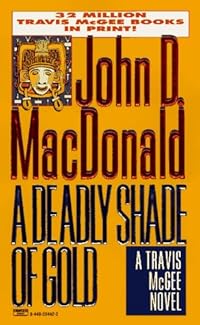
“John D. MacDonald was the great entertainer of our age, and a mesmerizing storyteller.”—Stephen KingWith an Introduction by Lee Child
When Travis McGee picks up the phone and hears a voice from his past, he can’t help it: He has to meddle. Especially when he has the chance to reunite Sam Taggart, a reckless, restless man like himself, with the woman who’s still waiting for him. But what begins as a simple matchmaking scheme soon becomes a bloody chase that takes McGee to Mexico, show more a beautiful country from which he hopes to return alive.
Deception. Betrayal. Heartbreak. When Sam left his girlfriend, Nora, and vanished from Fort Lauderdale, no one was surprised. But when he shows up three years later lying in a pool of his own blood, people start to ask questions. And his old friend Travis McGee is left to find answers.
But all he has to go on are a gold Aztec idol and a very angry ex-girlfriend. Is that enough to find his friend’s killer? And when the truth is as terrifying as this, does he really want answers after all?
Praise for A Deadly Shade of Gold
“Travis McGee is the last of the great knights-errant: honorable, sensual, skillful, and tough. I can’t think of anyone who has replaced him. I can’t think of anyone who would dare.”—Donald Westlake
“John D. MacDonald is a shining example for all of us in the field.”—Mary Higgins Clark. show less
Tags
Recommendations






























Member Reviews
“I hoped she was taken dead so quickly she was given no micro-second of the terrible reality of knowing she was ended.”
If ever there existed a book within a series which makes you realize as a reader that the series is something really special, this is it. You realize as you read A Deadly Shade of Gold that the Travis McGee series is more than the sum of its parts, and better than almost any other series in the genre ever written. This is the entry where you can visibly see on paper, and almost tangibly feel in your bones the series transforming from something very good, into something for the ages, worthy of being placed in a time capsule for generations hundreds of years from now to discover.
“She loved her tropic sea and it had show more killed her dead, in the hot blazing days of August.”
All John D. MacDonald had promised in the very good Deep Blue Good-bye was delivered on in this fifth book in the famous Travis McGee series. The lengthiest entry of the entire series is involving, insightful, violent, and yet resonating. It preceded Bright Orange For the Shroud and Darker Than Amber, making it the finest three-book stretch of the series until decades later, when we got Free Fall in Crimson, Cinnamon Skin, and the final Travis McGee, The Lonely Silver Rain.
I’m going to use a lot of quotes this time around, but I’m not really spoiling anything for anyone, because frankly, you can pretty much find something quote-worthy every two or three pages. And the story is so complex, so full of characters and motivations, there really isn’t a spoiler attached. As I mentioned, this is MacDonald taking the series to new heights, and it’s a stunningly good read. The body count is incredibly high here, yet the narrative is so rich and resonating, so filled with insight, it masks just how much life is lost in this one. McGee does actually take a body count as he lays wounded near the end of the book, and reaches ten. But the dying isn’t over yet.
A Deadly Shade of Gold is one of the Mexico stories, which seemed an extension of Florida, and McGee. Nothing was lost by taking McGee out of his Ft. Lauderdale environment in the Mexico entries. He’s in New York for a spell, and Los Angeles, but you can feel rural Mexico in this one:
“At sea level the heat was moist, full of a smell of garbage and flowers, and a faint salty flavor of the sea.”
“Unpaved streets of mud and dust, some clumsy churches, a public square with a small sagging bandstand, naked children, somnolent dogs, snatches of loud music from small cantinas, scores of small weathered stalls, squatting street vendors, ancient rickety trucks, a massive, pervasive almost overpowering stench composed of a rare mixture of mud flats, dead fish, greasy cooking and outdoor plumbing.”
Author Carl Hiaasen, in praising the series — as do a slew of writers which, were I to list them all, male and female, would read like a who’s who of great writers — talks about MacDonald’s ability to capture Florida perfectly, in all it’s racy sense of promise, breath-grabbing beauty, and languid sleaze. MacDonald does the same with Mexico. That may in fact be why the books where part of the narrative is set in Mexico, seem so natural. Mexico seems in fact, in this series, to be an extension of Florida, with much of the same atmosphere, including MacDonald’s disdain for its spoilage by greed and corruption.
There is also a lot about Cuba in this book, which like Mexico, has a strong connection with McGee’s Florida. McGee’s friend Raoul tries to explain just how it was in Cuba under Batista, and how it didn’t get better with Castro:
“You are not such a great fool as to try to fight such power, neither do you get too close to a power which has a silent and secret side, sudden disappearances, quiet confiscations. What you do, you give him and the ones close to him no opening. How do businessmen survive under Salazar, Franco, any of them? I am not being an apologist for my class. Perhaps we should have done something sooner, before the communistas came in with their perversions of freedom.”
Later, when Raoul puts McGee into contact with Dominguez, McGee inquires whether Dominguez knows some of the wealthy Cubans who made it out, and gets this response:
"I used to know them well. Just as Raoul used to know them well. Upper class Havana was a small community, McGee. But now there is...a considerable financial difference between us. Raoul and I came out later. It is the Castro equation, my friend. The later you left, the cleaner you were plucked. So we no longer travel in the same circles."
To know Florida, as MacDonald did, was to know both Mexico and Cuba, and there is a deep, rich resonance to all that happens in this narrative centered on those two countries. Mexico and Cuba loom large over McGee’s quest for justice for his friend Sam Taggart’s murder. McGee is doing it mostly for Nora, but also for some gold artifacts which led to Sam’s ugly death in a lonely hotel room:
“When a man with a hundred dollar car gets killed in a four dollar cabin, the pros are not going to get particularly agitated.”
But love dies hard, and the chance of reconciliation between Sam and Nora has McGee heading to New York, with Nora in tow, because this isn’t just his quest to unravel what happened, but hers as well:
“I cannot describe the look on her face then, a hunting look, a merciless look, a look of dreadful anticipation. It reminded me that the worst thing the Indians could do to their enemy prisoners was turn them over to the women.”
But there is danger, and deception, which bothers Nora. And there is a very dangerous man from the old Cuban regime living high on the hog in Mexico. McGee and Nora get close, and in a marvelously tense and exciting portion of the narrative, McGee sneaks into the compound at night, is attacked by a dog, and moves stealthily in the darkness to discover what’s been happening. There he meets the beautiful little Almah, with whom Sam was in love. McGee’s plan is to fool her into spilling the beans, and toward that end, he needs to frighten her:
"I wanted her to feel death so close she could smell the shroud and the dank earth."
But even when he’s accomplished what he needed to, there is a sickening feeling that the cost was too great:
"Her glance moved swiftly away again, reminding me of the way a spiritless dog cringes when inviting a caress."
"As I started up I told myself that something would have broken her sooner or later. She would have come up against something that couldn't be cajoled or seduced. The ones with no give, the ones with the clear little porcelain hearts shatter. And in shattering, some splinters are lost, so that when, with great care, they are mended, the little fracture lines show. But when you break a pretty thing, even if it is a cheap pretty thing, something does go out of the world. Something died in that clearing. And she would never fit together as well again."
All the while McGee moves closer to discovering what happened, he moves closer to Nora as well. He soon realizes that through actions aboard a boat, goaded into killing under false pretenses, Sam, at least the Sam both he and Nora knew, died long before he returned to Florida with the stolen artifact. And then, something beyond McGee’s control, and beyond the acceptable risk they were taking occurs, changing everything for McGee. As good as the story has been up to that point — and it’s stellar — it then gets better. Yes, it appears to meander a bit as McGee tries to drown his sorrows, but once Raoul puts McGee in touch with Dominguez, the story gets grittier, weirder, and more violent, with McGee desperately attempting to keep at bay his depression about all that’s happened, and all that’s been lost:
“There can be a sort of emotional exhaustion compounding of finding no good answers to anything. Too much had faded away, and the only target left was a grotesque pornographer with a voice like a trapped bee, and he seemed peripheral to the whole thing.”
But he may not be as peripheral as McGee first thought, and there is some unexpected violence to this one, which echoes all the way back to Cuba. The ending is not violent at all, but kind and resonating, as McGee plays guardian angel so at least one good thing can come out of Sam Taggart’s death.
Rich, colorful, incredibly involving and satisfying, A Deadly Shade of Gold is the kind of read that is marvelous on its own, and foreshadows the even deeper and more mature resonance of the last few books in the series. Meyer is only at the beginning of the narrative in this one, but will soon become an integral part of the series, taking on a larger role as McGee’s confidant, and sometimes conscience. At over 400 pages, there is a lot here for a McGee novel, but the ride, and the ending, make it all worth the reader’s time. A marvelous achievement within the series, and a book which set the bar higher for not only this series, but this genre. Highly recommended.
“For Superman it’s easy. For Mike Hammer it’s easy. But real people wander around in the foggy foggy dew, and never get to understand anything completely, themselves included.” show less
If ever there existed a book within a series which makes you realize as a reader that the series is something really special, this is it. You realize as you read A Deadly Shade of Gold that the Travis McGee series is more than the sum of its parts, and better than almost any other series in the genre ever written. This is the entry where you can visibly see on paper, and almost tangibly feel in your bones the series transforming from something very good, into something for the ages, worthy of being placed in a time capsule for generations hundreds of years from now to discover.
“She loved her tropic sea and it had show more killed her dead, in the hot blazing days of August.”
All John D. MacDonald had promised in the very good Deep Blue Good-bye was delivered on in this fifth book in the famous Travis McGee series. The lengthiest entry of the entire series is involving, insightful, violent, and yet resonating. It preceded Bright Orange For the Shroud and Darker Than Amber, making it the finest three-book stretch of the series until decades later, when we got Free Fall in Crimson, Cinnamon Skin, and the final Travis McGee, The Lonely Silver Rain.
I’m going to use a lot of quotes this time around, but I’m not really spoiling anything for anyone, because frankly, you can pretty much find something quote-worthy every two or three pages. And the story is so complex, so full of characters and motivations, there really isn’t a spoiler attached. As I mentioned, this is MacDonald taking the series to new heights, and it’s a stunningly good read. The body count is incredibly high here, yet the narrative is so rich and resonating, so filled with insight, it masks just how much life is lost in this one. McGee does actually take a body count as he lays wounded near the end of the book, and reaches ten. But the dying isn’t over yet.
A Deadly Shade of Gold is one of the Mexico stories, which seemed an extension of Florida, and McGee. Nothing was lost by taking McGee out of his Ft. Lauderdale environment in the Mexico entries. He’s in New York for a spell, and Los Angeles, but you can feel rural Mexico in this one:
“At sea level the heat was moist, full of a smell of garbage and flowers, and a faint salty flavor of the sea.”
“Unpaved streets of mud and dust, some clumsy churches, a public square with a small sagging bandstand, naked children, somnolent dogs, snatches of loud music from small cantinas, scores of small weathered stalls, squatting street vendors, ancient rickety trucks, a massive, pervasive almost overpowering stench composed of a rare mixture of mud flats, dead fish, greasy cooking and outdoor plumbing.”
Author Carl Hiaasen, in praising the series — as do a slew of writers which, were I to list them all, male and female, would read like a who’s who of great writers — talks about MacDonald’s ability to capture Florida perfectly, in all it’s racy sense of promise, breath-grabbing beauty, and languid sleaze. MacDonald does the same with Mexico. That may in fact be why the books where part of the narrative is set in Mexico, seem so natural. Mexico seems in fact, in this series, to be an extension of Florida, with much of the same atmosphere, including MacDonald’s disdain for its spoilage by greed and corruption.
There is also a lot about Cuba in this book, which like Mexico, has a strong connection with McGee’s Florida. McGee’s friend Raoul tries to explain just how it was in Cuba under Batista, and how it didn’t get better with Castro:
“You are not such a great fool as to try to fight such power, neither do you get too close to a power which has a silent and secret side, sudden disappearances, quiet confiscations. What you do, you give him and the ones close to him no opening. How do businessmen survive under Salazar, Franco, any of them? I am not being an apologist for my class. Perhaps we should have done something sooner, before the communistas came in with their perversions of freedom.”
Later, when Raoul puts McGee into contact with Dominguez, McGee inquires whether Dominguez knows some of the wealthy Cubans who made it out, and gets this response:
"I used to know them well. Just as Raoul used to know them well. Upper class Havana was a small community, McGee. But now there is...a considerable financial difference between us. Raoul and I came out later. It is the Castro equation, my friend. The later you left, the cleaner you were plucked. So we no longer travel in the same circles."
To know Florida, as MacDonald did, was to know both Mexico and Cuba, and there is a deep, rich resonance to all that happens in this narrative centered on those two countries. Mexico and Cuba loom large over McGee’s quest for justice for his friend Sam Taggart’s murder. McGee is doing it mostly for Nora, but also for some gold artifacts which led to Sam’s ugly death in a lonely hotel room:
“When a man with a hundred dollar car gets killed in a four dollar cabin, the pros are not going to get particularly agitated.”
But love dies hard, and the chance of reconciliation between Sam and Nora has McGee heading to New York, with Nora in tow, because this isn’t just his quest to unravel what happened, but hers as well:
“I cannot describe the look on her face then, a hunting look, a merciless look, a look of dreadful anticipation. It reminded me that the worst thing the Indians could do to their enemy prisoners was turn them over to the women.”
But there is danger, and deception, which bothers Nora. And there is a very dangerous man from the old Cuban regime living high on the hog in Mexico. McGee and Nora get close, and in a marvelously tense and exciting portion of the narrative, McGee sneaks into the compound at night, is attacked by a dog, and moves stealthily in the darkness to discover what’s been happening. There he meets the beautiful little Almah, with whom Sam was in love. McGee’s plan is to fool her into spilling the beans, and toward that end, he needs to frighten her:
"I wanted her to feel death so close she could smell the shroud and the dank earth."
But even when he’s accomplished what he needed to, there is a sickening feeling that the cost was too great:
"Her glance moved swiftly away again, reminding me of the way a spiritless dog cringes when inviting a caress."
"As I started up I told myself that something would have broken her sooner or later. She would have come up against something that couldn't be cajoled or seduced. The ones with no give, the ones with the clear little porcelain hearts shatter. And in shattering, some splinters are lost, so that when, with great care, they are mended, the little fracture lines show. But when you break a pretty thing, even if it is a cheap pretty thing, something does go out of the world. Something died in that clearing. And she would never fit together as well again."
All the while McGee moves closer to discovering what happened, he moves closer to Nora as well. He soon realizes that through actions aboard a boat, goaded into killing under false pretenses, Sam, at least the Sam both he and Nora knew, died long before he returned to Florida with the stolen artifact. And then, something beyond McGee’s control, and beyond the acceptable risk they were taking occurs, changing everything for McGee. As good as the story has been up to that point — and it’s stellar — it then gets better. Yes, it appears to meander a bit as McGee tries to drown his sorrows, but once Raoul puts McGee in touch with Dominguez, the story gets grittier, weirder, and more violent, with McGee desperately attempting to keep at bay his depression about all that’s happened, and all that’s been lost:
“There can be a sort of emotional exhaustion compounding of finding no good answers to anything. Too much had faded away, and the only target left was a grotesque pornographer with a voice like a trapped bee, and he seemed peripheral to the whole thing.”
But he may not be as peripheral as McGee first thought, and there is some unexpected violence to this one, which echoes all the way back to Cuba. The ending is not violent at all, but kind and resonating, as McGee plays guardian angel so at least one good thing can come out of Sam Taggart’s death.
Rich, colorful, incredibly involving and satisfying, A Deadly Shade of Gold is the kind of read that is marvelous on its own, and foreshadows the even deeper and more mature resonance of the last few books in the series. Meyer is only at the beginning of the narrative in this one, but will soon become an integral part of the series, taking on a larger role as McGee’s confidant, and sometimes conscience. At over 400 pages, there is a lot here for a McGee novel, but the ride, and the ending, make it all worth the reader’s time. A marvelous achievement within the series, and a book which set the bar higher for not only this series, but this genre. Highly recommended.
“For Superman it’s easy. For Mike Hammer it’s easy. But real people wander around in the foggy foggy dew, and never get to understand anything completely, themselves included.” show less
"A Deadly Shade of Gold" is the fifth installment of this amazing series and it is a terrific thriller of a novel from cover to cover. At over four hundred pages, it is one of the longer McGee novels, but well worth the time it takes to read. It is filled with adventure, intrigue, romance, social commentary, and some of the best and most in-depth characterizations you will read anywhere. One of the things that really stands out about Macdonald's McGee series is that somehow he captures the substance of people and is able to convey it in his lengthy detailed descriptions. This novel takes McGee on some journeys, mainly away from his beloved sea. He starts in Florida,heads to deep Mexico, and ends up in Tinsel Town. There is almost never show more any let up in the tension though.
Here, McGee is after revenge and after some treasure that has been misappropriated and he goes through an entire range of emotions from shock and anger and so on and actually does things that are quite shocking and cruel in his quest to get the bottom of the mystery. This is not merely a novel about McGee working on commission to get someone's money back from bad folks, but McGee trying to avenge a friend -Sam Taggart- and he is emotionally attached to this quest and to Sam's long-lost love Nora, who tags along with McGee to adventures and dangers she could barely have imagined when she set out on this quest. One of the more striking things about the McGee novels is that it is about a man who muses about society and his place in it. He lives on a houseboat, doesn't exactly work a regular job, and is quite cynical about the institutions and people he encounters and about what their motives are. The social commentary he engages in does not feel dated or past its time even now. show less
Here, McGee is after revenge and after some treasure that has been misappropriated and he goes through an entire range of emotions from shock and anger and so on and actually does things that are quite shocking and cruel in his quest to get the bottom of the mystery. This is not merely a novel about McGee working on commission to get someone's money back from bad folks, but McGee trying to avenge a friend -Sam Taggart- and he is emotionally attached to this quest and to Sam's long-lost love Nora, who tags along with McGee to adventures and dangers she could barely have imagined when she set out on this quest. One of the more striking things about the McGee novels is that it is about a man who muses about society and his place in it. He lives on a houseboat, doesn't exactly work a regular job, and is quite cynical about the institutions and people he encounters and about what their motives are. The social commentary he engages in does not feel dated or past its time even now. show less
Wildly uneven and way overlong, this one packs in every bit of melodrama MacDonald can scrounge up from his overactive imagination. There are passages that are hard to read because they are so overdone, and passages that are hard to read because they are so painful. But scattered throughout are those gems--two or three paragraphs of prose so right and so pure that it would do Fitzgerald proud. Our anti-hero (?), Travis McGee, is closer to his old bastard self in this one than in the previous outing where he was rather tame for some unknown reason. But he always has things to teach us, like how to win the respect of Mexican villagers, how to fend off an angry attack dog, and how to threaten women so that they tell you (for pages) exactly show more what you need to know to advance the plot. And that's just the tip of the iceberg. A joy ride it isn't. But neither is it boring. show less
In this 5th book in the Travis McGee series MacDonald showed more of his opinions than in the previous books. For example,
"When dawn came, there would be a hundred thousand more souls alive in the world than on the previous day, three quarters of a million more every week. This is the virus theory of mankind. The pretentious virus, never knowing that it is a disease. Imagine a great ship from a far galaxy which inspects a thousand green planets and then comes to ours and, from on high, looks down at all the scabs, the buzzings, the electronic jabberings, the poisoned air and water, the fetid night glow. A little cave-dwelling virus mutated, slew the things which balanced the ecology, and turned the fair planet sick. An overnight show more disease, racing and explosive compared with geological time. I think they would be concerned. They would be glad to have caught it in time. By the time of their next inspection, a hundred thousand years hence, this scabrous growth might have infected this whole region of an unimportant galaxy. They would push the button. Too bad. This happens every once in a while. Make a note to re-seed it the next time around, after it has cooled down."
What struck me about them is that so many of these 1960s feelings are so relevant to now, such as:
"If we can restrain ourselves from killing off our own rebels, our doubters and dreamers, all in the name of making ourselves strong, then we can prevail." or
"The president is selling the country down the river with the help of the Supreme Court. Agree with us or you are a marked traitor. You know the sort of thing, all that tiresome pea-brained nonsense that attracts those people who are so dim-witted that the only way they can understand the world is to believe that it is all some kind of conspiracy."
As for the mystery, it didn't really read like a mystery but as a revenge play. And just like the revenge plays, there were a lot of deaths. If I hadn't been enjoying the snide comments on society so much, I am uncertain I would have liked this plot. While not a typical hard-boiled detective story, it is more hard-boiled than I usually like. show less
"When dawn came, there would be a hundred thousand more souls alive in the world than on the previous day, three quarters of a million more every week. This is the virus theory of mankind. The pretentious virus, never knowing that it is a disease. Imagine a great ship from a far galaxy which inspects a thousand green planets and then comes to ours and, from on high, looks down at all the scabs, the buzzings, the electronic jabberings, the poisoned air and water, the fetid night glow. A little cave-dwelling virus mutated, slew the things which balanced the ecology, and turned the fair planet sick. An overnight show more disease, racing and explosive compared with geological time. I think they would be concerned. They would be glad to have caught it in time. By the time of their next inspection, a hundred thousand years hence, this scabrous growth might have infected this whole region of an unimportant galaxy. They would push the button. Too bad. This happens every once in a while. Make a note to re-seed it the next time around, after it has cooled down."
What struck me about them is that so many of these 1960s feelings are so relevant to now, such as:
"If we can restrain ourselves from killing off our own rebels, our doubters and dreamers, all in the name of making ourselves strong, then we can prevail." or
"The president is selling the country down the river with the help of the Supreme Court. Agree with us or you are a marked traitor. You know the sort of thing, all that tiresome pea-brained nonsense that attracts those people who are so dim-witted that the only way they can understand the world is to believe that it is all some kind of conspiracy."
As for the mystery, it didn't really read like a mystery but as a revenge play. And just like the revenge plays, there were a lot of deaths. If I hadn't been enjoying the snide comments on society so much, I am uncertain I would have liked this plot. While not a typical hard-boiled detective story, it is more hard-boiled than I usually like. show less
Over the years I have read many Travis McGee novels and enjoyed his escapades from the boat he lives on in South Florida. This effort is different as he leaves his boat to find out who murdered his friend. Not even half-way through this book, I began to find the events contrived, the plot tedious and the characters boring. I was expecting much more and now I will have to read some of his other novels and maybe reread some to prove that MacDonald usually writes better than this. We will see.
This entry in the Travis McGee series takes our reluctant knight from the comfy confines of his houseboat to an obscure Mexican resort town. McGee traces the footsteps of his brutally murdered friend Sam Taggart. He's accompanied by the leggy and luscious Nora Gardino, the dame Sam loved and left years ago.
What they uncover is a rat's nest of corruption and crime, with all tendrils leading back to a shadowy millionaire.
This is not my favorite among the MacDonald 'color' novels I've read, but it's still very high quality entertainment.
What they uncover is a rat's nest of corruption and crime, with all tendrils leading back to a shadowy millionaire.
This is not my favorite among the MacDonald 'color' novels I've read, but it's still very high quality entertainment.
Written in the 1960's and 1970's, John D. MacDonald's books were ostensibly adventure/mysteries, but his main protagonist, Travis McGee, gave voice to Mac Donald's visionary worldview that accurately predicted the cultural/political polarization of our time.
Members
- Recently Added By
Lists

A Rainbow of Books: Colors in the Title
570 works; 24 members
Author Information

John D. MacDonald was born in Sharon, Pennsylvania on July 24, 1916. He received a B.S. from Syracuse University in 1938 and an M.B.A. from the Harvard Graduate School of Business Administration in 1939. During World War II, he served in the Army. His first novel, Brass Cupcake, was published in 1950. He wrote about 70 books during his lifetime show more including the Travis McGee series, Condominium, No Deadly Drug, Nothing Can Go Wrong, and A Friendship: The Letters of Dan Rowan and John Dann MacDonald. A Flash of Green was adapted into a movie by the same name and The Excuse was adapted into a movie entitled Cape Fear. He received numerous awards including the Ben Franklin Award for the best American short story in 1955, the Grand Prix de Litterature Policiere for A Key to the Suite in 1964, the Mystery Writers of America's Grand Master Award in 1972, the American Book Award for The Green Ripper in 1980. He died from complications of an earlier heart bypass surgery on December 28, 1986 at the age of 70. (Bowker Author Biography) show less
Series

Belongs to Publisher Series
Work Relationships
Common Knowledge
- Canonical title
- A Deadly Shade of Gold
- Original title
- A deadly shade of gold
- Original publication date
- 1965-02
- People/Characters
- Travis McGee; Meyer the economist; Miguel Alconedo; Ken Branks; Shaja Dobrak; Paul Dominguez (show all 17); Girdon Face (Doctor); Chip Fertacci; Nora Gardino; Almah Hichin; Warner B. Gifford (professor, Florida Southwestern University); Constancia Melgar "Connie"; Carlos Menterez y Crusada; Sam Taggert; Ramon Talavera; Raoul Tenero; Calvin Tomberlin "Cal"
- Important places
- Fort Lauderdale, Florida, USA; Long Beach, California, USA; Miami, Florida, USA; New York, New York, USA; Puerto Altamura, Mexico
- First words
- A smear of fresh blood has a metallic smell.
- Last words
- (Click to show. Warning: May contain spoilers.)And there was some money to send down to Felicia ... as Sam had promised her ....
- Blurbers
- Vonnegut, Kurt Jr.
- Original language
- English
Classifications
Statistics
- Members
- 1,000
- Popularity
- 25,855
- Reviews
- 15
- Rating
- (3.82)
- Languages
- 5 — English, Estonian, Finnish, German, Spanish
- Media
- Paper, Audiobook, Ebook
- ISBNs
- 29
- UPCs
- 1
- ASINs
- 21