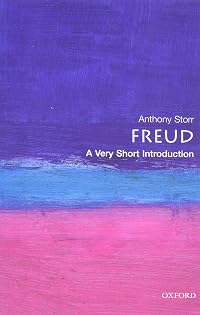
Freud: A Very Short Introduction
by Anthony Storr
On This Page
Description
Sigmund Freud revolutionized the way in which we think about ourselves. From its beginnings as a theory of neurosis, Freud developed psychoanalysis into a general psychology, which became widely accepted as the predominant mode of discussing personality and interpersonal relationships. Anthony Storr goes one step further and investigates the status of Freud's legacy today and the disputes that surround it.Tags
Recommendations












Member Reviews
Introducing Freud and his work, Anthony Storr delivers here 'an attempt to evaluate his more important theories in the light of modern knowledge'. When it comes to 'evaluating', I honestly can't tell if he has failed or succeeded -at the time of reading this I was too ignorant of psychoanalysis and Freud's work (I still haven't read any of his original papers!) and of the debates and controversies it has been stirring, ever since he first put forward some of his most famous assumptions, to have a valid opinion on the matter. What I wanted here was an introduction to the man and his theories. I got it. I would therefore recommend this brief little book to anyone who, like me, is interested yet clueless.
In fact, as a trained analyst who show more taught psychotherapy at Oxford, you would expect the author to be highly sympathetic to Freud. To some extent he is, acknowledging his overall positive heritage (more tolerance and understanding towards neurosis, sexual deviations, emotional maladaptation...), although I found him trying a bit too hard to make sense of some of Freud's still most dumbfounding claims (the Oedipus Complex is a case in point; as far as I was concerned it still sounds like the mumbo-jumbo from a crank, no matter how he tries to rephrase and reconceptualise it... -but, again: don't take my word for it; I am ignorant of psychoanalysis, here are just my own prejudices). To an other extent, though, he can be critical. After all, Freud wasn't professing in a cultural vacuum. He was a man of his time, and so his theories were also influenced by the morality prevalent in late 19th-early 20th century Europe. It's particularly true when it comes to his opinion on women, and, so, his views on neurosis, hysteria, or, again, the Oedipus Complex. Freud was also working with a very small sample of the population (upper/middle class), he never dealt first hand with mentally ill people (his field of study was neurosis, not psychosis) and, he certainly was an armchair intellectual. What's left of his speculations on the human psyche, then?
Well, if I trust Anthony Storr, his main mistake was to narrow everything down to our libido. If I trust Anthony Storr again, sex is only part of the picture; and many of his disciples will have to challenge this restricted view to offer a better picture. He particularly refers to John Bowlby, which I found quite nice since Bowlby is one of my favourite thinker (I used to work with children, so I always had a soft spot for his impact).
All in all, then, here's a great introduction to a man and his ideas; still controversial to this day despite Freud being hailed as a pioneer. Does he deserves as much credit as he is given, or, has he just happened to stumble upon great insights while formulating dubious assumptions? This book here is too simplistic (or sympathetic) to properly address such debate. At least, this is a great starting point! show less
In fact, as a trained analyst who show more taught psychotherapy at Oxford, you would expect the author to be highly sympathetic to Freud. To some extent he is, acknowledging his overall positive heritage (more tolerance and understanding towards neurosis, sexual deviations, emotional maladaptation...), although I found him trying a bit too hard to make sense of some of Freud's still most dumbfounding claims (the Oedipus Complex is a case in point; as far as I was concerned it still sounds like the mumbo-jumbo from a crank, no matter how he tries to rephrase and reconceptualise it... -but, again: don't take my word for it; I am ignorant of psychoanalysis, here are just my own prejudices). To an other extent, though, he can be critical. After all, Freud wasn't professing in a cultural vacuum. He was a man of his time, and so his theories were also influenced by the morality prevalent in late 19th-early 20th century Europe. It's particularly true when it comes to his opinion on women, and, so, his views on neurosis, hysteria, or, again, the Oedipus Complex. Freud was also working with a very small sample of the population (upper/middle class), he never dealt first hand with mentally ill people (his field of study was neurosis, not psychosis) and, he certainly was an armchair intellectual. What's left of his speculations on the human psyche, then?
Well, if I trust Anthony Storr, his main mistake was to narrow everything down to our libido. If I trust Anthony Storr again, sex is only part of the picture; and many of his disciples will have to challenge this restricted view to offer a better picture. He particularly refers to John Bowlby, which I found quite nice since Bowlby is one of my favourite thinker (I used to work with children, so I always had a soft spot for his impact).
All in all, then, here's a great introduction to a man and his ideas; still controversial to this day despite Freud being hailed as a pioneer. Does he deserves as much credit as he is given, or, has he just happened to stumble upon great insights while formulating dubious assumptions? This book here is too simplistic (or sympathetic) to properly address such debate. At least, this is a great starting point! show less
Pequeno livro simples e direto introduzindo o trabalho de Freud de modo didático e compreensível, já apontando, em despeito da sua genialidade, influência e contribuição, os problemas de sua obra (sua obstinação teimosa e tendência excessiva à generalização, seu pendor por fazer uma filosofia no sentido de "abordagem de tudo", sua cegueira experimental, quando a teoria ditava o que devia esperar), bem como comentários aqui e ali sobre a posição de algumas de suas concepções perante o avanço hodierno da psicologia. Como leitura para quem leu pouco Freud e sem grandes pretensões, é bem vindo. Termina com uma apreciação da conexão Freud-Darwin e sua contribuição para a popularização da psicanálise, como algumas show more palavras sobre a pluralidade de práticas desse segmento. show less
After a brief account of Freud's early life the author traces significant developments in Freud's thinking over the rest of his life.
There were some points where I felt a bit lost in the technical terms but for the most part this was a reasonably accessible account of Freud's thinking with commentary throughout on how well the ideas had stood the test of time and further discoveries in anthropology as well as psychology. The author particularly stresses Freud's contribution to psychotherapeutic method over his theoretical ideas.
There were some points where I felt a bit lost in the technical terms but for the most part this was a reasonably accessible account of Freud's thinking with commentary throughout on how well the ideas had stood the test of time and further discoveries in anthropology as well as psychology. The author particularly stresses Freud's contribution to psychotherapeutic method over his theoretical ideas.
This very short book is unfortunately not a very good book. If you want to know what Freud thought about things, probably the best place to start is Freud himself. Author Anthony Storr concedes that Freud was an excellent writer, even in translation, and quite convincing. But this book — meant to introduce people to the ideas of the Viennese psychoanalyst — is not a great place to start. Storr wants to assert his independence, to produce an account that is respectful but not hagiographic. His gripes about Freud are many and this short book sometimes repeats the same critical remark or thought. If the purpose of the book was to encourage one to go back to the source, then it worked. I for one will continue my exploration of Freud’s show more ideas by reading his books rather than hearing them interpreted by someone who seems to hold a bit of a grudge. show less
This is a brief overview of the main facets of Freud's thought and legacy. It is written with an unusual lucidity for the subject, although sometimes I found myself wanting more detail. Most of Freud's concepts are only given a very general outline. The book is also pretty dated when it comes to questions of sex and sexuality. The author, for instance, talks of their own practice as a therapist and his attempt to "cure" a man of transvestism. Really, OUP ought to commission a new Brief Introduction to Freud that is more reflective of where psychoanalytical thought currently is.
While listening to the free speech of his wealthy and neurotic Viennese patients, Sigmund Freud developed theories on how the mind works and falters. His method of psychoanalysis and his proposed terms-Oedipus complex, ego, superego, and id, among others-revolutionized Western thought and psychiatric treatment.
Sigmund Freud (1856-1939) was the founder of psycho-analysis. From a method of treating neurosis in upper-middle-class patients in Vienna, Freud developed a novel way of looking at human nature. His insistence that this method was a science earned him disbelief and hostility from some but the success and originality of his treatment and ideas converted many others to the cause. Published on the 50th anniversary of Freud's death, show more this book looks at his major theories, evaluating whether they have relevance to today. show less
Sigmund Freud (1856-1939) was the founder of psycho-analysis. From a method of treating neurosis in upper-middle-class patients in Vienna, Freud developed a novel way of looking at human nature. His insistence that this method was a science earned him disbelief and hostility from some but the success and originality of his treatment and ideas converted many others to the cause. Published on the 50th anniversary of Freud's death, show more this book looks at his major theories, evaluating whether they have relevance to today. show less
I found this to be a hideaous book on Dr. Freud. The problem is that Storrs admits that he will be reviewing Freud through "modern eyes" and critiquing his validity. Somehow that is not a Short introduction to Freud if you ask me but a modern critical analysis of Freud which is a whole nother kettle of fish. I did not like and I do not recommend this hoax.
Members
- Recently Added By
Author Information

22+ Works 4,242 Members
Charles Anthony Storr, May 18, 1920 - March 17, 2001 Charles Anthony Storr was born on May 18, 1920 in London to a Reverend of Westminster Abbey and his wife. The two were first cousins, which may have lead to his poor health and depression. At the age of eight, he attended public school at Winchester and was very unhappy. He graduated from show more Winchester College and proceeded to Christ's Church in Cambridge where he met C. P. Snow who encouraged him to be moral and compassionate. Storr continued his medical studies at Westminster Hospital from 1941 to 1944, and then became a house physician at various hospitals. He is best known for his books on Freud and Jung. After completing his education, Storr practiced psychotherapy privately, but combined his private practice with hospitals as a consultant. In 1974, he retired from private practice to teach post graduate doctors at Oxford where he received dining rights at Wadham College and became a fellow at Green College. After his first attempt at writing proved fruitful, Storr continued his career as a writer, producing 11 books in the next 26 years. Storr's books were very popular in the U. S. and following his literary fame, he became a frequent book reviewer and commentator on British television. He wrote on different themes, but his favorites were gurus, as evidenced in his book, "Feet of Clay, solitude as a helpful tool in recovery, "Solitude: A Return to Self", and the theories of Freud and Jung. Storr died on March 17 in Oxford after having a heart attack during a speech at Wadham College. He was 80 years old. show less
Series
Belongs to Publisher Series
Common Knowledge
- Canonical title
- Freud: A Very Short Introduction
- Original title
- Freud
- Original publication date
- 1989
- People/Characters
- Sigmund Freud
- First words
- Sigmund Freud was born on 6 May 1856 in the Moravian town of Freiberg, now Pribor in the Czech Republic.
- Last words
- (Click to show. Warning: May contain spoilers.)Even though much isn't true, it was a splendid achievement.
- Original language
- English
Classifications
Statistics
- Members
- 448
- Popularity
- 68,119
- Reviews
- 10
- Rating
- (3.45)
- Languages
- 6 — Chinese, Czech, English, German, Greek, Romanian
- Media
- Paper, Audiobook, Ebook
- ISBNs
- 18
- UPCs
- 1
- ASINs
- 3