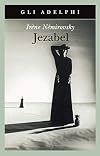
Jezabel
by Irène Némirovsky
On This Page
Description
In a French courtroom, the trial of a woman is taking place. Gladys Eysenach is no longer young, but she is still beautiful, elegant, cold. She is accused of shooting dead her much-younger lover. As the witnesses take the stand and the case unfolds, Gladys relives fragments of her past- her childhood, her absent father, her marriage, her turbulent relationship with her daughter, her decline, and then the final irrevocable act. With the depth of insight and pitiless compassion we have come to show more expect from the author of Suite Fran aise, Ir ne Nemirovsky shows us the soul of a desperate woman obsessed with her lost youth. show lessTags
Recommendations


























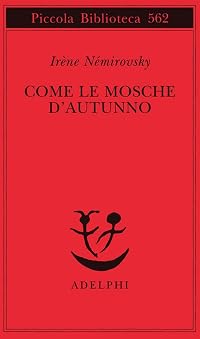




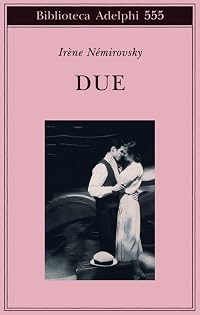

Member Recommendations

alv entitlement, vanity and frivolity
Member Reviews
Che inquietudine mi ha messo questa donna. Nel romanzo si contano: 82 volte la parola "bella" e 33 volte "bellezza", oltre a ben 87 volte la parola "giovane". Mentre vecchia, vecchia, invecchia etc. sommati sono presenti per 77 volte e "donna" per 105 volte. Questo assurdo conteggio spiega il tema del romanzo e l'inquietudine non solo della protagonista ma soprattutto dell'autrice che, da quello che ho letto, aveva una madre che ricorda un po' Gladys Eysenach. A parte che vorrei conoscere questa donna di sessant'anni che ne dimostra quaranta e che nessuno s'accorge che è in giro da vent'anni in più... Mettiamo che molti siamo morti per la guerra e che la guerra abbia fatto perdere un po' il conto ma... L'ossessione di Gladys per la show more bellezza e la giovinezza fa riflettere sul senso che diamo all'apparenza e sulla debolezza dei nostri valori. show less
Némirovsky does it again. Another repugnant main character, who nonetheless raises our sympathy. Another example of stereotype reflecting reality. To begin with I was horrified, as I was supposed to be, by this creature who is utterly trapped by her fear of aging. She has nothing to live for other than the impossible task of preserving her physical beauty, life for her is literally no more than how other people see her. One wants to say, at least things aren't like that any more. But they are, of course.
At the extreme end, I know various extremely wealthy women whose fears are the same as Gladys's. They have retreated from public life as their looks fade. Some of them have husbands who have mistresses on the side, have sired children show more with them even. They are willing to put up with the humiliation of this, rather than lose the prestige of their positions. Gladys has more pride than this.
https://alittleteaalittlechat.wordpress.com/2016/01/22/jezebel-by-irene-nemirovs... show less
At the extreme end, I know various extremely wealthy women whose fears are the same as Gladys's. They have retreated from public life as their looks fade. Some of them have husbands who have mistresses on the side, have sired children show more with them even. They are willing to put up with the humiliation of this, rather than lose the prestige of their positions. Gladys has more pride than this.
https://alittleteaalittlechat.wordpress.com/2016/01/22/jezebel-by-irene-nemirovs... show less
Némirovsky does it again. Another repugnant main character, who nonetheless raises our sympathy. Another example of stereotype reflecting reality. To begin with I was horrified, as I was supposed to be, by this creature who is utterly trapped by her fear of aging. She has nothing to live for other than the impossible task of preserving her physical beauty, life for her is literally no more than how other people see her. One wants to say, at least things aren't like that any more. But they are, of course.
At the extreme end, I know various extremely wealthy women whose fears are the same as Gladys's. They have retreated from public life as their looks fade. Some of them have husbands who have mistresses on the side, have sired children show more with them even. They are willing to put up with the humiliation of this, rather than lose the prestige of their positions. Gladys has more pride than this.
https://alittleteaalittlechat.wordpress.com/2016/01/22/jezebel-by-irene-nemirovs... show less
At the extreme end, I know various extremely wealthy women whose fears are the same as Gladys's. They have retreated from public life as their looks fade. Some of them have husbands who have mistresses on the side, have sired children show more with them even. They are willing to put up with the humiliation of this, rather than lose the prestige of their positions. Gladys has more pride than this.
https://alittleteaalittlechat.wordpress.com/2016/01/22/jezebel-by-irene-nemirovs... show less
The opening of this books is something of an infodump – a woman, Gladys Eysenach, is accused of murdering her young lover and her life story is related in a large chunk. The rest of the book goes back and covers her life up to that point, giving the reader a different view of the dispassionately related events. I thought that the in-depth look at Gladys would be more sympathetic than the judge’s description, which showed her to be a shallow, hedonistic woman. However, Nemirovsky’s portrayal of her is even more shallow and hedonistic, along with a side of creepy. The story is mostly told from Gladys’ POV and it can be a bit uncomfortable reading all her thoughts. It is all effectively done though, and the book is a penetrating show more and very readable depiction of a horrible person.
Gladys’ story starts when she is a young woman first realizing the power of her beauty. Her unhappy childhood up to that point prevented her from thinking about such things, but her cousin takes her out into society and she soon learns how attractive she is. Nemirovsky portrays Gladys’ life after that in a series of quick and effective scenes, summarizing several affairs and her marriage to Richard Eysenach. Richard is one of the few people who Gladys really cares about, and she thinks fondly of him for years after his death. However, there are hints that even that relationship is memorable mostly due to Gladys’ narcissism and obsession with youth. It seemed based on strict gender division – Richard was concerned with money and power, Gladys with looking good and being amenable – and Richard pretty much treated Gladys as a spoiled, pretty child. He also died before he could ever see her grow old.
Soon enough, Gladys starts lying about her age but her daughter, Marie-Therese, is evidence. Her relationship with her daughter is horribly selfish, competitive and disturbing. It becomes clear that she has no true friends – only women that she competes with and sees as rivals. Men are only seen as lovers or admirers. As she ages, she still remains beautiful but is no longer so stunning that men stop on the street or only pay attention to her, facts which cause Gladys to panic. Despite being extremely self-involved and narcissistic, she absolutely needs people to provide her with admiration, love and something to be compared (favorably) to. The war and other disruptions in the early decades of the 20th century give Gladys excuses to shed her social circle various times and lie about her age. Her obsession with her age prevents her from getting close to anyone and affects her relationship with the murdered man, Bernard Martin, which is also quite disturbing and unhealthy.
Gladys is not a character that anyone can like and I always felt some separation from her even though the book was mainly from her POV. It is certainly hard to sympathize with someone who thinks this –
“Yes, there was music, poetry, books…but she knew very well that those things were only useful to be more seductive, because even the most beautiful face can look tired, unattractive in a moment of boredom or fatigue; but to her, as for most women, such things meant nothing, they didn’t really affect her. A few passionate, melancholy lines or poetry, some beautiful, lyrical words: they were just offerings to a man, for him alone, and when the man was gone, nothing remained.”
However, Nemirovsky did a very good job getting into her head and clearly delineating her obsessions. Nemirovsky is probably as famous for her life as for her works and one part of her life that appeared in her books is the selfish and narcissistic mother. The introduction notes that her mother refused to take in Nemirovsky’s orphaned daughters after she and her husband died at Auschwitz and instead suggested they be taken to an orphanage. Obviously the author could have known nothing about this but it creates a horrible parallel to this book. One can readily imagine Gladys Eysenach doing such a thing as well. show less
Gladys’ story starts when she is a young woman first realizing the power of her beauty. Her unhappy childhood up to that point prevented her from thinking about such things, but her cousin takes her out into society and she soon learns how attractive she is. Nemirovsky portrays Gladys’ life after that in a series of quick and effective scenes, summarizing several affairs and her marriage to Richard Eysenach. Richard is one of the few people who Gladys really cares about, and she thinks fondly of him for years after his death. However, there are hints that even that relationship is memorable mostly due to Gladys’ narcissism and obsession with youth. It seemed based on strict gender division – Richard was concerned with money and power, Gladys with looking good and being amenable – and Richard pretty much treated Gladys as a spoiled, pretty child. He also died before he could ever see her grow old.
Soon enough, Gladys starts lying about her age but her daughter, Marie-Therese, is evidence. Her relationship with her daughter is horribly selfish, competitive and disturbing. It becomes clear that she has no true friends – only women that she competes with and sees as rivals. Men are only seen as lovers or admirers. As she ages, she still remains beautiful but is no longer so stunning that men stop on the street or only pay attention to her, facts which cause Gladys to panic. Despite being extremely self-involved and narcissistic, she absolutely needs people to provide her with admiration, love and something to be compared (favorably) to. The war and other disruptions in the early decades of the 20th century give Gladys excuses to shed her social circle various times and lie about her age. Her obsession with her age prevents her from getting close to anyone and affects her relationship with the murdered man, Bernard Martin, which is also quite disturbing and unhealthy.
Gladys is not a character that anyone can like and I always felt some separation from her even though the book was mainly from her POV. It is certainly hard to sympathize with someone who thinks this –
“Yes, there was music, poetry, books…but she knew very well that those things were only useful to be more seductive, because even the most beautiful face can look tired, unattractive in a moment of boredom or fatigue; but to her, as for most women, such things meant nothing, they didn’t really affect her. A few passionate, melancholy lines or poetry, some beautiful, lyrical words: they were just offerings to a man, for him alone, and when the man was gone, nothing remained.”
However, Nemirovsky did a very good job getting into her head and clearly delineating her obsessions. Nemirovsky is probably as famous for her life as for her works and one part of her life that appeared in her books is the selfish and narcissistic mother. The introduction notes that her mother refused to take in Nemirovsky’s orphaned daughters after she and her husband died at Auschwitz and instead suggested they be taken to an orphanage. Obviously the author could have known nothing about this but it creates a horrible parallel to this book. One can readily imagine Gladys Eysenach doing such a thing as well. show less
I absolutely loved this book.
Its about a woman Gladys who is obsessed with her youth and her need to be a desirable woman. As the book progresses through the times and she ages,her attitude changes but age has it her main priority. Its amazing the lengths that this woman went to in order to maintain her youth and not age gracefully.
Although there are several other characters, you grow to focus solely on Gladys and how she is feeling. I felt sad that she had these thoughts and feelings that impacted her so hugely.
This book has left me wanted more from this author. A definate must read for me.
Its about a woman Gladys who is obsessed with her youth and her need to be a desirable woman. As the book progresses through the times and she ages,her attitude changes but age has it her main priority. Its amazing the lengths that this woman went to in order to maintain her youth and not age gracefully.
Although there are several other characters, you grow to focus solely on Gladys and how she is feeling. I felt sad that she had these thoughts and feelings that impacted her so hugely.
This book has left me wanted more from this author. A definate must read for me.
This was fascinating. Starts with the trial of an older woman, accused of murdering her young lover. The rest of the book is the story of her life, culminating the the murder (I won't let on whodunit). The woman is Gladys, and her life is told from a young girl to the present time. She's not very likeable; she's attractive to men, but very self absorbed (in my mind). And that self absorbtion is the cause of her current predicament. I found myself feeling sorry for her, but thinking that it was largely self inflicted.
There's a distinct twist in the tail and it's a good read.
There's a distinct twist in the tail and it's a good read.
I don't know what drew mw to this book, but it must have been something good. Apparently this book was originally written in french and has been translated into english, something that is quit unusual for me to have contemplated.
The basic story is that of the life of a woman on trial for the murder of her "lover" in a french court. This is the story of a life of privelage, but also the underside of that privelage where we have the main character atttempting to maintain the illusion of youth no matter what it takes.
This is not an exposet, this is not the main character looking for sympathy, infact it is a story that she refuses to tell anyone, maintining the illusion for the court is more important that any punishment. Though I would show more say that she is deluded enough to think that they would not inflict anything to rought on a lady such as herself.
It is not perhaps a book I might have normally chosen but it is one well worth the read show less
The basic story is that of the life of a woman on trial for the murder of her "lover" in a french court. This is the story of a life of privelage, but also the underside of that privelage where we have the main character atttempting to maintain the illusion of youth no matter what it takes.
This is not an exposet, this is not the main character looking for sympathy, infact it is a story that she refuses to tell anyone, maintining the illusion for the court is more important that any punishment. Though I would show more say that she is deluded enough to think that they would not inflict anything to rought on a lady such as herself.
It is not perhaps a book I might have normally chosen but it is one well worth the read show less
Members
- Recently Added By
Author Information

91+ Works 17,037 Members
Some Editions
Series
Belongs to Publisher Series
Les ales esteses (315)
Work Relationships
Is contained in
Common Knowledge
- Canonical title*
- Jezabel
- Original title
- Jézabel
- Original publication date
- 1936
- First words
- A woman stepped into the dock.
*Some information comes from Common Knowledge in other languages. Click "Edit" for more information.
Classifications
- Genres
- Fiction and Literature, General Fiction
- DDC/MDS
- 843.912 — Literature & rhetoric French & related literatures French fiction 1900- 20th Century 1900-1945
- LCC
- PQ2627 .E4 .J4913 — Language and Literature French, Italian, Spanish and Portuguese literatures French literature Modern literature 1900-1960
- BISAC
Statistics
- Members
- 312
- Popularity
- 101,838
- Reviews
- 18
- Rating
- (3.73)
- Languages
- 8 — Catalan, English, Finnish, French, German, Italian, Portuguese, Spanish
- Media
- Paper, Audiobook, Ebook
- ISBNs
- 22
- ASINs
- 10