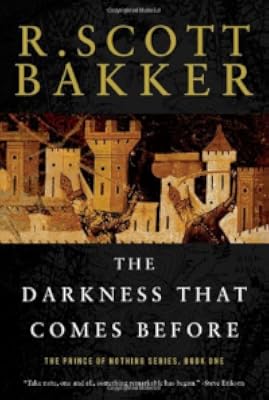
The Darkness That Comes Before
by R. Scott Bakker
The Second Apocalypse (1), The Prince of Nothing (1)
On This Page
Description
Strikingly original in its conception, ambitious in scope, with characters engrossingly and vividly drawn, the first book in R. Scott Bakker's Prince of Nothing series creates a remarkable world from whole cloth-its language and classes of people, its cities, religions, mysteries, taboos, and rituals-the kind of all-embracing universe Tolkien and Herbert created unforgettably in the epic fantasies The Lord of the Rings and Dune. It's a world scarred by an apocalyptic past, evoking a time show more both two thousand years past and two thousand years into the future, as untold thousands gather for a crusade. Among them, two men and two women are ensnared by a mysterious traveler, Anasûrimbor Kellhus-part warrior, part philosopher, part sorcerous, charismatic presence-from lands long thought dead. The Darkness That Comes Before is a history of this great holy war, and like all histories, the survivors write its conclusion.|R. Scott Bakker holds a B.A. in English language and literature, an M.A. in theory and criticism, and is currently completing his Ph.D. in philosophy at Vanderbilt University. He lives in London, Ontario. show lessTags
Recommendations


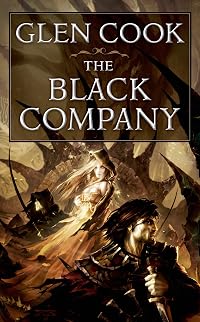
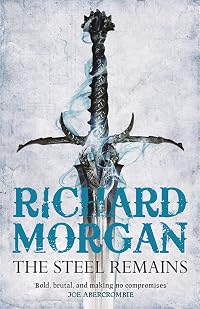
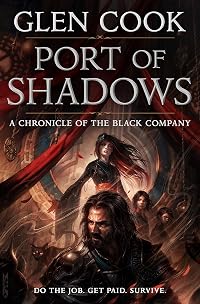
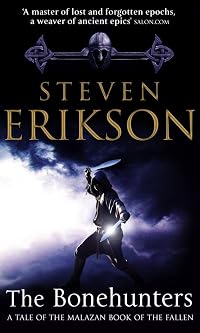
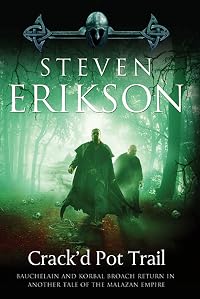
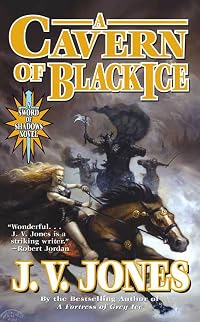
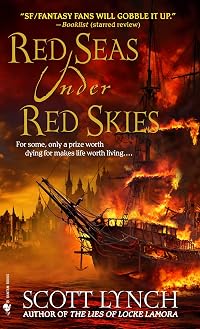
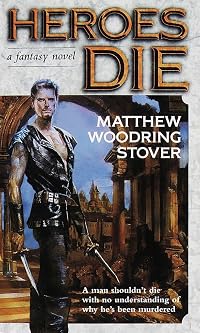




Member Recommendations
Vulco1 Both epic fantasy. Grim dark. There's magic and schools and people manipulating the politics and histories
caimanjosh Both series involve a possibly false prophet with impressive martial abilities and questionable motives. Both would also qualify as grimdark, though R. Scott Bakker's work is actually considerably darker. I quite enjoyed both series.
Member Reviews
This is a thumpingly big first volume of a three part fantasy trilogy and, while it contains all the problems of the genre, it also has some pleasant surprises.
Bakker is a remarkably good writer when it comes to evoking his world which is a wonderful recreation and rethinking of something Byzantine, Scythian, Tibetan, Mycenean and Persian.
Naturally we have a plethora of weird names and nomenclature but he provides both a map and a character and 'faction' glossary so confusion reigns for a surprisingly short time (though the map in the paperback edition contains horribly small print).
There is both sword and sorcery. The sorcery is, for once, genuinely 'believable' within the constraints of the universe he has created. The author has show more thought through how power and magic might compete and intersect.
His weaknesses? His women simply do not stand up to scrutiny as characters. There is a bit of Gorean adolescence in there - the 'whore with the heart of gold' is just not what women are like, perhaps regrettably to many a male fantasist.
Similarly, there are times in the central parts of the book when it is almost as if he was rambling through his world. You might have to kick yourself to keep going at late mid-point - but I suggest you do so because it all starts to drive forwards again quite soon.
His literary vision is cinematic. He describes very much to the point and scene after scene can be visualised as if it were 'Game of Thrones' but a 'show' where you can actually see the minds working. This is an achievement.
Scenes at court and scenes of battle are remarkable well written. The battle between the ambitious Nansur heir Conphas ('Byzantine') and the Scylvendi ('Hyperborean') is massively engaging and many set scenes reach the same filmic level of clarity.
I am not sure if I will have the time to read and review the next two 600 page plus tomes but if you are inclined to fantasy or sword and sorcery literature and have a smidgeon of intelligence, then I think it is very well worth you trying this writer and this series.
As for the 'message' (and I think there is one lurking in there), you do not need to worry too much about it but Bakker is clearly a 'thinker'. The book opens with a quotation from Nietzsche who happens to be favourite philosopher.
In fact, I dislike the faux religious quotations at the beginning of each chapter - they jar - but I can see where he is going and why this book is 'setting up' a story which is going to have more depth in later volumes.
Even in this volume, the hint is of fantasy literature as a means of analogising the way we face the abyss at the heart of our relationship to being. Heavy stuff though I still prefer to read the German philosophers.
The Scylvendi Conan-like Cnaiur is a more perfect representation of the philosophy of a Conan if Conan's nature was to have had a philosophy. The sorcerer Drusas is a man we know in all our modern dealings with men who give service to things they believe in absurdly.
The central figure is Anasurimbor Kellhus, a warrior monk, whose expression of an existentialist zen-ism will appeal to anyone with what I call a 'martial arts sensibility'.
I am not a Kellhus man - I am more a Cnaiur at heart, certainly not a Drusus Achamian - but Kellhus' search for meaning (which will not be satisfied in this first volume) is clearly the heart of the trilogy.
The 'monsters' are few but wonderful. There is a dark force in here straight out of Nothingness itself and the feral Sranc are drawn as your worst nightmare were you ever to be left alone in woodland.
The one thing perhaps I found missing was some physical description of the peoples who populate Earwa (Bakker's universe) which was often left to statements made in passing late into the back of the story.
Nothing too elaborate was required but it might have stopped one from creating an image from healthy prejudice only to see the image shattered in a sub-clause buried in a passing comment. show less
Bakker is a remarkably good writer when it comes to evoking his world which is a wonderful recreation and rethinking of something Byzantine, Scythian, Tibetan, Mycenean and Persian.
Naturally we have a plethora of weird names and nomenclature but he provides both a map and a character and 'faction' glossary so confusion reigns for a surprisingly short time (though the map in the paperback edition contains horribly small print).
There is both sword and sorcery. The sorcery is, for once, genuinely 'believable' within the constraints of the universe he has created. The author has show more thought through how power and magic might compete and intersect.
His weaknesses? His women simply do not stand up to scrutiny as characters. There is a bit of Gorean adolescence in there - the 'whore with the heart of gold' is just not what women are like, perhaps regrettably to many a male fantasist.
Similarly, there are times in the central parts of the book when it is almost as if he was rambling through his world. You might have to kick yourself to keep going at late mid-point - but I suggest you do so because it all starts to drive forwards again quite soon.
His literary vision is cinematic. He describes very much to the point and scene after scene can be visualised as if it were 'Game of Thrones' but a 'show' where you can actually see the minds working. This is an achievement.
Scenes at court and scenes of battle are remarkable well written. The battle between the ambitious Nansur heir Conphas ('Byzantine') and the Scylvendi ('Hyperborean') is massively engaging and many set scenes reach the same filmic level of clarity.
I am not sure if I will have the time to read and review the next two 600 page plus tomes but if you are inclined to fantasy or sword and sorcery literature and have a smidgeon of intelligence, then I think it is very well worth you trying this writer and this series.
As for the 'message' (and I think there is one lurking in there), you do not need to worry too much about it but Bakker is clearly a 'thinker'. The book opens with a quotation from Nietzsche who happens to be favourite philosopher.
In fact, I dislike the faux religious quotations at the beginning of each chapter - they jar - but I can see where he is going and why this book is 'setting up' a story which is going to have more depth in later volumes.
Even in this volume, the hint is of fantasy literature as a means of analogising the way we face the abyss at the heart of our relationship to being. Heavy stuff though I still prefer to read the German philosophers.
The Scylvendi Conan-like Cnaiur is a more perfect representation of the philosophy of a Conan if Conan's nature was to have had a philosophy. The sorcerer Drusas is a man we know in all our modern dealings with men who give service to things they believe in absurdly.
The central figure is Anasurimbor Kellhus, a warrior monk, whose expression of an existentialist zen-ism will appeal to anyone with what I call a 'martial arts sensibility'.
I am not a Kellhus man - I am more a Cnaiur at heart, certainly not a Drusus Achamian - but Kellhus' search for meaning (which will not be satisfied in this first volume) is clearly the heart of the trilogy.
The 'monsters' are few but wonderful. There is a dark force in here straight out of Nothingness itself and the feral Sranc are drawn as your worst nightmare were you ever to be left alone in woodland.
The one thing perhaps I found missing was some physical description of the peoples who populate Earwa (Bakker's universe) which was often left to statements made in passing late into the back of the story.
Nothing too elaborate was required but it might have stopped one from creating an image from healthy prejudice only to see the image shattered in a sub-clause buried in a passing comment. show less
The Darkness That Comes Before by Scott Bakker which is Book One of The Prince Of Nothing, and has so many long, unwieldy titles that I keep forgetting what they are. I did NOT want to get into another multivolume epic fantasy but someone pressed me to it, and, well, it's an odd one. Very well written, quite dense with history, religion, philosophy, it can be heavy going, but he actually handles the complex plots and the characters with a surprising deftness and clarity, while leaving lots of fairly important stuff quite murky. It's unlike Martin, inasmuch is often about the human failings and foibles and even whims that create history, whereas history here is all about titanic forces being manipulated with varying degrees of success by show more powerful people who are probably all sociopathic monsters willing to sacrifice thousands for their own ends. show less
Despite a promising beginning, this series botched the characters, plot, and story structure so badly that it isn't worth reading. Whether you're looking for good writing and deeper meaning or just an entertaining fantasy story, you'll find neither here.
Let's start with story structure: despite ostensibly being a series, none of the three books here stand by themselves, instead each abruptly ends and then immediately starts up again in the next volume. Thus, The Prince of Nothing is a single book divided into three parts. Even taking this view, however, The Prince of Nothing is still an unsatisfying story because there is no resolution to speak of. Bakker proves incapable of writing a beginning, middle, and end even when given over show more 1,800 pages to do so. Instead, this whole series feels like one big prologue to whatever book set in this world he writes next.
Considering the pure tonnage of writing here you would expect the world to be fleshed out, since that's the only thing this massive tome actually seems to try to accomplish. Instead the world is strangely muddled, as Bakker chooses to hide elements of the world from the reader for no sufficiently good reason. There is, for instance, a chronicle of an event known as the First Apocalypse that is widely known in this fictional world, even by characters that can't read the chronicle itself. Thus, every character in the book knows the full saga, but instead of Bakker allowing the reader to know about these events as well, he gives a trickle of information that never edifies. When a writer keeps the reader ignorant in a way that a character is also ignorant then that can create sympathy. When a writer keeps the reader ignorant where all the characters are in-the-know, at best it's an unnecessary irritation and at worst it creates a hole in the world building. Apparently Bakker doesn't realize this. He also keeps the reader in the dark for a huge number of pages concerning the magic system on this world, though that seemingly stems as much from his own lack of understanding of the system as it does his desire to give the reader only scraps of information.
Moving on to the plot: there are machinations between characters here, but the main plot is a fantasy take on the Crusades, where a Holy War is launched by the fantasy Christians to retake the land occupied by the fantasy Muslims. Hundreds upon hundreds of pages are devoted to depictions of the battles of the Holy War and the trials and tribulations of the army. The problem is, none of the main characters of this novel care about the war at all. They use the war for their own interests, or follow it as part of an unrelated mission, and have no personal investment as to whether it succeeds or fails. The lone character who genuinely believes in the Holy War is a character named Proyas, a second-tier character who is fleshed out little. Thus, for the hundreds of pages of battles it's impossible to care if the army takes that city or fights off that cavalry charge or if troop morale is low or high. What was Bakker thinking, making every major character care about revenge, power, control, knowledge, love, every conceivable motivation except for the one motivation of faith that actually would drive a Holy War? Thus, all the battles are mere background to the different plots of the characters.
This flaw is magnified by the fact that we learn early on that this whole war between the fantasy Christians and fantasy Muslims isn't important, because the battle between good and evil is right around the corner. The passages where dreams explore the First Apocalypse are actually interesting, and have stakes, compared to the Holy War where it seems of little import who wins or who loses- the real battle is up ahead. The fact that the real battle is never reached (is never even begun) further emphasizes the prologue nature of this series.
When the final volume "explains" the Holy War, it makes very little sense (if I'm understanding it correctly the idea was that it would allow for the world to be unified against the great evil that will soon emerge. How exactly does the slaughter of hundreds of thousands of people based on religious and ethnic differences lead to unity?). The main overarching plot is a huge mistake on Bakker's part.
Finally, on to the biggest flaw of this book, the characters. Specifically one character, Kellhus. Kellhus is at first presented as preternaturally good at manipulating people. Fine, though I think it strange that Bakker identifies homeschooling as the path to extreme social competence. But then it's revealed that he's also the most amazing fighter ever, capable of beating the best warrior in the world in single combat having only suffered one blow. Later on someone mentions that the only thing he lacks is the ability to use magic. Then it's discovered that he is one of the very, very few who can use magic, and he's the best ever at it. He's also an incredibly quick learner of everything, and even designs some siege weapons that makes everyone's jaw drop, because why not? In short, Kellhus suffers from superman syndrome, being so good at everything that he's unsympathetic, there's no dramatic tension to anything he does, and in general he's not so much a character as he is a plot robot.
I don't mean to suggest that Kellhus would be a better character if he had fewer strengths, though, since as soon as Bakker granted Kellhus the ability to manipulate people this whole character was hopeless. An author has certain limitations on what characteristics he can write, and those limitations are based on the author's own characteristics. Thus, if an author isn't smart, that author won't be able to write very smart characters. He can write characters that are quicker with a comeback, or who know a lot about a topic, because for the former the author can take time writing something that he or she wouldn't be able to think of on the spur of the moment, and for the latter the author can do research and put that in the character's mouth. How smart a character is, though, is limited by how smart the author is, since if an author were able to successfully answer the question "hmm, what would someone smarter than me do?" then that author would be the smarter person. That's not a loop that happens. In this case, the relevant limitation is that an author can't believably write a character who can understand and manipulate people better than the author can. Bakker is clearly no savant at manipulating people: the chapters showcasing Kellhus's mastery over others are thoroughly unconvincing, the theoretical underpinnings of that mastery are laughable as well. Instead we have a character mentioning bland "truths" about people and then those people begin licking that character's boots. It reminded me a bit of Ayn Rand, who populated her books with selfish lazy parasites to make the characters espousing her philosophy look better by comparison. Here we have a world populated by easily manipulated idiots in order to try to convince us that Kellhus is truly a master manipulator (and thus that Bakker can convincingly write such manipulation and understanding). Because of this the character that serves as the keystone of this narrative is not written believably or interestingly. It makes the book a mess.
This book raised my hopes in the beginning, depicting a dying world filled with monumental ruins of ages past, populated by strange creatures and a few humans struggling to survive. Then it turned into generic fantasy stuff, even including the cliche of a game with unexplained rules that symbolizes whatever the author needs it to. Then it turned into below average fantasy as the character of Kellhus gained more prominence. When it became clear that this book was going to focus on a war that no one cared about, while hiding some of the only interesting parts of the world, that it would blatantly serve as a prologue and not a complete book, and that it would take 1,800 pages to do it, it was revealed as yet another crappy fantasy series. Don't let the opening chapters fool you, this book is a waste of time. show less
Let's start with story structure: despite ostensibly being a series, none of the three books here stand by themselves, instead each abruptly ends and then immediately starts up again in the next volume. Thus, The Prince of Nothing is a single book divided into three parts. Even taking this view, however, The Prince of Nothing is still an unsatisfying story because there is no resolution to speak of. Bakker proves incapable of writing a beginning, middle, and end even when given over show more 1,800 pages to do so. Instead, this whole series feels like one big prologue to whatever book set in this world he writes next.
Considering the pure tonnage of writing here you would expect the world to be fleshed out, since that's the only thing this massive tome actually seems to try to accomplish. Instead the world is strangely muddled, as Bakker chooses to hide elements of the world from the reader for no sufficiently good reason. There is, for instance, a chronicle of an event known as the First Apocalypse that is widely known in this fictional world, even by characters that can't read the chronicle itself. Thus, every character in the book knows the full saga, but instead of Bakker allowing the reader to know about these events as well, he gives a trickle of information that never edifies. When a writer keeps the reader ignorant in a way that a character is also ignorant then that can create sympathy. When a writer keeps the reader ignorant where all the characters are in-the-know, at best it's an unnecessary irritation and at worst it creates a hole in the world building. Apparently Bakker doesn't realize this. He also keeps the reader in the dark for a huge number of pages concerning the magic system on this world, though that seemingly stems as much from his own lack of understanding of the system as it does his desire to give the reader only scraps of information.
Moving on to the plot: there are machinations between characters here, but the main plot is a fantasy take on the Crusades, where a Holy War is launched by the fantasy Christians to retake the land occupied by the fantasy Muslims. Hundreds upon hundreds of pages are devoted to depictions of the battles of the Holy War and the trials and tribulations of the army. The problem is, none of the main characters of this novel care about the war at all. They use the war for their own interests, or follow it as part of an unrelated mission, and have no personal investment as to whether it succeeds or fails. The lone character who genuinely believes in the Holy War is a character named Proyas, a second-tier character who is fleshed out little. Thus, for the hundreds of pages of battles it's impossible to care if the army takes that city or fights off that cavalry charge or if troop morale is low or high. What was Bakker thinking, making every major character care about revenge, power, control, knowledge, love, every conceivable motivation except for the one motivation of faith that actually would drive a Holy War? Thus, all the battles are mere background to the different plots of the characters.
This flaw is magnified by the fact that we learn early on that this whole war between the fantasy Christians and fantasy Muslims isn't important, because the battle between good and evil is right around the corner. The passages where dreams explore the First Apocalypse are actually interesting, and have stakes, compared to the Holy War where it seems of little import who wins or who loses- the real battle is up ahead. The fact that the real battle is never reached (is never even begun) further emphasizes the prologue nature of this series.
When the final volume "explains" the Holy War, it makes very little sense (if I'm understanding it correctly the idea was that it would allow for the world to be unified against the great evil that will soon emerge. How exactly does the slaughter of hundreds of thousands of people based on religious and ethnic differences lead to unity?). The main overarching plot is a huge mistake on Bakker's part.
Finally, on to the biggest flaw of this book, the characters. Specifically one character, Kellhus. Kellhus is at first presented as preternaturally good at manipulating people. Fine, though I think it strange that Bakker identifies homeschooling as the path to extreme social competence. But then it's revealed that he's also the most amazing fighter ever, capable of beating the best warrior in the world in single combat having only suffered one blow. Later on someone mentions that the only thing he lacks is the ability to use magic. Then it's discovered that he is one of the very, very few who can use magic, and he's the best ever at it. He's also an incredibly quick learner of everything, and even designs some siege weapons that makes everyone's jaw drop, because why not? In short, Kellhus suffers from superman syndrome, being so good at everything that he's unsympathetic, there's no dramatic tension to anything he does, and in general he's not so much a character as he is a plot robot.
I don't mean to suggest that Kellhus would be a better character if he had fewer strengths, though, since as soon as Bakker granted Kellhus the ability to manipulate people this whole character was hopeless. An author has certain limitations on what characteristics he can write, and those limitations are based on the author's own characteristics. Thus, if an author isn't smart, that author won't be able to write very smart characters. He can write characters that are quicker with a comeback, or who know a lot about a topic, because for the former the author can take time writing something that he or she wouldn't be able to think of on the spur of the moment, and for the latter the author can do research and put that in the character's mouth. How smart a character is, though, is limited by how smart the author is, since if an author were able to successfully answer the question "hmm, what would someone smarter than me do?" then that author would be the smarter person. That's not a loop that happens. In this case, the relevant limitation is that an author can't believably write a character who can understand and manipulate people better than the author can. Bakker is clearly no savant at manipulating people: the chapters showcasing Kellhus's mastery over others are thoroughly unconvincing, the theoretical underpinnings of that mastery are laughable as well. Instead we have a character mentioning bland "truths" about people and then those people begin licking that character's boots. It reminded me a bit of Ayn Rand, who populated her books with selfish lazy parasites to make the characters espousing her philosophy look better by comparison. Here we have a world populated by easily manipulated idiots in order to try to convince us that Kellhus is truly a master manipulator (and thus that Bakker can convincingly write such manipulation and understanding). Because of this the character that serves as the keystone of this narrative is not written believably or interestingly. It makes the book a mess.
This book raised my hopes in the beginning, depicting a dying world filled with monumental ruins of ages past, populated by strange creatures and a few humans struggling to survive. Then it turned into generic fantasy stuff, even including the cliche of a game with unexplained rules that symbolizes whatever the author needs it to. Then it turned into below average fantasy as the character of Kellhus gained more prominence. When it became clear that this book was going to focus on a war that no one cared about, while hiding some of the only interesting parts of the world, that it would blatantly serve as a prologue and not a complete book, and that it would take 1,800 pages to do it, it was revealed as yet another crappy fantasy series. Don't let the opening chapters fool you, this book is a waste of time. show less
At first I was put off by the sheer number of peoples and places and religions and gods and character names and details, details, details. There seemed to be nothing to hold onto. But gradually the main characters emerged from the chaos, and the chaos itself wrapped around me, pulling me into this holy war and forcing me to march along with it. Now, I’m looking forward to the battle, and hoping for victory over the Apocalypse that is taking shape in books two and three of this trilogy. This is not just barbarians and battle, it is more a metaphysical fantasy with parts that can send you wandering off following the ghosts of your own deep thoughts. Excellent!
I hadn't been this transfixed reading a book in a long time. A horrible, horrible place that you can't peel your eyes from. The characters have flaws on their flaws, with some hidden flaws to boot. The history develops like a sink with a slow drip, except without the annoyance. Misogynism is rife, made even worse being a state of normalcy. I read it was based on the Crusades. All I know is, when magic wasn't being thrown, the whole was so grounded. Like you'd get blood on you reading the pages. Yeah, it was good.
To be ignorant and to be deceived are two different things. To be ignorant is to be a slave of the world. To be deceived is to be the slave of another man. The question will always be: Why, when all men are ignorant, and therefore already slaves, does this latter slavery sting us so?
I first added these books to my TBR list on the advice of other fantasy fans here at LT. When I finally came upon them, I was especially attracted to the idea of an epic fantasy series written by a philosophy doctoral candidate, and was pleased to find that although his philosophical training shines through in places, Bakker nonetheless writes fantasy like a fantasy writer, and not like a philosopher.
The Darkness that Comes Before serves this series show more primarily as an introduction to the world that Bakker has built, the primary players, and the Holy War which frames the events to follow. In the land of Nansur, the schools of sorcery are gearing up for a fight in light of rumors that a new Shriah in Sumna is about to declare a holy war. When the news comes that the intended targets are the Kianene heathens who hold the holy city of Shimeh and not the schools themselves, the Schoolmen can breathe easier again. Except for the Mandate, that is, who wage a darker and older war against the Consult - an enemy unseen for centuries, and an enemy that the rest of the world has long since ceased believing in. While the other schools laugh at the Mandati, the Mandate Schoolmen are forced to live the reality of the Consult and the first Apocalypse every night in their dreams - the dreams passed down from a sorcerous ancestor. As parties begin gathering for the long march into Kian, the Mandate schoolman Achamian finds himself facing enemies on all sides.
Although I am very much enjoying the Prince of Nothing series, I would say that comparisons to George R. R. Martin and Steven Erikson are overblown. Although Bakker has utilized his philosophical training to develop something like fantasy's answer to the LaPlacian demon, he has not imagined a metaphysics of anything near the scale or sophistication you see in Erikson's Malazan. And although there is deep political intrigue driving much of the story line, it pales in comparison to the depth of the intellectual duels in Martin's Song of Ice and Fire. All of that said, I don't think Bakker needs to be compared to these other authors of the genre. His work stands well on its own, and I don't need hyperbolic praise from book-jacket-blurb-writers to convince me to pick up the second. I've already done that, all on my own. show less
I first added these books to my TBR list on the advice of other fantasy fans here at LT. When I finally came upon them, I was especially attracted to the idea of an epic fantasy series written by a philosophy doctoral candidate, and was pleased to find that although his philosophical training shines through in places, Bakker nonetheless writes fantasy like a fantasy writer, and not like a philosopher.
The Darkness that Comes Before serves this series show more primarily as an introduction to the world that Bakker has built, the primary players, and the Holy War which frames the events to follow. In the land of Nansur, the schools of sorcery are gearing up for a fight in light of rumors that a new Shriah in Sumna is about to declare a holy war. When the news comes that the intended targets are the Kianene heathens who hold the holy city of Shimeh and not the schools themselves, the Schoolmen can breathe easier again. Except for the Mandate, that is, who wage a darker and older war against the Consult - an enemy unseen for centuries, and an enemy that the rest of the world has long since ceased believing in. While the other schools laugh at the Mandati, the Mandate Schoolmen are forced to live the reality of the Consult and the first Apocalypse every night in their dreams - the dreams passed down from a sorcerous ancestor. As parties begin gathering for the long march into Kian, the Mandate schoolman Achamian finds himself facing enemies on all sides.
Although I am very much enjoying the Prince of Nothing series, I would say that comparisons to George R. R. Martin and Steven Erikson are overblown. Although Bakker has utilized his philosophical training to develop something like fantasy's answer to the LaPlacian demon, he has not imagined a metaphysics of anything near the scale or sophistication you see in Erikson's Malazan. And although there is deep political intrigue driving much of the story line, it pales in comparison to the depth of the intellectual duels in Martin's Song of Ice and Fire. All of that said, I don't think Bakker needs to be compared to these other authors of the genre. His work stands well on its own, and I don't need hyperbolic praise from book-jacket-blurb-writers to convince me to pick up the second. I've already done that, all on my own. show less
Bakker's series has been getting very positive reviews, and it is easy to see why. Folks who like the dark gritty fantasy of Steven Erikson but are put off by the at times overwhelming complexity of the Malazan books will find this particularly appealing.
Bakker's setting is detailed and well sketched without being particularly complex. He has given this setting a powerful sense of history. In particular, there was something both original and fascinating about various cultures and nations and "schools" that populate this world. The cast of leading characters is also managably small. These characters all have an air of mystery, and only over time do we start to understand their motivations and goals. This is not fantasy built around the show more good guys vs the bad guys. Instead the characters are sympathetic shades of gray, competing factions pursuing their private goals, not knowing that some powerful apocalyptic force is about to be unleashed on their world. Kellhus is a particularly intriguing character, and yet at the end of the book he remains morally ambigious.
An extremely impressive debut novel that left me eager to move on to Book 2 of the series. show less
Bakker's setting is detailed and well sketched without being particularly complex. He has given this setting a powerful sense of history. In particular, there was something both original and fascinating about various cultures and nations and "schools" that populate this world. The cast of leading characters is also managably small. These characters all have an air of mystery, and only over time do we start to understand their motivations and goals. This is not fantasy built around the show more good guys vs the bad guys. Instead the characters are sympathetic shades of gray, competing factions pursuing their private goals, not knowing that some powerful apocalyptic force is about to be unleashed on their world. Kellhus is a particularly intriguing character, and yet at the end of the book he remains morally ambigious.
An extremely impressive debut novel that left me eager to move on to Book 2 of the series. show less
Members
- Recently Added By
Lists

Best Fantasy Novels
821 works; 358 members

Sarah's Wish List
48 works; 1 member

SantaThing 2014 Gifts
299 works; 17 members

Jean's Sci Fi/Fantasy Reading list
189 works; 12 members

KayStJ's to-read list
1,616 works; 11 members

infjsarah's wishlist
408 works; 2 members
Author Information

21+ Works 7,424 Members
R. Scott Bakker holds a B.A. in English language and literature, an M.A. in theory and criticism, and is currently completing his Ph.D. in philosophy at Vanderbilt University
Some Editions
Awards and Honors
Distinctions
Notable Lists
Series


Work Relationships
Common Knowledge
- Canonical title
- The Darkness That Comes Before
- Original title
- The Darkness That Comes Before
- Original publication date
- 2003
- People/Characters
- Drusas Achamian; Coithus Athjeari; Bannut; Nersei Calmemunis; Cememketri; Chepheramunni (show all 41); Cnaiur; Ikurei Conphas; Eleazaras; Esmenet; Gehrunni; Hoga Gothyelk; Incheiri Gotian; Paro Inrau; Ikurei Istriya; Iyokus; Kascamandri; Anasurimbor Kellhus; Kussalt; Maithanet; Mallahet; Martemus; Anasurimbor Moenghus; Nautzera; Nersei Proyas; Cutias Sarcellus; Coithus Saubon; Seokti; Serwe; Seswatha; Simas; Skaiyelt; Skalateas; Skauras; Skeaos; Skioitha; Ikurei Xerius III; Krijates Xinemus; Xunnurit; Yalgrota; Yursalka
- Epigraph
- I shall never tire of underlining a concise little fact which these superstitious people are loath to admit -- namely, that a thought comes when "it" wants, not when "I" want ...
Friederich Nietzsche, Beyond Good and Ev... (show all)il - Dedication
- To Sharron - before you, I never dared hope
- First words
- (Prologue) One cannot raise walls against what has been forgotten.
All spies obssessed over their informants. - Last words
- (Click to show. Warning: May contain spoilers.)And judgement.
- Original language
- English; English Canada
Classifications
Statistics
- Members
- 2,798
- Popularity
- 6,556
- Reviews
- 58
- Rating
- (3.80)
- Languages
- 6 — Czech, English, French, German, Romanian, Spanish
- Media
- Paper, Audiobook, Ebook
- ISBNs
- 21
- ASINs
- 13