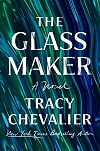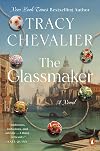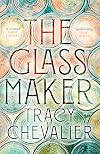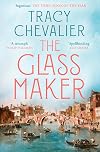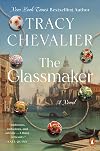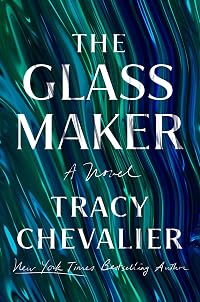
The Glassmaker
by Tracy Chevalier
On This Page
Description
"In 1486, Orsola Rosso is the eldest daughter in a family of glassblowers in Murano, Italy. As a woman, she is not meant to blow glass--but when her father dies, she teaches herself to make beads in secret, and her work becomes the cornerstone of the Rosso family fortunes. Skipping like a stone through the centuries, we follow Orsola and her family as they live through creative triumph and heartbreaking loss, from a plague rearing its head over Venice to Continental soldiers stripping its show more palazzos bare, from the domination of Murano and its maestros to the transformation of the city of trade into a city of tourists. In every era, the Rosso women ensure that their work, and their bonds, endure"-- show lessTags
Recommendations











Member Reviews
I read this with my book club – and while it checked several of my boxes, I didn’t love it so am giving it 3.5 stars. What worked for me is that it was historical fiction, took place in an interesting and new-to-me area of the world, and featured strong women. I enjoyed learning about something new – making glass beads.
Author Tracy Chevalier explains why she wrote this: “I am particularly interested in women’s stories that aren’t traditionally told, so it was the image of women sitting at kitchen tables making beads that got me to invent Orsola Rosso, a member of the Rosso family of glassmakers. The story follows her struggle to learn to handle glass in a male-dominated environment. We follow her and her family over the show more course of 500 years of Venetian history.”
I found the time construct distracting – characters living on Murano and Venice skip across centuries while aging only a few years at a time. They live through several eras and major historical events, including a plague, two world wars, and a global pandemic. So as we follow Orsola from her childhood, adolescence, motherhood and beyond, the world changes dramatically during those 500 years. This device felt very manipulative and kept me from relating more closely to the characters and the story.
I think if I had felt connected in a greater degree to the main character Orsola, I would have enjoyed the novel more than I did. In addition to the time jump concept, the third person writing style kept me from feeling closer to Orsola.
Nonetheless, this is an extremely well-researched novel, from a historical standpoint as well as the art of glassmaking in Murano. Another thing that many people will like is the Italian glossary found at the back of the book explaining the slang and other words used throughout the novel. show less
Author Tracy Chevalier explains why she wrote this: “I am particularly interested in women’s stories that aren’t traditionally told, so it was the image of women sitting at kitchen tables making beads that got me to invent Orsola Rosso, a member of the Rosso family of glassmakers. The story follows her struggle to learn to handle glass in a male-dominated environment. We follow her and her family over the show more course of 500 years of Venetian history.”
I found the time construct distracting – characters living on Murano and Venice skip across centuries while aging only a few years at a time. They live through several eras and major historical events, including a plague, two world wars, and a global pandemic. So as we follow Orsola from her childhood, adolescence, motherhood and beyond, the world changes dramatically during those 500 years. This device felt very manipulative and kept me from relating more closely to the characters and the story.
I think if I had felt connected in a greater degree to the main character Orsola, I would have enjoyed the novel more than I did. In addition to the time jump concept, the third person writing style kept me from feeling closer to Orsola.
Nonetheless, this is an extremely well-researched novel, from a historical standpoint as well as the art of glassmaking in Murano. Another thing that many people will like is the Italian glossary found at the back of the book explaining the slang and other words used throughout the novel. show less
I loved this story of Orsolo Rosso, a woman who side-stepped tradition and became a glassmaker in her own right in the late 1400s in Murano, Italy.
This is a story about fluidity: of molten glass, of water, of relationships and of time itself. As the author explains, time works differently on Murano that on "terra firma", so while 100 years may have passed in the wider world, Orsolo and her family may have aged only 17 years. But this isn't the plot...it's just the way things are.
This time shifting allows the author to explore almost half a century in the life of one family while keeping the same characters. It is interesting to see how much changes, and how much doesn't as they age more slowly than the world around them. But this is show more primarily a story of women making their way in a man's world , of family and relationships.
Well researched and very well written. A great story full of vivid images and intriguing characters. show less
This is a story about fluidity: of molten glass, of water, of relationships and of time itself. As the author explains, time works differently on Murano that on "terra firma", so while 100 years may have passed in the wider world, Orsolo and her family may have aged only 17 years. But this isn't the plot...it's just the way things are.
This time shifting allows the author to explore almost half a century in the life of one family while keeping the same characters. It is interesting to see how much changes, and how much doesn't as they age more slowly than the world around them. But this is show more primarily a story of women making their way in a man's world , of family and relationships.
Well researched and very well written. A great story full of vivid images and intriguing characters. show less
The Glassmaker - Chevalier
5 stars
“That sudden passage of time: What does it matter, one century or another, as long as Orsola is accompanied by those she loves and those she needs and even those she hates?”
This book is unique. It is an historical family saga, but without the constantly changing cast of characters through the ages. It is not a time travel fantasy, but it begins in 1486 and ends in the 21st century. It is not the dreaded split timeline novel, but threads of time do split in the progress of the story until they are finally fused at the end. Orsola Russo and her loved ones are not immortal. They live in Murano and Venice. Time passes differently there than it does on Terra Firma, elsewhere on the planet.
“If you skim show more a flat stone skillfully across water, it will touch down many times, in long or short intervals as it lands. With that image in mind, now replace water with time.”
With that explanation, Chevalier sets the Russo family story in motion through the ages. At the beginning of the book, I was skeptical. Lightman played with a similar idea of regional time variations in Einstein’s Dreams, but I couldn’t see how it would work in a full-length novel.
It did work. Before the book ended, I was totally comfortable with the idea that the Russo family would continue with their daily concerns of housekeeping and glassmaking at their own pace while accommodating the outside world only when necessary. I liked the comparisons that could happen with the compression of centuries.
Orsola Russo is Chevalier’s primary female/feminist, protagonist in this novel. Murano glass work is, of course, a totally male industry. The book begins and ends with the competitive tension between Orsola and the head of the family, her brother, Marco. Orsolo carves a small independence for herself with hand crafted glass beads. As years and centuries pass, this becomes an entree for female artisans in business. I enjoyed the way Orsola was always there, crafting beads, while Chevalier shifted the social and political setting.
I learned a bit about glassmaking from reading this book. Chevalier had clearly done her research. She captured the hierarchy of the workshop and the labor of learning an exacting craft. The Russo glassmakers struggled constantly to balance the desire to create art with the practical necessity to make a living and run a household.
“People who make things also have an ambiguous relationship with time. Painters, writers, wood-carvers, knitters, weavers and, yes, glassmakers: creators often enter an absorbed state that psychologists call flow, in which hours pass without their noticing.
Readers, too.”
As a reader, I was definitely in the flow. show less
5 stars
“That sudden passage of time: What does it matter, one century or another, as long as Orsola is accompanied by those she loves and those she needs and even those she hates?”
This book is unique. It is an historical family saga, but without the constantly changing cast of characters through the ages. It is not a time travel fantasy, but it begins in 1486 and ends in the 21st century. It is not the dreaded split timeline novel, but threads of time do split in the progress of the story until they are finally fused at the end. Orsola Russo and her loved ones are not immortal. They live in Murano and Venice. Time passes differently there than it does on Terra Firma, elsewhere on the planet.
“If you skim show more a flat stone skillfully across water, it will touch down many times, in long or short intervals as it lands. With that image in mind, now replace water with time.”
With that explanation, Chevalier sets the Russo family story in motion through the ages. At the beginning of the book, I was skeptical. Lightman played with a similar idea of regional time variations in Einstein’s Dreams, but I couldn’t see how it would work in a full-length novel.
It did work. Before the book ended, I was totally comfortable with the idea that the Russo family would continue with their daily concerns of housekeeping and glassmaking at their own pace while accommodating the outside world only when necessary. I liked the comparisons that could happen with the compression of centuries.
Orsola Russo is Chevalier’s primary female/feminist, protagonist in this novel. Murano glass work is, of course, a totally male industry. The book begins and ends with the competitive tension between Orsola and the head of the family, her brother, Marco. Orsolo carves a small independence for herself with hand crafted glass beads. As years and centuries pass, this becomes an entree for female artisans in business. I enjoyed the way Orsola was always there, crafting beads, while Chevalier shifted the social and political setting.
I learned a bit about glassmaking from reading this book. Chevalier had clearly done her research. She captured the hierarchy of the workshop and the labor of learning an exacting craft. The Russo glassmakers struggled constantly to balance the desire to create art with the practical necessity to make a living and run a household.
“People who make things also have an ambiguous relationship with time. Painters, writers, wood-carvers, knitters, weavers and, yes, glassmakers: creators often enter an absorbed state that psychologists call flow, in which hours pass without their noticing.
Readers, too.”
As a reader, I was definitely in the flow. show less
Chevalier has made her name writing about women in history, makers and creators, who have defied the odds and forged a way forwards. This time is no different but the craft we are involved with is Murano glass made on the island just off Venice and we get a detailed history of it throughout time, up until present day. What is different, is the way Chevalier has handled the passing of time.
The novel starts in 1476 with Orsola Rosso watching her father and brothers make platters and goblets with the tradition being that the work is passed down from father to eldest son, in this case Marco. With the help of another woman in a glassmaking house further down their street, Orsola learns how to make beads and eventually sells some through the show more middleman, Klingenberg, a German merchant.
In order to move on in time, Chevalier has explained that like a skimming stone, touching down at points across the water, so we will do across time. But what we also do is keep the same characters so 100 years might have passed but in Venetian time or story time only eight have passed and so the characters age but not too much. This is a fascinating device for handling time and not one have seen used before. What it does in one bounce is to show how somethings change and others don't. We pass through the Renaissance, the plague and the Napoleonic era and through world wars and also meet Casanova, Josephine (she of Napoleonic fame) and a flamboyant countess with cheetahs that she takes everywhere. What stays the same is the family's scrabble to remain making glass through all of these changes only to end up in the world of cheap chinese knock-offs that now litter Venice.
Like swirling, Muranese glass, the writing enfolds you, drawing you forward through the ups and downs of the family which are closely linked to the waves that new techonologies and ideas bring to glass making. It's a fascinating story of hard physical work coupled with creativity where women, as usual, are not expected to contribute but do, and hold the family together at difficult times.
Having watched several series of Blown Away on Netflix, I fully appreciate the strength and creativity involved in glass making and now I know more about the history of it. show less
The novel starts in 1476 with Orsola Rosso watching her father and brothers make platters and goblets with the tradition being that the work is passed down from father to eldest son, in this case Marco. With the help of another woman in a glassmaking house further down their street, Orsola learns how to make beads and eventually sells some through the show more middleman, Klingenberg, a German merchant.
In order to move on in time, Chevalier has explained that like a skimming stone, touching down at points across the water, so we will do across time. But what we also do is keep the same characters so 100 years might have passed but in Venetian time or story time only eight have passed and so the characters age but not too much. This is a fascinating device for handling time and not one have seen used before. What it does in one bounce is to show how somethings change and others don't. We pass through the Renaissance, the plague and the Napoleonic era and through world wars and also meet Casanova, Josephine (she of Napoleonic fame) and a flamboyant countess with cheetahs that she takes everywhere. What stays the same is the family's scrabble to remain making glass through all of these changes only to end up in the world of cheap chinese knock-offs that now litter Venice.
Like swirling, Muranese glass, the writing enfolds you, drawing you forward through the ups and downs of the family which are closely linked to the waves that new techonologies and ideas bring to glass making. It's a fascinating story of hard physical work coupled with creativity where women, as usual, are not expected to contribute but do, and hold the family together at difficult times.
Having watched several series of Blown Away on Netflix, I fully appreciate the strength and creativity involved in glass making and now I know more about the history of it. show less
I quickly became attached to the characters and was impressed with how much detail the author provided---enough to make you really feel that you were right there watching as things happened, especially in terms of the actual glass and bead production. Using a time travel idea worked well...aging the characters a little with each jump but also showing the pluses and minuses of what they discovered ----how change over time affects us all in different ways.
The Glassmaker by Tracy Chevalier follows a family of glassmakers from the height of Renaissance-era Italy to the present day. It is highly recommended historical fiction melded with magic realism.
Orsola Rosso is the eldest daughter in a family of glassblowers on Murano, the island near Venice known for the craft. It is 1486 and Venice is a trade center for the glassmakers of Murano. After her father dies in an accident, her brother Marco takes over the family business and he is struggling to support the family. As a woman, she is not meant to be a glassmaker, but she learns the craft of making glass beads in order to help her family.
From this point the novel moves through six centuries, from the late 15th century, when Orsola is a show more child, on through to the present day, when she’s in her late 60s. Chevalier tells us that "time passes differently" on the island and Orsola and her family age slowly as they live through historical events across hundreds of years. History moves forward as they live from the Italian Renaissance through the plague, the Napoleonic era, and world wars into the 21st century and Covid-19. I found the time jumps interesting and the novel entrancing until they rushed into more current events. It was toward the end of a lovely novel that my rating dropped a point.
The writing is extraordinary in every way. The characters are all exceptionally well-written as fully realized individuals. They come to life on the pages. The descriptions of places, glass, historical times, events, and people are wonderful and perfectly capture the essence of every scene. I loved everything about The Glassmaker until the end and the time jumps went disastrously into current events. If you can accept and go with the magic realism and jumps through time, this is an enchanting novel. Thanks to Viking for providing me with an advance reader's copy via NetGalley. My review is voluntary and expresses my honest opinion.
http://www.shetreadssoftly.com/2024/06/the-glassmaker.html show less
Orsola Rosso is the eldest daughter in a family of glassblowers on Murano, the island near Venice known for the craft. It is 1486 and Venice is a trade center for the glassmakers of Murano. After her father dies in an accident, her brother Marco takes over the family business and he is struggling to support the family. As a woman, she is not meant to be a glassmaker, but she learns the craft of making glass beads in order to help her family.
From this point the novel moves through six centuries, from the late 15th century, when Orsola is a show more child, on through to the present day, when she’s in her late 60s. Chevalier tells us that "time passes differently" on the island and Orsola and her family age slowly as they live through historical events across hundreds of years. History moves forward as they live from the Italian Renaissance through the plague, the Napoleonic era, and world wars into the 21st century and Covid-19. I found the time jumps interesting and the novel entrancing until they rushed into more current events. It was toward the end of a lovely novel that my rating dropped a point.
The writing is extraordinary in every way. The characters are all exceptionally well-written as fully realized individuals. They come to life on the pages. The descriptions of places, glass, historical times, events, and people are wonderful and perfectly capture the essence of every scene. I loved everything about The Glassmaker until the end and the time jumps went disastrously into current events. If you can accept and go with the magic realism and jumps through time, this is an enchanting novel. Thanks to Viking for providing me with an advance reader's copy via NetGalley. My review is voluntary and expresses my honest opinion.
http://www.shetreadssoftly.com/2024/06/the-glassmaker.html show less
This sort-of-historical-fiction novel begins in 1486 and ends just after the Covid epidemic of the early 2020s. Time advances in most places, but not in Murano and Venice, Italy, so we follow the same people they navigate change in their alternate timeline.
The main character is Orsola Rosso, the oldest daughter in a glassmaking family in Murano. When Orsola’s father died in a workshop accident, the sons were not skilled enough to take over just yet. To help supplement their income, Orsola learned how to make glass beads. (She was talked into doing this by Maria Barovier, a real-life bead maker in Murano who overcame gender barriers to manage her family’s glass workshop, and who created the “Rosetta” bead.)
Murano is famous still show more today for glassmaking. Up until the late 13th century, Venice was the leading center of glass manufacturing. Making glass requires heating the main source ingredients - sand, soda, and limestone - to very high temperatures. Because glass factories frequently caught fire and threatened the mostly wooden buildings in Venice, in 1291, the Venetian government decreed that all glassworks in Venice had to relocate to the Island of Murano in the Venetian Lagoon.
The isolation also served to protect Venice's valuable glassmaking trade secrets from leaking to competitors. Murano glassmakers who divulged secrets of glassmaking faced severe penalties, and they were even discouraged from leaving the island.
For centuries, Orsola and her family only left Murano to take their wares over to Venice for sale to middlemen who then sold them elsewhere. Over time, Orsola got better at bead making, married, opened a shop, and experienced professional success. But what she really wanted - the respect of her older brother and the love a lifetime - continued to elude her.
Discussion: I think Chevalier was trying to combine two different plot ideas into one but they didn’t really fit together well.
One was the evolution of the glassmaking industry in Murano, Italy, and especially how certain aspects of it were developed early on by women - a remarkable advancement for the time.
The other was a love story that transcended time and space.
In order to accomplish both goals, the author used a Brigadoon-like trope in which time didn’t advance in Murano (or sometimes even in Venice) the same way it did on “terrafirma.” [Venice was not physically connected to the Italian mainland until 1846 when a railroad was built. For nearly 1400 years, two or three miles of shallow water separated Venice from the “terrafirma” and was negotiated by gondolas.]
In the fantasy of Brigadoon, the town only appeared for one day every one hundred years; that is why the inhabitants didn’t age. Venice and Murano, on the other hand, were always there, and there was a great deal of interaction between the glassmakers and others. Those who dealt with the glassmakers would surely have taken note of the way they hardly changed and rarely died.
In fact, the characters themselves in Venice and Murano rarely wonder about their unique relationship to time or why it happens.
Meanwhile, we readers get to spend centuries with the same family with the same relatively conventional and boring dynamics of large families everywhere in every time: lots of diapers and other laundry to do, lots of noisy kids, a misfit or two, a tyrant or two, battles for control, and sibling rivalry. For many, many years. And these family members were pretty unhappy most of the time.
So why would readers want to spend such a long time with them? Well, the glassmaking industry - both its history and the processes that make it work - are quite interesting, and the love story has a couple of good pages to contribute. But while I rarely would advocate turning to resources on the internet instead of reading a book, what you can see and learn about glass making and Maria Barovier online seemed more worth the time [which in my case is limited, alas, to the conventional lifespan], with diagrams and videos adding a great deal to descriptions of how glass making works.
But if you don’t mind severe time travel paradoxes and 700 years or more of dirty diapers, this book does have features that will enlighten and entertain you. show less
The main character is Orsola Rosso, the oldest daughter in a glassmaking family in Murano. When Orsola’s father died in a workshop accident, the sons were not skilled enough to take over just yet. To help supplement their income, Orsola learned how to make glass beads. (She was talked into doing this by Maria Barovier, a real-life bead maker in Murano who overcame gender barriers to manage her family’s glass workshop, and who created the “Rosetta” bead.)
Murano is famous still show more today for glassmaking. Up until the late 13th century, Venice was the leading center of glass manufacturing. Making glass requires heating the main source ingredients - sand, soda, and limestone - to very high temperatures. Because glass factories frequently caught fire and threatened the mostly wooden buildings in Venice, in 1291, the Venetian government decreed that all glassworks in Venice had to relocate to the Island of Murano in the Venetian Lagoon.
The isolation also served to protect Venice's valuable glassmaking trade secrets from leaking to competitors. Murano glassmakers who divulged secrets of glassmaking faced severe penalties, and they were even discouraged from leaving the island.
For centuries, Orsola and her family only left Murano to take their wares over to Venice for sale to middlemen who then sold them elsewhere. Over time, Orsola got better at bead making, married, opened a shop, and experienced professional success. But what she really wanted - the respect of her older brother and the love a lifetime - continued to elude her.
Discussion: I think Chevalier was trying to combine two different plot ideas into one but they didn’t really fit together well.
One was the evolution of the glassmaking industry in Murano, Italy, and especially how certain aspects of it were developed early on by women - a remarkable advancement for the time.
The other was a love story that transcended time and space.
In order to accomplish both goals, the author used a Brigadoon-like trope in which time didn’t advance in Murano (or sometimes even in Venice) the same way it did on “terrafirma.” [Venice was not physically connected to the Italian mainland until 1846 when a railroad was built. For nearly 1400 years, two or three miles of shallow water separated Venice from the “terrafirma” and was negotiated by gondolas.]
In the fantasy of Brigadoon, the town only appeared for one day every one hundred years; that is why the inhabitants didn’t age. Venice and Murano, on the other hand, were always there, and there was a great deal of interaction between the glassmakers and others. Those who dealt with the glassmakers would surely have taken note of the way they hardly changed and rarely died.
In fact, the characters themselves in Venice and Murano rarely wonder about their unique relationship to time or why it happens.
Meanwhile, we readers get to spend centuries with the same family with the same relatively conventional and boring dynamics of large families everywhere in every time: lots of diapers and other laundry to do, lots of noisy kids, a misfit or two, a tyrant or two, battles for control, and sibling rivalry. For many, many years. And these family members were pretty unhappy most of the time.
So why would readers want to spend such a long time with them? Well, the glassmaking industry - both its history and the processes that make it work - are quite interesting, and the love story has a couple of good pages to contribute. But while I rarely would advocate turning to resources on the internet instead of reading a book, what you can see and learn about glass making and Maria Barovier online seemed more worth the time [which in my case is limited, alas, to the conventional lifespan], with diagrams and videos adding a great deal to descriptions of how glass making works.
But if you don’t mind severe time travel paradoxes and 700 years or more of dirty diapers, this book does have features that will enlighten and entertain you. show less
Members
- Recently Added By
Lists

Netgalley Reads
468 works; 3 members

Fiction: Historical
288 works; 3 members

Books Read in 2024
4,727 works; 128 members

Top Five Books of 2024
795 works; 264 members
Author Information

29+ Works 43,180 Members
Tracy Chevalier was born on October 19, 1962 in Washington, D.C. After receiving a B.A. in English from Oberlin College, she moved to England in 1984 where she worked several years as a reference book editor. Leaving her job in 1993, she began a year-long M.A in creative writing at the University of East Anglia. She is the author of several novels show more including The Virgin Blue, Burning Bright, Remarkable Creatures, and The Last Runaway. Her novel Girl with a Pearl Earring was made into a film starring Colin Firth and Scarlett Johansson. (Bowker Author Biography) show less
Awards and Honors
Awards
Distinctions
The Guardian Book of the Day (2024-09-17)
Common Knowledge
- Canonical title
- The Glassmaker
- Original title
- The Glassmaker
- Important places
- Murano, Venice, Veneto, Italy
Classifications
Statistics
- Members
- 681
- Popularity
- 42,309
- Reviews
- 27
- Rating
- (3.97)
- Languages
- 6 — Dutch, English, French, German, Italian, Spanish
- Media
- Paper, Audiobook, Ebook
- ISBNs
- 27
- ASINs
- 9