On This Page
Description
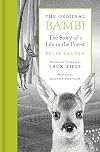
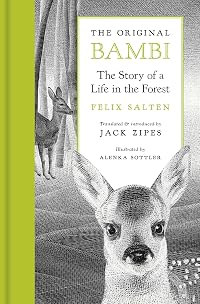
"A new, beautifully illustrated translation of Felix Salten's celebrated novel Bambi-the original source of the beloved story. Most of us think we know the story of Bambi-but do we? The Original Bambi is an all-new, illustrated translation of a literary classic that presents the story as it was meant to be told. For decades, readers' images of Bambi have been shaped by the 1942 Walt Disney film-an idealized look at a fawn who represents nature's innocence-which itself was based on a 1928 show more English translation. This masterful new translation gives contemporary readers a fresh perspective on this moving allegorical tale and provides important details about its creator, the Austrian Jewish writer Felix Salten. Originally published in 1923, Salten's story is more somber than the adaptations that followed it. Life in the forest is dangerous and precarious, and Bambi learns important lessons about survival as he grows to become a strong, heroic stag. Jack Zipes's introduction traces the history of the book's reception and explores the tensions that Salten experienced in his own life-as a hunter who also loved animals, and as an Austrian Jew who sought acceptance in Viennese society even as he faced persecution. With captivating drawings by award-winning artist Alenka Sottler, The Original Bambi captures the rich emotional meaning of a celebrated story"-- show lessTags
Recommendations



















Member Reviews
This is a new translation of the 1923 novel Bambi, on which the Disney movie was based. Or, more accurately, the movie was based on the 1928 English translation, but Whittaker Chambers. Yes, that Whittaker Chambers, if you recognize the name. If you do, you're most likely a Boomer like me. If you don't, that bit of weird background would probably not be that interesting to you.
What's more relevant is that Felix Salten didn't write a sweet children's story about a deer born in the forest, making friends with all sorts of other forest animals, and growing up to live happily ever after with Faline. It's a darker story, and in part an allegory of the dangers of life for minorities in Europe, particularly the Austro-Hungarian Empire, where show more Salten, a secular Jew, tried very hard to assimilate and be accepted. In the book, the deer, birds, foxes, hares, and other animals, are trying to peacefully live their lives. Predation happens, but it's always shown as both shocking, and something those not directly involved should stay out of the way of. I don't think this is the strongest aspect of Salten's book, but I don't recall that the movie acknowledges this aspect of forest life at all.
The great danger is He, Man, with the ability to kill at a distance, and hounds--animals who have betrayed their fellow animals--to help Him find and track them. Some of the most pleasant places in the forest, such as the meadow, are also places of great danger, because the animals are more visible there. Bambi's mother teaches him about the dangers and the need to take care, but the Great Prince of the Forest, who may be Bambi's father (the book never says so directly), goes further. He teaches Bambi many useful skills, but also that he must learn to live alone--truly alone.
Bambi and Faline do fall in love, and do mate, but this doesn't become the film's happily ever after. That's not how deer live.
Missing from the book are some of the film's most popular characters, such as Thumper the rabbit and Flower the skunk. Missing from the movie is Faline's brother, Gobo, whose story is one of great lessons of the dangers of Man. It's differences like this that make Salten's original story so much darker. As a child, I had a copy of the 1928 translation by Whittaker Chambers, and read and reread it till it fell apart. Chambers had done his own toning down, mostly of the political allegory, with more emphasis on the animal rights message--which I should note was also important to Salten. Even as a young child, I noticed the differences between book and movie, although the movie of course was a delight, and quite intentionally more fun. As an adult, my memories have been a bit of a mishmash of the two, such as "remembering" Gobo as part of the movie, which he wasn't. Now, it's fascinating to read a better translation of the original, as well as getting more background on the story, the author, and the circumstances in which he wrote it.
Recommended.
I bought this audiobook. And the ebook, too, because yes, I really loved this book, dark though it is, as a kid. show less
What's more relevant is that Felix Salten didn't write a sweet children's story about a deer born in the forest, making friends with all sorts of other forest animals, and growing up to live happily ever after with Faline. It's a darker story, and in part an allegory of the dangers of life for minorities in Europe, particularly the Austro-Hungarian Empire, where show more Salten, a secular Jew, tried very hard to assimilate and be accepted. In the book, the deer, birds, foxes, hares, and other animals, are trying to peacefully live their lives. Predation happens, but it's always shown as both shocking, and something those not directly involved should stay out of the way of. I don't think this is the strongest aspect of Salten's book, but I don't recall that the movie acknowledges this aspect of forest life at all.
The great danger is He, Man, with the ability to kill at a distance, and hounds--animals who have betrayed their fellow animals--to help Him find and track them. Some of the most pleasant places in the forest, such as the meadow, are also places of great danger, because the animals are more visible there. Bambi's mother teaches him about the dangers and the need to take care, but the Great Prince of the Forest, who may be Bambi's father (the book never says so directly), goes further. He teaches Bambi many useful skills, but also that he must learn to live alone--truly alone.
Bambi and Faline do fall in love, and do mate, but this doesn't become the film's happily ever after. That's not how deer live.
Missing from the book are some of the film's most popular characters, such as Thumper the rabbit and Flower the skunk. Missing from the movie is Faline's brother, Gobo, whose story is one of great lessons of the dangers of Man. It's differences like this that make Salten's original story so much darker. As a child, I had a copy of the 1928 translation by Whittaker Chambers, and read and reread it till it fell apart. Chambers had done his own toning down, mostly of the political allegory, with more emphasis on the animal rights message--which I should note was also important to Salten. Even as a young child, I noticed the differences between book and movie, although the movie of course was a delight, and quite intentionally more fun. As an adult, my memories have been a bit of a mishmash of the two, such as "remembering" Gobo as part of the movie, which he wasn't. Now, it's fascinating to read a better translation of the original, as well as getting more background on the story, the author, and the circumstances in which he wrote it.
Recommended.
I bought this audiobook. And the ebook, too, because yes, I really loved this book, dark though it is, as a kid. show less
Salten intended this book to be read by adults. Apparently it is a metaphor about oppressed people, such as Jews; the Nazis who banned and burned it thought so. The first English translation was done by Whittaker Chambers (of Alger Hiss fame) and because of copyright problems, no other translation could be done until recently. I found the New Yorker article , "'Bambi' is Even Bleaker Than You Thought" by Kathryn Schulz (https://www.newyorker.com/magazine/2022/01/24/bambi-is-even-bleaker-than-you-thought), more informative than Jack Zipes' introduction.
Maybe bleak is the right word for the story; certainly it is not a warm cozy tale of frolicking animals. Humans, referred to as "He" with a capital H, are a dangerous intrusion on natural show more forest life. One deer, to his deep regret, learns that, although he is welcomed and cared for by Him, He cannot be trusted. I can see this incident as a warning that passing may only work to a certain extent; is Salten saying that He can always recognize the other? After all, a deer can't pretend to be human. There are some lovely, sweet bits and some gloomy, sad ones and some important life lessons and they balance out: this is not a happily-ever-after story, more a realization that life is difficult but survivable. I'm reminded of the end of Candide---"we must cultivate our garden." show less
Maybe bleak is the right word for the story; certainly it is not a warm cozy tale of frolicking animals. Humans, referred to as "He" with a capital H, are a dangerous intrusion on natural show more forest life. One deer, to his deep regret, learns that, although he is welcomed and cared for by Him, He cannot be trusted. I can see this incident as a warning that passing may only work to a certain extent; is Salten saying that He can always recognize the other? After all, a deer can't pretend to be human. There are some lovely, sweet bits and some gloomy, sad ones and some important life lessons and they balance out: this is not a happily-ever-after story, more a realization that life is difficult but survivable. I'm reminded of the end of Candide---"we must cultivate our garden." show less
This is a review of "The Original Bambi: The Story of a Life in the Forest," translated by Jack Zipes, not the prior English translation of the book, a translation that has been roundly criticized pretty much since it was published because it lacked Salten's nuance and lost the sense that Salten's book is an allegory about discrimination against Jews in early 20th century Austria-Hungary. As Zipes's translation has just been released, I've not had time to read the whole thing yet but I have compared the two translations and have to say that Zipes's translation reads much more naturally. I wanted to post this here ASAP as the other reviews all seem to be for the older (and problematic) translation. If you're in the market for this book, show more make sure you get this new translation. show less
Everyone knows the story of Bambi as depicted in the Walt Disney film. This book allow you to see the original story that was the basis for the film. The translation from Jack Zipes is wonderful and provides a sensuous look at the forest and its inhabitants. The introduction with its biography of Felix Salten and the history of the book is also valuable.
Life in the forest is dangerous and precarious, and Bambi learns important lessons about survival as he grows to become a strong, heroic stag.
Ratings
Members
- Recently Added By
Lists

Books Read in 2024
4,623 works; 126 members

Science: Zoology
107 works; 1 member
Author Information

85+ Works 4,410 Members
All Editions
Some Editions
Series

Common Knowledge
- Original title
- The Original Bambi: The Story of a Life in the Forest
- Disambiguation notice
- A new Translation by Jack Zipes. Also, an introduction by Zipes.
Do not combine with the Bambi translated decades ago. Only the concept of the story is the same. words and some events differ.
Classifications
- Genres
- Fiction and Literature, General Fiction, Children's Books
- DDC/MDS
- 833.912 — Literature & rhetoric German & related literatures German fiction 1900- 1900-1990 1900-1945
- LCC
- PZ10.3 .S176 .B — Language and Literature Fiction and juvenile belles lettres Fiction and juvenile belles lettres Juvenile belles lettres
- BISAC
Statistics
- Members
- 208
- Popularity
- 157,206
- Reviews
- 5
- Rating
- (4.02)
- Languages
- English
- Media
- Paper, Audiobook, Ebook
- ISBNs
- 3
- ASINs
- 3