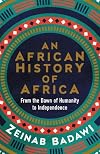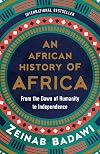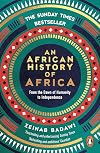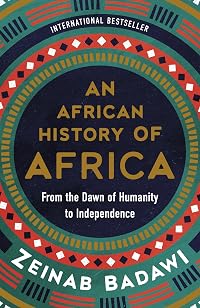
An African History of Africa: From the Dawn of Humanity to Independence
by Zeinab Badawi
On This Page
Description
Already a major international bestseller, Zeinab Badawi's sweeping and much-needed survey of African history traces the continent's extraordinary legacy from prehistory to the present from the African perspective. Everyone is originally from Africa, and this book is therefore for everyone. For too long, Africa's history has been dominated by western narratives of slavery and colonialism, or simply ignored. Now, Zeinab Badawi sets the record straight. In this fascinating book, Badawi guides show more us through Africa's spectacular history-from the very origins of our species, through ancient civilizations and medieval empires with remarkable queens and kings, to the miseries of conquest and the elation of independence. Visiting more than thirty African countries to interview countless historians, anthropologists, archaeologists and local storytellers, she unearths buried histories from across the continent and gives Africa its rightful place in our global story. The result is a gripping new account of Africa: an epic, sweeping history of the oldest inhabited continent on the planet, told through the voices of Africans themselves. show lessTags
Recommendations

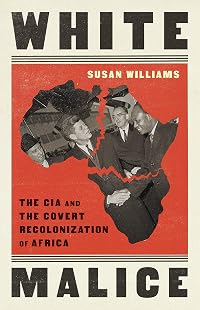
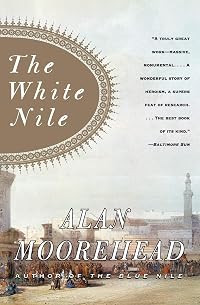
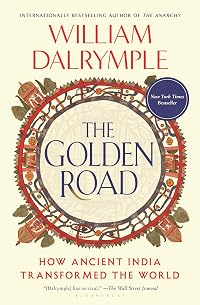

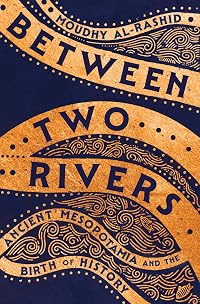




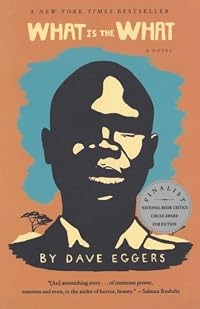
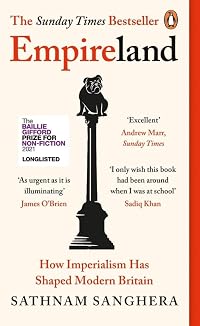
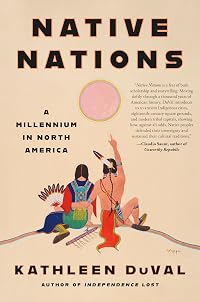
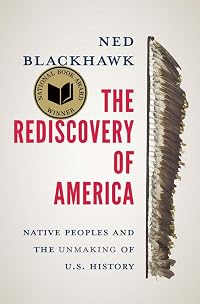

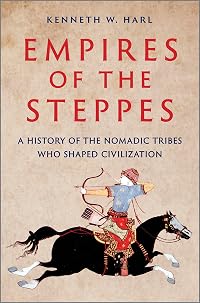

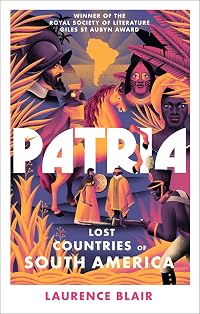
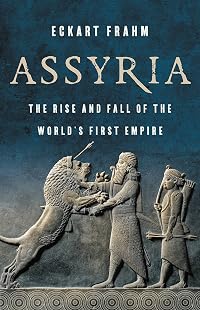

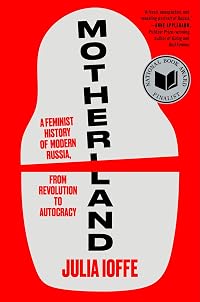



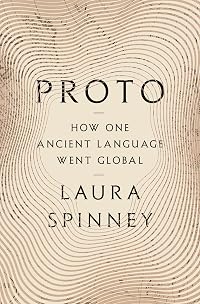
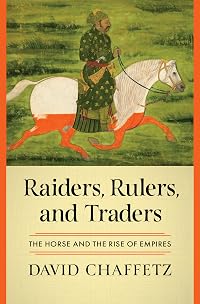
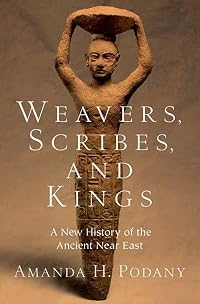
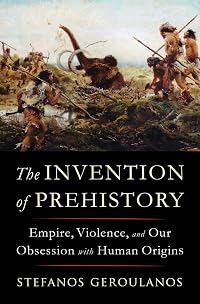

Member Recommendations
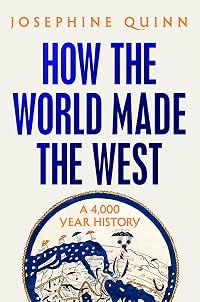
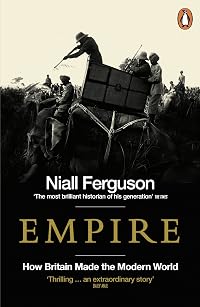
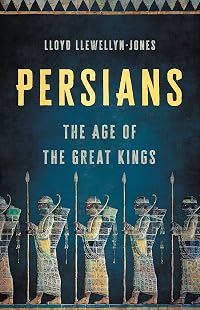
Cecrow A western world history text that strives to be globally inclusive, including of Africa.
The Kebra Negast: The Lost Bible of Rastafarian Wisdom and Faith from Ethiopia and Jamaica by E. A. Wallis Budge
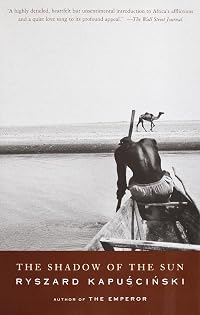
Cecrow A medieval (13th C) historical work from East Africa.

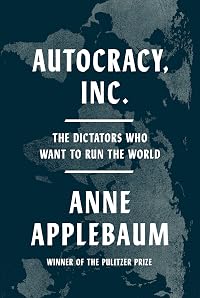
Cecrow First volume of a monumental series that represents several decades of effort by numerous experts.
Member Reviews
Rarely has the history of Africa been told from an African perspective. Sudanese-born Zeinab Badawi seeks to rectify this imbalance in this work, which spans from humanity's earliest origins to the present day, as well as an optimistic, if cautious, look toward Africa's future.
High praises for Badawi in ensuring this book does not read overly academic, making it fully accessible and immediately engaging for any reader with sincere historical interest. It is a bleak, though brutally honest, read. I'd even go so far as to suggest that it be required reading for European and American high schoolers. Be prepared to experience renewed outrage at the many and continuously reprehensible ways Africans and people of African descent have been show more exploited by outsiders. In addition to providing rich, comprehensive historical accounting, Badawi excels in illustrating the many ways that past abuses have had far-reaching, catastrophic reverberations to the present day, in many cases crippling economies, devastating and severely unbalancing populations, arresting development and causing lasting distrust of one's closest neighbors. A tangential detail that shocked me was that Haiti, upon gaining independence, was required to take out a loan from France in order to compensate(!) their former enslavers — a loan which they were repaying until 1947 (and Haiti was not alone in this perversion of justice). Also, according to Biblical texts, Moses married a Kushite, but you don't hear racists mention that much! Despite its heft at over 500 pages the narrative moves along at a relatively quick pace and is full of fascinating historical accounts seldom mentioned in Western classrooms. Highly recommended. show less
High praises for Badawi in ensuring this book does not read overly academic, making it fully accessible and immediately engaging for any reader with sincere historical interest. It is a bleak, though brutally honest, read. I'd even go so far as to suggest that it be required reading for European and American high schoolers. Be prepared to experience renewed outrage at the many and continuously reprehensible ways Africans and people of African descent have been show more exploited by outsiders. In addition to providing rich, comprehensive historical accounting, Badawi excels in illustrating the many ways that past abuses have had far-reaching, catastrophic reverberations to the present day, in many cases crippling economies, devastating and severely unbalancing populations, arresting development and causing lasting distrust of one's closest neighbors. A tangential detail that shocked me was that Haiti, upon gaining independence, was required to take out a loan from France in order to compensate(!) their former enslavers — a loan which they were repaying until 1947 (and Haiti was not alone in this perversion of justice). Also, according to Biblical texts, Moses married a Kushite, but you don't hear racists mention that much! Despite its heft at over 500 pages the narrative moves along at a relatively quick pace and is full of fascinating historical accounts seldom mentioned in Western classrooms. Highly recommended. show less
Zeinab Badawi made it her mission to cover an entire continent's entire history in 450 pages. At that rate, as you can imagine, you're likely to find more detail on most of these topics by referring to Wikipedia. But how will you know what to search for, and how to piece it all together? Here is the necessary framework to see the whole picture and how it evolved. Furthermore, she writes from an internal-to-Africa perspective. What were the African goals and motivations as events unfolded, as empires rose and fell, as invaders threatened? People called 'bloodthirsty' in western-written histories become patriots and rebels fighting for their humanity. This is no bait-and-switch. This is wearing the shoes of those who were trodden upon.
The show more introduction clearly defines what this is not: an academic work or a polemic about contested history, though she does desire to "counterbalance negative perceptions". There is no way to avoid referencing how events have customarily been depicted, and placing that in contrast with the African viewpoint. It's a necessary exercise during this stage of writing a more balanced history. Someday this task will be behind us, and we can have popular African histories that don't require this kind of defending, that won't read like a sequence of corrections to what we'd previously understood as the sole truth.
Ancient Egypt of course takes pride of place in the early chapters, "the only part of African history that is taught widely in schools". From there we skip around the map of Africa, covering each area from prehistory up to Europe's age of exploration. In the last hundred pages Badawi revisits various portions in a rapid-fire account of slavery, colonization and independence movements. Along the way there are a number of highlights I looked forward to which were already familiar to me: the pyramids, the Queen of Sheba, St. Augustine, Mansa Musa's empire, Shaka Zulu, and the evil machinations of Leopold II of Belgium.
But I learned about much more that was new to me. I hadn't heard of the Beta Israel of Ethiopia, the Benin Bronzes, or the kente cloth of Ghana. I'd never looked up images of the wondrous city of Constantine in Algeria. I didn't know what the Berlin Conference was. I learned about key women figures like Queen Kahina of present-day Algeria, Yaa Asantewa of Ghana, and Njinga and Kimpa Vita of the Congo. I also was presented with key heroic figures during Africa's independence movements, including the Mahdi of Khartoum and Patrice Lumumba of the Congo. There isn't time to explore every corner: the Bantu migration is only mentioned incidentally, I saw no reference to the Kanem-Bornu empire, and Madagascar is practically ignored.
The rational for Africa's troubles with governance and economics during the last 75 years is well explained: the enormous loss of population to slavery, the devastations wrought by colonization that overshadowed any benefits, and artificial map lines that partitioned Africa into convenient European colony borders rather than accounting for local ethnicities. This legacy of imposed divisions has required a long and difficult course correction that is still not over, but there is much hope for the future. Africa is embracing the online world and environmentally friendly technologies, and it still remains a source of valuable natural resources. By harnessing the processing of those resources and securing a seat at international tables, the continent's profile steadily improves. Embracing the future includes taking pride in a clear understanding of the past. This is a promising step towards achieving that. show less
The show more introduction clearly defines what this is not: an academic work or a polemic about contested history, though she does desire to "counterbalance negative perceptions". There is no way to avoid referencing how events have customarily been depicted, and placing that in contrast with the African viewpoint. It's a necessary exercise during this stage of writing a more balanced history. Someday this task will be behind us, and we can have popular African histories that don't require this kind of defending, that won't read like a sequence of corrections to what we'd previously understood as the sole truth.
Ancient Egypt of course takes pride of place in the early chapters, "the only part of African history that is taught widely in schools". From there we skip around the map of Africa, covering each area from prehistory up to Europe's age of exploration. In the last hundred pages Badawi revisits various portions in a rapid-fire account of slavery, colonization and independence movements. Along the way there are a number of highlights I looked forward to which were already familiar to me: the pyramids, the Queen of Sheba, St. Augustine, Mansa Musa's empire, Shaka Zulu, and the evil machinations of Leopold II of Belgium.
But I learned about much more that was new to me. I hadn't heard of the Beta Israel of Ethiopia, the Benin Bronzes, or the kente cloth of Ghana. I'd never looked up images of the wondrous city of Constantine in Algeria. I didn't know what the Berlin Conference was. I learned about key women figures like Queen Kahina of present-day Algeria, Yaa Asantewa of Ghana, and Njinga and Kimpa Vita of the Congo. I also was presented with key heroic figures during Africa's independence movements, including the Mahdi of Khartoum and Patrice Lumumba of the Congo. There isn't time to explore every corner: the Bantu migration is only mentioned incidentally, I saw no reference to the Kanem-Bornu empire, and Madagascar is practically ignored.
The rational for Africa's troubles with governance and economics during the last 75 years is well explained: the enormous loss of population to slavery, the devastations wrought by colonization that overshadowed any benefits, and artificial map lines that partitioned Africa into convenient European colony borders rather than accounting for local ethnicities. This legacy of imposed divisions has required a long and difficult course correction that is still not over, but there is much hope for the future. Africa is embracing the online world and environmentally friendly technologies, and it still remains a source of valuable natural resources. By harnessing the processing of those resources and securing a seat at international tables, the continent's profile steadily improves. Embracing the future includes taking pride in a clear understanding of the past. This is a promising step towards achieving that. show less
In the West, so many histories of Africa only focus on a depressing narrative that conveniently neglects many inspiring parts. Omitted are the triumphs of empires and heights of humanity shown in the African people; instead, only colonialist attitudes are amplified to disparage the Africans as an inferior continent. Many of us intuit that these negative narratives are lacking somehow, but we don't have any new information to replace it. The Oxford-educated, Sudanese-born Zeinab Badawi writes this history much like we'd expect any other history to be written: fair and balanced with highlights on cultural triumphs. And she does a spectacular job.
Badawi herself is not an erudite historian but rather a popular writer who consults historians show more and first-hand evidence to gather together her narrative. She covers the entire continent, not just Europeanized segments like North Africa. She doesn't just speak of recent centuries of colonization but of the entire history of tribes and non-European empires. She reminds us of all the diversity embedded within this huge, complex continent.
I particularly enjoyed hearing of the cultural triumphs and practices like the Golden Stool. I loved hearing of the dignity with which Africans faced invaders, whether from European or from fellow African nations. Stories like a queen offering her son as a sacrifice for her people to escape across a river cannot but emotionally move even the hardest soul. These stories teach us of what great stock the African peoples come from.
Of course, I never heard much of this, aside from some Egyptian segments, in my education in the United States. Hopefully, Badawi will turn the tide of our lack of enlightenment. As she notes, with rich deposits of rare minerals and under-tapped human potential, Africa can disproportionately benefit from the smallest of economic investments with great yields. With proper investment, just treatment, and fair reparations, cities like Nairobi and Johannesburg and countries like Rwanda might just become large contributors to the global economy, as large as other productive centers. But first, we must come to terms with our human history and our unexamined biases, and Badawi gives the reading public great access to those stories. show less
Badawi herself is not an erudite historian but rather a popular writer who consults historians show more and first-hand evidence to gather together her narrative. She covers the entire continent, not just Europeanized segments like North Africa. She doesn't just speak of recent centuries of colonization but of the entire history of tribes and non-European empires. She reminds us of all the diversity embedded within this huge, complex continent.
I particularly enjoyed hearing of the cultural triumphs and practices like the Golden Stool. I loved hearing of the dignity with which Africans faced invaders, whether from European or from fellow African nations. Stories like a queen offering her son as a sacrifice for her people to escape across a river cannot but emotionally move even the hardest soul. These stories teach us of what great stock the African peoples come from.
Of course, I never heard much of this, aside from some Egyptian segments, in my education in the United States. Hopefully, Badawi will turn the tide of our lack of enlightenment. As she notes, with rich deposits of rare minerals and under-tapped human potential, Africa can disproportionately benefit from the smallest of economic investments with great yields. With proper investment, just treatment, and fair reparations, cities like Nairobi and Johannesburg and countries like Rwanda might just become large contributors to the global economy, as large as other productive centers. But first, we must come to terms with our human history and our unexamined biases, and Badawi gives the reading public great access to those stories. show less
When I was in Kenya (April 2024) I noticed that this volume had come out and so back here in the UK I got hold of a copy and have now read it. It is not an academic book but it is a thorough trawl through what is known of African history. The material is presented in an interesting and appealing way and what appears to be quite a balanced approach. A great deal of it was new to me and I would recommend it to any African, European or whatever wanting to expand their understanding of the various issues. Could have been much more on Christianity.
This book’s strength is also its weakness, I think. I began it knowing almost nothing of Africa’s history apart from what I have learned in pursuing my interest in the European search for the source of the Nile. Badawi’s easy conversational style, full of first-person references to her travels around the continent and conversations with African scholars make the book an easy entrée to an unfamiliar subject. The book is organised geographically, pursuing a historical narrative for each region, rather than attempting to present and defend a thesis. Any broad conclusions are attributed to the academics she encounters along the way, without further discussion in most cases. This all makes the book very readable but one finishes it show more feeling that the surface has only been scratched, and rather unevenly at that. show less
What a fantastic book! A 500-page history of a continent may sound intimidating and wonky, but it's VERY readable, a real page turner. There are lots of facts and stats and dates in there, but it's presented as more of a story telling way, much more engaging than a history textbook and much more accessible than an academic overview. There is some analysis and interpretation in there as well, Badawi is not afraid to weave in her own identity and personal perspective, which only makes the narrative stronger. My only complaint about this book is that it's over, leaving me salivating for more!
I have enjoyed discovering the history of Africa along with Zeinab Badawi as she travelled and interviewed experts from the different counties. The excitement she felt exploring the continent's past and present came through loud and clear, even in German translation. She also made a particular effort to include the 'herstory', which made it a lot more interesting to me.
Members
- Recently Added By
Lists


Author Information

1 Work 451 Members
All Editions
Awards and Honors
Awards
Distinctions
Common Knowledge
- Original publication date
- 2024-04-18
- Dedication
- For my mother Asia Malik and my father M.K. Badawi
- First words
- Everyone is originally from Africa, and this book is therefore for everyone.
- Last words
- (Click to show. Warning: May contain spoilers.)This book, I hope, has shown them, and the world, that they should do so with their heads held high and their hearts full of pride in their magnificent past.
- Publisher's editor
- Joseph, Jamie; Waters, Amanda
- Blurbers
- Cannadine, David; Busby, Margaret; Marozzi, Justin; Chigudu, Simukai
- Original language
- English
Classifications
Statistics
- Members
- 455
- Popularity
- 67,307
- Reviews
- 13
- Rating
- (4.12)
- Languages
- Dutch, English, German
- Media
- Paper, Audiobook, Ebook
- ISBNs
- 12
- ASINs
- 8